





— Blogs —
—Products—
 Consumer hotline +8618073152920
 WhatsApp:+8615367865107
Address:Room 102, District D, Houhu Industrial Park, Yuelu District, Changsha City, Hunan Province, China
Product knowledge
Time:2026-03-12 11:08:20 Popularity:527
With the intensification of global climate change, the frequency of high-wind weather triggered by cold waves and cold air activity has significantly increased. In industrial, agricultural, and municipal transportation sectors, real-time monitoring of wind intensity is not only a requirement for meteorological recording but also the baseline for safety prevention.
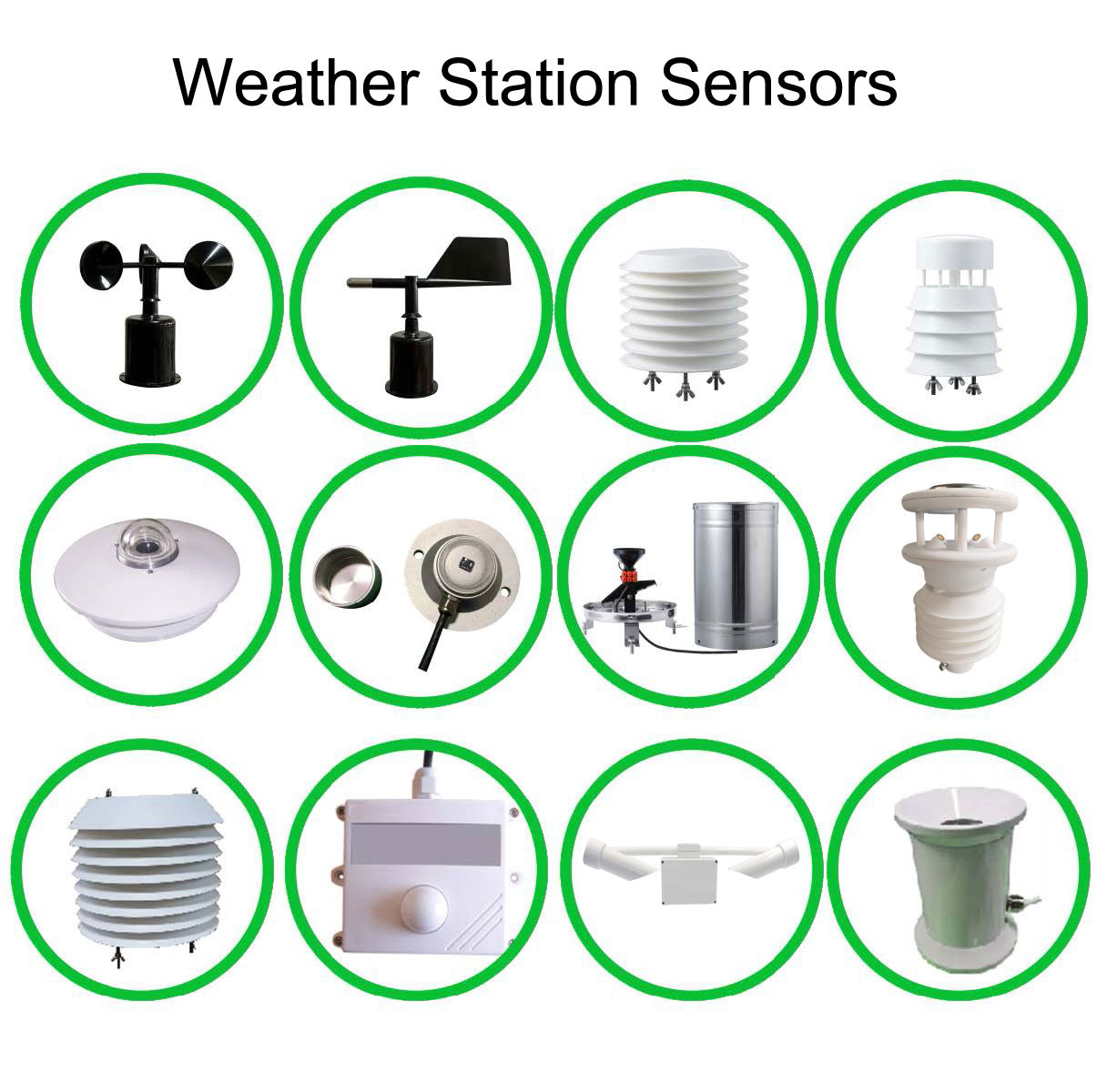
1. Risk of Crop Lodging and Yield Reduction in Agricultural Production
High winds have both physical destructive and pathological transmission effects on crops. Strong winds can cause branches and leaves to break and large-scale lodging, especially during flowering and fruiting periods, where wind disrupts natural pollination and causes fruit drop, directly leading to yield reduction. In addition, wind is a major vector for pathogens and migratory pests; monitoring wind dynamics helps implement early pest and disease control.
2. Safety and Visibility Challenges in Transportation
In arid or bare surface areas, high winds accompanied by dust storms drastically reduce air visibility, easily causing rear-end collisions. For highways, bridges, and tunnel entrances, instantaneous gusts affect vehicle stability and can even cause high-center-of-gravity vehicles to overturn.
3. Physical Impact on Urban Environment and Power Systems
Loose buildings, outdoor billboards, and construction tower cranes pose fall risks in high winds. Meanwhile, falling trees or foreign objects contacting power lines are the main causes of power system failures and large-scale blackouts.
To effectively prevent the above hazards, highly reliable perception-layer hardware — the ultrasonic anemometer — has become a core component of modern monitoring systems.
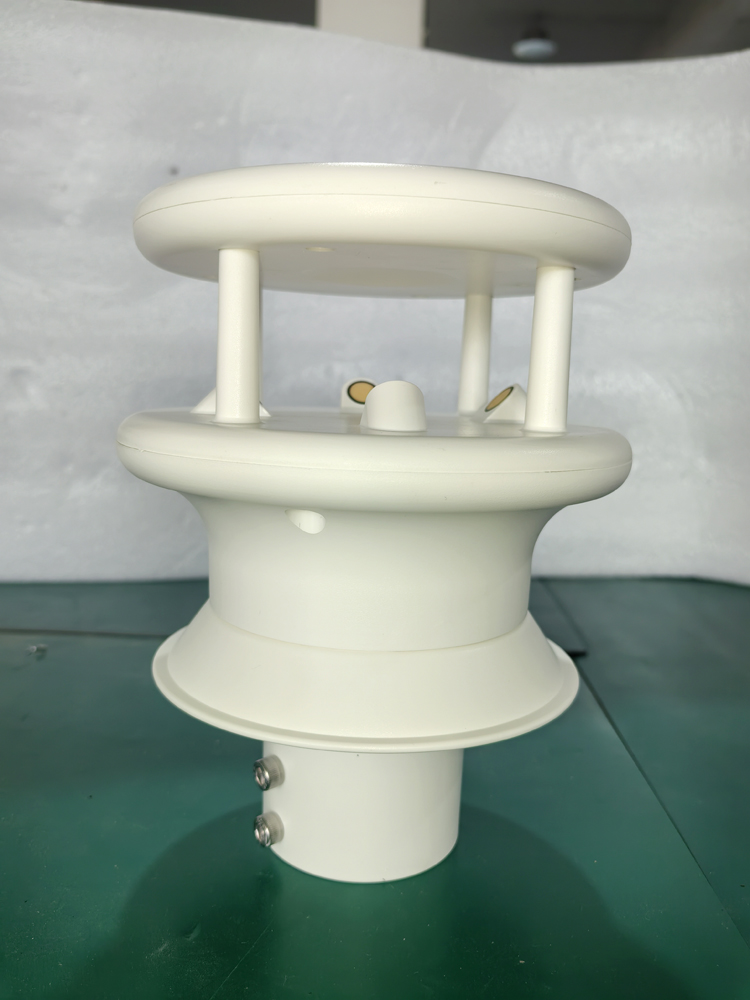
The NBL-W-21GUWS series sensor developed by NiuBoL is designed to address the inherent defects of traditional mechanical anemometers (cup/vane) in industrial applications.
1. Ultrasonic Time-of-Flight Measurement Principle
The device calculates wind speed by measuring the time difference of ultrasonic wave propagation in air.
Physical model: The sensor is equipped with four groups of ultrasonic transducers corresponding to North (N), South (S), East (E), and West (W) directions.
Calculation logic: Assuming wind blows from the north, the transmission time from N to S shortens, while from S to N lengthens. By calculating the time difference along each axis, instantaneous wind speed can be precisely derived.
Advantages: This measurement method is independent of temperature drift and eliminates physical friction.
2. Zero Start-up Wind Speed and Fully Digital Detection
Unlike traditional mechanical sensors that need to overcome bearing static friction (start-up wind speed typically above 0.5 m/s), the ultrasonic sensor achieves “zero start-up wind speed.” It can capture extremely weak air flows, ensuring monitoring accuracy in low-wind environments.
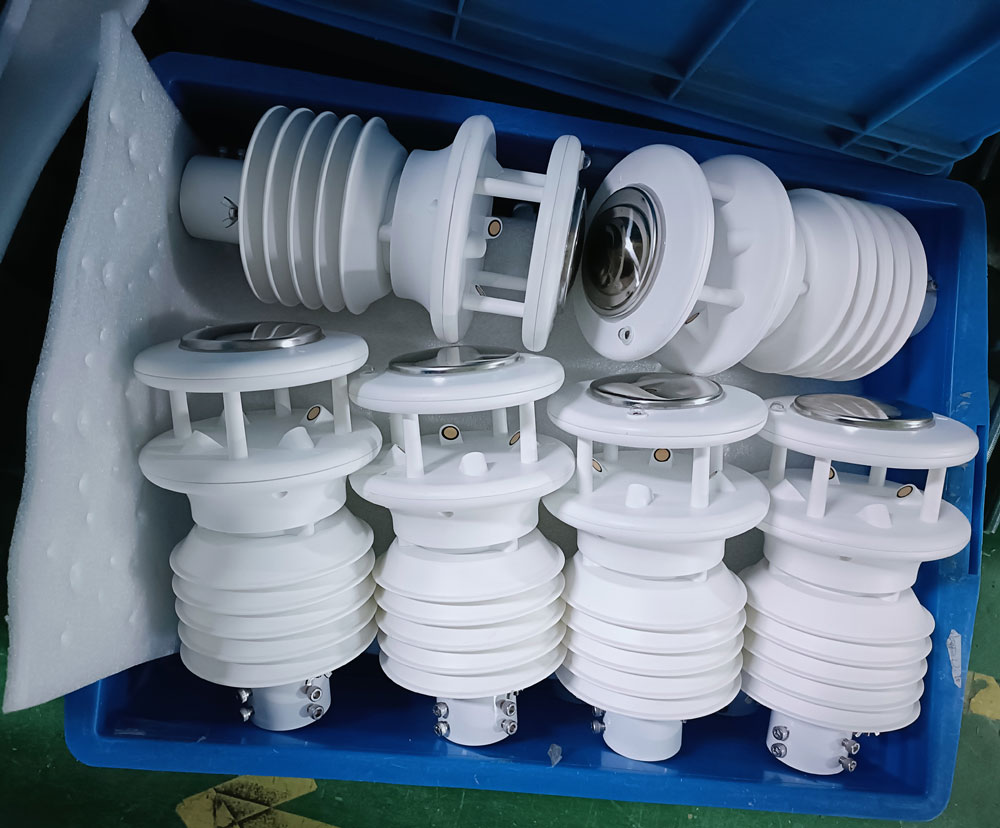
For system integrators and IoT solution providers, the following technical specifications are key references for engineering selection:
| Parameter | Technical Specification | Remarks |
|---|---|---|
| Wind Speed Measurement Range | 0 ~ 60 m/s | Covers extreme hurricane range |
| Wind Speed Accuracy | ±0.5 + 3% FS | High linearity accuracy |
| Wind Direction Measurement Range | 0 ~ 359° | 360° full coverage |
| Wind Direction Accuracy | ±3° | Meets meteorological-grade monitoring requirements |
| Power Supply Voltage | DC 12-24V | Compatible with industrial-grade power systems |
| Communication Interface | RS485 | Long-distance anti-interference transmission |
| Communication Protocol | Standard MODBUS-RTU | Easy for secondary development and integration |
| Housing Material | ASA engineering plastic | UV-resistant, salt-fog corrosion resistant |
| Operating Environment | Temperature: -20–80℃; Humidity: 0–100%RH | Suitable for harsh outdoor environments |
| Protection Rating | IP65 | High-strength dustproof and waterproof |
| Power Consumption | Standard mode ≤ 0.4W | ≤ 3W when optional heating function is enabled |
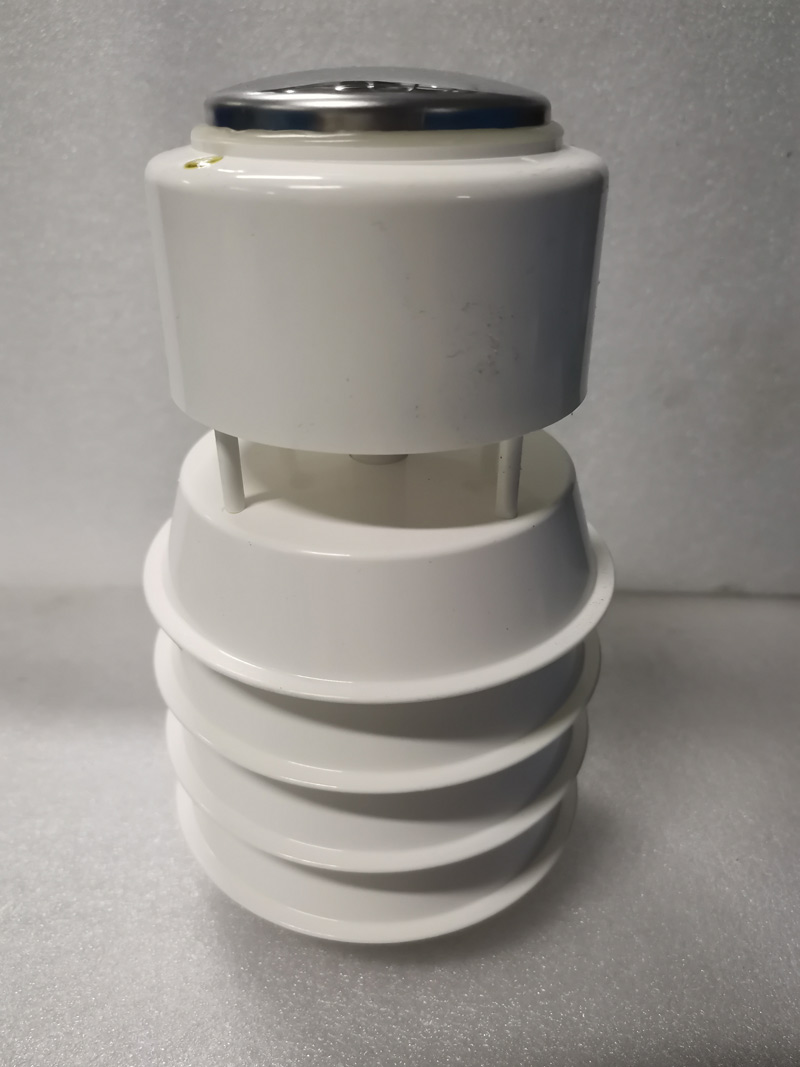
To ensure the authority of monitoring data, NiuBoL engineering team recommends following the WMO (World Meteorological Organization) installation standards during project implementation:
Open Area Principle: The anemometer should be installed in an area where the height of obstacles is more than 10 meters. If installed on a building, the theoretical installation height should be 1.5 times the building height.
Geographic North Alignment: During installation, use a standard compass to align the instrument's “north mark” with true geographic north; otherwise, wind direction data will have systematic deviation.
Avoid Turbulence Interference: The device should be kept away from trees, tall buildings, and large radar/radio transmitting devices. Radar scanning devices should maintain at least 2 meters horizontal distance from the sensor.
Stress Relief: When routing cables through mounting tubes, perform stress relief treatment. NBL-W-21GUWS uses a twist-lock connector; rotate the outer sleeve clockwise during installation to lock securely.
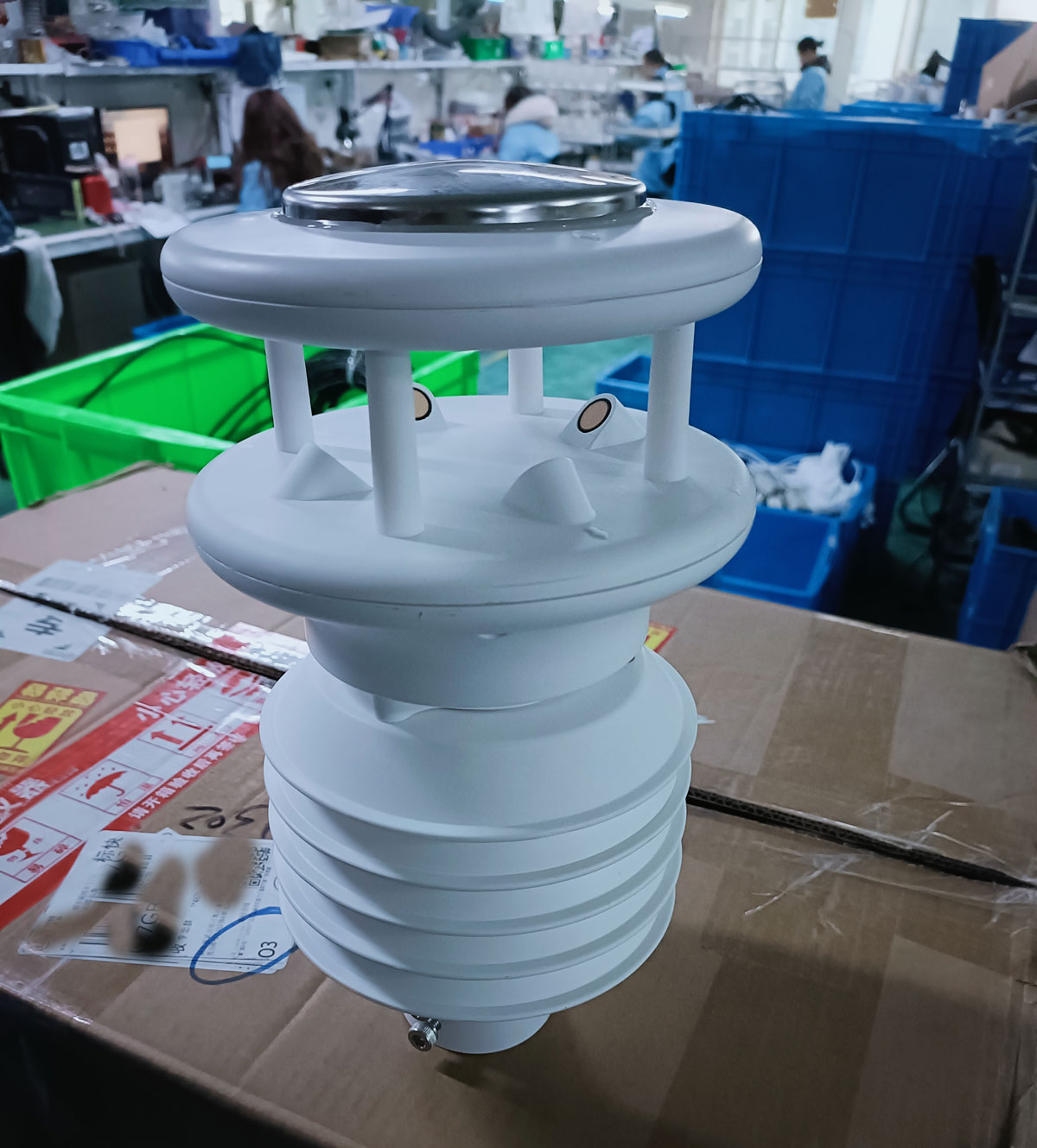
Q1: Why is an ultrasonic anemometer more durable than a mechanical cup anemometer?
A1: Mechanical anemometers have rotating parts; long-term operation leads to bearing wear, rust, or freezing by snow/ice. NiuBoL ultrasonic instruments adopt a fully solid-state structure with no moving parts, fundamentally eliminating mechanical wear and making long-term maintenance costs nearly zero.
Q2: Can the ASA engineering plastic housing be used in coastal areas?
A2: Yes. ASA material has excellent salt-fog corrosion resistance and UV resistance. Compared to ordinary ABS plastic, it does not become brittle under long-term exposure, making it very suitable for coastal ports, ships, and desert environments.
Q3: Under what conditions is the heating function necessary?
A3: In regions prone to icing such as Northeast China, Xinjiang, or high-altitude areas, it is recommended to select the optional 3W heating module. It effectively prevents ice formation on the transducer surface that would block normal ultrasonic transmission and reception.
Q4: Are there specific requirements for the mounting tube specifications?
A4: It is recommended to use a vertical mounting tube and reserve three M5 screw holes at 7.5mm from the top of the tube. NiuBoL equipment supports quick plug-in connection, offering extremely high installation efficiency.
Q5: How far can RS485 communication support?
A5: Under standard twisted-pair configuration, RS485 can support transmission up to 1200 meters. Combined with NiuBoL wireless gateway, 4G/5G remote data transparent transmission can be achieved.
Q6: Will strong radar signals nearby affect the measurement?
A6: Ultrasonic phase detection has certain resistance to high-frequency radio, but strong radar scanning interference may affect the signal chain. It is recommended to maintain more than 2 meters horizontal distance and ensure proper grounding of shielded cables.
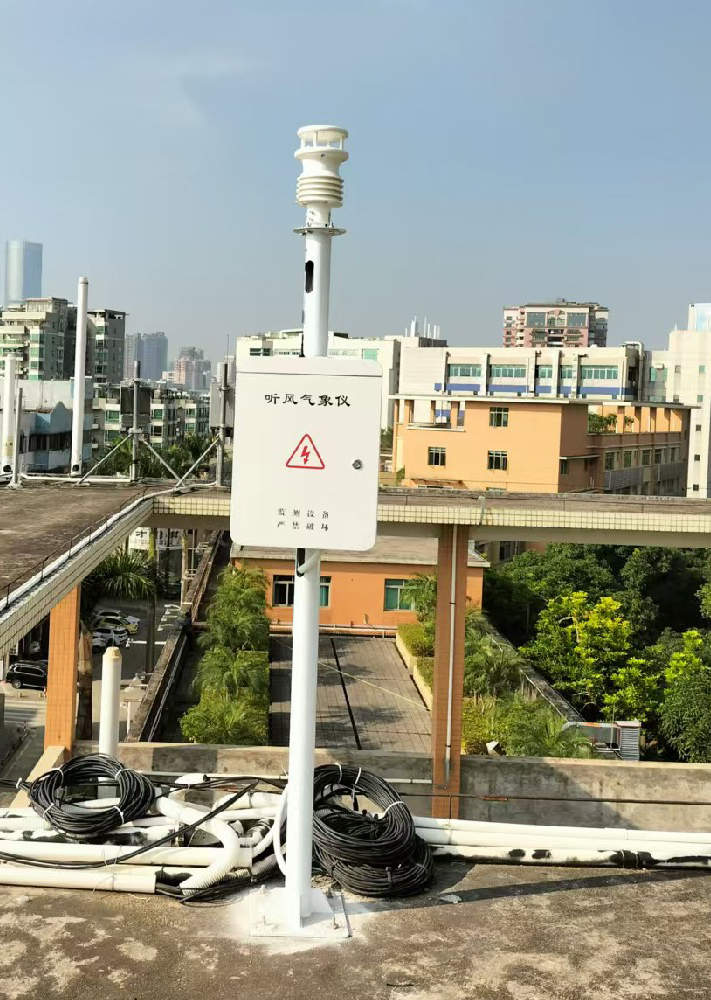
The defense against high-wind disasters relies on forward-looking early warning systems. NiuBoL ultrasonic wind speed and direction sensor, with its wear-free, digital, and highly integrated technical advantages, provides system integrators and engineering companies with a highly competitive hardware choice.
By integrating the NBL-W-21GUWS into wind power generation control, bridge traffic safety, and smart city monitoring systems, users can not only obtain high-precision real-time data but also significantly reduce long-term hidden operation and maintenance costs. NiuBoL will continue to focus on industrial-grade perception-layer technology, providing you with full-chain professional support from hardware supply to protocol integration.
If you are looking for a highly reliable wind monitoring solution, welcome to contact the NiuBoL technical sales team for detailed Modbus command set and bulk purchase discounts.
 All-in-One-Ultrasonic-Weather-Sensor-Instruction-Manual.pdf
NBL-W-61MUWS-Ultrasonic-Weather-Station-Instruction-Manual.pdf
Prev:Necessity of Agricultural Weather Stations in Large-Scale Cucumber, Wheat, and Vegetable Production
Related recommendations
Sensors & Weather Stations Catalog
Agriculture Sensors and Weather Stations Catalog-NiuBoL.pdf
Weather Stations Catalog-NiuBoL.pdf
Agriculture Sensors Catalog-NiuBoL.pdf
Water Quality Sensor Catalog-NiuBoL.pdf
Related products
 Combined air temperature and relative humidity sensor
 Soil Moisture Temperature sensor for irrigation|NBL-S-THR
 Soil pH sensor RS485 soil Testing instrument soil ph meter for agriculture |NBL-S-PH
 Wind Speed sensor Output Modbus/RS485/Analog/0-5V/4-20mA
 Tipping bucket rain gauge for weather monitoring auto rainfall sensor RS485/Outdoor/stainless steel
 Pyranometer Solar Radiation Sensor 4-20mA/RS485

Screenshot, WhatsApp to identify the QR code
WhatsApp number:+8615367865107
(Click on WhatsApp to copy and add friends)

