





— Blogs —
—Products—
 Consumer hotline +8618073152920
 WhatsApp:+8615367865107
Address:Room 102, District D, Houhu Industrial Park, Yuelu District, Changsha City, Hunan Province, China
Product knowledge
Time:2026-04-26 20:33:43 Popularity:439
In modern pharmaceutical and chemical production systems, the treatment of high-salinity wastewater remains a core challenge restricting corporate green transformation and compliance. Due to extensive acid-base neutralization and inorganic salt washing processes, such wastewater typically features high salinity, high organic load (COD), and strong biotoxicity.
For environmental system integrators and engineering contractors, single treatment technologies can no longer meet increasingly stringent environmental protection requirements. This article provides an in-depth analysis of the definition of high-salinity wastewater in the pharmaceutical and chemical industry, limitations of conventional treatment processes, and novel integrated solutions centered on the PSB biochemical system.
In engineering practice, high-salinity wastewater is generally defined as wastewater with a total dissolved solids (TDS) mass fraction exceeding 3.5%. However, in the pharmaceutical and chemical field, its complexity far exceeds conventional industrial wastewater:
High TDS content: After concentration by reverse osmosis (RO) and other technologies, the TDS mass fraction of concentrate often exceeds 8%; for some production lines with high-COD mother liquor, TDS even exceeds 15%.
Biochemical inhibition: When salinity exceeds 30,000 mg/L, conventional microorganisms undergo cell dehydration due to high osmotic pressure, rendering biochemical systems nearly ineffective.
Complex composition: Wastewater contains large amounts of benzene ring compounds, heterocyclic organic substances, and heavy metal ions, with an extremely low B/C ratio.
Currently, domestic pharmaceutical and chemical enterprises mostly adopt a combined process of "physical desalination + post biochemical treatment." However, in actual operation, technology selection directly impacts operating costs and effluent indicators.
Distillation is one of the most thorough methods for separating brine, utilizing thermal energy for phase change.
Multi-Effect Distillation (MED): Multiple evaporators are connected in series, using secondary steam from one effect as the heating steam for the next. Benefits: low-temperature operation, effectively reducing equipment corrosion, suitable for heat-sensitive substances.
Mechanical Vapor Recompression (MVR): A compressor is used to increase the enthalpy of secondary steam, enabling thermal energy recycling. Although initial equipment investment is higher, specific energy consumption is far lower than traditional multi-effect evaporation.
Membrane distillation combines membrane separation and distillation, driven by the vapor pressure difference across a hydrophobic microporous membrane. Its ability to treat high-concentration salt solutions is superior to reverse osmosis (RO). Experimental data show that even at NaCl concentrations of 5 mol/L, membrane distillation maintains a high desalination rate (>99%).
Although diluting with clean water to reduce salinity below 8,000 mg/L may marginally maintain biochemical operation, it leads to massive water waste and significantly increases facility size, substantially weakening product cost competitiveness and failing to meet current "dual carbon" and water-saving policy requirements.
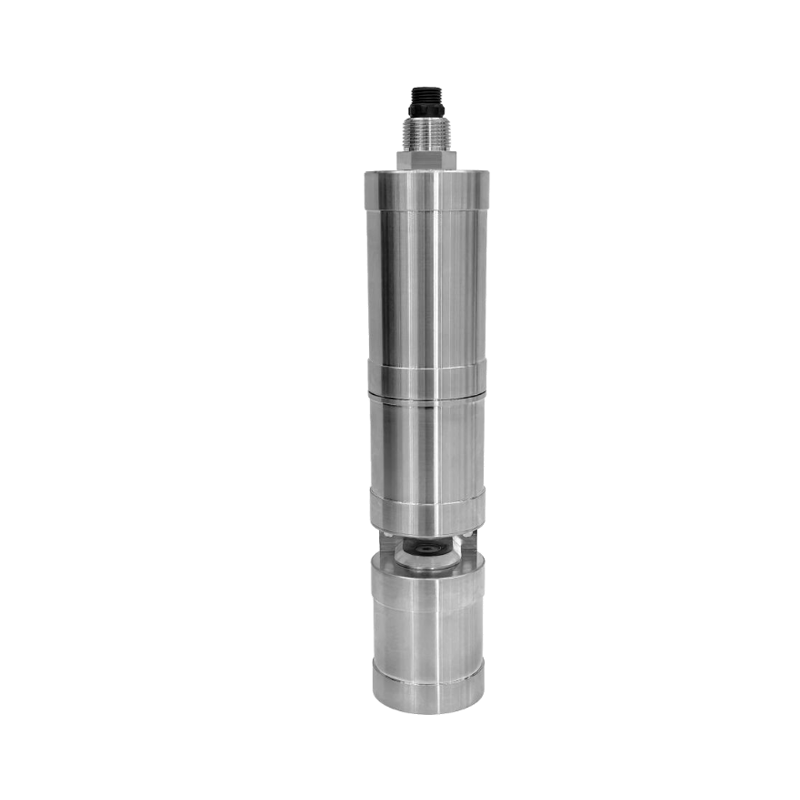
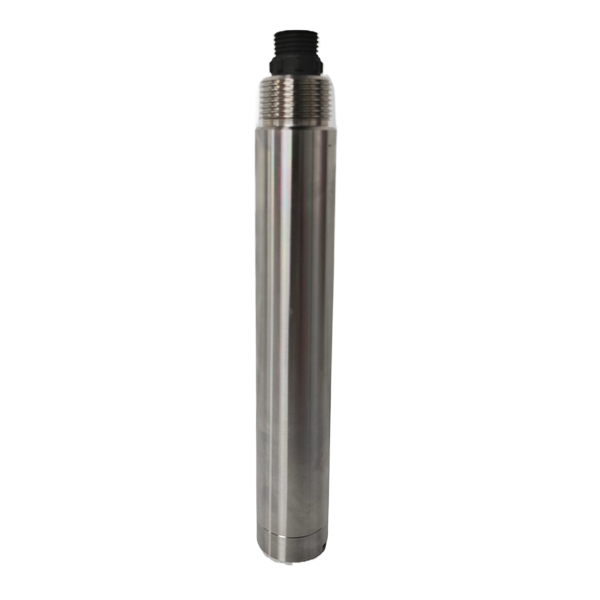
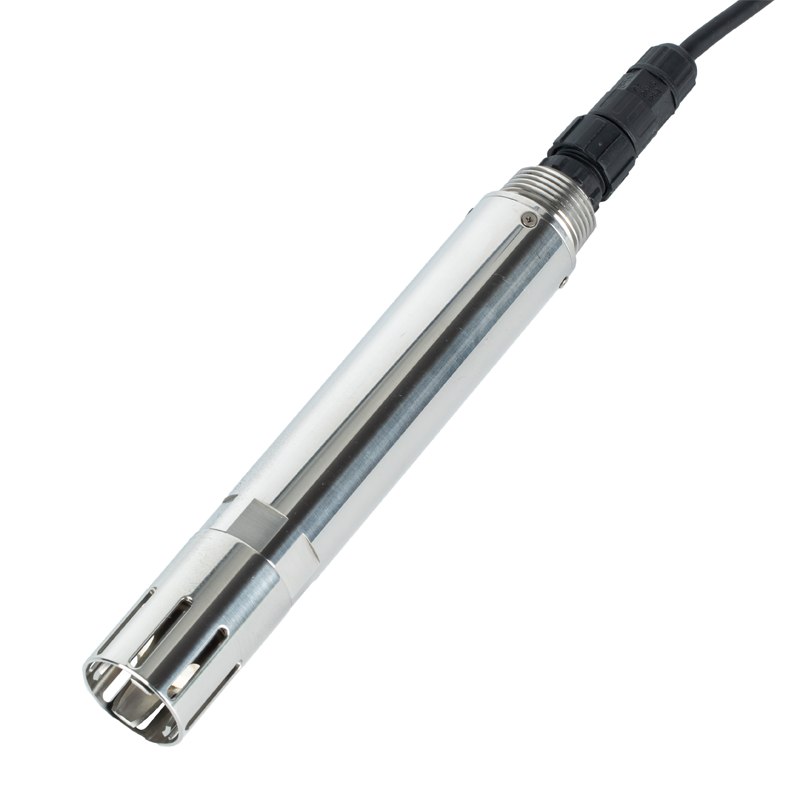
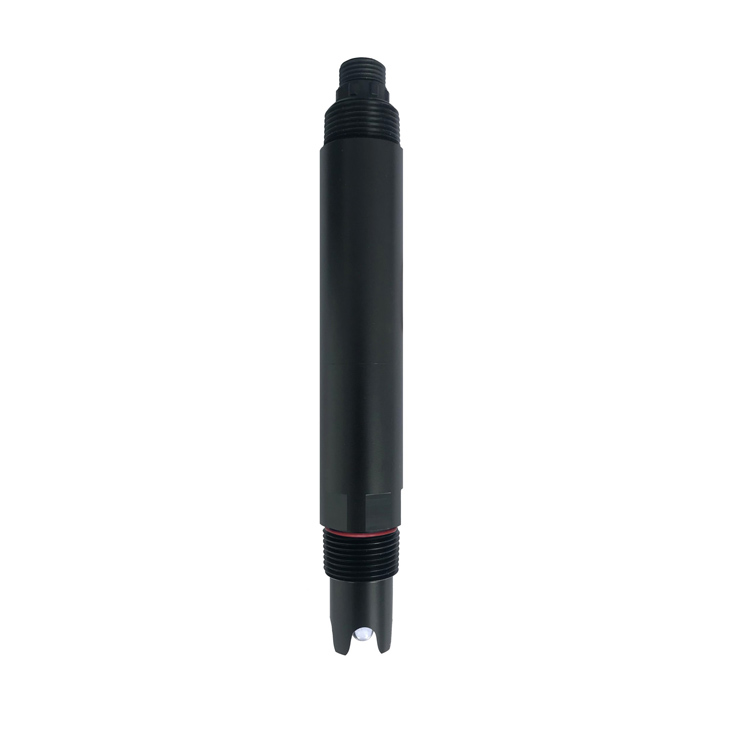
In high-salinity wastewater treatment processes, precise data monitoring is fundamental to process stability. NiuBoL is dedicated to providing high-standard water quality sensors for system integrators, ensuring system perception even in extreme high-salt environments.
| Parameter | Measurement Principle | Typical Range | Application Location |
|---|---|---|---|
| Industrial Conductivity/TDS Sensor | Electrolyte induction/electrode method | 0-200,000 mg/L | Distillate outlet/concentrate monitoring |
| Industrial Online COD Monitor | UV method/chemical method | 0-20,000 mg/L | Iron-carbon pretreatment inlet/outlet |
| Industrial Online pH Meter | Combined electrode method | 0-14 pH | Neutralization tank/Fenton reaction |
| Ammonia Nitrogen Monitor | Ion selective electrode method | 0-1,000 mg/L | PSB biochemical effluent |
| Dissolved Oxygen (DO) Sensor | Fluorescence method | 0-20 mg/L | A/O and PSB biochemical tanks |
To solve the "three highs" (high salt, high COD, high toxicity) that conventional processes cannot handle, the industry currently recommends the combination of "iron-carbon micro-electrolysis + PSB biochemical system."
Unlike traditional iron beds that are prone to passivation and scaling, the novel iron-carbon device utilizes flat, high-carbon pig iron blocks combined with a specially designed flow distribution system.
Mechanism: Utilizes the iron-carbon galvanic effect to generate micro-currents, breaking aromatic rings in organic compounds through electrochemical reduction, improving wastewater biodegradability (B/C ratio can be increased by 0.1-0.3).
Engineering advantages: Stable COD removal rate of 40%-60%, color removal rate exceeding 80%, and no frequent activation of filler required.
The PSB system is a breakthrough for treating high-salinity wastewater. Photosynthetic bacteria possess a unique photosynthetic system, maintaining metabolic activity under extremely high osmotic pressure.
Salt tolerance: PSB strains operate normally at salinities as high as 30,000-60,000 mg/L.
High-efficiency degradation: For high-concentration organic wastewater, PSB achieves COD removal rates of 70%-80%, with excellent nitrogen removal.
Integration advantages: The footprint is only 20%-25% of conventional activated sludge processes, with minimal seasonal temperature impact and excellent operational stability.
Project background: Wastewater from a pharmaceutical company in Zhejiang Province: COD 20,000 mg/L, total salinity 30,000 mg/L.
Process route: Equalization tank → Novel iron-carbon unit → Fenton reactor → PSB biochemical system → A/O process.
Operational results:
After iron-carbon pretreatment, COD significantly decreased and toxicity reduced.
The PSB system directly degrades organic matter in high-salinity wastewater without dilution.
Final effluent COD stabilized below 500 mg/L, meeting the third-level standard of the "Integrated Wastewater Discharge Standard" (GB8978-1996).
Q1: Why can't high-salinity wastewater be directly treated by conventional biochemical processes?
High salinity creates high osmotic pressure, causing plasmolysis (dehydration) of ordinary microorganisms, inhibiting enzyme activity, ultimately leading to sludge bulking or bacterial death.
Q2: How to prevent corrosion in MVR evaporators when treating pharmaceutical wastewater?
Due to the presence of chloride ions, equipment materials typically require titanium (TA2) or duplex stainless steel (2205), along with a front-end precise pH adjustment system.
Q3: What is the main advantage of the PSB biochemical system compared to conventional aerobic methods?
The greatest advantage is "tolerance." It can treat wastewater with COD exceeding 10,000 mg/L and salinity exceeding 3%, which is unattainable by conventional activated sludge processes.
Q4: How to avoid filler compaction during operation of iron-carbon units?
Use flat, high-activity filler combined with periodic water-air backwashing and a unique draft tube design, keeping the filler in a mildly fluidized state within the tower.
Q5: How to monitor desalination efficiency of a wastewater treatment system in real time?
By installing NiuBoL conductivity/TDS sensors with RS485 communication before and after distillation, system integrators can integrate real-time data into the SCADA platform to automatically calculate desalination rates.
Q6: What challenges does membrane distillation (MD) face in large-scale engineering applications?
Main challenges are membrane fouling and wetting. If pre-treatment is inadequate, surfactants or organic matter in wastewater can cause hydrophobic membranes to lose their hydrophobicity, leading to salt leakage.
Q7: What is the typical operating cost range for high-salinity wastewater treatment?
Depends on specific processes. Distillation processes are relatively expensive (30-60 RMB/ton), whereas PSB biochemical treatment costs less. Therefore, an integrated "physical concentration reduction + biochemical degradation" approach is the most cost-effective option.
Q8: Can frequent pH fluctuations in pharmaceutical wastewater affect sensor lifespan?
Yes. Therefore, in the pharmaceutical and chemical industry, industrial-grade electrodes with strong chemical resistance must be selected, equipped with automatic cleaning devices. Digital sensors supporting Modbus-RTU protocol are recommended to reduce signal attenuation.
Treatment of high-salinity wastewater in the pharmaceutical and chemical industry is a highly integrated engineering task. From front-end precision monitoring to mid-stream physical desalination and end-stage high-efficiency biochemical treatment, stability at each step determines final compliance. For system integrators, selecting mature MVR/MED technologies combined with PSB salt-tolerant bacteria, supplemented by high-precision water quality monitoring instruments (such as the NiuBoL series), is the inevitable path to building a cost-effective, highly stable wastewater treatment system.
As environmental standards become increasingly stringent, the combination of technological innovation and precise control will help pharmaceutical and chemical enterprises achieve green production, reduce environmental risks, and enhance global competitive advantages.
 NBL-RDO-206 Online Fluorescence Dissolved Oxygen Sensor.pdf
NBL-COD-208 Online COD Water Quality Sensor.pdf
NBL-CL-206 Water Quality Sensor Online Residual Chlorine Sensor.pdf
NBL-DDM-206 Online Water Quality Conductivity Sensor.pdf
Related recommendations
Sensors & Weather Stations Catalog
Agriculture Sensors and Weather Stations Catalog-NiuBoL.pdf
Weather Stations Catalog-NiuBoL.pdf
Agriculture Sensors Catalog-NiuBoL.pdf
Water Quality Sensor Catalog-NiuBoL.pdf
Related products
 Combined air temperature and relative humidity sensor
 Soil Moisture Temperature sensor for irrigation|NBL-S-THR
 Soil pH sensor RS485 soil Testing instrument soil ph meter for agriculture |NBL-S-PH
 Wind Speed sensor Output Modbus/RS485/Analog/0-5V/4-20mA
 Tipping bucket rain gauge for weather monitoring auto rainfall sensor RS485/Outdoor/stainless steel
 Pyranometer Solar Radiation Sensor 4-20mA/RS485

Screenshot, WhatsApp to identify the QR code
WhatsApp number:+8615367865107
(Click on WhatsApp to copy and add friends)

