





— Blogs —
—Products—
 Consumer hotline +8618073152920
 WhatsApp:+8615367865107
Address:Room 102, District D, Houhu Industrial Park, Yuelu District, Changsha City, Hunan Province, China
Product knowledge
Time:2026-06-10 10:00:41 Popularity:341
Quick Answer: Municipal residual chlorine monitoring should compare observations from defined supply zones with their sampling conditions and water history. A lower remote reading does not automatically mean the treatment-plant dose is wrong. Verify the local measuring point, disinfectant basis and flow first, then review source changes, storage and network operation before selecting a response.
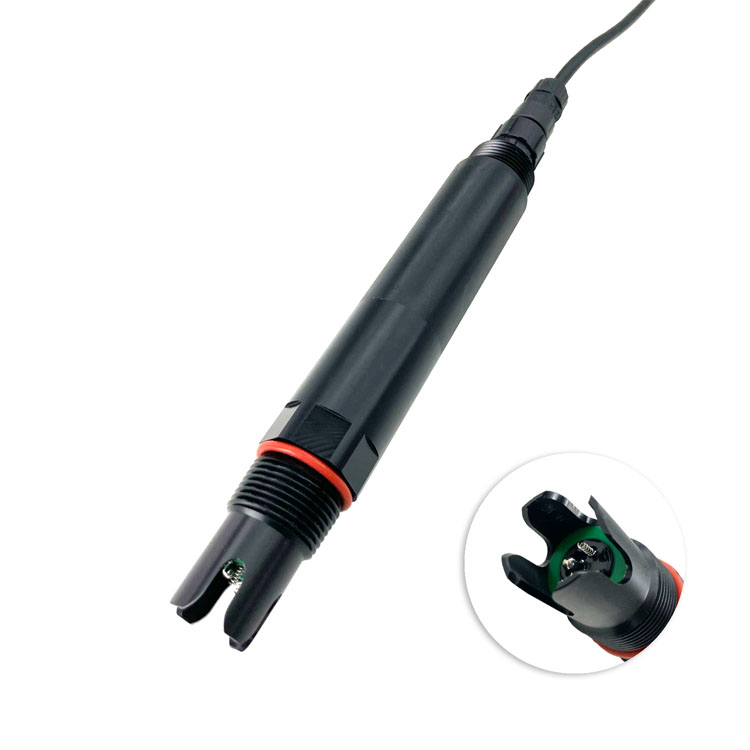
Water observed at a distant point may have entered the network earlier and passed through storage or mixed with another source. Comparing it with the current plant outlet can therefore combine different water histories. A change in the supply route can alter that relationship again.
Record the network location and zone, not just the analyzer address. Retain reservoir levels, relevant valve changes, source selection and other operating context where available. Estimate water travel and mixing using the utility's network information; a fixed time shift is not reliable when the hydraulic conditions change.
The EPA distribution-system resources discuss water age and disinfectant residual. They support investigating network conditions, not assigning one universal residual limit or proving the cause of a particular event.
| Observed pattern | First comparison | What not to conclude immediately |
|---|---|---|
| One remote point drops while nearby points do not | Fresh local reference, cell flow and sampling route | That the entire zone has the same residual |
| Several points change after a source or valve operation | Source identity, mixing and corresponding water periods | That all analyzers failed together or need a common offset |
| Residual changes with storage or demand pattern | Tank operation, water age and repeated local observations | That a single dosing increase is the only corrective action |
These patterns guide checks rather than establish a diagnosis. A genuine low residual requires the utility's operating response, while an invalid sample channel needs its own handling. Do not postpone required action solely because one possible cause has not yet been proved.
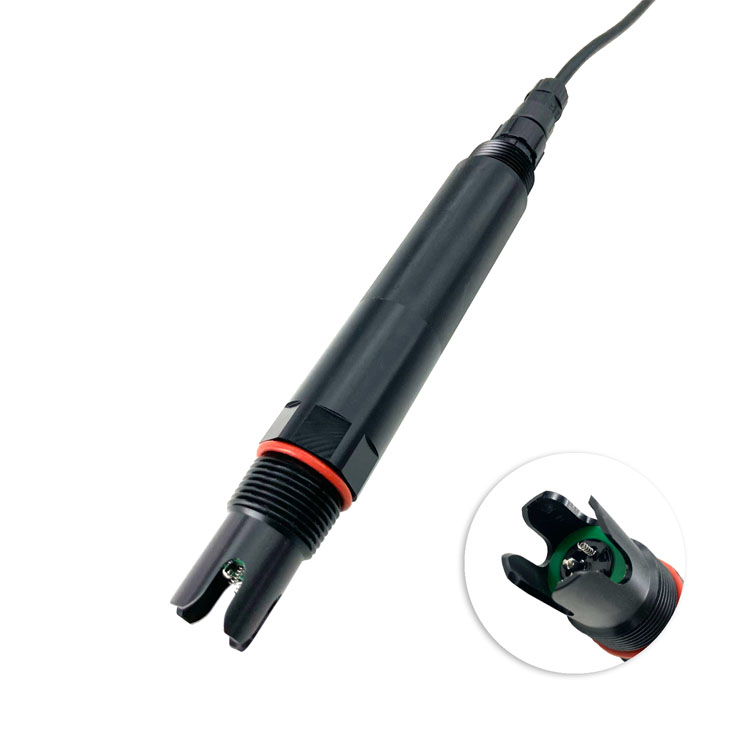
Identify whether each site reports free chlorine, total chlorine or another specific result. A free-chlorine-related channel and a total-chlorine analyzer are not interchangeable comparisons, particularly where chloramines are relevant. Keep the reference procedure and reporting basis with each point.
The NiuBoL basic CL is an HClO-based constant-voltage probe. Resolve its relationship to the requested free-chlorine determination for the actual water. Do not describe it as a total-chlorine instrument or assume its temperature compensation removes every effect of pH.
| Basic CL item | NBL-WQ-CL specification |
|---|---|
| Range / resolution | 0-2.000 mg/L HClO; 0.001 mg/L |
| Accuracy expression | +/-5% or +/-0.05 mg/L; confirm applicable basis |
| Sample conditions | 5-50 degrees C; below 0.1 MPa; pH 4-9 |
| Cell / flow | Matching flow cell; 30-60 L/h |
| Supply / consumption | 12-24 V DC; 0.2 W at 12 V |
| Signal / construction | RS485 Modbus RTU; POM and PTFE; IP68 |
| Cable | Standard 5 m; confirm jacket and external-joint compatibility |
Review the basic CL product limits against the point's normal and peak range. Do not assign the wider range, pressure limit or analog option of CL-4A to this model. An acceptable display increment also does not establish that a small difference between two stations is significant.
A distant tap, stagnant branch or long sample tube may not represent the desired network point. Disinfectant can change during transport, and a closed or restricted valve can leave the cell receiving old water. A live Modbus reply does not detect all such conditions.
Check sample flow at the cell and compare a fresh reference close to that location. Record any flushing or maintenance so the resulting transient is not mistaken for the normal zone condition. Use the utility's approved sampling and handling method.
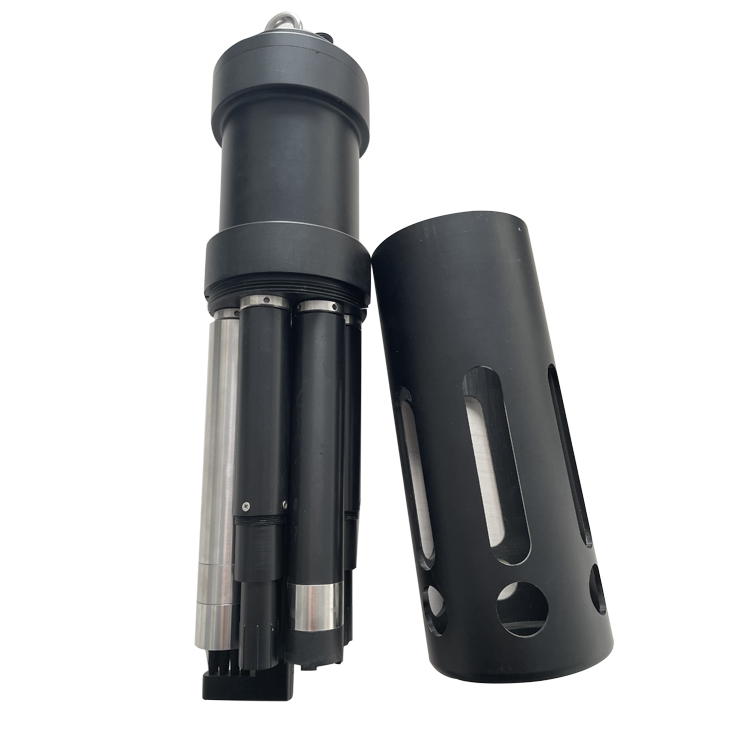
A multiparameter assembly can add context, as shown below. Conductivity, pH and temperature may help investigate a source change, but none independently proves the cause or supplies a missing chlorine fraction. Confirm its fitted channels before describing the station's capabilities.
Acquire the sensor through RS485 Modbus RTU into the RTU or logger, and preserve the measurement time separately from platform arrival time. Identify delayed uploads so a backfilled point does not appear to be a new live observation.
Maintain distinct states for communication loss, sample-flow concern, maintenance and a valid out-of-band result where those states are supported by the installed equipment. Do not replace a missing value with zero or silently extend the last observation through a long outage.
For procurement, specify a defined monitoring point rather than merely a network cabinet. Include the takeoff, pressure reduction, flow-cell arrangement, protected drain, power and service route. Remote access does not eliminate the need for local reference checks or periodic site visits.
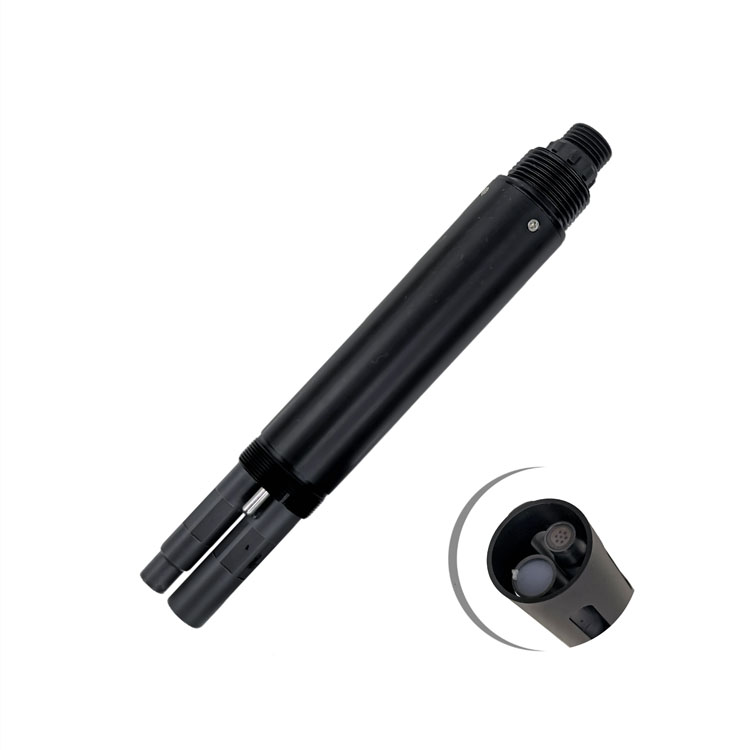
The separate probe illustration below does not establish identical channel wiring or maintenance. Keep the installed model and sample-point identity in the utility's record when equipment is replaced.
Only with the water's travel, storage and mixing considered. The two points may describe different water periods or sources.
No. Confirm the local observation and review other representative points. Follow required operating procedures while investigating the extent.
No. Keep the determination and reference basis explicit so comparisons and operating decisions use the intended quantity.
No. A responding instrument may still receive stagnant water. Check the installed sample-delivery information and cell flow.
Send the zone and sample location, disinfectant basis, concentration band, source and cell conditions, data destination and service access. Include any required sample-flow indication and upload behavior.
Municipal residual chlorine monitoring is most useful when supply-zone identity, sample conditions and time remain attached to the reading. Confirm local measurement validity before interpreting network patterns, and review the hydraulic context before treating every remote change as a plant dosing problem.
Prev:Water Quality Station Cabling: RS485 Routes and Field Voltage
Next:Multi-Pond Dissolved Oxygen Monitoring: Match Probes to Pond Records
Related recommendations
Sensors & Weather Stations Catalog
 Agriculture Sensors and Weather Stations Catalog-NiuBoL.pdf
Weather Stations Catalog-NiuBoL.pdf
Agriculture Sensors Catalog-NiuBoL.pdf
Water Quality Sensor Catalog-NiuBoL.pdf
Related products
 Combined air temperature and relative humidity sensor
 TDR Soil Moisture & Temperature Sensor for irrigation| RS485 |4-20mA| NBL-S-THR
 Soil pH sensor RS485 soil Testing instrument soil ph meter for agriculture |NBL-S-PH
 Wind Speed sensor Output Modbus/RS485/Analog/0-5V/4-20mA
 Tipping bucket rain gauge for weather monitoring auto rainfall sensor RS485/Outdoor/stainless steel
 Pyranometer Solar Radiation Sensor 4-20mA/RS485

Screenshot, WhatsApp to identify the QR code
WhatsApp number:+8615367865107
(Click on WhatsApp to copy and add friends)

