





— Blogs —
—Products—
 Consumer hotline +8618073152920
 WhatsApp:+8615367865107
Address:Room 102, District D, Houhu Industrial Park, Yuelu District, Changsha City, Hunan Province, China
Product knowledge
Time:2026-06-10 10:00:39 Popularity:1150
Quick Answer: Fishery water quality monitoring should combine a representative reference condition with observations at the sensitive habitat or receiving-water location. DO, pH, temperature and turbidity can identify changes that warrant investigation; they do not identify every toxic substance or prove the source of an event. Define the sampling response and responsible team before deploying a remote station.
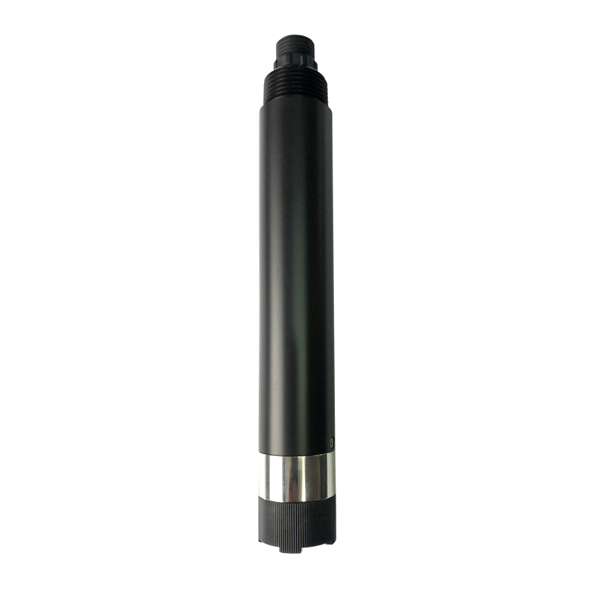
In a managed pond, an alarm may lead to checking an aerator. In a river reach, spawning area or cage-water boundary, staff may instead need to confirm an event, collect samples and notify the responsible manager. The same sensor parameter can therefore serve a different task.
State the protected location, observation period and action the record supports. A continuous DO trend is useful for recognizing a developing oxygen problem, but it does not establish that an upstream discharge caused it. Weather, flow, temperature, biological activity and local mixing also affect the result.
Use the applicable site and species requirements when defining an investigation threshold. Do not turn a sensor's measuring range or a generic freshwater pH recommendation into a universal habitat standard.
A reference point helps describe background conditions. It is useful only when its water and timing are relevant to the comparison. A point on a different tributary, at a different depth or under a different tidal influence may introduce another difference rather than explain the one being investigated.
The USGS guidance on continuous water-quality monitoring treats site selection, field operation and record handling as parts of the monitoring method. A station is not qualified by its sensor list alone.
| Site condition | Comparison issue | Design response |
|---|---|---|
| Possible discharge influence | Incomplete mixing and time of travel | Survey representative locations and compare corresponding water periods |
| Stratified lake or sheltered water | Different conditions by depth | Record depth and assess whether additional observations are needed |
| Estuarine or tidal location | Salinity and water movement change through the cycle | Retain tidal context and appropriate compensation inputs |
| Seasonal low water | Probe exposure or changed local exchange | Check the operating level range and retrieval arrangement |
Do not specify a universal distance between reference and event stations. Establish locations from the water movement and the question being answered. Document intentional relocation because it changes the meaning of the record.
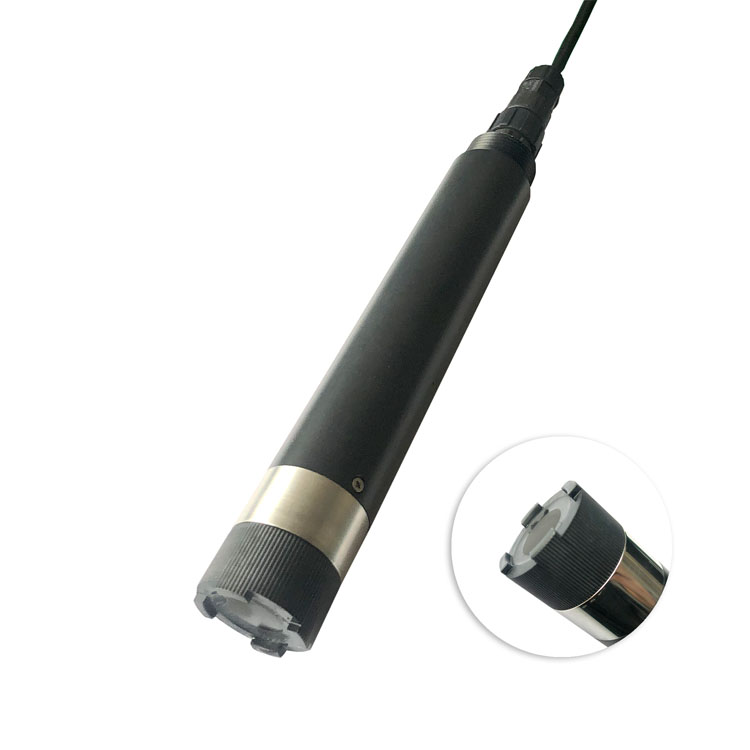
The basic NiuBoL NBL-WQ-DO differs from the DO-4A illustrated at the start of this page. Use the actual supplied model for range, accuracy, power and operating limits.
| Basic DO characteristic | NBL-WQ-DO |
|---|---|
| Method / range | Fluorescence quenching; 0-20.00 mg/L |
| Resolution / accuracy | 0.01 mg/L; +/-2% FS, equivalent to +/-0.4 mg/L over the span |
| Compensation | Pt1000 temperature compensation; configured salinity value |
| Operating water conditions | 0-45 degrees C; pressure below 0.2 MPa |
| Supply / consumption | 12-24 V DC; below 0.3 W at 12 V |
| Output / protection | RS485 Modbus RTU; IP68 |
| Construction / mounting / cable | POM and 316L; 3/4 NPT immersion; standard 5 m cable. Confirm jacket compatibility. |
The stated increment is not the measurement error. A project requiring smaller differences must assess the uncertainty of the complete comparison. Salinity compensation uses an entered or supplied setting; it is not an independent salinity measurement.
A falling DO trend with a temperature change raises different questions from a simultaneous turbidity and conductivity excursion. These patterns help choose what to check next, but do not identify a pollutant by themselves. Metals, pesticides and other specific hazards need appropriate sampling and analytical methods.
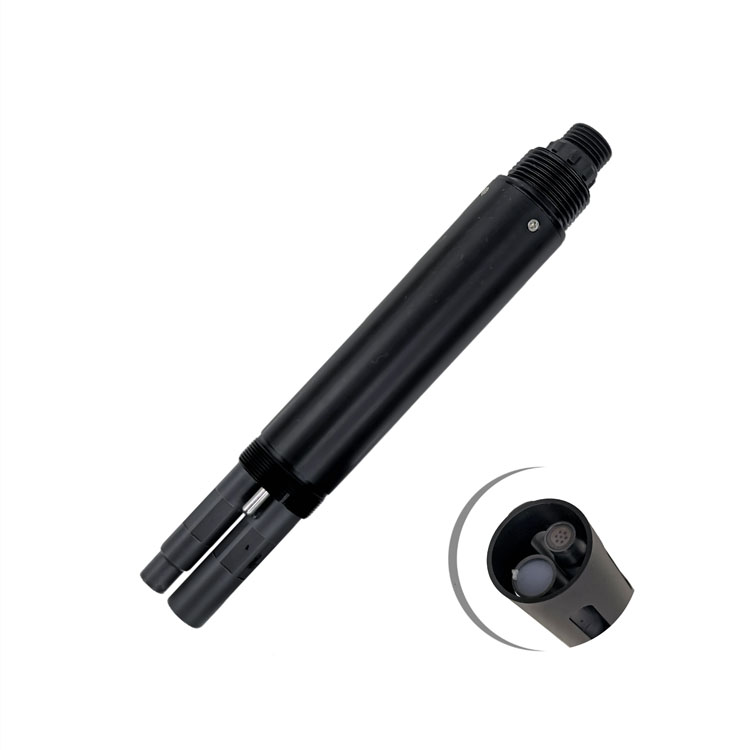
Keep each parameter's identity visible. Turbidity is not suspended-solids mass without a suitable relationship, and conductivity does not identify a particular dissolved salt. A familiar probe body, such as the separate example below, does not establish which channel is fitted.
Do not recalibrate immediately in order to remove an unexplained event from the trend. Preserve the original record and distinguish maintenance observations from water observations. If a sensor fault is found, qualify the affected data rather than presenting a reconstructed value as an original measurement.
Connect the probes through RS485 Modbus RTU to a suitable RTU or data logger. Record timestamps and validity, and confirm how the system behaves during communication or power loss. A gateway's online status does not prove that its submerged sensor is clean or still at the intended depth.
Size remote power for the logger, transmission equipment and all sensors, including cleaning loads where fitted. Set service access around actual water levels and safe retrieval. Freeze exposure, debris and changing currents require a site-specific installation review rather than reliance on an IP rating.
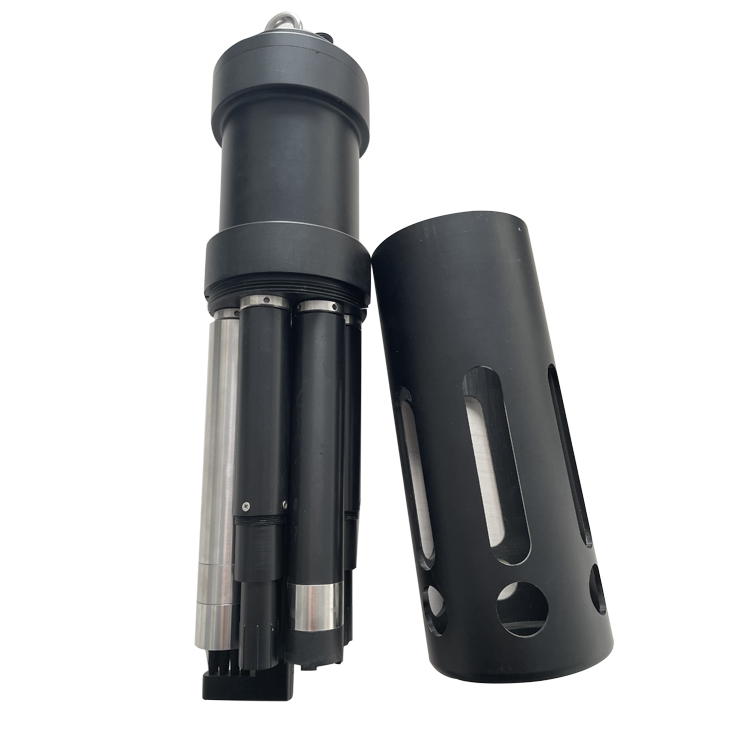
A multiparameter assembly can consolidate selected observations, as shown below. Specify the fitted channels and whole-assembly requirements; its consumption and accuracy need not match those of the standalone DO probe.
No. It identifies an oxygen observation requiring investigation. Source attribution needs appropriate spatial, timing and analytical evidence.
Not automatically. Review depth differences and the habitat being observed. A surface value cannot be assumed to describe deeper water.
No. Apply the requirements for the site, species and observation purpose. Keep those limits distinct from the instrument's operating range.
It measures only its fitted parameters and their specified methods. General pH, DO and turbidity channels do not replace testing for named toxic substances.
Provide habitat location, depth and water-level variation, salinity, seasonal conditions, target observations, response arrangements and power or network access. Identify any required independent analytical sampling.
Fishery water quality monitoring needs representative sites and a defined investigation response. Match NiuBoL sensor models to the required observations, preserve valid time and depth information, and use specific analyses where the decision concerns a named hazard. Continuous data can guide action without being overstated as proof of ecological condition or pollution source.
Prev:Chloramine Monitoring: When an HClO Probe Is the Wrong Choice
Next:Water Quality Station Cabling: RS485 Routes and Field Voltage
Related recommendations
Sensors & Weather Stations Catalog
 Agriculture Sensors and Weather Stations Catalog-NiuBoL.pdf
Weather Stations Catalog-NiuBoL.pdf
Agriculture Sensors Catalog-NiuBoL.pdf
Water Quality Sensor Catalog-NiuBoL.pdf
Related products
 Combined air temperature and relative humidity sensor
 TDR Soil Moisture & Temperature Sensor for irrigation| RS485 |4-20mA| NBL-S-THR
 Soil pH sensor RS485 soil Testing instrument soil ph meter for agriculture |NBL-S-PH
 Wind Speed sensor Output Modbus/RS485/Analog/0-5V/4-20mA
 Tipping bucket rain gauge for weather monitoring auto rainfall sensor RS485/Outdoor/stainless steel
 Pyranometer Solar Radiation Sensor 4-20mA/RS485

Screenshot, WhatsApp to identify the QR code
WhatsApp number:+8615367865107
(Click on WhatsApp to copy and add friends)

