





— Blogs —
—Products—
 Consumer hotline +8618073152920
 WhatsApp:+8615367865107
Address:Room 102, District D, Houhu Industrial Park, Yuelu District, Changsha City, Hunan Province, China
Product knowledge
Time:2026-06-10 10:00:43 Popularity:1014
Quick Answer: Heavy metal water monitoring requires a method that measures the specified element and reporting fraction. pH, conductivity and turbidity can describe changing water conditions, but they cannot identify a metal or establish its concentration. Select the metal analysis first, then add supporting NiuBoL sensors where their observations help the operator interpret an event.
A requirement for "heavy metals" is not yet an instrument specification. A source-water project concerned with dissolved lead has a different analytical requirement from a metal-finishing plant tracking total recoverable nickel. Chromium concentration and a chromium species determination are also different requests. Record the element, reporting fraction, concentration unit, decision limit and required method before comparing equipment.
The distinction affects sampling as well as the analyzer. Filtration, preservation and preparation can change which fraction is reported. Do not fit a protective filter to a total-recoverable monitoring line without evaluating what the filter removes. Conversely, suspended particles must not be included inadvertently in a result intended to describe a dissolved fraction.
EPA Method 200.8 treats dissolved and total recoverable determinations separately. It is an example of why the reporting requirement and preparation procedure belong together, not a claim that this method applies to every site, metal or online analyzer.
| Observation | Useful contribution | What it cannot establish |
|---|---|---|
| Target-metal analytical result | Concentration for the specified element, fraction and method | All metal species or fractions unless the method covers them |
| pH | Acid-base changes relevant to treatment and metal chemistry | Identity or concentration of a particular metal |
| Conductivity | Changes in the water's overall ionic condition | How much of that signal comes from lead, nickel or another target |
| Turbidity | Changes in light scattering associated with suspended material | Particulate metal mass or a universal NTU-to-metal conversion |
| Flow | Discharge context and, with compatible concentration data, load assessment | Concentration during an unmeasured interval |
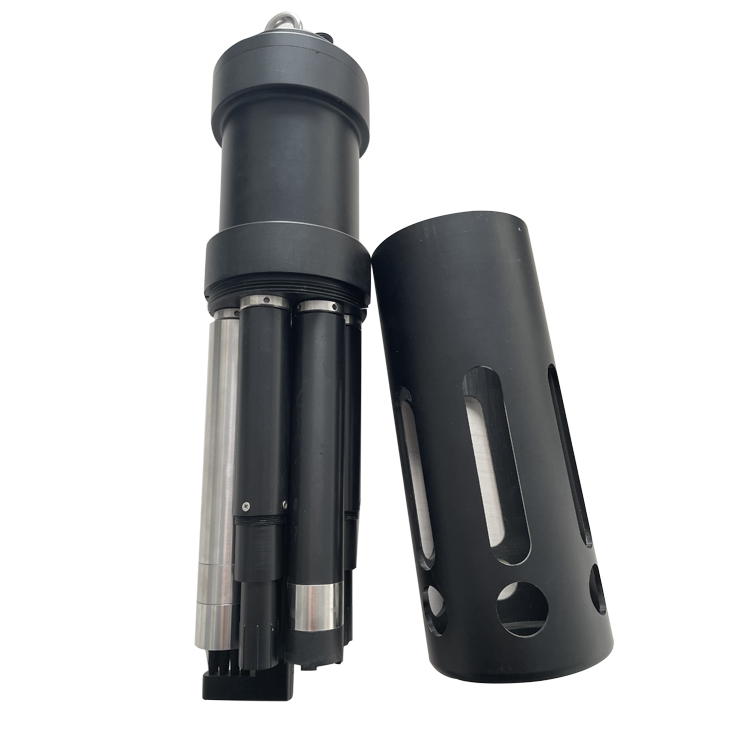
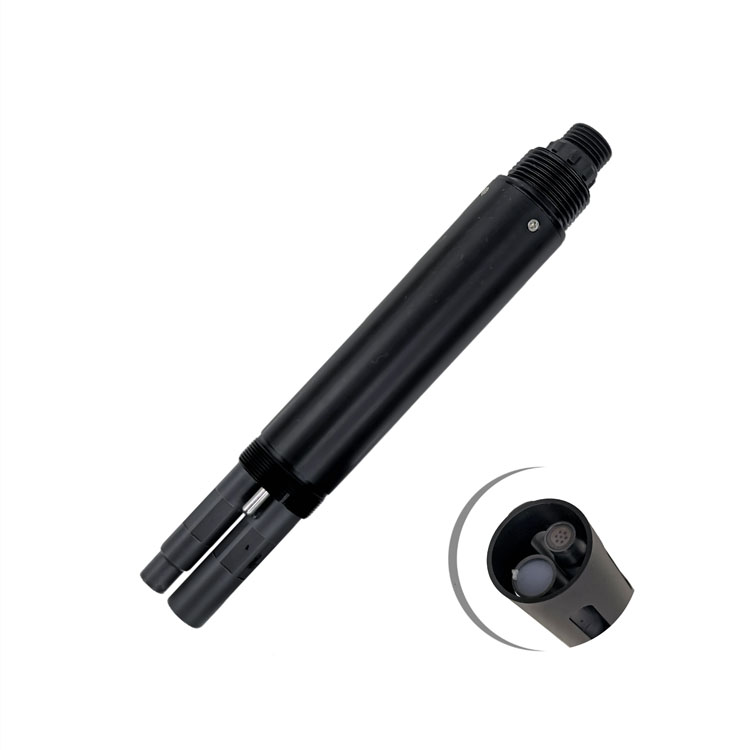
The NiuBoL multiparameter assembly shown at the beginning belongs in the supporting-observation layer. Its fitted channels must be specified individually. Neither the number of displayed parameters nor automatic brushing makes it a direct heavy-metal analyzer. The separate probe below likewise should not be identified as a metal analyzer merely from its appearance.
Consider a drainage point where turbidity rises after rain. Fine sediment may account for the change, but the optical record alone does not establish whether the sediment contains the target metal. A low turbidity reading likewise cannot rule out a dissolved metal increase. Use the event record to support the sampling response, not to replace the analysis.
For a source-water intake, place the observations where they describe water relevant to the intake and account for travel time. For a metal-treatment outlet, distinguish samples before settling from samples after solids separation. Changing the location can change the meaning of a trend even when the sensor itself has not changed.
A useful investigation compares the target-metal result with the local pH, turbidity, flow and production or rainfall record. Keep the sampling time, location and fraction visible. A laboratory result from another shift should not be placed beside an online peak as though both described the same sample.
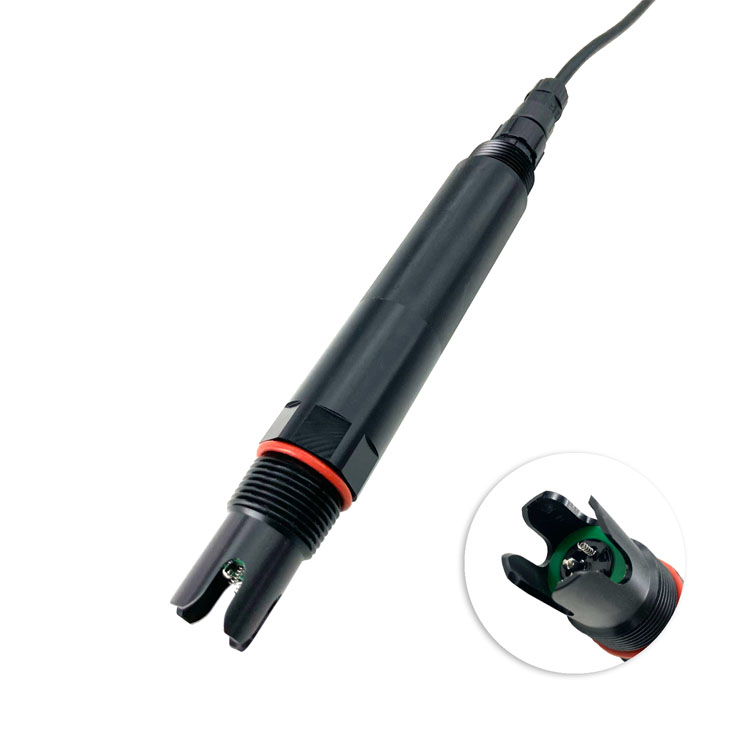
A residual-chlorine probe has a defined role where a process actually uses or monitors chlorine. It is not a detector for copper, cadmium or arsenic. If disinfection is outside the project's scope, a chlorine channel need not be part of the heavy-metal station quotation.
This matters when reusing an existing monitoring cabinet. Available channels can remain useful for their original tasks, but their labels must not imply a metal result. The chlorine electrode below illustrates a separate measurement, not an alternative metal-analysis technology.
For particle-related context, the NBL-WQ-TS turbidity sensor offers the following model-specific operating details. These are probe specifications, not the capabilities of the metal analyzer or the complete station.
| NBL-WQ-TS item | Specification |
|---|---|
| Range choices | 0-20, 0-100 or 0-1000 NTU |
| Resolution | 0.01 NTU for the 20 NTU range; 0.1 NTU for the other two ranges |
| 100 NTU range accuracy expression | +/-3% or +/-2 NTU; confirm the applicable percentage basis and rule |
| Medium conditions | 0-50 degrees C; below 0.2 MPa |
| Supply / consumption | 12-24 V DC; 0.2 W at 12 V |
| Digital output | RS485 Modbus RTU |
| Construction / protection | POM and ABS housing; IP68; standard 5 m cable |
Select the range for the expected water, including storms or solids carryover. Resolution is not accuracy, and a high-range optical probe should not be assumed suitable for a very small change near a clean-water baseline. Confirm chemical exposure and cable-jacket compatibility separately.
An immersed sensor can update more frequently than a reagent-based metal analyzer completes a cycle. Store the analyzer's sample or cycle information and validity state alongside its result. Polling the same completed result every second does not create a new metal analysis every second.
Check each device's actual output and register definitions. RS485 Modbus RTU on a supporting probe does not establish the interface of another manufacturer's analyzer. The data logger must distinguish a valid result, an incomplete cycle and a communication failure without converting any of them into a false zero concentration.
For an inquiry, give NiuBoL the supporting parameters, water conditions and acquisition interface. Specify the target-metal method and analyzer requirement separately. This lets the quotation distinguish the probes supplied from analytical equipment and sampling services that still need selection.
No. Different ions contribute to conductivity. A conductivity change can prompt investigation, but it cannot provide a selective lead, nickel or other metal concentration.
No. Decide from the required analytical fraction and method. A filter that protects an instrument may also remove material that belongs in a total-recoverable result.
No. Dissolved contamination may not cause a visible or measurable turbidity rise. Use the specified metal method even when the supporting optical channel appears normal.
Only after matching location, time, fraction, units and preparation. Investigate differences in sampling and method before attributing disagreement to instrument calibration.
The target metals, analytical sensitivity, sample preparation, number of locations and service requirements can change the equipment scope substantially. Quote supporting probes separately from the analyzer, reagents, waste handling and laboratory work; there is no defensible single price for all heavy-metal stations.
Heavy metal water monitoring starts with a defined analytical result. Add NiuBoL pH, conductivity or turbidity observations where they answer a specific process question, and preserve their limits in the display and reports. Supporting trends help explain when and where to investigate; they do not certify the absence of metals.
Prev:Multi-Pond Dissolved Oxygen Monitoring: Match Probes to Pond Records
Next:Turbidity Monitoring for Changing Source Water: Normal Bands and Event Peaks
Related recommendations
Sensors & Weather Stations Catalog
 Agriculture Sensors and Weather Stations Catalog-NiuBoL.pdf
Weather Stations Catalog-NiuBoL.pdf
Agriculture Sensors Catalog-NiuBoL.pdf
Water Quality Sensor Catalog-NiuBoL.pdf
Related products
 Combined air temperature and relative humidity sensor
 TDR Soil Moisture & Temperature Sensor for irrigation| RS485 |4-20mA| NBL-S-THR
 Soil pH sensor RS485 soil Testing instrument soil ph meter for agriculture |NBL-S-PH
 Wind Speed sensor Output Modbus/RS485/Analog/0-5V/4-20mA
 Tipping bucket rain gauge for weather monitoring auto rainfall sensor RS485/Outdoor/stainless steel
 Pyranometer Solar Radiation Sensor 4-20mA/RS485

Screenshot, WhatsApp to identify the QR code
WhatsApp number:+8615367865107
(Click on WhatsApp to copy and add friends)

