





— Blogs —
—Products—
 Consumer hotline +8618073152920
 WhatsApp:+8615367865107
Address:Room 102, District D, Houhu Industrial Park, Yuelu District, Changsha City, Hunan Province, China
Product knowledge
Time:2026-02-06 17:37:36 Popularity:661
Ultrasonic wind sensor data must be decoded and summarized correctly before it is useful in a PLC, RTU or weather database. A valid reply can still become the wrong wind speed through an incorrect scale factor, or the wrong direction through arithmetic averaging. For the NiuBoL NBL-W-21GUWS, begin with its two wind registers and the acquisition period; treat cloud access, statistics and control functions as separate integration tasks.
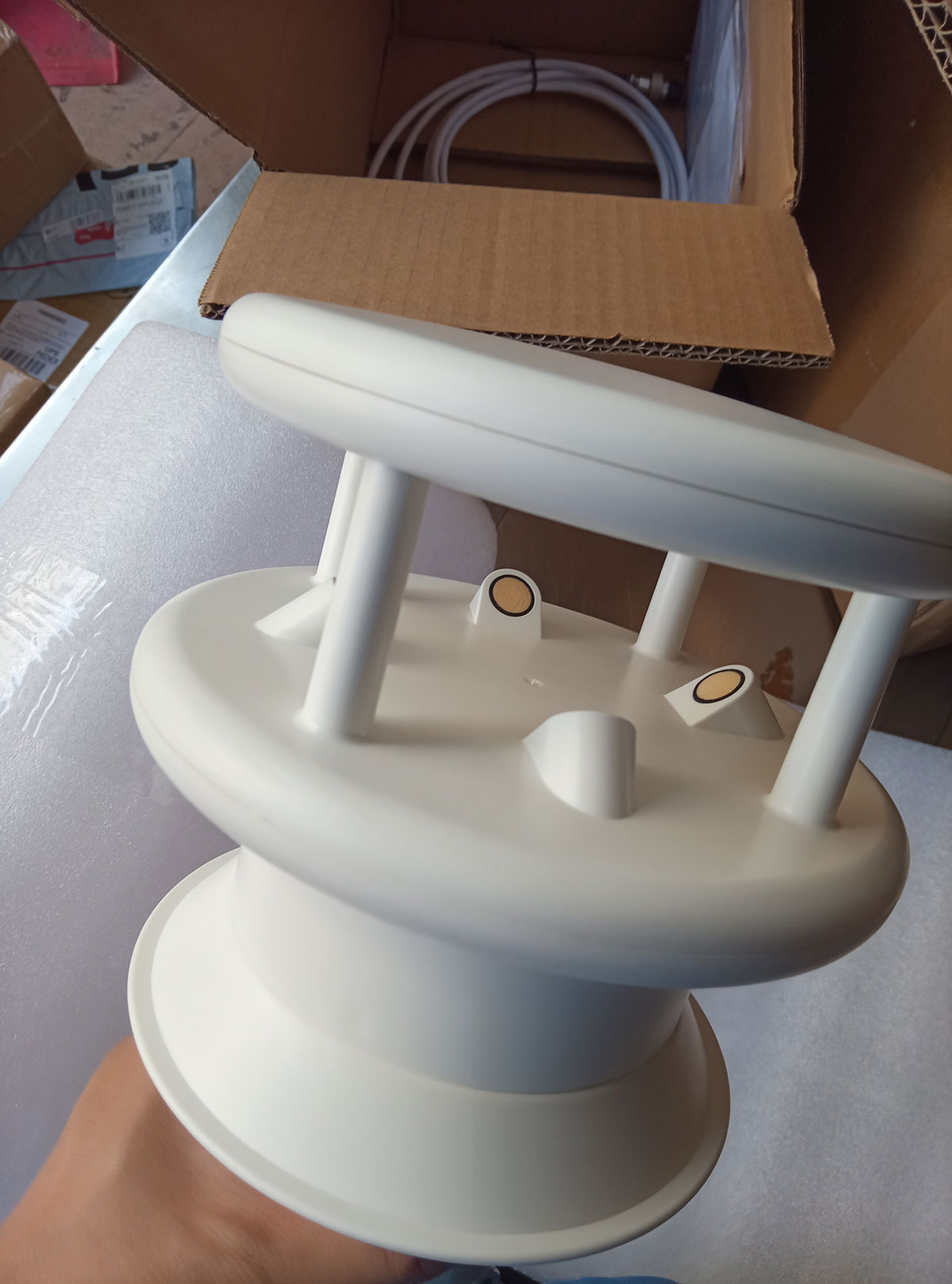
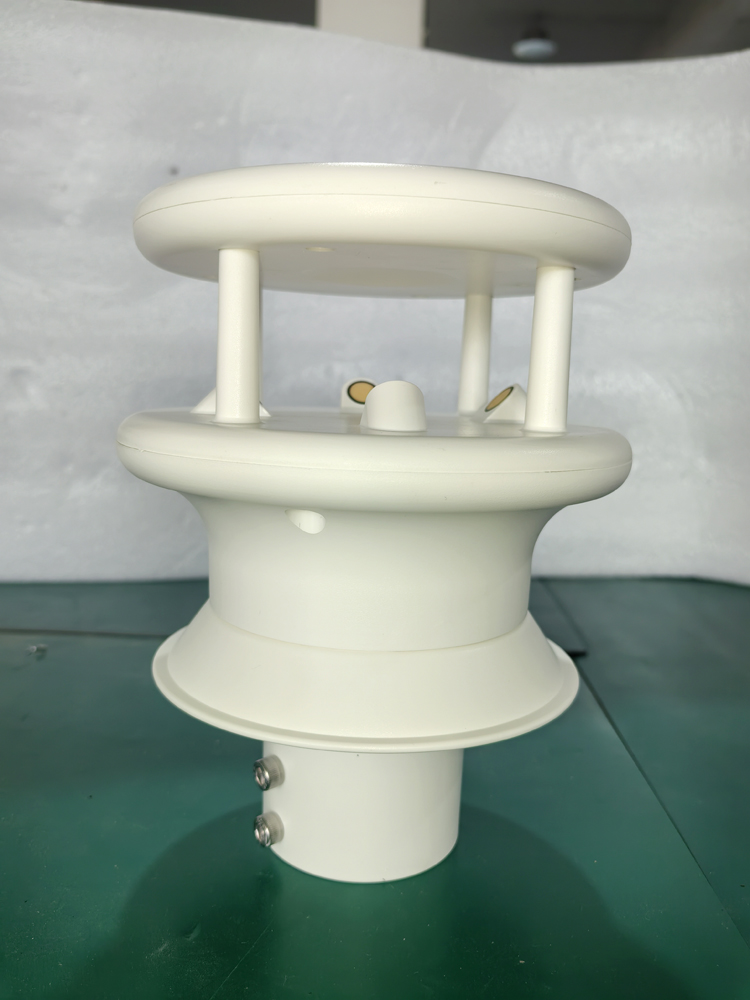
NBL-W-21GUWS uses ultrasonic travel times in opposing directions to derive horizontal wind speed and direction. It has no rotating cup or vane. That removes those mechanical wear components, but does not establish a ten-year service life, sub-100 ms output, turbulence measurement or unrestricted winter operation.
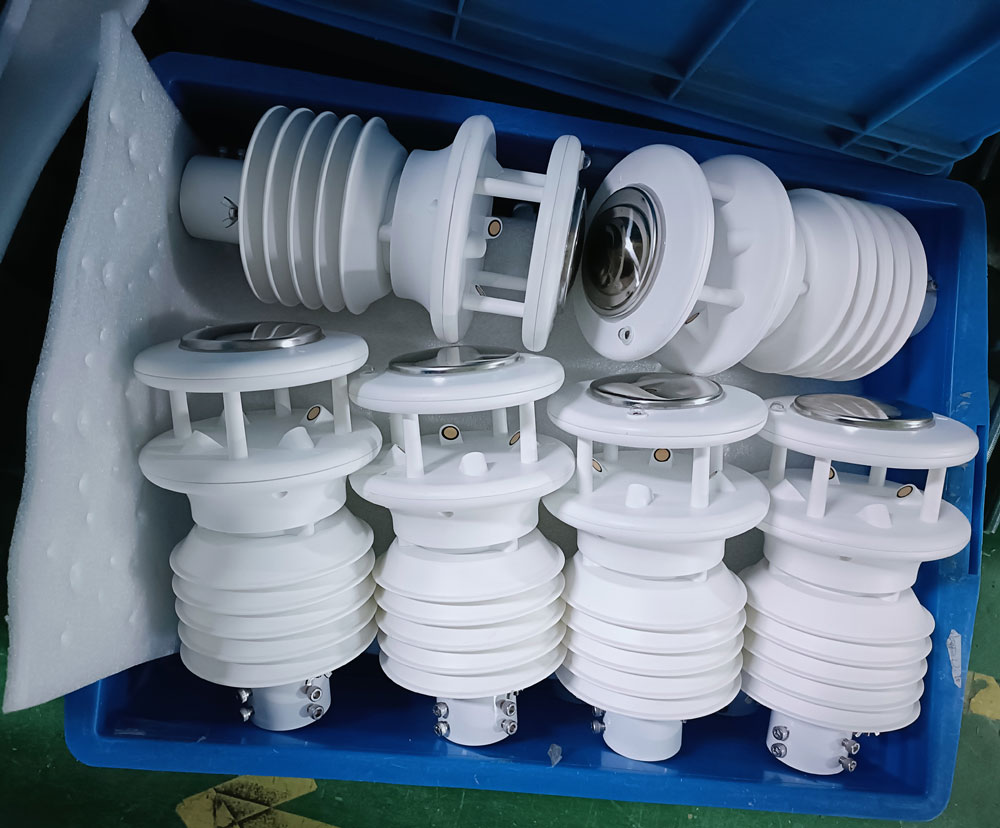
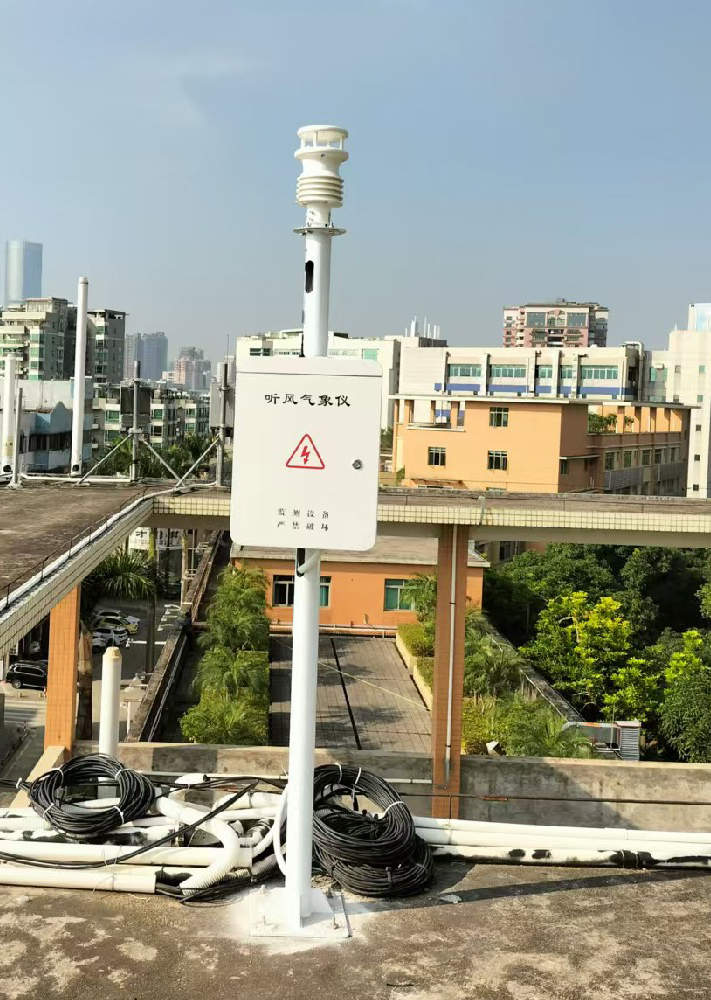
The two-parameter configuration below reports wind speed and direction. Photographs of related multiparameter heads illustrate other configurations, not additional channels automatically present in every 21GUWS. Temperature, pressure, particle concentration and rainfall require the appropriate supplied hardware and data definition.
| Item | Two-parameter configuration |
|---|---|
| Wind speed | 0-60 m/s; 0.01 m/s resolution |
| Wind-speed accuracy expression | +/-(0.5 m/s + 3% FS) for the configuration described here; confirm the offered revision |
| Wind direction | 0-359 degrees; +/-3 degrees accuracy; 1 degree resolution |
| Supply and interface | 12-24 V DC; RS485 Modbus RTU |
| Communication settings | 9600 bps; 8 data bits; no parity; at least 1,000 ms between communications |
| Environmental limits | -20 to +80 C; 0-100% RH; IP65 |
| Heating | Optional 3 W function, not the total station power |
Read the accuracy expression as well as the resolution. If full scale is 60 m/s, 3% FS is 1.8 m/s; adding 0.5 m/s gives a 2.3 m/s numerical bound for that expression. It is not 3% of the current reading, and it is not 0.01 m/s. Confirm the accuracy applicable to the supplied revision before using it in a low-wind assessment.

For device address 1, the two-register read request is 01 03 00 00 00 02 C4 0B. It uses function 0x03, starting register 0x0000 and a register count of two. The request is for the documented two-channel arrangement; do not increase the count and assume that unused addresses contain optional weather measurements.
A response example has the header and data bytes 01 03 04 01 10 00 B0, followed by its CRC. The four data bytes contain two 16-bit values. The first word, 0x0110, is decimal 272. Multiplication by 0.01 gives 2.72 m/s. The second word, 0x00B0, is decimal 176 and represents 176 degrees.
| Data bytes | Integer | Engineering value |
|---|---|---|
| 01 10 | 272 | 2.72 m/s |
| 00 B0 | 176 | 176 degrees |
The letters CRC in a printed example are a placeholder, not bytes to transmit. Use a suitable Modbus driver to validate the actual response address, function, byte count and checksum. Do not accept two plausible numbers from a damaged or mismatched frame merely because both fall within the measuring range.
Some PLC drivers display the first holding register as 40001, while protocol messages use an offset such as 0x0000. Configure according to the driver's addressing convention. A one-register offset can swap the intended quantity or return another value without an obvious serial-port error. Keep the raw response beside the decoded tags during initial testing.
The documented communication spacing is at least one second. A successful one-second polling cycle does not establish a sub-second physical response or a standards-defined gust record. The receiving application must define whether it stores an instantaneous reported value, an interval mean or the maximum of the collected samples.
For an illustrative ten-minute record with one-second polling, 600 successful reads could be expected if the schedule remains uninterrupted. If only 450 valid samples arrive, the record has 75% sample coverage. That arithmetic does not define an acceptable completeness threshold; the project must assign one based on the intended analysis.
Store sample count and valid duration with the statistic. A mean calculated from the first few seconds should not be labeled as an equally representative ten-minute observation. Avoid repeating the last value to create 600 apparently valid samples after communication stops. Preserve a distinction between observation time and the time the server receives a delayed record.
Wind direction is circular. Equal-weight directions of 350 and 10 degrees are centered around north, not at the arithmetic mean of 180 degrees. Calculate a circular mean using the chosen directional convention. If directions are widely opposed, the resultant may be too small for a meaningful mean direction; a software value of zero degrees must not silently stand in for that uncertainty.
Scalar mean speed and vector-mean speed answer different questions. Two equal-duration observations of 5 m/s from opposite directions have a scalar mean speed of 5 m/s, while their mean velocity vector cancels. The latter does not mean the air was calm during the period. Choose the statistic required by the consuming application and label it accordingly.
These distinctions matter for pollutant dispersion studies, irrigation spray decisions and crosswind assessments. A wind rose typically relates directional sectors to valid observations or their selected weighting. Its result depends on how calm periods and missing values are handled. A two-dimensional wind head does not provide vertical velocity or the complete high-frequency measurements needed for turbulent flux calculations.
State whether direction means where the wind comes from or where it travels toward. Also state the north reference and any orientation correction applied by the logger. A mathematically correct conversion can still rotate a dispersion plot or reverse a crosswind sign if those conventions differ between the sensor tags and the application.
A timeout is not zero wind. A disconnected cable, failed checksum or unexpected frame must generate an appropriate quality condition rather than a fabricated calm observation. Use the invalid-data definitions of the supplied instrument and driver; do not import a sentinel value from an unrelated sensor model.
For display and alarm purposes, retain the age of the last valid observation. If communications stop while the last reading was low, a frozen green status can conceal the loss of monitoring. Conversely, a stale high reading should not create repeated new events without the configured alarm policy. Set freshness limits in relation to the task and acquisition interval.
Where a sensor is mounted on a moving platform, reported wind is relative to the instrument unless the larger system performs the required heading and motion corrections. Do not label it true wind solely because the data is digital. Platform speed, heading, timing and coordinate definitions belong to that separate calculation.
The NBL-W-21GUWS ultrasonic wind sensor provides the serial measurement input. A gateway may then publish records to a server if that function is included and configured. MQTT, Ethernet access, historical storage and retransmission are not implied by the sensor's RS485 interface.
A quotation request should therefore identify the consuming PLC or logger, required statistics, sample interval, data-retention period and upstream interface. Ask for the matching register definition and an example record containing units, time and quality information. Where the specification requires gusts, obtain the exact averaging and sampling method instead of accepting a dashboard label.
Power scope also needs care. The optional 3 W heater is a separate load from the rest of the installation. Its presence does not prove every icing condition can be managed or that the nonheated operating limit can be ignored. Include the offered electronics, heater control, logger and backhaul in the energy budget.
At handover, repeat the known-frame decoding test in the actual controller, then demonstrate loss of response and recovery. Review one exported interval manually against its valid samples. That checks the point where many integration errors appear: the transition from correct serial bytes to an apparently credible but incorrectly summarized database record.
The wind-speed word uses a 0.01 scale in the two-parameter arrangement described here. Convert decimal 272 to 2.72 m/s. Confirm that the driver has not already applied this scale before applying it again.
No. Resolution describes reported increments. Accuracy has a separate expression and must be checked for the offered configuration. Do not substitute the smallest displayed increment for the measurement error allowance.
No, not across the north boundary. Use a circular or appropriate vector method, document weighting and handle a near-zero resultant explicitly. Ordinary arithmetic can turn two near-north observations into a false south direction.
It is the maximum of the values acquired under that polling arrangement. A gust definition may require a particular averaging interval and sampling method. Verify those requirements separately rather than renaming the maximum tag.
No. Mark it as unavailable or stale according to the integration design. Zero wind is a measurement value, while a timeout means the current value was not obtained.
The configuration described here supplies RS485 Modbus data. Remote upload requires the appropriate acquisition and communication equipment. Specify the upstream protocol and record format as separate purchased functions.
Useful ultrasonic wind sensor data starts with correct register offsets, scaling and units. It remains useful only when averaging, coverage, direction convention and validity are preserved. For NBL-W-21GUWS integration, verify a known response in the real controller and define the statistics the project needs before treating a live dashboard as an accepted wind-data system.
 NBL-W-21GUWS-Ultrasonic-Wind-speed-and-direction-Sensor.pdf
NBL-W-61MUWS-Ultrasonic-Weather-Station-Instruction-Manual.pdf
NBL-W-71MUWS-Micrometeorological-Sensor-Operating-Instructions.pdf
Prev:Farmland Weather Station for Precision Agriculture Projects
Next:PV Weather Station Sensor Schedule: Channels and Signal Versions
Related recommendations
Sensors & Weather Stations Catalog
Agriculture Sensors and Weather Stations Catalog-NiuBoL.pdf
Weather Stations Catalog-NiuBoL.pdf
Agriculture Sensors Catalog-NiuBoL.pdf
Water Quality Sensor Catalog-NiuBoL.pdf
Related products
 Combined air temperature and relative humidity sensor
 TDR Soil Moisture & Temperature Sensor for irrigation| RS485 |4-20mA| NBL-S-THR
 Soil pH sensor RS485 soil Testing instrument soil ph meter for agriculture |NBL-S-PH
 Wind Speed sensor Output Modbus/RS485/Analog/0-5V/4-20mA
 Tipping bucket rain gauge for weather monitoring auto rainfall sensor RS485/Outdoor/stainless steel
 Pyranometer Solar Radiation Sensor 4-20mA/RS485

Screenshot, WhatsApp to identify the QR code
WhatsApp number:+8615367865107
(Click on WhatsApp to copy and add friends)

