





— Blogs —
—Products—
 Consumer hotline +8618073152920
WhatsApp:+8615367865107
Address:Room 102, District D, Houhu Industrial Park, Yuelu District, Changsha City, Hunan Province, China
Product knowledge
Time:2026-05-09 10:57:10 Popularity:507
A water quality sampler collects water; a retained-sample system keeps identified portions available for later analysis under defined conditions. These functions can exist in the same machine. Portable versus fixed installation does not establish the difference, and neither refrigeration nor Modbus communication alone proves that the sample represents an online event.
A field team may need discrete bottles from several locations. A plant may need a composite over a discharge period. An event investigation may need separate samples before, during and after an online excursion. Each task requires a collection program; retaining the bottles adds storage, identification and retrieval requirements.
The terms sampler and retained-sample device are used differently across equipment catalogues. Compare the actual functions rather than assuming that one name means portable and the other means fixed. A refrigerated automatic sampler may perform routine collection and event retention, while a basic portable pump may do neither automatically.
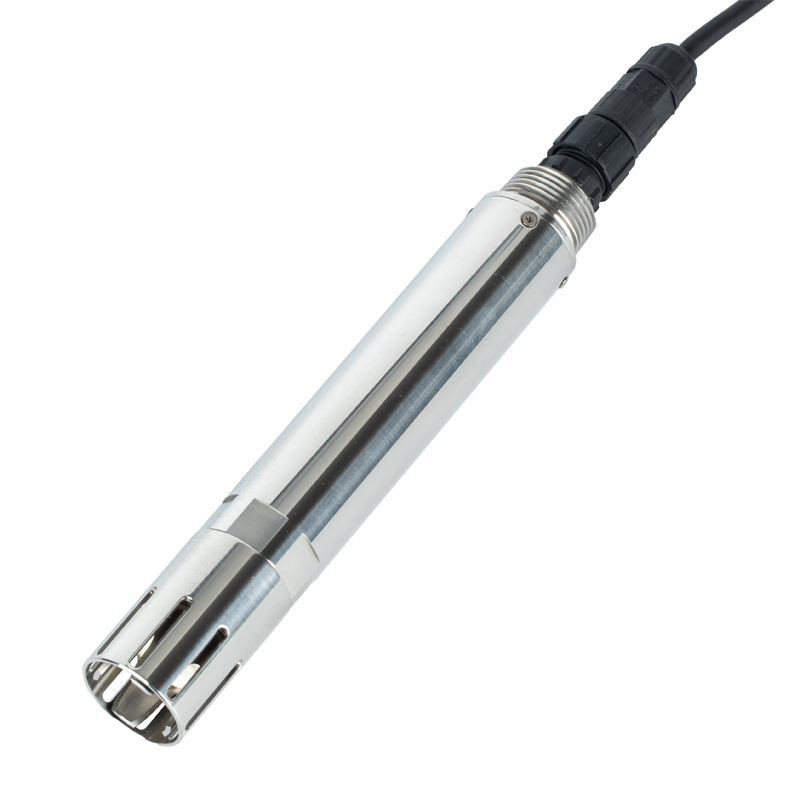
The NiuBoL pH probe shown above is an online measurement channel, not a sampling pump or refrigerated cabinet. It illustrates a signal that could help identify a sampling event when a separately specified controller and sampler support that function. Sensor supply and sample-handling equipment are different parts of the project.
| Required task | Function to specify | What to demonstrate |
|---|---|---|
| Discrete collection | Separate portions at the intended locations or times | Actual water arrival, correct bottle and identifiable collection event |
| Composite collection | Defined aliquots combined under a time or flow basis | Correct interval, delivered volumes and relevant flow input |
| Event retention | Keep the required event portions without unintended mixing or overwrite | Event-to-bottle association, occupied positions and retrieval record |
| Sample preservation | Suitable container, temperature and any method-specific treatment | Conditions actually experienced by the sample until analysis |
| Long-term installation | Power, weather protection, drainage and maintenance access | Operation under the site's exposure and service constraints |
Online measurements and bottle analysis can describe different conditions. Water may change during transport and storage. For pH and dissolved oxygen, direct field observations can be important because temperature and gas exchange can affect a later determination. Do not promise that refrigeration preserves every property unchanged.
The USGS automatic-sampling guidance calls for evaluating representativeness and selecting preservation for the actual constituents. Its equipment discussion also distinguishes automatic triggering, sample delivery and refrigeration. These are useful design questions, not a universal specification for every sampler.
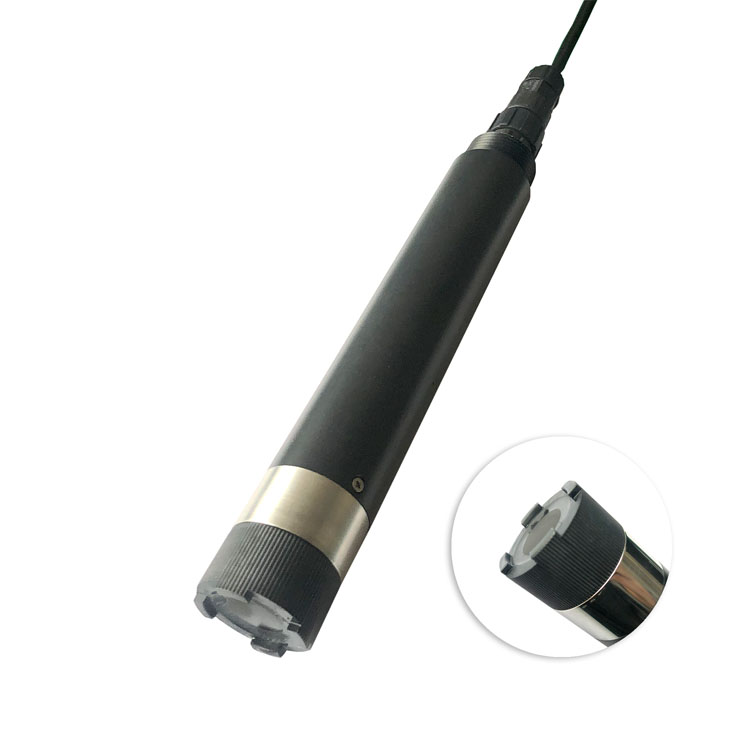
Use NiuBoL NBL-WQ-DO for a defined oxygen observation rather than treating a stored bottle as a permanent record of the original oxygen concentration. Its operating limits belong to the probe, not to the separate sampler.
| NBL-WQ-DO item | Specification | Sampling-system consequence |
|---|---|---|
| Oxygen range and accuracy | 0-20.00 mg/L; +/-2% full scale | Assess the online observation independently of stored-sample analysis |
| Working conditions | 0-45 deg C; pressure <0.2 MPa | Check direct immersion or the actual measurement loop |
| Electrical interface | 12-24 VDC; <0.3 W at 12 V; RS485 Modbus RTU | A separate controller must provide any supported sampling command |
| Construction | POM and 316L; IP68; 3/4 NPT; standard 5 m cable | No sampler enclosure, bottle cooling or pump rating is implied |
An alarm time is not necessarily the time the corresponding water reaches the collection bottle. Account for detection, decision logic, line purge and sample transport. A delay can cause the first retained portion to contain water already in the tubing rather than the event being investigated.
As a simple ideal-volume example, a 10 m intake line with 6 mm internal diameter holds about 0.283 L. At 0.5 L/min, replacing that volume takes about 34 seconds before considering pump startup, purge programming or non-ideal transport. These are illustrative dimensions and flow, not a sampler specification or a recommended purge volume.
For a short event, demonstrate timing with the proposed intake path. Record the command, actual fill, bottle position and relevant sensor observation. Where the objective requires pre-event water, confirm that the chosen sampling program can capture it; a command sent only after the threshold is crossed cannot recover water that has already passed.
RS485 is an electrical interface and Modbus RTU is a communication protocol. Neither defines a universal sampling command, event register or acknowledgement. Confirm the controller role, the actual sampler command and the method of reporting successful or failed collection.
Repeat the test for an occupied bottle, blocked intake, interrupted power and a second event before the first program ends. Decide whether the program queues, rejects or combines events. A log saying command sent must remain distinguishable from evidence that a specified volume reached the bottle.
Flow-proportional sampling also needs a suitable flow signal and defined logic. Do not assume a communications port includes a flow meter or that equal time intervals create a flow-weighted composite. Verify pulse or data interpretation with the actual equipment.
Choose containers and preservation from the required analytical methods. One chilled chamber does not make one bottle suitable for every constituent. Confirm cooling performance under ambient conditions, and record relevant storage excursions rather than relying only on a temperature setpoint.
The Environment Agency monitoring guidance for England discusses discrete and composite collection, preservation and continuous monitoring as separate duties. Apply the requirements relevant to the actual project instead of importing a generic 4 deg C claim as a worldwide acceptance rule.
Size capacity around the programmed samples between visits, including blanks or duplicates where required. Define what happens when positions are full and how bottles are replaced without losing their identity. A lock can restrict access, but cannot by itself establish sample validity or replace handling records.
A UV COD trend may help identify a changing organic-related signal, but the retained sample still needs a suitable reference determination. A changed optical response does not identify which compound caused the event. Check both the sensing duty and the analytical question before setting a trigger.
For NiuBoL sensor selection, provide the intended pH, oxygen or optical observation, water conditions and receiving PLC or RTU. Obtain a separate itemized specification for sampling hardware, cooling, bottle management and trigger implementation. Do not infer availability of a complete retained-sample package from the presence of sensor product links.

No. Those labels do not establish capability. A fixed or portable automatic sampler can collect discrete or composite samples and may retain them where its configuration supports the required storage duty.
No. Stored water can change through gas exchange, temperature and biological or chemical processes. Retain the required direct observations and follow the applicable analytical handling procedure.
No. Confirm the specific command, controller logic, acknowledgement and delivered-sample status. Demonstrate the complete chain with the proposed sampler and intake path.
Evaluate detection and transport delays, then test the intended program. Separate discrete samples may be more informative than one composite; the correct choice depends on the event and analytical objective.
No. Identification, representative collection, suitable container and preservation, handling history and acceptable analysis are also necessary. Access control addresses only part of the handling risk.
State the analytical targets, sample program, intake path, delivery flow, visit interval, expected events, preservation and controller inputs. Specify online sensing separately from sample collection and storage.
Select a water quality sampler by the required collection and retention functions, not by a portable or fixed label. Demonstrate sample delivery, event timing and preservation through retrieval. NiuBoL online sensors can support defined observations; the sampling system must independently deliver the water needed for the intended analysis.
 NBL-WQ-CL Water Quality Sensor Online Residual Chlorine Sensor.pdf
NBL-WQ-DO Online Fluorescence Dissolved Oxygen Sensor.pdf
NBL-WQ-NHN Ammonia Nitrogen Water Quality Sensor.pdf
NBL-WQ-COD Online Water Quality COD Sensor.pdf
NBL-WQ-PH Online pH Water Quality Sensor.pdf
NBL-WQ-EC water quality conductivity sensor.pdf
Prev:Rapid COD Test Quality Control: Checks Before Accepting Results
Next:16 Water Quality Analysis Concepts: Hardness, Alkalinity and Result Bases
Related recommendations
Sensors & Weather Stations Catalog
Agriculture Sensors and Weather Stations Catalog-NiuBoL.pdf
Weather Stations Catalog-NiuBoL.pdf
Agriculture Sensors Catalog-NiuBoL.pdf
Water Quality Sensor Catalog-NiuBoL.pdf
Related products
 Combined air temperature and relative humidity sensor
 TDR Soil Moisture & Temperature Sensor for irrigation| RS485 |4-20mA| NBL-S-THR
 Soil pH sensor RS485 soil Testing instrument soil ph meter for agriculture |NBL-S-PH
 Wind Speed sensor Output Modbus/RS485/Analog/0-5V/4-20mA
 Tipping bucket rain gauge for weather monitoring auto rainfall sensor RS485/Outdoor/stainless steel
 Pyranometer Solar Radiation Sensor 4-20mA/RS485


Screenshot, WhatsApp to identify the QR code
WhatsApp number:+8615367865107
(Click on WhatsApp to copy and add friends)

