





— Blogs —
—Products—
 Consumer hotline +8618073152920
 WhatsApp:+8615367865107
Address:Room 102, District D, Houhu Industrial Park, Yuelu District, Changsha City, Hunan Province, China
Product knowledge
Time:2025-12-10 14:52:34 Popularity:686
With the growing global demand for clean energy, photovoltaic power generation has become a mainstay in achieving the “carbon neutrality” goal. However, PV power plants are exposed to the outdoors long-term, and their power generation efficiency and operational safety are directly affected by environmental meteorological conditions. The photovoltaic weather station was developed to address this challenge.
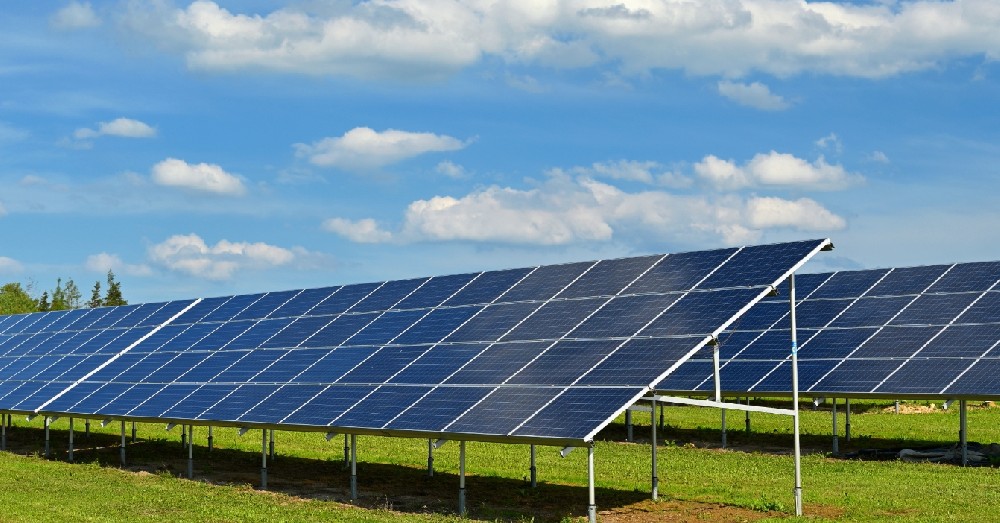
A Photovoltaic Weather Station is a professional environmental monitoring platform that integrates multiple high-precision meteorological sensors, data acquisition equipment, and transmission systems. Specifically designed for photovoltaic power generation systems, it continuously monitors core environmental factors affecting PV efficiency and safety (such as solar radiation intensity, ambient temperature/humidity, wind speed/direction, etc.) in real time.
Data collected by the weather station is indispensable core support for evaluating PV plant performance (e.g., plant efficiency, effective operating hours) and conducting fault diagnosis.
Performance Ratio (PR) evaluation of a PV plant is a complex process, and accurate meteorological data is the foundation for calculating PR:
Performance evaluation and optimization: Solar radiation intensity directly determines the theoretical output power of PV panels; module temperature affects actual output power (higher temperature = lower efficiency). Weather station data precisely corrects these environmental factors, calculating the true operating efficiency of the PV plant and guiding operational optimization.
Fault warning and diagnosis: Excessive wind speed may endanger mounting structures; abnormal module temperature (e.g., hot spot effect) may indicate faults. Real-time monitoring by the weather station can detect anomalies promptly and provide warning information.
Forecasting and scheduling: Combined with prediction models, meteorological data can forecast PV plant generation in advance, providing a scientific basis for grid scheduling and stable operation.
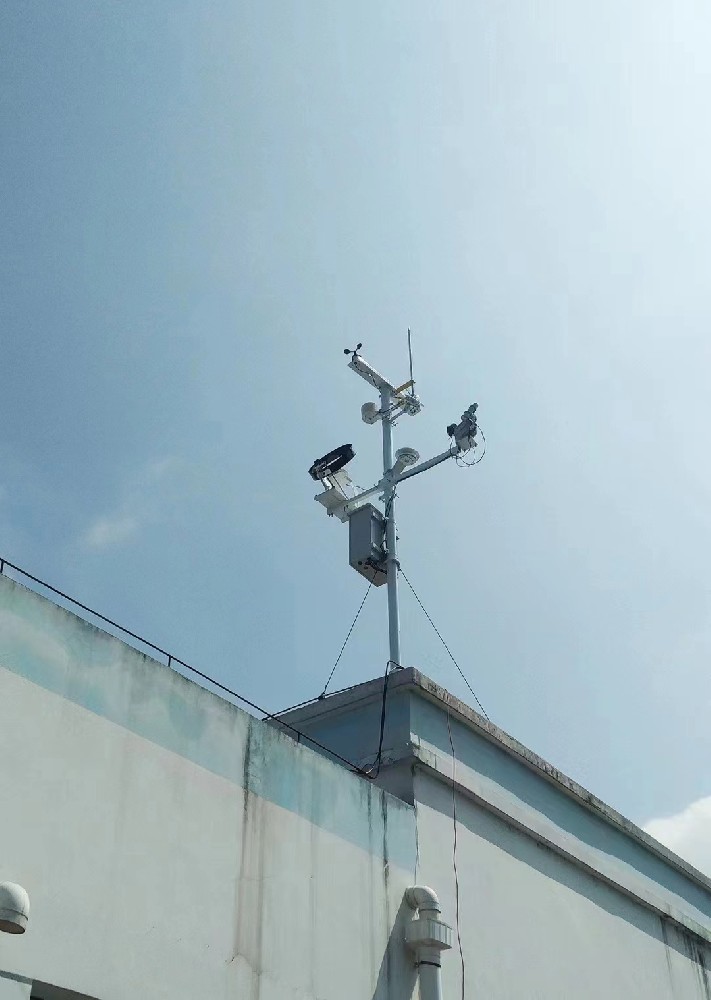
A complete photovoltaic weather station system consists of three major parts: front-end perception, mid-end transmission/processing, and back-end management platform.
Sensor Section (Front-End Perception): The system’s “sensory organs” that monitor total solar radiation, ambient temperature/humidity, PV module temperature, wind speed, wind direction, and other meteorological elements. Sensor types can be flexibly configured according to specific PV plant needs.
Weather Station Mounting Structure: Securely installs and supports sensors, solar panels, data logger, etc., ensuring sensor installation heights comply with standards.
Solar Panels and Batteries: Typically deployed in the field, providing independent power support to ensure stable operation without mains electricity.
Data Logger and Transmission Module: The logger collects meteorological data in real time, processes and stores it; the transmission module (e.g., GPRS/4G/5G) transmits data according to communication protocols to the back-end computer.
Back-End Computer Section: The system’s “brain” responsible for data display, recording, storage, analysis, and warning, integrated via SCADA systems or inverter control systems.
The workflow: Sensors monitor meteorological elements in real time → Data collection → Logger/RTU processes data → Wireless transmission → Back-end computer/SCADA system → Analysis and display → Users observe and make decisions in real time
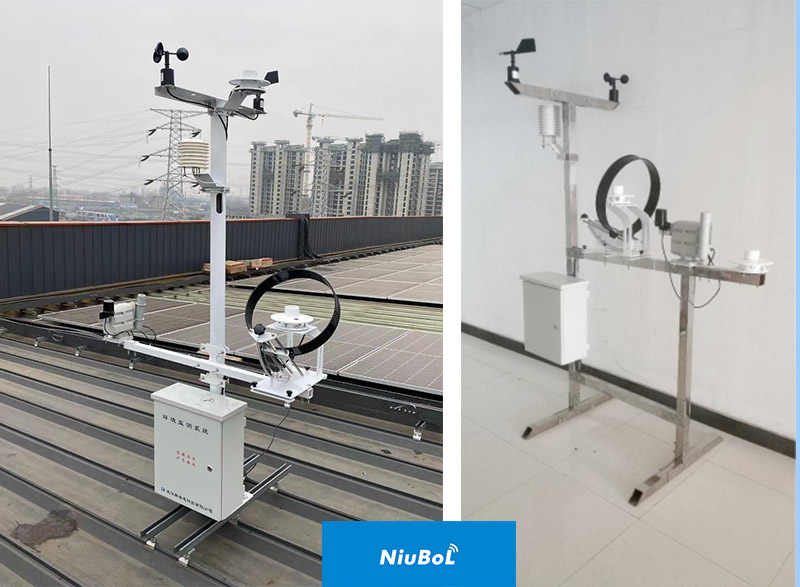
NiuBoL Technology has developed a photovoltaic weather station solution tailored for the solar PV industry, designed to connect to plant SCADA systems or inverter control systems to ensure efficient operation.
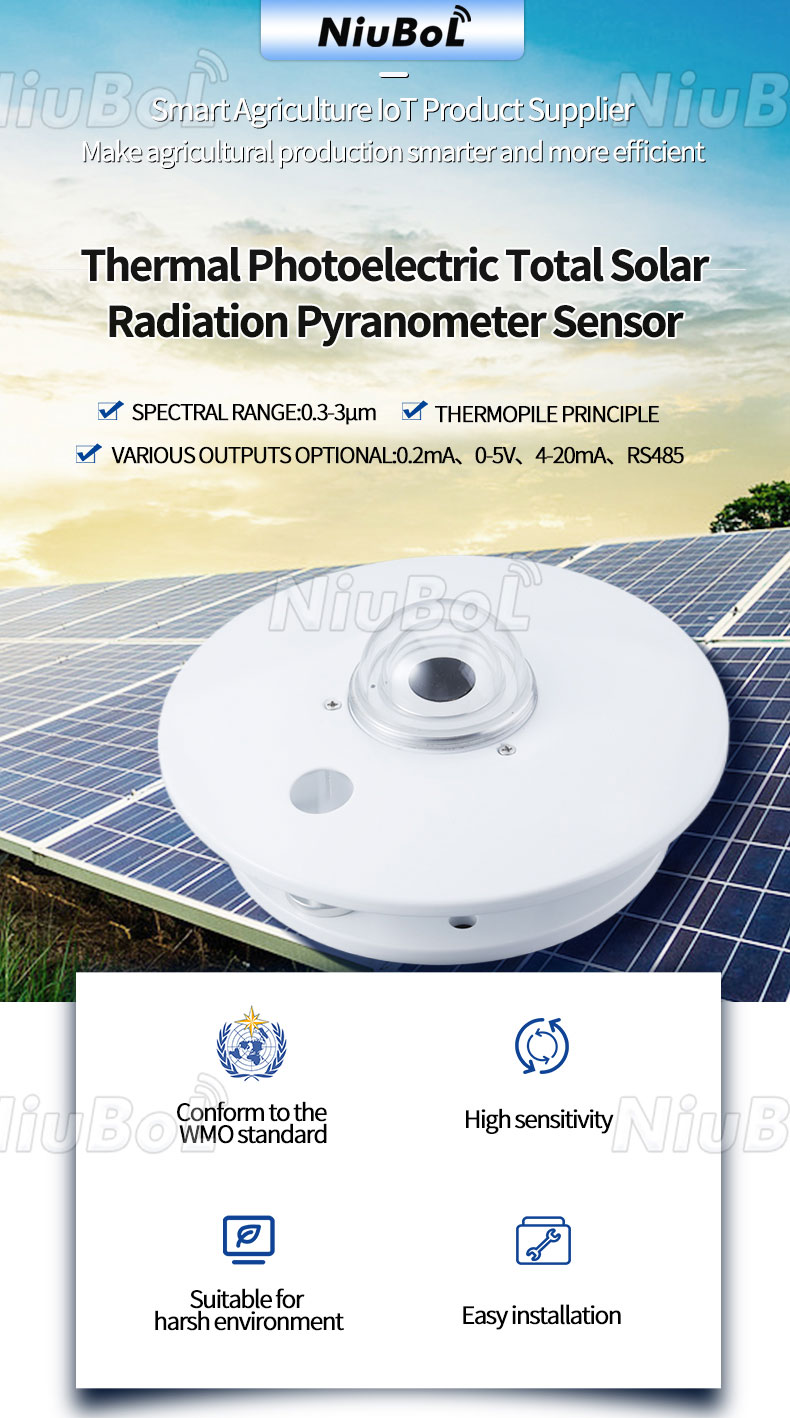
1. NBL-W-HPRS Total Solar Radiation Sensor
Monitoring Principle: Based on thermopile principle. The sensing element uses a wire-wound electroplated multi-junction thermopile with a high-absorption black coating. The temperature difference between cold and hot junctions generates an electromotive force proportional to solar irradiance.
Technical Features: Double-glass dome (reduces air convection and infrared radiation effects), built-in temperature compensation circuit.
Key Parameters: Spectral range: 0.3–3 μm; Measurement range: 0–2000 W/m²; Response time: ≤35 s
2. NBL-W-PPT PV Module Temperature Sensor
Monitoring Principle: Uses high-precision platinum resistance as the sensing element (thermal resistance principle) to measure the surface (contact) temperature of PV modules.
Technical Features: Surface-mount design, easy installation, excellent linearity, strong anti-interference, supports multiple output signals (4–20 mA, 0–5 V, RS485).
Key Parameters: Accuracy: ±0.5°C; Range: -50~100°C (customizable)
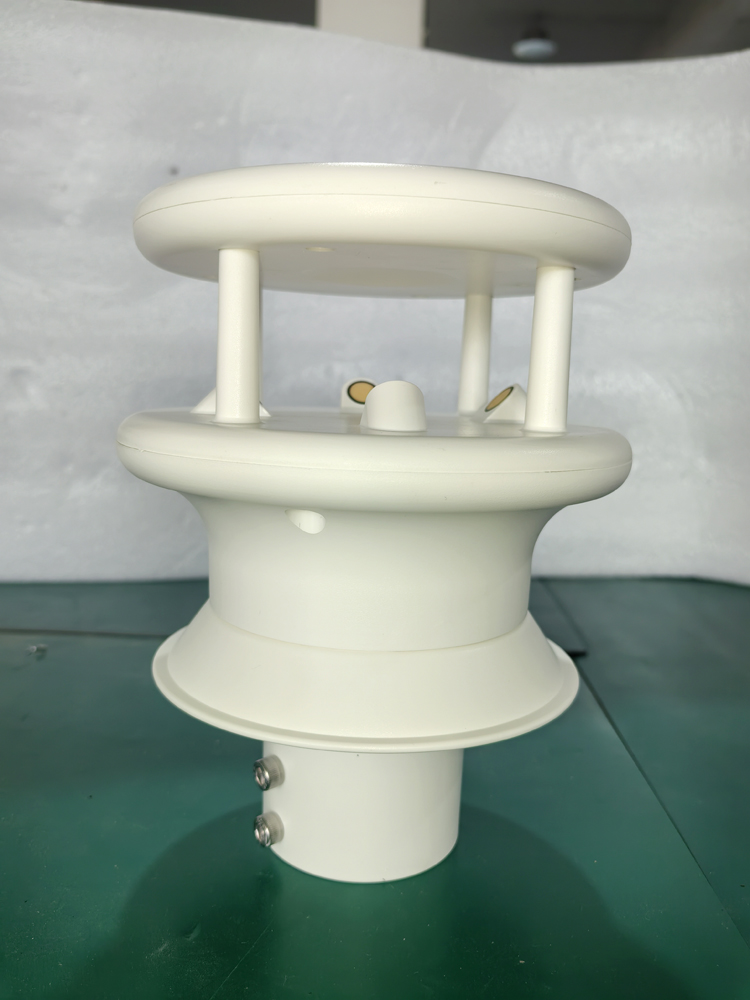
3. NBL-W-21GUWS Ultrasonic Wind Speed & Direction Sensor
Monitoring Principle: Based on ultrasonic principle, calculates wind speed and direction using the time or frequency difference of ultrasonic pulses under different wind speeds.
Technical Features: No moving parts, lightweight and compact structure, provides accurate and stable values even in high-altitude, extremely cold, or dusty harsh climates, with low maintenance costs.
4. NBL-W-LBTH Atmospheric Temperature/Humidity/Pressure Sensor
Monitoring Principle: Uses high-precision digital integrated chips for fully digital detection of temperature, humidity, and pressure.
Technical Features: Can be equipped with a radiation shield (louver box) to ensure measurements are unaffected by solar radiation and rain.
Key Parameters: Temperature: -40~80°C, Humidity: 0~100% RH, Pressure: 10~1200 hPa
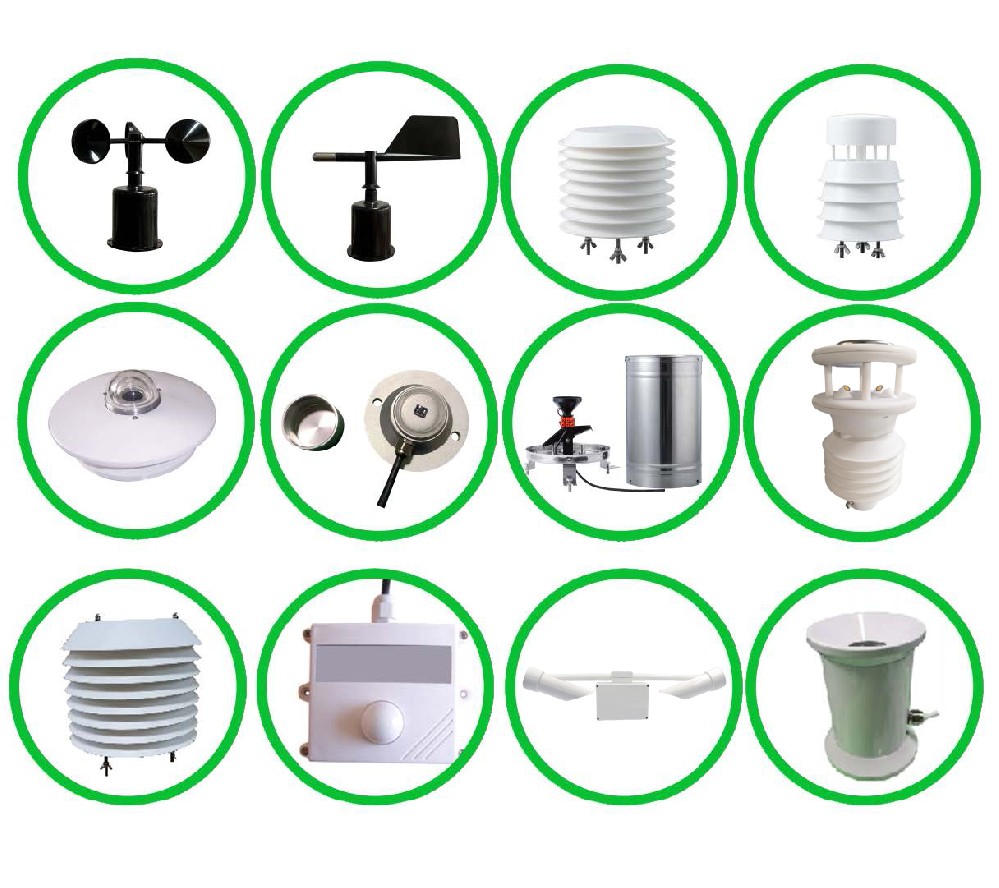
NiuBoL photovoltaic weather stations are designed to meet the stringent requirements of the PV industry for data accuracy, reliability, and flexibility:
High accuracy: Sensors strictly follow industry standards in measurement, calibration, and accuracy, providing high-precision, long-term, continuous irradiance measurement as a solid foundation for performance evaluation.
Strong reliability: Excellent electromagnetic compatibility and environmental adaptability design ensure reliable measurement data even in harsh field conditions.
Flexibility and expandability: Observation elements can be flexibly configured (e.g., total radiation, scattered radiation, UV radiation). The system software has strong expansion and compatibility capabilities to accommodate future additional observation elements or business systems.
| Q Common Questions | A NiuBoL Answers and Recommendations |
|---|---|
| 1. Why can’t photovoltaic power plants only use ambient temperature and must use PV module temperature? | The surface temperature of PV modules is typically 15°C to 40°C higher than ambient air temperature. PV module temperature is the key input parameter for calculating actual power generation efficiency of the modules. NBL-W-PPT surface-mount sensor provides precise module surface temperature for performance correction. |
| 2. What is the purpose of the double-glass dome on a total solar radiation sensor? | The outer dome reduces the influence of air convection on the radiometer; the inner dome blocks infrared radiation from the outer dome itself, minimizing error and ensuring measurement accuracy. This design is the standard configuration for high-precision pyranometers. |
| 3. What are the advantages of ultrasonic wind speed/direction sensors compared to traditional mechanical ones? | No moving parts, eliminating mechanical wear, freezing, or sand/dust jamming issues, resulting in extremely low maintenance costs. Especially suitable for high-altitude, extremely cold, or dusty harsh environments. NBL-W-21GUWS provides higher reliability and stability. |
| 4. How is data from a photovoltaic weather station integrated into the plant’s SCADA system? | The weather station data logger outputs unified data through RS485 or other industrial communication protocols (such as Modbus/RTU), which is then connected to the plant’s SCADA system for display, recording, and analysis. All NiuBoL sensors provide standardized output interfaces. |
| 5. How is power supply solved for the weather station? | Photovoltaic weather stations are typically equipped with solar panels and batteries as an independent power supply system. This ensures 24-hour continuous operation in remote field environments without access to mains electricity. |
| 6. What does cosine response error mean for a solar radiation sensor? | Cosine response describes the sensor’s response accuracy to different solar elevation angles (incident angles). The smaller the error, the better. NBL-W-HPRS has an error ≤7% at 10° solar elevation angle, delivering reliable performance. Ensures accurate all-day radiation measurement. |
| 7. What non-core parameters can a photovoltaic weather station monitor? | In addition to radiation, temperature/humidity, and wind speed/direction, it can be expanded to monitor rainfall, snow depth, UV radiation, atmospheric pollution (e.g., dust), etc. NiuBoL systems offer flexible expandability and can be customized according to needs. |
| 8. How do ice or snow on PV panels affect weather station data? | Snow significantly reduces radiation sensor readings and PV panel power generation efficiency. The weather station can be equipped with rain/snow sensors or use atmospheric temperature data to assist in warning about snow impact on plant performance. Data is the key basis for deciding cleaning or de-icing operations. |
| 9. How to choose the output type of the NBL-W-PPT sensor? | Choose based on the input interface type of the plant monitoring system (inverter or SCADA): current (4–20 mA), voltage (0–5 V), or digital (RS485) output. NiuBoL supports multiple output types to meet diverse interface requirements. |
| 10. Why do photovoltaic power plants need high-precision wind speed and direction data? | Wind speed data is used to evaluate the wind cooling effect on module temperature (affecting power generation efficiency). Excessively high wind speeds require warnings to prevent wind load damage to PV mounting structures. Wind speed and direction are important parameters for safe operation and performance correction. |
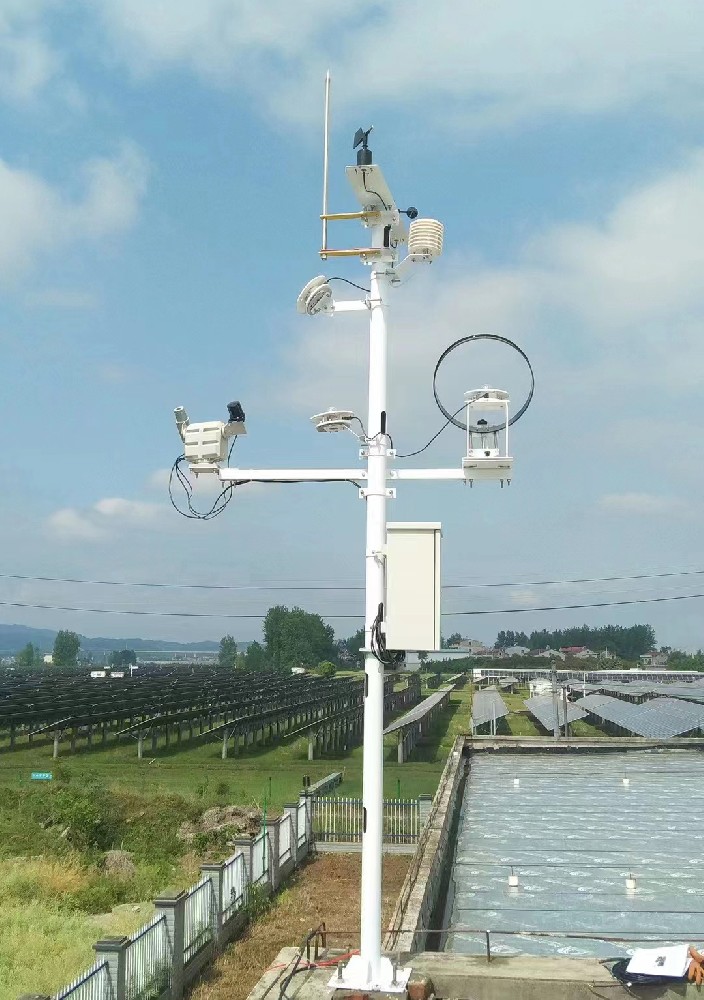
The photovoltaic weather station is the intelligent hub for achieving scientific management, improving power generation efficiency, and ensuring operational safety in PV power plants. By integrating professional sensors provided by NiuBoL — such as thermopile pyranometers, high-precision PV temperature surface-mount sensors, and ultrasonic wind speed/direction sensors — it delivers accurate, reliable, and continuous environmental meteorological data to the plant SCADA system.
Under the backdrop of the “dual carbon” goals and vigorous clean energy development, refined operation of PV power plants has become particularly important. NiuBoL Technology is committed to providing comprehensive, high-performance PV environmental monitoring solutions, helping the photovoltaic industry achieve sustainable and healthy development and unlocking the enormous potential of solar energy resource utilization.
Prev:NiuBoL Road Weather Monitoring Solution
Next:NiuBoL Solar Photovoltaic Meteorological Solution and Products
Related recommendations
Sensors & Weather Stations Catalog
 Agriculture Sensors and Weather Stations Catalog-NiuBoL.pdf
Weather Stations Catalog-NiuBoL.pdf
Agriculture Sensors Catalog-NiuBoL.pdf
Water Quality Sensor Catalog-NiuBoL.pdf
Related products
 Combined air temperature and relative humidity sensor
 TDR Soil Moisture & Temperature Sensor for irrigation| RS485 |4-20mA| NBL-S-THR
 Soil pH sensor RS485 soil Testing instrument soil ph meter for agriculture |NBL-S-PH
 Wind Speed sensor Output Modbus/RS485/Analog/0-5V/4-20mA
 Tipping bucket rain gauge for weather monitoring auto rainfall sensor RS485/Outdoor/stainless steel
 Pyranometer Solar Radiation Sensor 4-20mA/RS485

Screenshot, WhatsApp to identify the QR code
WhatsApp number:+8615367865107
(Click on WhatsApp to copy and add friends)

