





— Blogs —
—Products—
 Consumer hotline +8618073152920
 WhatsApp:+8615367865107
Address:Room 102, District D, Houhu Industrial Park, Yuelu District, Changsha City, Hunan Province, China
Product knowledge
Time:2026-07-21 13:45:01 Popularity:235
An ammonia sensor for water is selected when ammonia nitrogen affects aquatic life, wastewater process control or pollution evidence. In aquaculture, ammonia risk changes with pH and temperature. In wastewater, ammonia indicates treatment performance. In river monitoring, ammonia nitrogen can help identify pollution events and upstream discharge influence.
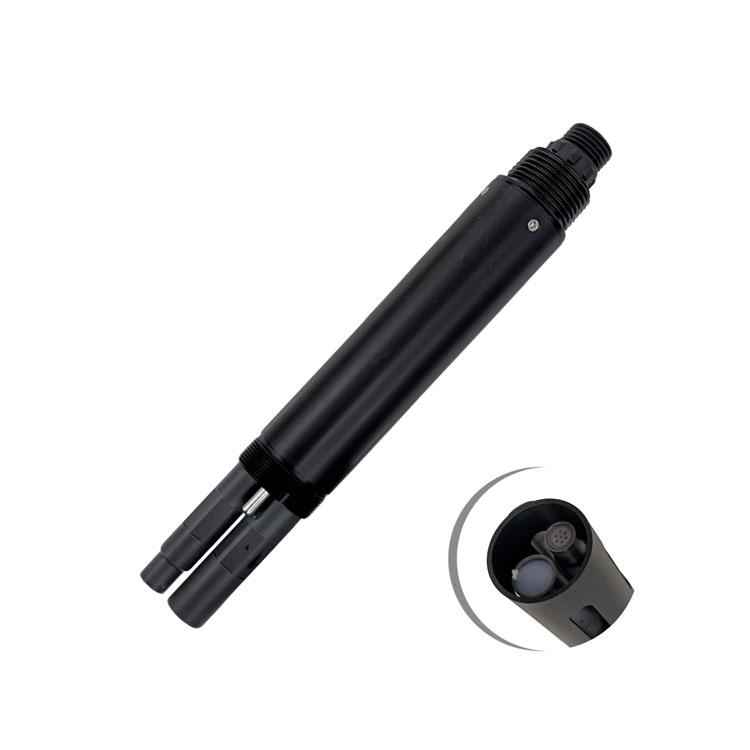
The buyer should first define whether the project needs early warning, process optimization, compliance evidence or research data. That decision affects range, calibration routine, data interval, cleaning access and whether pH and temperature must be monitored at the same location.
| Parameter | Verified value or procurement note |
|---|---|
| Model | NBL-WQ-NHN |
| Method | Ammonium ion selective electrode with temperature compensation |
| Range options | 0 to 10.00 mg/L, 0 to 100.00 mg/L, or 0 to 1000.0 mg/L |
| Resolution | 0.01 mg/L or 0.1 mg/L by range |
| Accuracy | ±10% or ±0.5 mg/L; temperature ±0.5°C |
| Working condition | 0 to 40°C; pressure below 0.1 MPa; medium pH 4 to 10 |
| Output | RS485 Modbus RTU; default communication 9600, n, 8, 1 |
| Material and protection | PVC and POM wetted material; 3/4 NPT; IP68 |
The NiuBoL ammonia nitrogen manual describes an ammonium ion selective electrode with temperature compensation. Verified ranges include 0 to 10.00 mg/L, 0 to 100.00 mg/L and 0 to 1000.0 mg/L. The medium pH range is 4 to 10, which should be checked before ordering because pH condition affects both measurement suitability and ammonia risk interpretation.
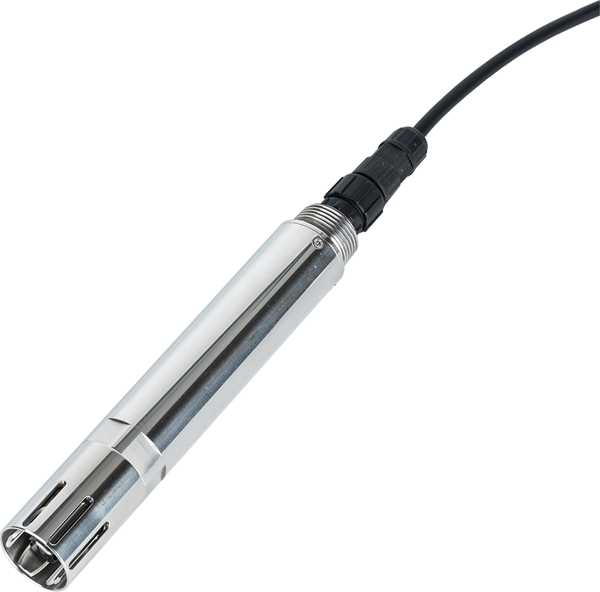
| Project | Range choice logic | Related parameter |
|---|---|---|
| Aquaculture pond | Low to medium range for warning and trend | pH, temperature and DO |
| Municipal wastewater | Medium range for process monitoring | COD, pH and flow context |
| Industrial discharge | Range based on expected process concentration | pH and conductivity |
| River station | Low range for event detection unless pollution spikes are expected | Turbidity, COD and conductivity |
The manual describes zero and slope calibration using standard solutions. It also notes electrode activation before testing and dry storage with protective cap when the electrode is not used for more than two weeks. These details should be part of the acceptance checklist because an ammonia sensor is not a maintenance-free cable device.
The verified signal output is RS485 bus with Modbus RTU protocol. The manual states default communication as 9600 bps, no parity, 8 data bits and 1 stop bit, with customizable parameters. Integrators should request the register map before programming a PLC, DCS, industrial computer or data logger.

For an ammonia sensor for water, send the water type, expected range, temperature, pressure, installation photos, cable length, output requirement, controller or gateway model, quantity and destination country. State whether the project needs ammonium trend, alarm evidence, wastewater control or aquaculture risk warning.
For contractors, also state who supplies the cabinet, bracket, sampling line, power supply, surge protection, SIM card or platform account. Missing scope items usually appear during commissioning, when they are more expensive to solve.
Ammonia data can be misleading if pH and temperature are ignored, especially in fish farming. High pH and warm water increase un-ionized ammonia risk. In wastewater and rivers, ammonia should often be evaluated with COD, conductivity, turbidity and flow information so the operator can distinguish process changes from dilution or storm events.
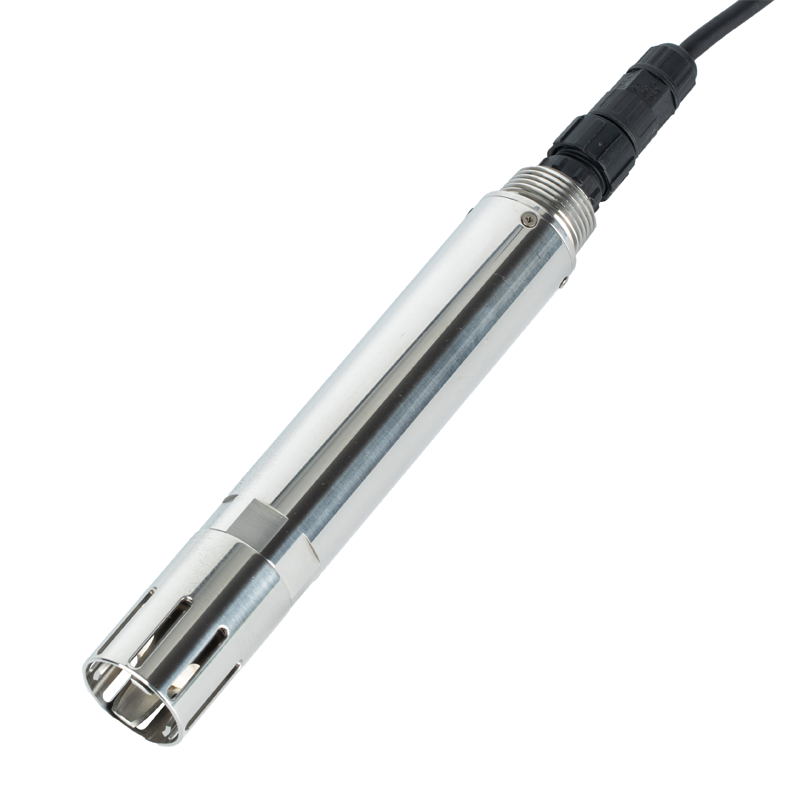
Ammonia nitrogen values are not interpreted the same way in every project. In aquaculture, the risk is linked to fish species, pH and temperature. In wastewater, the value may indicate nitrification performance. In river monitoring, a sudden increase may suggest upstream discharge, but dilution, rainfall and conductivity changes should also be reviewed.
For this reason, an ammonia sensor for water is often more useful when installed near pH and temperature measurement. The buyer should decide whether the system must show ammonia nitrogen only, or whether it must help explain the cause and risk of ammonia changes.
| Question | Selection effect | Why it matters |
|---|---|---|
| Expected concentration? | Select 0 to 10, 0 to 100 or 0 to 1000 mg/L range | Wrong range reduces useful resolution or saturates data. |
| pH condition? | Check pH 4 to 10 medium requirement | Outside condition can affect suitability. |
| Remote site? | Plan calibration supplies and service interval | Electrode-based sensors need field care. |
| Host system? | Use RS485 Modbus RTU settings | PLC or logger needs register clarity. |
Acceptance should include communication reading, temperature reading, standard solution check, installation photo, cable waterproofing and baseline record. If the project uses calibration commands through Modbus, the integrator should keep a written record of the register and the standard concentration used.
If the project only needs periodic laboratory reporting, online ammonia measurement may not be necessary. If the project needs early warning in a river or high-density aquaculture, online measurement can be justified because delayed sampling may miss the event. The purchase should be tied to the decision time required by the site.
For NiuBoL selection, concentration range and pH condition are the first technical filters. The next filters are output, cable length, installation thread, maintenance access and whether the project needs other parameters at the same station.
The verified medium pH condition for the NiuBoL ammonia nitrogen sensor is pH 4 to 10. If the process is outside this range or changes sharply, the buyer should discuss suitability before ordering. The sensor is also an electrode-based instrument, so storage, activation, calibration and cleaning procedures are part of the purchase.
In aquaculture, ammonia data without pH and temperature context can lead to weak decisions. In wastewater, ammonia data without process stage and flow context may be hard to interpret. In river stations, ammonia spikes should be compared with conductivity, COD and turbidity to judge whether the event is dilution, runoff or discharge.
Ask for the user manual, Modbus register map, wiring definition, calibration procedure, standard solution recommendation, storage instructions and spare-part guidance. For remote projects, calibration solutions and protective accessories should be considered before the first shipment leaves the factory.
A clear procurement file reduces the chance that the sensor arrives before the site knows how to activate, calibrate or read it.
A river station near livestock or food-processing discharge may require ammonia nitrogen, conductivity, turbidity and COD context. If ammonia rises together with conductivity and COD, the event may suggest a discharge source. If ammonia changes after heavy rainfall with turbidity, dilution and runoff should be considered before drawing conclusions.
For this scenario, the RFQ should include expected normal ammonia level, possible peak level, pH range, river flow condition and whether the station must trigger remote alarms. These details affect both range and platform design.
Before releasing the purchase order, the buyer should confirm five items in writing: measured parameter, expected range, installation point, output signal and maintenance owner. These five items prevent most misunderstandings between purchasing, engineering, site operators and the supplier. If any item is unknown, the RFQ should say so clearly instead of hiding the uncertainty.
The quotation should also separate sensor body, cable, controller or data logger, mounting accessory, calibration or verification materials, communication gateway, packing and documents. This makes it possible to compare suppliers by actual scope. A lower price is not useful if the buyer later discovers that the controller, flow cell, bracket or register map was not included.
Keep the user manual, wiring definition, Modbus register map, calibration record, installation photos, alarm settings, packing list and spare-part suggestion in one folder. For distributors and contractors, this file is also after-sales protection. When the end user asks for help months later, the service team can see what was supplied, how it was installed and what assumptions were used during commissioning.
If the buyer is unsure of the expected ammonia range, collect several laboratory results or historical readings before selecting the online range. Guessing too high can reduce useful resolution, while guessing too low can saturate the sensor during pollution events. Range selection is one of the highest-value details in the RFQ.
For ammonia projects, the RFQ should state whether the buyer wants ammonium trend, ammonia nitrogen reporting or process alarm. Those are not the same purchasing requirement. The supplier needs concentration history, pH range, temperature range and calibration responsibility before recommending the 0 to 10, 0 to 100 or 0 to 1000 mg/L version.
A: The NiuBoL sensor measures ammonium ion content and reports ammonia nitrogen values with temperature compensation.
A: Verified ranges include 0 to 10.00 mg/L, 0 to 100.00 mg/L and 0 to 1000.0 mg/L with resolution depending on range.
A: Yes. The verified medium pH range is 4 to 10, and pH also affects ammonia toxicity interpretation in aquaculture.
A: Yes. The verified output is RS485 Modbus RTU, suitable for PLC, DCS, data logger, industrial computer or touch-screen controller integration.
A: The manual describes zero and slope calibration using standard ammonia nitrogen solutions. Calibration records should be kept for acceptance and maintenance.
A: It is important when stocking density, feeding rate, pH and temperature create risk of ammonia stress.
A: Wrong range, poor calibration, electrode storage mistakes, fouling, pH outside condition and bad sampling points can cause unreliable data.
A: Range, water type, pH range, temperature, installation method, cable length, output, point count and required calibration supplies should be included.
A: Often yes. pH, temperature, DO, COD, conductivity and turbidity help explain why ammonia risk changes.
An ammonia sensor for water should be selected by application risk, concentration range, pH condition, calibration workload and integration method. NiuBoL ammonia nitrogen sensors provide verified RS485 Modbus RTU output, multiple measurement ranges, IP68 protection and two-point calibration for aquaculture, river and wastewater monitoring projects.
Prev:Turbidity Sensor Selection Guide for Online Water Quality Monitoring
Next:Online TDS Meter for RO and Water Treatment Systems: Selection Guide
Related recommendations
Sensors & Weather Stations Catalog
 Agriculture Sensors and Weather Stations Catalog-NiuBoL.pdf
Weather Stations Catalog-NiuBoL.pdf
Agriculture Sensors Catalog-NiuBoL.pdf
Water Quality Sensor Catalog-NiuBoL.pdf
Related products
 Combined air temperature and relative humidity sensor
 TDR Soil Moisture & Temperature Sensor for irrigation| RS485 |4-20mA| NBL-S-THR
 Soil pH sensor RS485 soil Testing instrument soil ph meter for agriculture |NBL-S-PH
 Wind Speed sensor Output Modbus/RS485/Analog/0-5V/4-20mA
 Tipping bucket rain gauge for weather monitoring auto rainfall sensor RS485/Outdoor/stainless steel
 Pyranometer Solar Radiation Sensor 4-20mA/RS485

Screenshot, WhatsApp to identify the QR code
WhatsApp number:+8615367865107
(Click on WhatsApp to copy and add friends)

