





— Blogs —
—Products—
 Consumer hotline +8618073152920
 WhatsApp:+8615367865107
Address:Room 102, District D, Houhu Industrial Park, Yuelu District, Changsha City, Hunan Province, China
Product knowledge
Time:2026-07-21 13:45:03 Popularity:309
An online TDS meter is usually specified for RO plants, water treatment skids, irrigation systems and process water lines where dissolved ion load must be tracked continuously. In most industrial instruments, TDS is derived from conductivity. That means buyers should understand both the conductivity range and the conversion logic before comparing quotations.
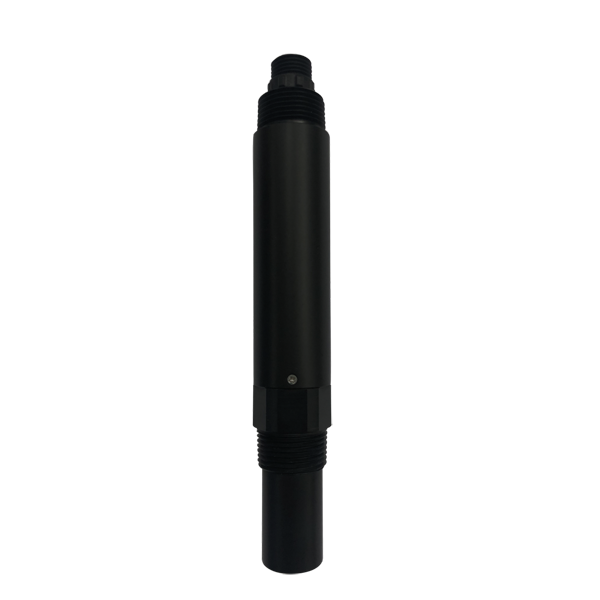
Conductivity measures how well water carries electrical current. TDS is an estimated dissolved solids value based on a conversion factor. The conversion factor depends on water chemistry, so an online TDS meter is reliable for trend and control only when the user understands whether the displayed TDS value matches the application expectation.
| Parameter | Verified value or procurement note |
|---|---|
| Model | NBL-WQ-EC / NBL-WQ-EC-4A / NBL-WQ-EC-4S |
| Conductivity range | 0 to 5000 µS/cm standard; other models up to 200 mS/cm |
| TDS reference | 0 to 3000 mg/L on the 0 to 5000 µS/cm range |
| Accuracy | ±1% F.S. or ±1.5% F.S. by model; temperature ±0.3°C |
| Temperature compensation | Automatic, Pt1000 |
| Power and output | 12 to 24 VDC; RS485 Modbus RTU; optional 4-20 mA on 4-series models |
| Installation | 3/4 NPT immersion mounting; 5 m cable can be customized |
| Protection | IP68 |
For the 0 to 5000 µS/cm conductivity range, the manual lists a TDS reference range up to 3000 mg/L. Other conductivity ranges are available by model. For RO monitoring, the key is not the highest range; the key is sensitivity at the expected feed, permeate or reject point.
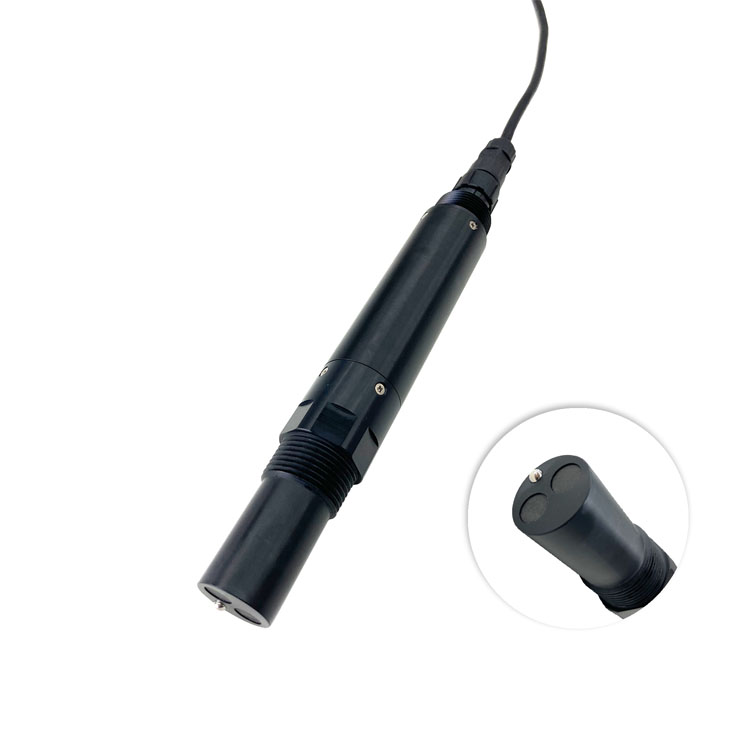
| Point | What it tells the operator | Buyer note |
|---|---|---|
| Feed water | Incoming ion load and pretreatment change | Range must handle raw water variation. |
| Permeate | RO membrane performance and product water quality | Low range sensitivity matters. |
| Reject or concentrate | Membrane recovery and scaling risk | Higher range may be required. |
| Storage tank | Final water stability | Avoid stagnant or poorly mixed sampling points. |
Do not use generic TDS alarm values without knowing the water use. Drinking water, boiler feed, irrigation, hydroponics and industrial rinsing have different limits. A useful system separates warning values from emergency values and records when maintenance or cleaning may explain a change.
RS485 Modbus RTU is suitable for multi-point TDS monitoring systems because one logger or PLC can poll several sensors. Optional 4-20 mA on selected 4-series conductivity models is useful for simple analog panels. The buyer should confirm whether the platform displays conductivity, TDS, salinity or all three.
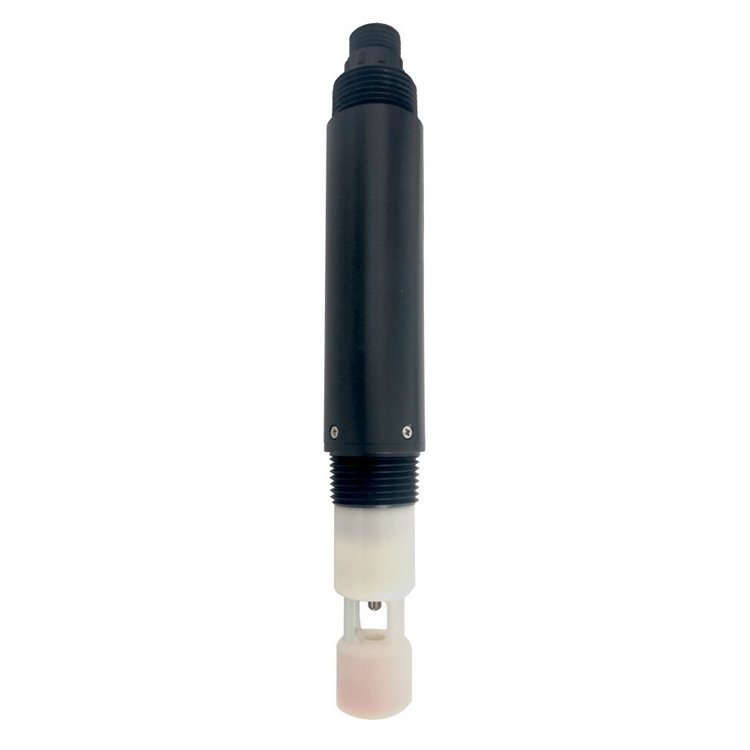
For an online TDS meter, send the water type, expected range, temperature, pressure, installation photos, cable length, output requirement, controller or gateway model, quantity and destination country. Include the process flow diagram if RO feed, permeate and reject points need separate sensors.
For contractors, also state who supplies the cabinet, bracket, sampling line, power supply, surge protection, SIM card or platform account. Missing scope items usually appear during commissioning, when they are more expensive to solve.
If the project is technical process control, conductivity is often the cleaner specification because it is the measured value. TDS can still be displayed for operators, but the purchasing document should state the conductivity range, TDS conversion requirement and expected water chemistry if accuracy of the TDS value matters.
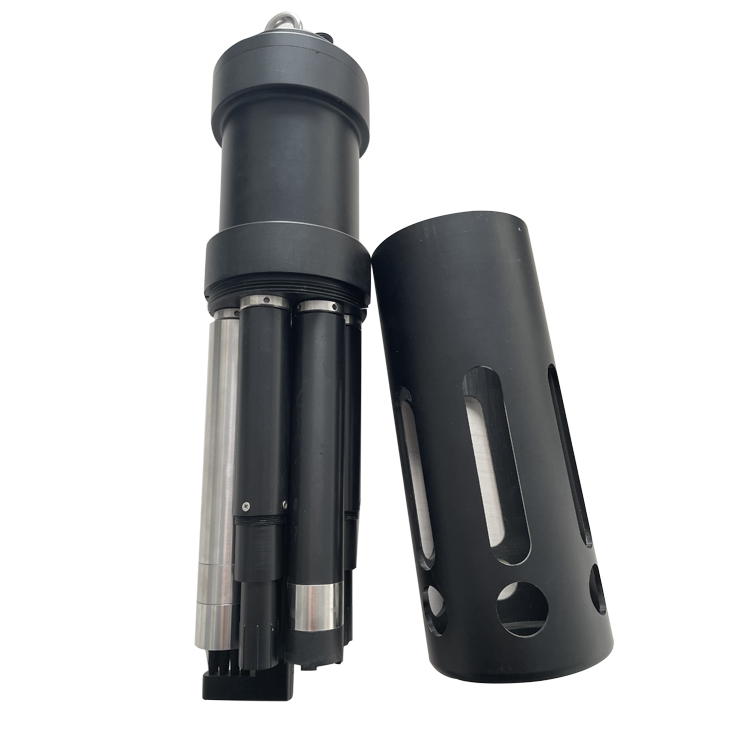
An RO operator uses TDS trend to see membrane performance, feed water changes and product water stability. The value should connect to an action: inspect pretreatment, check membrane condition, review recovery ratio or stop product water use. If the system only displays TDS without alarm or record logic, it does not reduce operating risk.
The buyer should decide whether the online TDS meter will be used for local display, PLC control, remote alarm or customer reporting. That decision affects whether RS485, 4-20 mA, a local controller or a cloud gateway is included in the quotation.
| Monitoring point | Likely range need | Action from abnormal value |
|---|---|---|
| Raw feed | Depends on source water | Inspect source change or pretreatment. |
| After pretreatment | Lower and more stable than raw feed | Check softener, filter or dosing condition. |
| Permeate | Low conductivity range | Inspect membrane and product water quality. |
| Reject | Higher conductivity range | Review recovery and scaling risk. |
During commissioning, record conductivity value, displayed TDS value, conversion factor if shown, temperature, output type and alarm point. If 4-20 mA is used, simulate or check low and high points so the PLC range matches the sensor. If RS485 is used, record device address, baud rate, register and unit.
Conductivity sensors are generally easier to maintain than some optical or reagent-based instruments, but deposits, scaling and bubbles can still affect readings. RO systems with antiscalant, high hardness or intermittent flow should plan periodic inspection and a reference solution check. Temperature compensation should be verified because conductivity is temperature-dependent.
For procurement, ask whether the supplier is quoting a sensor only or a complete measurement point. The measurement point may include controller, cable, mounting, cabinet, power, gateway and platform.
Two online TDS meters may display different values because they use different conversion factors from conductivity to TDS. This does not always mean one sensor is wrong. It means the buyer must define whether the project requires conductivity, displayed TDS, salinity, or a specific conversion factor tied to the customer's water chemistry.
For technical control, conductivity in µS/cm or mS/cm is often the more defensible measurement. TDS can still be shown for operators, but the engineering record should include the underlying conductivity range and conversion assumption.
During handover, record feed, permeate and reject readings under normal operating conditions. Include temperature, alarm values, PLC scaling, sensor address and display units. These baseline records help the owner identify membrane performance changes later.
For a distributor or skid builder, providing this record with the equipment makes the package look more professional and reduces later disputes about whether the sensor or the RO process changed.
An RO skid builder may need three online TDS points: feed, permeate and reject. The feed point shows source water changes, the permeate point protects product quality, and the reject point helps review recovery and scaling risk. These three points may not use the same practical range.
If the PLC already has analog inputs, optional 4-20 mA can be convenient. If the skid has several sensors and a data logger, RS485 Modbus RTU may reduce wiring. The quotation should state which signal path is expected before the sensor model is finalized.
Before releasing the purchase order, the buyer should confirm five items in writing: measured parameter, expected range, installation point, output signal and maintenance owner. These five items prevent most misunderstandings between purchasing, engineering, site operators and the supplier. If any item is unknown, the RFQ should say so clearly instead of hiding the uncertainty.
The quotation should also separate sensor body, cable, controller or data logger, mounting accessory, calibration or verification materials, communication gateway, packing and documents. This makes it possible to compare suppliers by actual scope. A lower price is not useful if the buyer later discovers that the controller, flow cell, bracket or register map was not included.
Keep the user manual, wiring definition, Modbus register map, calibration record, installation photos, alarm settings, packing list and spare-part suggestion in one folder. For distributors and contractors, this file is also after-sales protection. When the end user asks for help months later, the service team can see what was supplied, how it was installed and what assumptions were used during commissioning.
For OEM skid builders, it is also useful to standardize the tag names used on the PLC or display. Feed conductivity, permeate TDS and reject conductivity should not be mixed under one vague label. Clear tag names reduce commissioning mistakes and help customers understand which part of the RO process has changed.
For an online TDS meter, the final check should confirm whether the plant wants conductivity, calculated TDS, salinity or all displayed values. If TDS is calculated from conductivity, the conversion factor and display unit should be written into the commissioning record so operators do not compare inconsistent numbers.
For an online TDS meter, the final check should confirm whether the plant wants conductivity, calculated TDS, salinity or all displayed values. If TDS is calculated from conductivity, the conversion factor and display unit should be written into the commissioning record so operators do not compare inconsistent numbers.
A: Many online TDS meters calculate TDS from conductivity. The sensor measures conductivity and the system applies a conversion factor.
A: The 0 to 5000 µS/cm conductivity range has a listed TDS reference range up to 3000 mg/L. Other ranges are available by model.
A: Common points are feed water, permeate, reject water and storage tank. The exact point depends on the control or alarm purpose.
A: Yes. NiuBoL conductivity/TDS sensors support RS485 Modbus RTU, and selected 4-series models can provide optional 4-20 mA output.
A: Yes. Conductivity changes with temperature, so automatic Pt1000 temperature compensation should be used and checked.
A: Use salinity-focused models for seawater, brackish water or high-salt applications where salinity units are more meaningful than simple TDS.
A: Wrong conversion factor, poor range selection, bad sampling point, air bubbles, fouling and unverified temperature compensation can cause errors.
A: Sensor range, output, cable length, installation thread, controller or logger, calibration plan, quantity and required display units should be listed.
A: Use the method required by the project or regulation. Online TDS is useful for trend and control, while laboratory verification may still be required.
An online TDS meter should be selected through conductivity range, conversion logic, installation point and host system requirements. For RO and water treatment projects, NiuBoL conductivity/TDS sensors provide RS485 Modbus RTU, optional 4-20 mA on selected 4-series models and IP68 protection for continuous monitoring.
Prev:Ammonia Sensor for Water: Methods, Applications and Selection Criteria
Next:Residual Chlorine Meter: Portable Testing or Online Monitoring?
Related recommendations
Sensors & Weather Stations Catalog
 Agriculture Sensors and Weather Stations Catalog-NiuBoL.pdf
Weather Stations Catalog-NiuBoL.pdf
Agriculture Sensors Catalog-NiuBoL.pdf
Water Quality Sensor Catalog-NiuBoL.pdf
Related products
 Combined air temperature and relative humidity sensor
 TDR Soil Moisture & Temperature Sensor for irrigation| RS485 |4-20mA| NBL-S-THR
 Soil pH sensor RS485 soil Testing instrument soil ph meter for agriculture |NBL-S-PH
 Wind Speed sensor Output Modbus/RS485/Analog/0-5V/4-20mA
 Tipping bucket rain gauge for weather monitoring auto rainfall sensor RS485/Outdoor/stainless steel
 Pyranometer Solar Radiation Sensor 4-20mA/RS485

Screenshot, WhatsApp to identify the QR code
WhatsApp number:+8615367865107
(Click on WhatsApp to copy and add friends)

