





— Blogs —
—Products—
 Consumer hotline +8618073152920
WhatsApp:+8615367865107
Address:Room 102, District D, Houhu Industrial Park, Yuelu District, Changsha City, Hunan Province, China
Product knowledge
Time:2026-09-13 10:00:00 Popularity:220
Select aquaculture pond water quality parameters as a linked set: dissolved oxygen and temperature describe immediate oxygen conditions, while pH and temperature are essential context for interpreting ammonia results. Add salinity, turbidity or organic-load monitoring where the production conditions require them. The number of channels matters less than knowing what each value measures, its limits and the decision it supports.
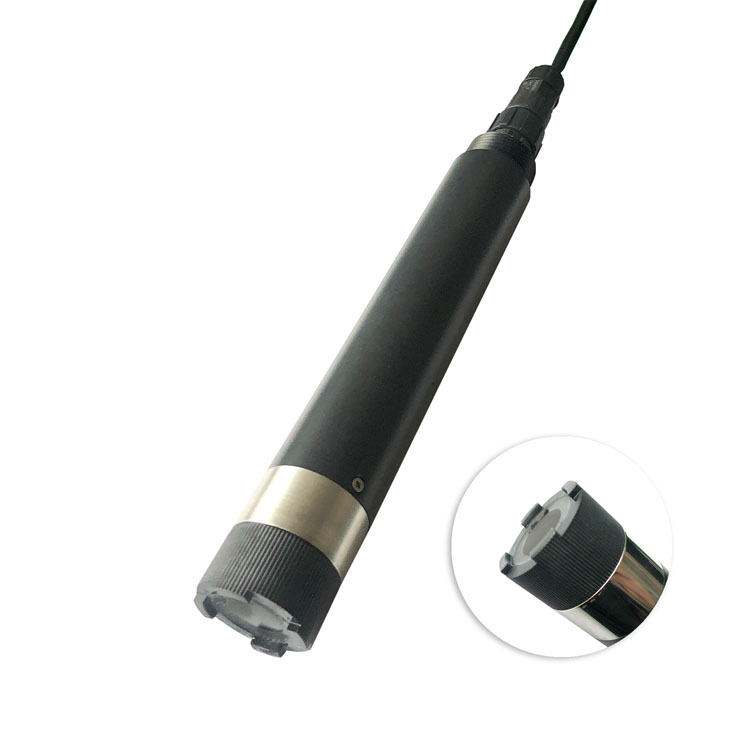
A daytime oxygen reading does not establish the minimum reached overnight. Photosynthesis and respiration change pond oxygen over the daily cycle; pH can change as well. Continuous observations help identify timing, but placement and maintenance still determine whether the record represents the culture water. FAO guidance on pond water quality describes these daily oxygen and pH changes.
Record feeding, aeration and water-exchange events alongside the measurements. Compare conditions at the animal's relevant depth rather than assuming a clean surface reading describes the bottom. Set operating limits for the species, life stage and farm conditions with the responsible aquaculture adviser; no universal table of safe values fits every pond.
| Parameter | Question it helps answer | What it cannot establish alone |
|---|---|---|
| Dissolved oxygen and temperature | Are oxygen conditions changing at the monitored depth and time? | Oxygen conditions throughout the whole pond or the cause of a decline. |
| pH | Is the acid-base condition changing, and is ammonia interpretation affected? | Alkalinity, buffering capacity or ammonia concentration. |
| Ammonia-related measurement | Is the measured nitrogen species increasing? | Toxic un-ionized ammonia without the correct measurement basis and supporting chemistry. |
| Conductivity or salinity | Has the dissolved-salt condition changed? | The identity of individual salts or direct suitability for every cultured species. |
| Turbidity | Has optical scattering changed? | A unique concentration of algae, pathogens or suspended solids. |
A separate turbidity probe can help follow changes after feeding, runoff or sediment disturbance. Investigate bubbles and deposits before attributing a sudden increase to a biological event. Turbidity cannot replace an ammonia test simply because both respond after a pond disturbance.
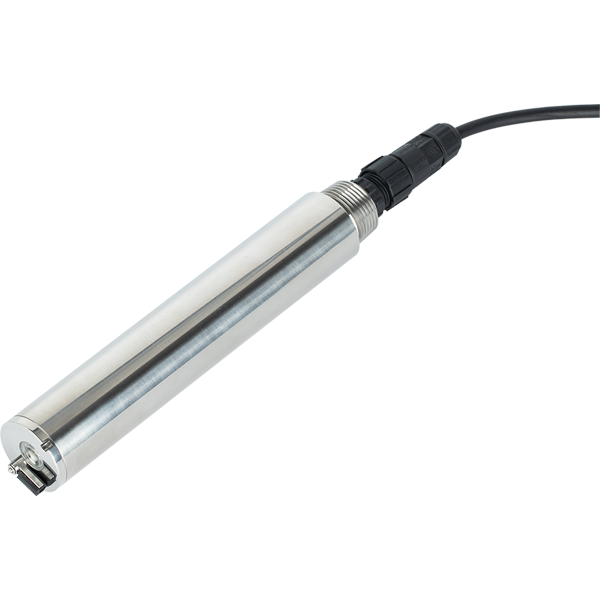
Dissolved oxygen in mg/L and oxygen saturation in percent are different expressions. Retain the unit on every channel and in exported data. Salinity correction on an oxygen probe is a configured input, not proof that the probe independently measures salinity. Review that correction if the pond water source changes.
For ammonia, distinguish total ammonia nitrogen, ammonium and un-ionized ammonia. Also distinguish a result expressed as nitrogen from one expressed as the complete chemical species. A laboratory TAN result must not be compared blindly with an electrode indication under a different definition.
The NiuBoL NBL-WQ-MPS-5B provides optional DO, pH, ORP, conductivity/salinity and turbidity channels, with up to six parameters including temperature. This is not the same configuration as the MPS-5A, and an ammonia channel must not be assumed from the word multiparameter.

| NBL-WQ-DO item | Specification | Pond application consequence |
|---|---|---|
| Principle and range | Fluorescence quenching; 0–20 mg/L | Continuous immersion measurement; the optical cap must remain clean and undamaged. |
| Accuracy and resolution | ±2% FS; 0.01 mg/L resolution | Full-scale accuracy corresponds to ±0.4 mg/L on this span, not ±0.01 mg/L. |
| Supply and consumption | 12–24 VDC; less than 0.3 W at 12 V | Add logger, communications and other sensor loads separately. |
| Interface | RS485 Modbus RTU | A controller, RTU or data logger must decode and store the concentration correctly. |
| Working conditions | 0–45 °C; pressure below 0.2 MPa; IP68 | Confirm actual water conditions and protect above-water terminations. |
| Construction and cable | POM and 316L stainless steel; standard 5 m cable | Specify extensions and cable compatibility for the installation. |
The NBL-WQ-DO oxygen sensor does not consume oxygen through its optical measuring principle. That does not make it independent of circulation: a poorly mixed pocket can still give an unrepresentative result. Avoid installing the cap in sediment or a persistent bubble plume.
The NBL-WQ-NHN uses a PVC-membrane ammonium ion-selective electrode. Before ordering it for a low-level pond decision, establish the reported concentration basis, expected range, relevant interfering ions and achievable comparison performance in the actual water. A high-range configuration is not automatically suitable for resolving a small change near the farm's operating limit.
The fraction of TAN present as un-ionized ammonia depends on pH and temperature. The FAO discussion of nitrogen compounds in ponds explains this relationship. Use a validated calculation appropriate to the water and consistent concentration units; do not label an ammonium electrode value as a direct toxic-ammonia measurement.
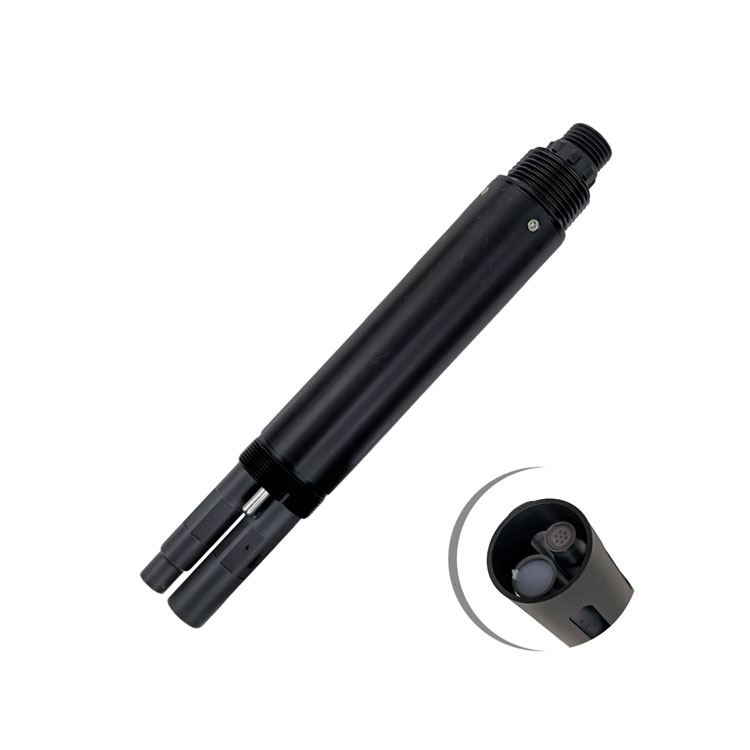
A UV-based COD sensor can support investigation of changing organic conditions, but its calibrated optical estimate is not a direct BOD measurement or a measurement of the oxygen currently available to stock. The NBL-WQ-COD uses dual-wavelength UV absorption with turbidity compensation. Validate its relationship to the relevant laboratory method in the pond water before using a trend for decisions.
When several parameters can share a representative location, an integrated assembly can simplify installation. If oxygen, inlet salinity and discharge turbidity answer questions at different locations, separate points may be needed. Send NiuBoL the production water type, expected ranges and actual decisions so the proposed instruments match those questions.
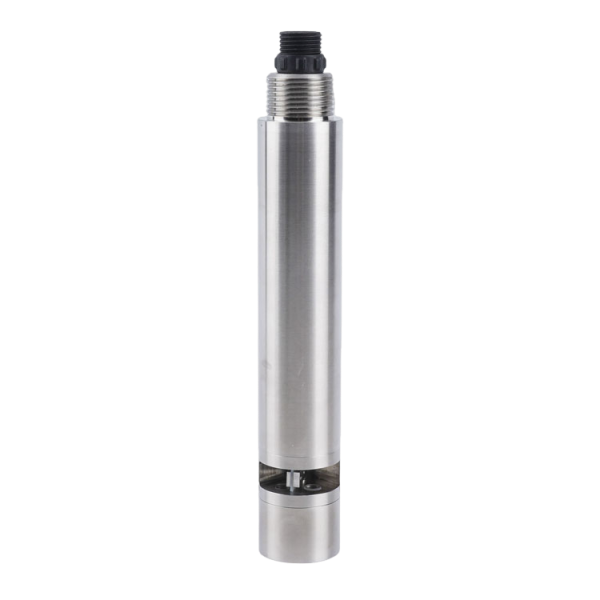
Start with the conditions that can change the farm's immediate operating response, commonly oxygen and temperature, then pH and the required nitrogen checks. Final selection depends on species, water source, feeding and production intensity rather than a fixed package size.
No. They are different measurements. Assess ammonia on the correct concentration basis with pH and temperature, even when dissolved oxygen appears satisfactory.
No. pH describes the current acid-base condition; alkalinity describes buffering capacity. Retain appropriate supplementary testing when buffering matters to the operating decision.
No. Its optional channel set supports up to six parameters including temperature. Discuss ammonia separately or evaluate an appropriate MPS-5A configuration; confirm the actual fitted modules before purchase.
Use a matched location and time, preserve the relevant sample conditions, and compare the same analyte and unit. Record probe condition and recent cleaning. A difference between TAN and ammonium results is not automatically a sensor error.
A useful pond parameter list connects oxygen conditions, pH, temperature and correctly defined nitrogen measurements. Add optical or salt-related channels to answer identified production questions. Clear units and realistic model performance make the information more useful than a longer list of loosely interpreted numbers.
Prev:Portable Water Quality Meter vs Online Monitor: How Project Buyers Should Choose
Next:Smart Aquaculture Water Quality Monitoring System: Pond-by-Pond Design
Related recommendations
Sensors & Weather Stations Catalog
 Agriculture Sensors and Weather Stations Catalog-NiuBoL.pdf
Weather Stations Catalog-NiuBoL.pdf
Agriculture Sensors Catalog-NiuBoL.pdf
Water Quality Sensor Catalog-NiuBoL.pdf
Related products
 Combined air temperature and relative humidity sensor
 TDR Soil Moisture & Temperature Sensor for irrigation| RS485 |4-20mA| NBL-S-THR
 Soil pH sensor RS485 soil Testing instrument soil ph meter for agriculture |NBL-S-PH
 Wind Speed sensor Output Modbus/RS485/Analog/0-5V/4-20mA
 Tipping bucket rain gauge for weather monitoring auto rainfall sensor RS485/Outdoor/stainless steel
 Pyranometer Solar Radiation Sensor 4-20mA/RS485


Screenshot, WhatsApp to identify the QR code
WhatsApp number:+8615367865107
(Click on WhatsApp to copy and add friends)

