





— Blogs —
—Products—
 Consumer hotline +8618073152920
WhatsApp:+8615367865107
Address:Room 102, District D, Houhu Industrial Park, Yuelu District, Changsha City, Hunan Province, China
Product knowledge
Time:2026-08-31 09:06:00 Popularity:289
Quick Answer: Commission a BOD COD TSS analyser as three measurement channels with different reference methods, not as one number set proven by a successful upload. Identify each sensor and sample point, verify the decoded values, then compare representative samples using the applicable laboratory procedures. Optical BOD and COD responses and optical solids estimates need application-specific evaluation before they support process decisions.

A wastewater monitoring point may combine organic-response probes and suspended-solids measurement in one controller. That common enclosure simplifies acquisition but does not establish analytical equivalence. BOD concerns biological oxygen demand under a defined method; COD concerns chemically oxidisable material under a defined method; TSS concerns suspended dry mass determined by the chosen procedure. None is a universal numerical substitute for the others.
For the proposed optical instruments, distinguish the sensing response from the reported process estimate. An optical COD probe does not perform a wet-chemical digestion in the water. An optical BOD-related channel does not incubate every sample through a five-day laboratory test. A scattering-based TSS probe needs a relationship appropriate to the particles. These distinctions determine which comparison proves useful performance.
Write a separate acceptance purpose for each channel. One may support an early process investigation, another a trend, and another a controlled operating decision. If a regulated reporting method is required, have the responsible laboratory and project authority identify it. Do not treat online display units as evidence that the required reporting procedure has been completed.
| Channel | Commissioning question | Required comparison record |
|---|---|---|
| Optical BOD-related estimate | Does the response represent the intended water matrix and operating band? | Matched samples and the selected BOD reference results, with collection times |
| Optical COD-related estimate | How does the optical response compare with the specified COD method? | Matched reference analysis over relevant process conditions |
| Optical suspended solids | Does the concentration estimate remain useful as particles change? | Representative solids samples and the applicable gravimetric reference |
| Host acquisition | Are model, value, unit, time and quality status correct? | Raw responses and corresponding PLC or logger records |
Use unique point and sample identifiers. A pH probe may describe the same treatment stage, but its buffer check does not verify the organic or solids channels. The pH instrument pictured below is a separate station component; retain its identity rather than labelling every similar enclosure as a BOD COD TSS analyser.
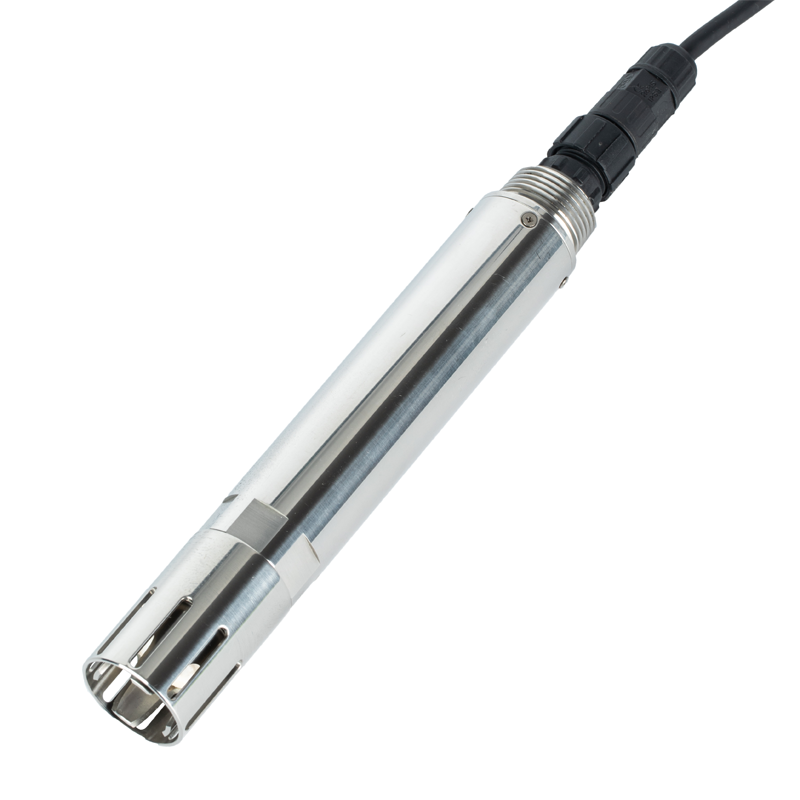
Record the actual model, ordered range, output and configuration for every probe. The following examples illustrate distinct NiuBoL instruments that can be assessed for a multi-channel point. They are individual limits, not a combined analyser specification or a promise that every controller supports every option.
| Instrument | Selected specifications | Commissioning implication |
|---|---|---|
| NBL-WQ-BOD-4S | Optical BOD-related configuration; 0-300 mg/L; 0-45 degrees C; pressure below 0.1 MPa; 0.2 W at 12 V | Confirm the reference relationship and exact accuracy basis for the ordered version |
| NBL-WQ-COD | Dual-wavelength UV response; selected 0-200 or 0-500 mg/L KHP configuration; 0-45 degrees C; pressure below 0.1 MPa; 0.3 W at 12 V | The specified calibration basis does not establish equal response to every wastewater composition |
| NBL-WQ-TSS-4A | Scattered-light measurement; 0-2000 mg/L; accuracy +/-5% depending on sludge homogeneity; 0-50 degrees C; pressure below 0.2 MPa; 0.2 W at 12 V | Agree percentage basis and verify performance for the actual particles |
| Described digital configurations | 12-24 V DC; RS485 Modbus RTU; IP68; standard 5 m probe cables | Acquire each model with its own register definition and protect external joints |
Specify wetted material, cable jacket, mounting and connector details for each offered assembly. Do not infer chemical compatibility from a stainless-steel section or apply one probe's pressure limit to the whole rack. For these examples, the BOD and COD limits are lower than the TSS limit; a common chamber must respect every installed component's conditions.
Check removal and cleaning access before fixing the rack permanently. A probe should return to its approved position after service without lifting by its cable. Optical clearance, bubbles, deposits and the local water path can differ by instrument. A mechanically tidy row of sensing ends is not sufficient if one window sees a wall or settled material.
Use a compatible PLC, RTU or data logger to read one identified device first. Confirm address, serial settings, register start, data type, decimal scaling and unit. Then add the remaining instruments with distinct addresses where they share a bus. Do not copy a successful BOD decoder into COD or TSS without checking the actual definitions.
Compare raw response data and decoded values with the final stored record. If a valid value is wrong at the host, resolve conversion before changing calibration. The dissolved oxygen probe pictured next is a separate measurement; an oxygen concentration in mg/L does not become a BOD result simply because the destination field also uses mg/L.
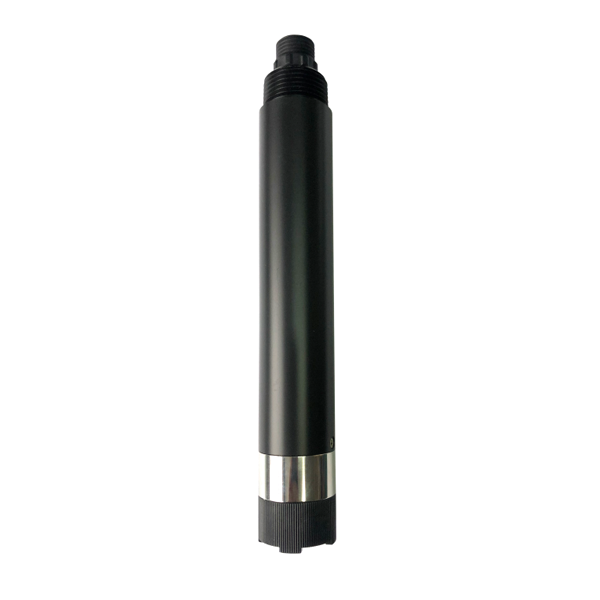
Mark the physical sample point and the sensor positions on a drawing. If the laboratory sample comes from a bypass, establish its transport path and flushing condition. If the probes are directly immersed, check whether the sample represents the same depth and stream. A downstream valve beyond settling or mixing may describe different water.
Retain collection time and the corresponding online interval before the laboratory results arrive. BOD analysis may take several days, but its result still belongs to the original sample, not to the sensor value displayed on the reporting day. COD and TSS comparisons also need the matching sample identity and time.
Use the laboratory's specified containers, handling and analytical procedures. Different analyses may require separate portions and different handling. Do not assume that one bottle left beside the cabinet remains suitable for every comparison, or filter the sample simply to make a probe reading stable. Any conditioning changes what the result represents.
Collect paired observations across the relevant operating band and process states. A group of nearly identical samples cannot demonstrate performance during a changing influent, colour event or solids surge. State which conditions the trial actually covered and which remain untested, rather than extrapolating a convenient fit to the whole plant.
Look at bias and differences near decision levels as well as overall correlation. As an illustrative comparison, a sensor estimate of 240 mg/L against a reference of 200 mg/L differs by +40 mg/L, or +20% relative to the reference. This arithmetic does not establish an acceptance tolerance or describe a NiuBoL field result.
If a site correction is justified, identify where it runs and keep its version with the data. Preserve the uncorrected values. Check additional samples not used to establish the correction, and do not apply the same factor in both probe and controller. There is no defensible universal BOD/COD ratio or NTU-to-TSS factor for all wastewater.
A separate salinity channel can document a matrix change but cannot validate BOD, COD or suspended mass. Keep the salinity probe below named by its own measurand. Its trend may explain when to investigate; it does not supply the missing reference analysis.
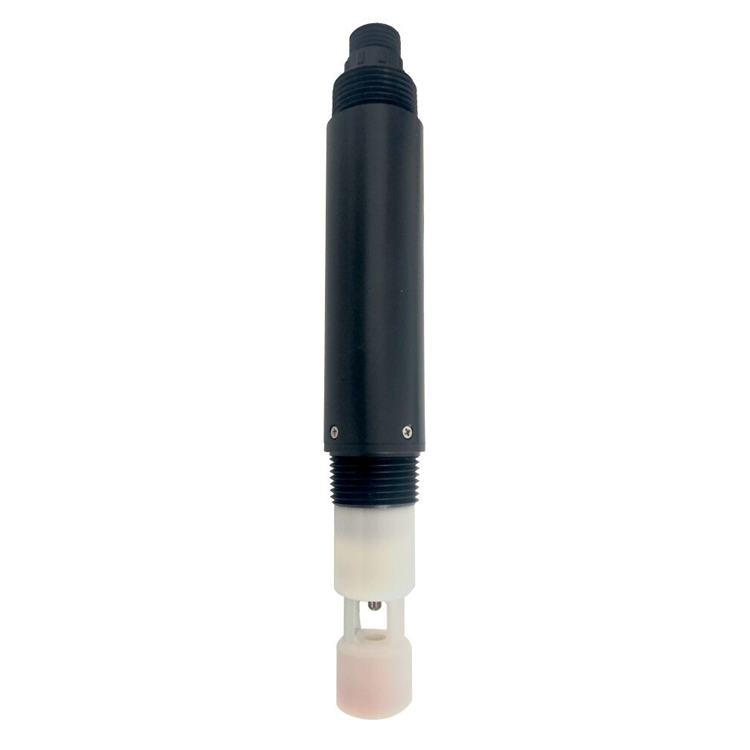
Remove one channel from service under the approved procedure and confirm that the host marks its data appropriately. Values measured in cleaning water or standards must not appear as normal process observations. Any calculation depending on that channel also needs a defined validity rule, while independent channels can remain usable.
Test communication interruption and restoration. A frozen last-good value should retain its original acquisition time and become visibly stale when required. If local buffering and later upload are part of the delivered system, verify original timestamps and duplicate handling. A card slot or a successful reconnection alone does not prove recovery of missing records.
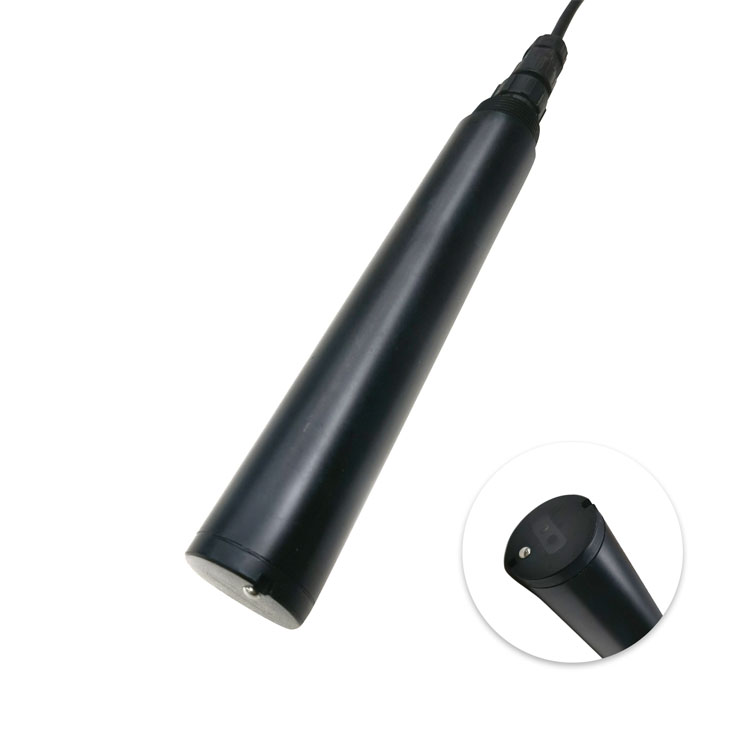
Repeat a removal-and-return check during suitably stable water conditions. Record the as-found value, deposits, cleaning action, return position and post-service result. If the value changes, distinguish cleaning, installation movement and process change before adjusting the measurement. The optical BOD probe below needs its own service procedure rather than a cleaning method copied from a pH electrode.

No. It demonstrates only part of the data path. Verify each channel's identity, conversion, sampling and comparison performance, then test maintenance and unavailable-data behaviour at the actual destination.
Not as a universal measurement rule. Any site relationship needs representative paired analysis and a defined validity range. Changes in wastewater composition can invalidate an earlier relationship.
No. They have different measurement principles and reference requirements. Keep standards, cleaning and adjustment records separate. A shared cabinet does not justify applying one instrument's commands or chemicals to another.
Choose the plan from variability, required confidence and decision risk with the responsible laboratory and engineering team. Include relevant process states and independent verification pairs. No universal count validates every matrix.
Identify the three model configurations, installation and sample paths, host system, reference methods and acceptance criteria. Separate hardware from laboratory analyses, configuration, site work and service training so the offer covers the required tests.
Not by itself. Turbidity is an optical response; TSS concerns suspended mass. A relationship must be assessed for the stream, and the reporting fields must remain distinct even when the trends are related.
A BOD COD TSS analyser needs channel-specific measurement evidence and a common, traceable sampling record. Establish hardware limits, prove the data map and compare matching samples before enabling the intended use. NiuBoL can assess the proposed probes and acquisition arrangement when the water matrix, installation and acceptance task are defined.
Prev:Industrial Rain Sensor: Preserve Rainfall Records Through Outages
Next:Total Dissolved Solids Meter: Compare TDS and Laboratory Results
Related recommendations
Sensors & Weather Stations Catalog
 Agriculture Sensors and Weather Stations Catalog-NiuBoL.pdf
Weather Stations Catalog-NiuBoL.pdf
Agriculture Sensors Catalog-NiuBoL.pdf
Water Quality Sensor Catalog-NiuBoL.pdf
Related products
 Combined air temperature and relative humidity sensor
 TDR Soil Moisture & Temperature Sensor for irrigation| RS485 |4-20mA| NBL-S-THR
 Soil pH sensor RS485 soil Testing instrument soil ph meter for agriculture |NBL-S-PH
 Wind Speed sensor Output Modbus/RS485/Analog/0-5V/4-20mA
 0.2mm Tipping Bucket Rain Gauge for Weather & Hydrology | NiuBoL
 Pyranometer Solar Radiation Sensor 4-20mA/RS485


Screenshot, WhatsApp to identify the QR code
WhatsApp number:+8615367865107
(Click on WhatsApp to copy and add friends)

