





— Blogs —
—Products—
 Consumer hotline +8618073152920
WhatsApp:+8615367865107
Address:Room 102, District D, Houhu Industrial Park, Yuelu District, Changsha City, Hunan Province, China
Product knowledge
Time:2026-08-31 09:07:00 Popularity:311
A total dissolved solids meter commonly estimates TDS from electrical conductivity; a laboratory can determine dissolved residue by a gravimetric method. These results are not automatically interchangeable. When a TDS water tester and laboratory report disagree, check the analytical method, sample identity, conductivity, temperature basis and conversion factor before rejecting the instrument or adjusting treatment.
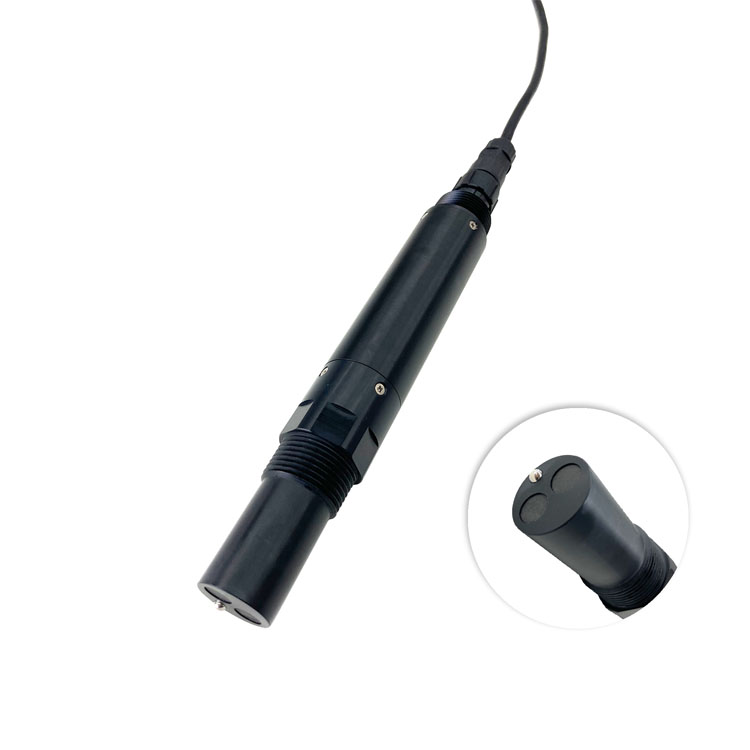
A conductivity-based tester measures how readily the water conducts electricity and converts that response into an estimated dissolved-solids concentration. The displayed result depends on the dissolved ions and the conversion used. It is useful for screening and trending when the water composition is reasonably consistent, but the display does not identify individual dissolved substances.
A gravimetric determination measures residue under a specified laboratory procedure. For example, EPA Method 160.1 for filterable residue describes filtration followed by evaporation and drying of the filtrate to constant weight at 180 degrees C. This is a different measurement procedure from multiplying conductivity by a factor. Ask the laboratory which method it actually used.
Not all dissolved constituents contribute equally to conductivity. The EPA conductivity guidance distinguishes the contribution of dissolved ions from substances such as sugars and oils that conduct poorly in water. An EC-derived TDS reading therefore cannot be treated as a complete analysis of dissolved organic material or a general water-safety certificate.
Before examining the difference, confirm that both results refer to the same collection point and time. A laboratory sample taken from a feed tank yesterday cannot directly verify a tester reading from the treated-water outlet today. Changes in blending, dosing, evaporation or flushing may be more important than the instruments' stated accuracy.
Record the tester's EC value, water temperature, compensation setting, TDS factor and displayed unit. For the laboratory result, retain the sample identifier, method, reported unit and any qualification on the result. If the report itself says calculated TDS, it may be another conductivity estimate rather than an independent gravimetric determination.
| Comparison item | Tester record | Laboratory record |
|---|---|---|
| Sample identity | Point, collection time and instrument ID | Matching submitted sample and collection details |
| Measurement basis | EC-derived estimate or another explicitly identified method | Analytical method, not just the label TDS |
| Temperature | Measured temperature and EC reference-temperature setting | Temperature basis if conductivity is reported |
| Conversion | Factor or conversion scale used by the tester | Factor if calculated; not applicable in the same way to gravimetry |
| Unit and precision | mg/L, ppm or another stated display unit; resolution and accuracy | Reported concentration, method range and result qualification |
Keep other measurements separate. A dissolved oxygen sensor can help assess oxygen conditions during a water investigation, but DO is not a component to add to the tester's TDS display. A shared sample bottle or monitoring cabinet does not make the measurement methods interchangeable.
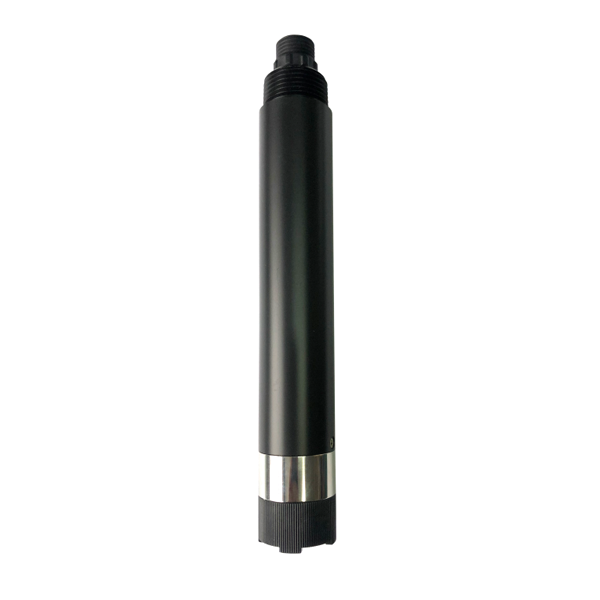
For a simple linear conversion, estimated TDS in mg/L equals EC in microS/cm multiplied by the selected factor. Units matter: 1 mS/cm equals 1000 microS/cm. Applying a factor to the wrong EC unit creates a thousandfold error, while applying it twice can create a less obvious but systematic bias.
Consider an illustrative sample with conductivity reported at the agreed reference temperature of 800 microS/cm. A factor of 0.50 gives 400 mg/L; a factor of 0.64 gives 512 mg/L. The 112 mg/L difference arises from configuration, without any change in the measured conductivity. These are arithmetic examples, not recommended factors for an unknown water source.
If a paired laboratory result were 480 mg/L, dividing it by 800 microS/cm would give an apparent factor of 0.60 for that pair. One pair is not enough to approve that factor across the plant. Check multiple representative operating conditions, including source-water changes and relevant process transitions. A factor fitted to one blend may no longer describe another blend.
Preserve the original EC readings while evaluating the relationship. Do not overwrite them with corrected TDS values or continuously retune the factor to make each laboratory result agree. That approach can conceal sample differences and prevent later investigation. A project-specific conversion is useful only when its applicable water types and limitations are documented.
A salinity measurement uses its own scale and relationship to water composition. It should not be copied into an mg/L TDS field simply because both relate to dissolved salts. For saline-water projects, select the required salinity method and reporting unit explicitly. The NiuBoL salinity sensor below is a separate product option for that measurement duty.
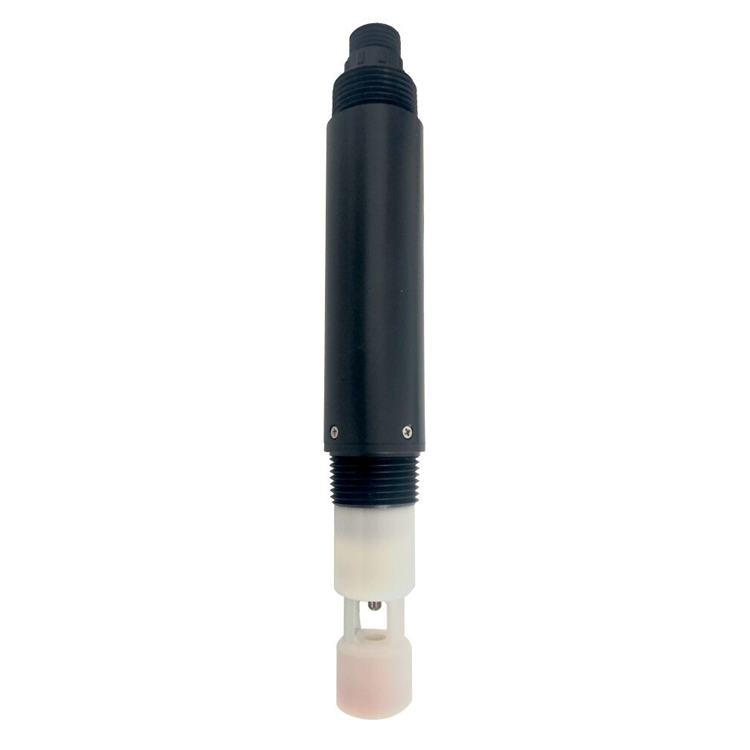
BOD addresses oxygen demand associated with biological activity, not total dissolved residue. Optical BOD estimates also require their own method evaluation and site relationship. A low TDS display does not establish a low oxygen demand, and a high BOD result cannot be used to calculate the TDS conversion factor.
This distinction matters when an industrial customer investigates a new discharge or a changed cleaning process. Additional dissolved organic material may affect the laboratory result or oxygen-demand observations differently from conductivity. Select the analysis that identifies the suspected change rather than ordering a wider-range TDS tester and expecting it to identify the compound.
For each failed comparison, ask a specific question. Did EC also change? Did the tester pass its reference check? Were two different reference temperatures used? Did a high-concentration sample contaminate the next measurement? Is the laboratory result near its reporting limit? These questions lead to different corrective actions and are more useful than a single percentage labeled meter error.
Where a BOD monitoring channel is part of the wider investigation, retain its sampling and calibration records separately. Correlated trends may help identify an event, but they do not establish analytical equivalence between BOD, EC-derived TDS and gravimetric residue.

A portable tester remains useful for spot checks and paired sampling. An online sensor becomes useful when the unresolved question is when the water changed between those checks. It can show the timing and duration of conductivity excursions, allowing the site to target subsequent samples. It does not remove the need for laboratory testing when a specified analytical method is required.
The NiuBoL NBL-WQ-EC is a powered online conductivity sensor, not a handheld TDS pen. Select its range from expected conductivity and the required discrimination near the operating limit. The table describes the online option; these values must not be assigned to an unspecified portable water tester.
| NBL-WQ-EC parameter | Specification | Use in a comparison project |
|---|---|---|
| Available EC ranges | 0-20.00 microS/cm; 0-200.0 microS/cm; 0-5000 microS/cm; 0-200.0 mS/cm | Select the appropriate range configuration rather than assuming one probe covers every duty. |
| Accuracy | +/-1% FS; temperature +/-0.3 degrees C | Evaluate full-scale error at the actual operating concentration. |
| Temperature measurement | Pt1000; automatic temperature compensation | Align the compensation basis with the reference comparison. |
| Operating limits | 0-50 degrees C; pressure below 0.6 MPa | Keep the sampling arrangement within these conditions. |
| Power and output | 12-24 VDC +/-10%; 0.2 W at 12 V; RS485 Modbus RTU | Provide a compatible supply and logger or controller. |
| Protection and installation | IP68; 3/4 NPT; 5 m standard cable | Specify accessible mounting and suitable protected cable connections. |
Store conductivity and temperature in the data logger, together with the TDS factor if a derived concentration is displayed. Confirm whether conversion is performed inside the sensor or in the receiving software so it is applied only once. Record configuration changes with dates; otherwise an apparent step in TDS may simply be a changed factor.
A turbidity channel can show suspended-particle changes that deserve separate investigation. It does not supply the missing dissolved-solids measurement. Similarly, a clear-looking sample can contain substantial dissolved salts. Keep the turbidity probe identified by its own parameter and unit when several sensors share an RS485 bus.
No. First establish whether the laboratory measured residue or calculated TDS from conductivity. Then compare sample identity, temperature basis and conversion settings. A failed conductivity-standard check supports an instrument investigation; a difference between two analytical methods needs a broader explanation.
No universal factor should be assumed. Ionic composition and the proportion of weakly conducting dissolved substances can change the relationship. Evaluate paired results for the water types actually encountered and keep the original EC data available.
No. Resolution is the smallest displayed increment, not the total measurement uncertainty. Acceptance must consider instrument accuracy, reference quality, sample handling and any conversion model. Establish the criterion before the comparison rather than selecting a convenient tolerance afterward.
Check the instrument's definition. A ppm display may be a conductivity-derived scale, while mg/L describes mass per volume. They may be numerically similar for dilute aqueous solutions under stated assumptions, but that does not establish the same analytical basis or justify treating all liquids identically.
Provide expected EC, water composition, temperature, pressure and the proposed sample connection. Include paired laboratory results where available, the required reporting method and the receiving PLC or logger. Ask for the EC configuration and conversion behavior separately so the quotation does not imply a direct gravimetric measurement.
No. Conductivity cannot distinguish ammonia from other dissolved constituents. Where ammonia nitrogen is the decision parameter, use an appropriate dedicated measurement and evaluate its matrix limitations. An EC trend may indicate a change without identifying its cause.
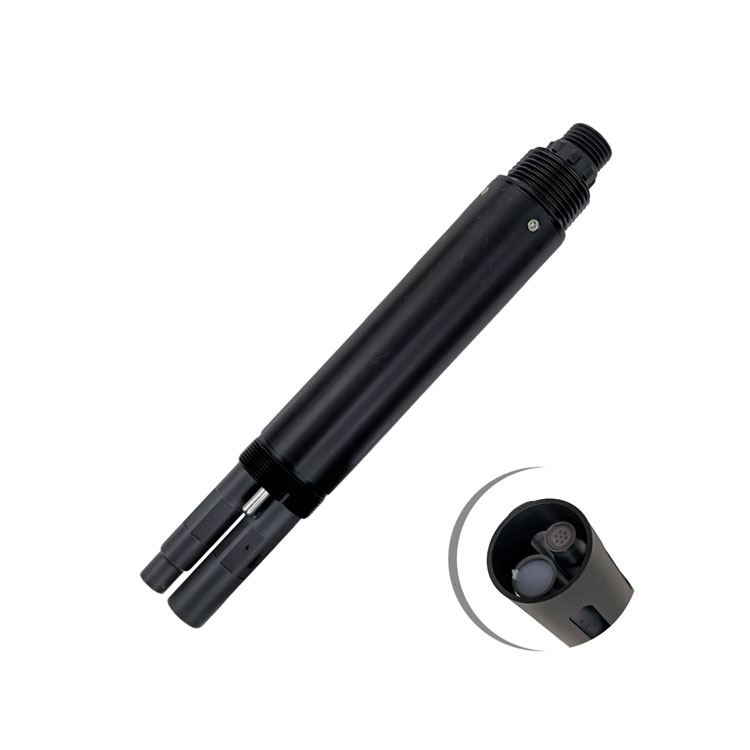
Use a total dissolved solids meter with a clearly identified measurement basis. Preserve EC, temperature and conversion settings, compare matched samples, and investigate method differences before changing equipment. NiuBoL online conductivity sensors can add time-resolved observations when manual checks leave gaps; laboratory residue results and dedicated chemical measurements retain their separate roles.
Prev:BOD COD TSS Analyser: Commission Each Measurement Separately
Next:ORP Sensor Maintenance: Clean, Check or Replace the Electrode
Related recommendations
Sensors & Weather Stations Catalog
 Agriculture Sensors and Weather Stations Catalog-NiuBoL.pdf
Weather Stations Catalog-NiuBoL.pdf
Agriculture Sensors Catalog-NiuBoL.pdf
Water Quality Sensor Catalog-NiuBoL.pdf
Related products
 Combined air temperature and relative humidity sensor
 TDR Soil Moisture & Temperature Sensor for irrigation| RS485 |4-20mA| NBL-S-THR
 Soil pH sensor RS485 soil Testing instrument soil ph meter for agriculture |NBL-S-PH
 Wind Speed sensor Output Modbus/RS485/Analog/0-5V/4-20mA
 0.2mm Tipping Bucket Rain Gauge for Weather & Hydrology | NiuBoL
 Pyranometer Solar Radiation Sensor 4-20mA/RS485


Screenshot, WhatsApp to identify the QR code
WhatsApp number:+8615367865107
(Click on WhatsApp to copy and add friends)

