





— Blogs —
—Products—
 Consumer hotline +8618073152920
 WhatsApp:+8615367865107
Address:Room 102, District D, Houhu Industrial Park, Yuelu District, Changsha City, Hunan Province, China
Product knowledge
Time:2026-09-16 11:00:00 Popularity:26
Chloride monitoring is specified when a project needs a chloride-specific trend for corrosion assessment, source-water change, desalination pretreatment, or industrial-water control. A NiuBoL online ion-selective water-quality sensor should be evaluated against the expected chloride range, water matrix, installation point, and receiving-system interface.
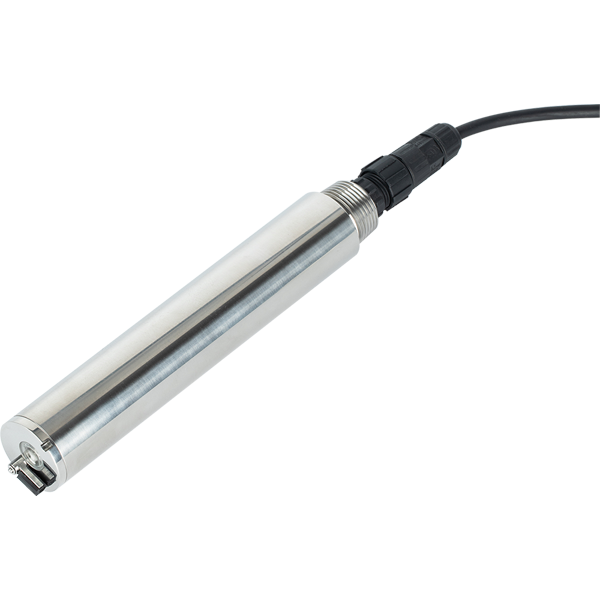
The design basis should describe the normal chloride band, credible excursions, temperature and salinity changes, sample movement, and the action taken when a threshold or rate of change is reached. This separates a corrosion-warning channel from a general-purpose water-quality display.
| Decision item | Project-specific check | Buyer value |
|---|---|---|
| Operating objective — application: Chloride Ion in Water Monitoring for Corrosion and Source-Water Projects | Define what field decision the value supports | Connects measurement to user value |
| Application stress — application: Chloride Ion in Water Monitoring for Corrosion and Source-Water Projects | Check fouling, flow, bubbles, algae, salinity or disinfectant effects | Improves model and mounting choice |
| Data use — application: Chloride Ion in Water Monitoring for Corrosion and Source-Water Projects | Set alarm limits, trend review and reporting needs | Prevents unused measurements |
| Service plan — application: Chloride Ion in Water Monitoring for Corrosion and Source-Water Projects | State cleaning access and inspection interval | Reduces lifecycle risk |
The chloride probe provides the field measurement, while the controller, RTU, data logger, or platform handles scaling, alarms, history, and reporting. The quotation should assign the holder, cable route, enclosure, power, communication, and platform configuration to named supply scopes.

Before PLC or RTU programming, confirm the exact model's RS485 Modbus RTU wiring, address settings, register definition, data type, scaling, and engineering unit. If an existing panel requires 4-20 mA, verify that output and its mapped range before the cabinet drawings are released.
| Parameter | Verified or product-family specification | Procurement meaning |
|---|---|---|
| Measurement principle — focus: Chloride Ion in Water Monitoring for Corrosion and | Ion selective electrode method, model-specific membrane and compensation | Use only for the ion named in the approved model |
| Output signal — focus: Chloride Ion in Water Monitoring for Corrosion and | RS485 Modbus RTU; 4-20 mA optional on selected 4-series models | Check register and scaling before PLC programming |
| Supply / power — focus: Chloride Ion in Water Monitoring for Corrosion and | 12-24 VDC / low-power sensor family | Suitable for distributed monitoring when the host is planned |
| Protection — focus: Chloride Ion in Water Monitoring for Corrosion and | IP68 immersion construction referenced for NiuBoL online probes | Protect cable joints and select material by water chemistry |
| Calibration — focus: Chloride Ion in Water Monitoring for Corrosion and | Two-point calibration according to selected ion | Standard solution and interval must be in the maintenance plan |
| Application | Field environment challenge | System integration solution | User value |
|---|---|---|---|
| Source-Water Risk Monitoring — focus: Chloride Ion in Water Monitoring for Corrosion and | Fouling, changing water chemistry and limited service access | Use the selected NiuBoL sensor with defined mounting, cleaning and protocol settings | Better alarm relevance |
| Groundwater Projects — focus: Chloride Ion in Water Monitoring for Corrosion and | Old PLC or RTU input restrictions | Confirm RS485 Modbus RTU or analog output before cabinet design | Less commissioning rework |
| Industrial Water Treatment — focus: Chloride Ion in Water Monitoring for Corrosion and | Representative sampling under variable flow | Set the point, depth or sample flow in the drawing | More defensible acceptance |
| Aquaculture And Environmental Stations — focus: Chloride Ion in Water Monitoring for Corrosion and | Need for trend evidence rather than one manual test | Store timestamped data with maintenance records | Lower support cost over the project life |
Not every site should use the same chloride ion in water monitoring configuration.
A chloride-monitoring RFQ should identify the water source, expected operating band, sampling point, cable distance, host interface, controller or platform, calibration provisions, documentation, quantity, and destination. Compare the sensing point, mounting, communication, and commissioning scope as separate line items.
For chloride ion in water monitoring, the first-day record should include photos, wiring, Modbus address, register mapping, calibration or comparison record and operator responsibility.
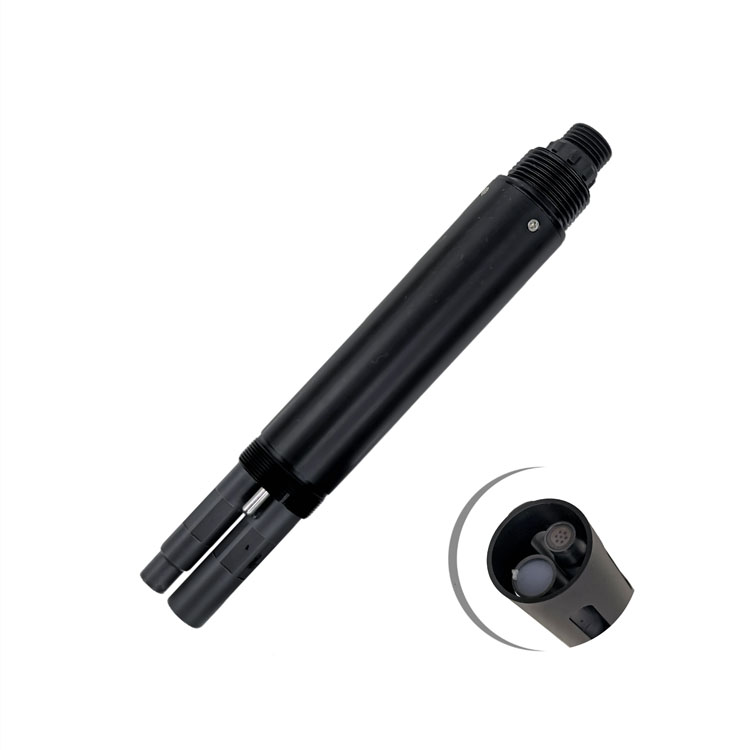
The engineering review treats chloride as a risk indicator for pipelines, desalination, boiler and groundwater projects.
It specifies why conductivity alone cannot replace chloride-specific monitoring when chloride is the concern.
For this chloride ion in water monitoring topic, the buying decision should be tied to the actual measuring point.
| Check item | What to verify | Why it matters |
|---|---|---|
| Water matrix — application: Chloride Ion in Water Monitoring for Corrosion and Source-Water Projects | pH, temperature, salinity, suspended solids, color, oil, disinfectant or biological fouling | Interference and maintenance interval depend on the medium |
| Installation — application: Chloride Ion in Water Monitoring for Corrosion and Source-Water Projects | Immersion depth, flow cell, pipe tap, bracket, anti-fouling access and cable protection | Mechanical details determine whether the reading is stable |
| Data integration — application: Chloride Ion in Water Monitoring for Corrosion and Source-Water Projects | RS485 address, Modbus RTU settings, register map, scaling, unit and alarm logic | Avoids commissioning disputes between supplier and integrator |
| Acceptance — application: Chloride Ion in Water Monitoring for Corrosion and Source-Water Projects | Reference method, comparison instrument, first-day readings and maintenance record | Creates evidence for project handover |
Conductivity cannot by itself identify chloride because it responds to the combined ionic content of the water. Where chloride is the decision variable, the review should address the ion-selective measurement, expected matrix, calibration approach, temperature, ionic strength, and potential interference before a model is approved.
An online chloride channel is most useful where repeated fixed-point trends support an operating or asset-protection decision. Retain chloride alongside relevant context such as conductivity, pH, temperature, flow, and operating state so an excursion can be distinguished from a sampling, process, or communication event.
Treat the quotation as the chloride channel's scope boundary. State whether the offer includes only the probe or also the holder or flow cell, cable extension, junction box, controller, RTU, logger, gateway, power equipment, platform setup, calibration materials, spares, and commissioning support. This makes sensor-only and installed-station offers comparable.
Acceptance should connect the wet point to the historian record. Document location, sample condition, temperature, flow, visible fouling, cleaning status, and the latest calibration or comparison. Then compare the local chloride value with the simultaneous host value and retain Modbus settings or, for a verified analog output, the PLC's lower and upper range mapping.
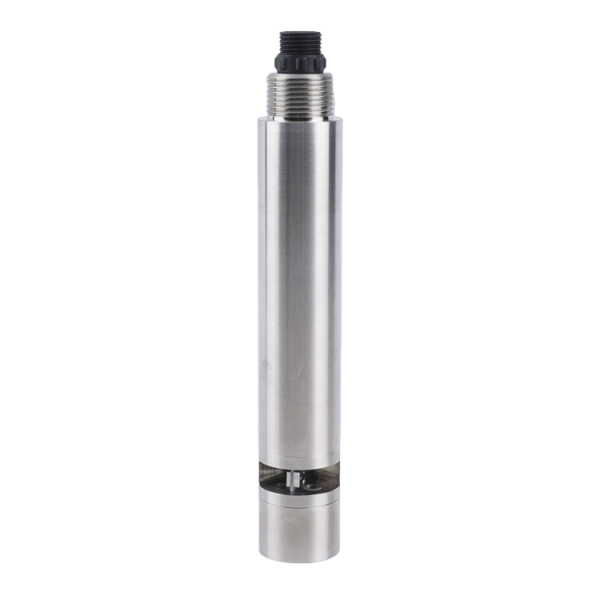
A1: Define the action that chloride data will support, such as investigating source-water intrusion, reviewing corrosion exposure, changing blending, or checking pretreatment. The required trend interval and alarm logic should follow that action.
A2: Yes, when RS485 Modbus RTU is confirmed for the selected NiuBoL model. Request the wiring definition, serial settings, register table, data format, scaling, unit, and a known example value before PLC or RTU software is finalized.
A3: Use 4-20 mA only when it is supported by the exact configuration and required by the existing control panel. Record the chloride range assigned to 4 and 20 mA so the field display and PLC value can be compared during commissioning.
A4: Provide the water source, chloride operating and upset bands, temperature and salinity context, installation drawing or photograph, cable distance, host interface, controller or platform, quantity, documentation, destination, and required commissioning scope.
A5: Price depends on the confirmed measuring configuration and delivered scope. A probe-only offer cannot be compared directly with a package that includes mounting, controller, enclosure, gateway, calibration materials, documentation, and startup support.
A6: Check whether the point represents the intake or process stream, whether stratification or intermittent flow is possible, and whether deposits, bubbles, cable-joint ingress, grounding, or incorrect scaling could create a false chloride trend.
A7: Retain the approved datasheet, model and serial number, wiring record, Modbus map, configured range, installation photographs, calibration or comparison record, first stable trend, alarm test, and named maintenance responsibility.
A8: Base the maintenance plan on the water matrix and observed drift. The handover file should state safe access, cleaning and calibration or comparison method, required materials or spares, responsible party, and the record format used to approve return to service.
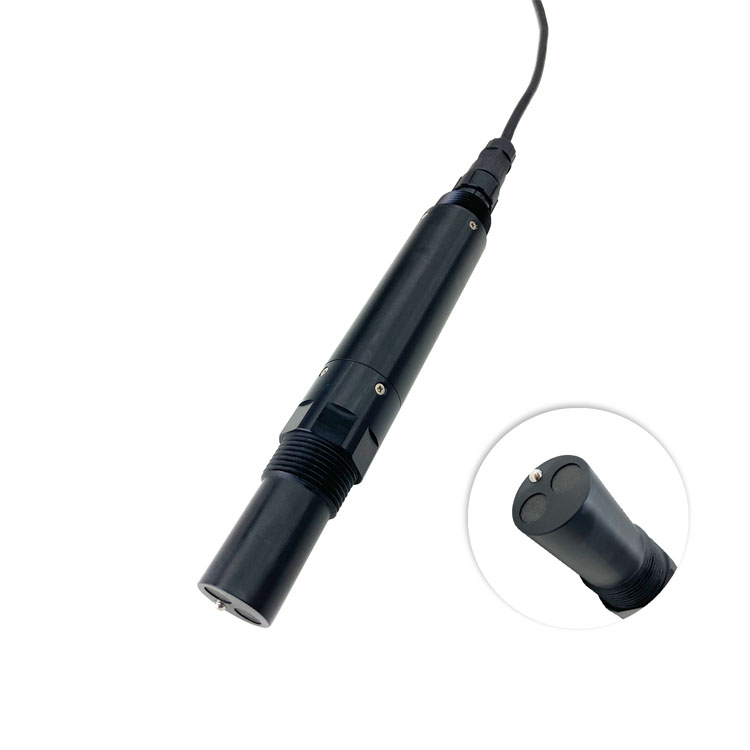
A defensible chloride-monitoring package links the corrosion or source-water decision to the sample point, confirmed NiuBoL configuration, host mapping, installation scope, calibration plan, and acceptance evidence.
Prev:Fluoride Ion in Water Monitoring: Risk, Source Water and Sensor Selection
Next:Micro Automatic Water Quality Monitoring Equipment Supplier Evaluation
Related recommendations
Sensors & Weather Stations Catalog
 Agriculture Sensors and Weather Stations Catalog-NiuBoL.pdf
Weather Stations Catalog-NiuBoL.pdf
Agriculture Sensors Catalog-NiuBoL.pdf
Water Quality Sensor Catalog-NiuBoL.pdf
Related products
 Combined air temperature and relative humidity sensor
 Soil Moisture Temperature sensor for irrigation|NBL-S-THR
 Soil pH sensor RS485 soil Testing instrument soil ph meter for agriculture |NBL-S-PH
 Wind Speed sensor Output Modbus/RS485/Analog/0-5V/4-20mA
 Tipping bucket rain gauge for weather monitoring auto rainfall sensor RS485/Outdoor/stainless steel
 Pyranometer Solar Radiation Sensor 4-20mA/RS485

Screenshot, WhatsApp to identify the QR code
WhatsApp number:+8615367865107
(Click on WhatsApp to copy and add friends)

