





— Blogs —
—Products—
 Consumer hotline +8618073152920
 WhatsApp:+8615367865107
Address:Room 102, District D, Houhu Industrial Park, Yuelu District, Changsha City, Hunan Province, China
Product knowledge
Time:2026-08-10 08:05:29 Popularity:111
CO2 Sensor Price: What Greenhouse and Environmental Projects Should Compare is written for buyers who need a working monitoring point, not a catalog comparison. The useful question is not only whether the device can measure co2 sensor price; it is whether the selected package can survive the site, connect to the existing controller and produce data that the project team trusts after commissioning.
For NiuBoL projects, the normal selection path starts with the application environment, required output, installation method, maintenance access and data platform. Model choice comes after those conditions are clear. This approach prevents common procurement mistakes: buying a range that is too narrow, choosing a consumer interface for an industrial cabinet, or ignoring cable and mounting details until installation day.
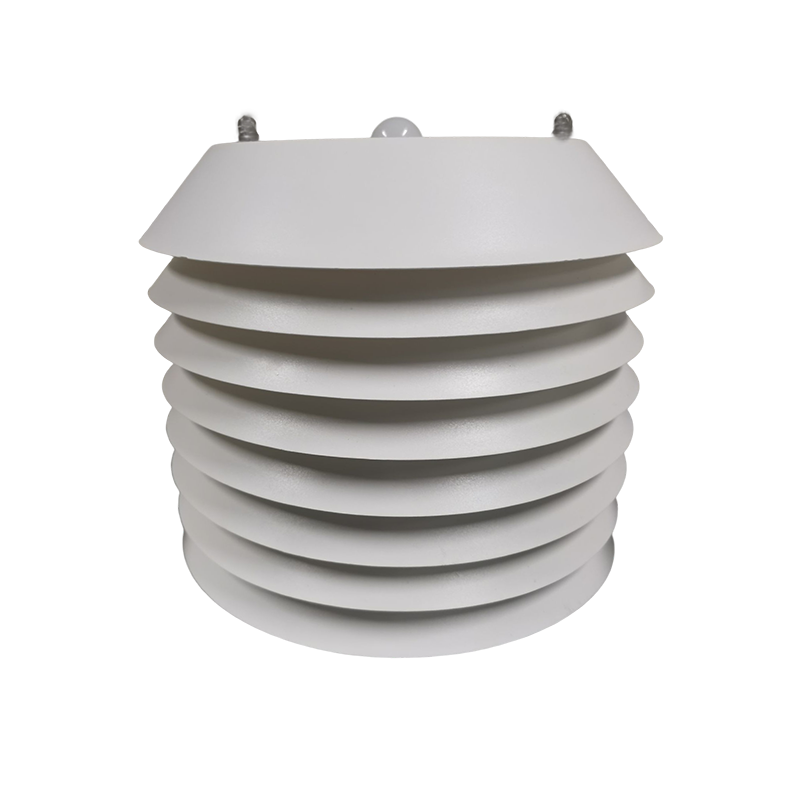
CO2 sensor price varies because buyers are not always comparing the same product. A bare indoor module, a wall display, an outdoor protected sensor and a five-parameter environmental sensor can all be called a CO2 sensor, but they solve different problems. In procurement, the price should be compared against range, enclosure, output, installation and service life.
A lower price can be acceptable for temporary checks or indoor reference use. For greenhouse climate control, storage ventilation or environmental monitoring, the project cost should include the sensor body, radiation or protective housing, wiring, power supply, data logger, calibration method and installation accessories.
NiuBoL CO2 and multi-parameter environmental sensors can be used as part of greenhouse climate stations or outdoor monitoring nodes. When paired with temperature, humidity, pressure and illumination, the CO2 reading becomes easier to interpret because ventilation and weather conditions are visible in the same data set.
In a greenhouse or environmental monitoring cabinet, the CO2 sensor is part of the climate feedback layer. It should be installed with temperature and humidity data, ventilation status and logging equipment so that operators can separate real CO2 demand from ventilation or sensor placement errors.
The practical value is highest when the sensor is specified together with power supply, cable length, mounting method, cleaning access, controller protocol and data acceptance rules. A technically correct sensor can still fail in a project if it is installed where the sample is not representative or if the data system cannot read the output reliably.
For industrial projects, RS485 Modbus RTU remains the preferred interface because it supports multi-drop wiring, long cable distance, stable register polling and direct connection to PLC, RTU, data logger or IoT gateway hardware. The buyer should confirm baud rate, parity, Modbus address, register map, unit definition and update interval before ordering.
Integration should also consider grounding, surge protection, waterproof junction boxes and separation from high-current pump or motor cables. Many field faults are not caused by the measuring element itself but by weak wiring practice, shared noisy power supplies or unprotected outdoor terminals.
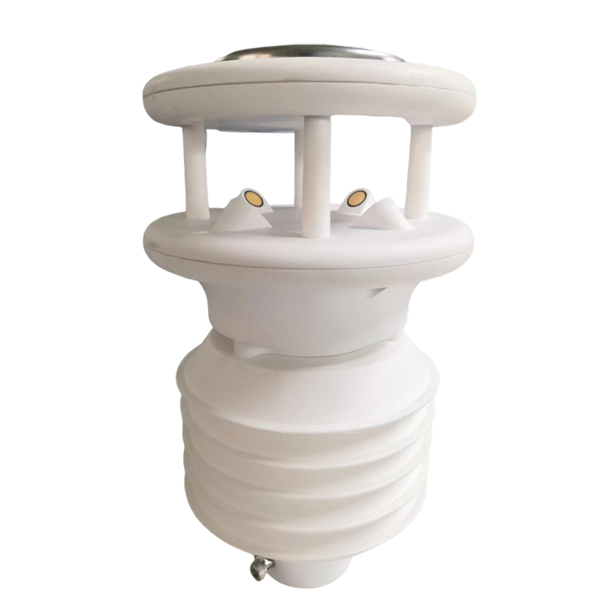
| Measurement range | 0-5000 ppm CO2; temperature, humidity, pressure and illumination by model | Enough for greenhouse ventilation, storage rooms and environmental monitoring stations |
|---|---|---|
| Accuracy | CO2 typically +/-50 ppm +/-3% reading; temperature +/-0.5 deg C; RH +/-3% RH | Accuracy level suitable for control decisions, not laboratory gas certification |
| Power supply | DC 12-24 V | Matches site power used by weather stations and environmental cabinets |
| Output signal | RS485 Modbus RTU | Simple integration into PLC, gateway and cloud data logger systems |
| Protection | Outdoor radiation shield or ventilated enclosure according to installation | Prevents solar heating from creating false temperature and humidity readings |
| Operating temperature | -40 to +80 deg C sensor-dependent | Suitable for most greenhouse and outdoor shelter applications |
Field challenge: CO2 readings change quickly near dosing points and vents.
Integration plan: Place sensors in representative zones and combine CO2 with temperature, humidity and ventilation data.
User value: Control decisions become less dependent on manual observation.
Field challenge: High humidity and enclosed air can shorten consumer sensor life.
Integration plan: Use an industrial housing, stable DC power and RS485 logging.
User value: Managers can keep records for ventilation and environmental control.
Field challenge: Outdoor or semi-outdoor sites need stable shelter and data upload.
Integration plan: Mount the sensor in a protected enclosure and connect it to a station gateway.
User value: The project obtains CO2 trend data together with meteorological parameters.
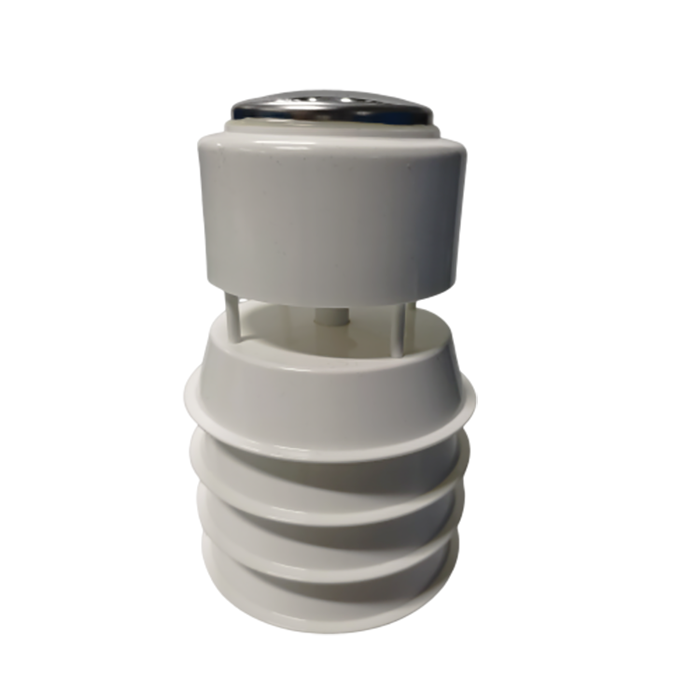
Compare CO2-only sensors with multi-parameter sensors according to cabinet inputs. If the system already has reliable temperature and humidity sensors, CO2-only may be enough. If the site is new, integrated multi-parameter measurement can reduce wiring and timestamp mismatch.
For permanent installations, avoid devices that cannot provide a protocol, wiring diagram, power requirement and environmental rating. A display meter without stable data output adds manual work and weakens project acceptance.
A useful RFQ states CO2 range, expected accuracy, indoor or outdoor installation, greenhouse size, mounting height, power supply, RS485 or analog output, cable length, required temperature and humidity measurement, and whether a gateway or display is needed.
Before shipment, confirm the model label, wiring definition, Modbus register table and accessory list. For large projects, ask for sample testing before bulk installation so the control logic can be verified.
An industrial CO2 sensor is not needed for a simple home comfort display. It is also not suitable for explosive or special gas safety applications unless the product is specifically certified for that environment.
A system integrator can use the article to define signals, Modbus communication, mounting and commissioning checks. A distributor can use it to qualify customer requirements before asking for a price. A project owner can use it to compare complete packages rather than isolated devices. A purchasing team can use the RFQ checklist to reduce revisions and avoid missing accessories.
Two CO2 sensor quotations may look close on paper but include different responsibilities. One quote may include only the sensing module. Another may include a weather-resistant enclosure, cable, RS485 register table, radiation shield, mounting bracket and support for controller connection. For a project buyer, the second quote can be cheaper in practice because it reduces installation decisions and troubleshooting time.
Greenhouse buyers should also separate display needs from control needs. A display is useful for local operators, but the controller needs a stable signal. If the CO2 value will be used for ventilation or enrichment, confirm the update interval, warm-up time and what happens after power loss. A sensor that restarts slowly or changes address after configuration can create unnecessary commissioning work.
For environmental stations, the CO2 reading should not be judged alone. Temperature, humidity, light and pressure help explain why readings rise or fall. When those parameters are captured in one station, project reports become easier to review because the operator can link CO2 changes to ventilation, sunlight, weather or site activity.
A practical CO2 specification can be written as: one RS485 CO2 environmental sensor, 0-5000 ppm range, DC 12-24 V supply, outdoor or greenhouse protective housing, Modbus RTU register map, cable length according to cabinet position and mounting height defined by crop canopy or breathing zone. This wording gives the supplier enough information to quote the correct package instead of guessing between an indoor display and a control sensor.
For greenhouse projects, add the number of zones and whether CO2 enrichment equipment is installed. For storage or indoor agriculture, add humidity level, cleaning method and whether condensation is expected. For outdoor environmental monitoring, add radiation shield, mast height and whether the sensor will be combined with wind, rain or solar radiation data.
Q1: What determines CO2 sensor price in greenhouse or environmental monitoring projects?
A: Price is mainly determined by CO2 range, NDIR module grade, whether temperature and humidity are integrated, enclosure design, radiation shield, output protocol, cable length and whether a data logger or gateway is included.
Q2: Is a low-cost indoor CO2 sensor suitable for greenhouse control?
A: Usually not for permanent greenhouse control. Greenhouses need stable power, humidity resistance, suitable enclosure, repeatable calibration and controller communication. Indoor display meters can be useful for spot checks but are weak for automation.
Q3: Which output is easier for system integration?
A: RS485 Modbus RTU is usually easier for PLC, RTU and data logger projects because it supports longer cable distance and direct register reading. Analog output may be selected for legacy controllers.
Q4: Where should the CO2 sensor be installed?
A: Install it at representative crop canopy or breathing-zone height, away from direct fertilizer gas injection, vents, heaters and water spray. A shielded or ventilated location gives more stable readings.
Q5: Can one sensor represent a whole greenhouse?
A: Only in a small and well-mixed house. Large greenhouses, partitioned houses and sites with uneven ventilation normally need several measuring points.
Q6: What should be included in an RFQ?
A: State measuring range, required accuracy, power supply, output protocol, installation environment, enclosure type, cable length, quantity and whether temperature, humidity, pressure or illumination must be measured together.
Q7: How often should CO2 sensors be calibrated?
A: Calibration interval depends on the sensor module and site drift tolerance. For control projects, schedule periodic checks against a reference meter and record adjustments.
Q8: When is a multi-parameter sensor better than a CO2-only sensor?
A: Use a multi-parameter sensor when ventilation control or climate analysis needs CO2, temperature, humidity, pressure and light in the same timestamp. Use CO2-only when the cabinet already has other sensors.
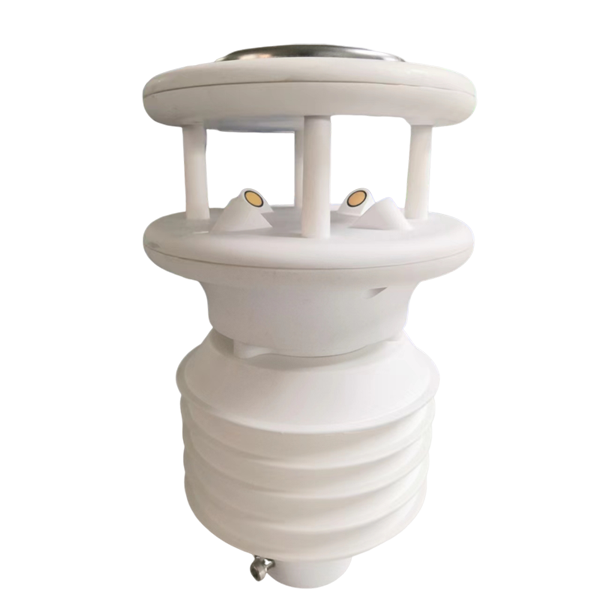
CO2 sensor price should be judged by application readiness, not by the sensor module alone. For greenhouse and environmental monitoring, the more reliable comparison includes enclosure, RS485 Modbus RTU output, installation accessories, calibration plan and data integration.
If the model is not obvious, send NiuBoL the site water or soil condition, expected measuring range, controller interface, power supply, installation method, cable length, quantity and project schedule. With those details, the quotation can match the engineering requirement instead of only naming a product.
Prev:Smart Irrigation Control Sensor Set: Industrial Soil Sensor Alternative
Next:Water Turbidity Sensor Selection for Online Water Monitoring Projects
Related recommendations
Sensors & Weather Stations Catalog
 Agriculture Sensors and Weather Stations Catalog-NiuBoL.pdf
Weather Stations Catalog-NiuBoL.pdf
Agriculture Sensors Catalog-NiuBoL.pdf
Water Quality Sensor Catalog-NiuBoL.pdf
Related products
 Combined air temperature and relative humidity sensor
 TDR Soil Moisture & Temperature Sensor for irrigation| RS485 |4-20mA| NBL-S-THR
 Soil pH sensor RS485 soil Testing instrument soil ph meter for agriculture |NBL-S-PH
 Wind Speed sensor Output Modbus/RS485/Analog/0-5V/4-20mA
 Tipping bucket rain gauge for weather monitoring auto rainfall sensor RS485/Outdoor/stainless steel
 Pyranometer Solar Radiation Sensor 4-20mA/RS485

Screenshot, WhatsApp to identify the QR code
WhatsApp number:+8615367865107
(Click on WhatsApp to copy and add friends)

