





— Blogs —
—Products—
 Consumer hotline +8618073152920
 WhatsApp:+8615367865107
Address:Room 102, District D, Houhu Industrial Park, Yuelu District, Changsha City, Hunan Province, China
Product knowledge
Time:2026-08-10 08:05:31 Popularity:116
Water Turbidity Sensor Selection for Online Water Monitoring Projects is written for buyers who need a working monitoring point, not a catalog comparison. The useful question is not only whether the device can measure water turbidity sensor; it is whether the selected package can survive the site, connect to the existing controller and produce data that the project team trusts after commissioning.
For NiuBoL projects, the normal selection path starts with the application environment, required output, installation method, maintenance access and data platform. Model choice comes after those conditions are clear. This approach prevents common procurement mistakes: buying a range that is too narrow, choosing a consumer interface for an industrial cabinet, or ignoring cable and mounting details until installation day.
A water turbidity sensor is selected to show how suspended particles change over time. In real projects, the buyer usually needs more than an NTU number. The sensor must remain stable in dirty water, be easy to clean and connect to the existing monitoring cabinet or telemetry station.
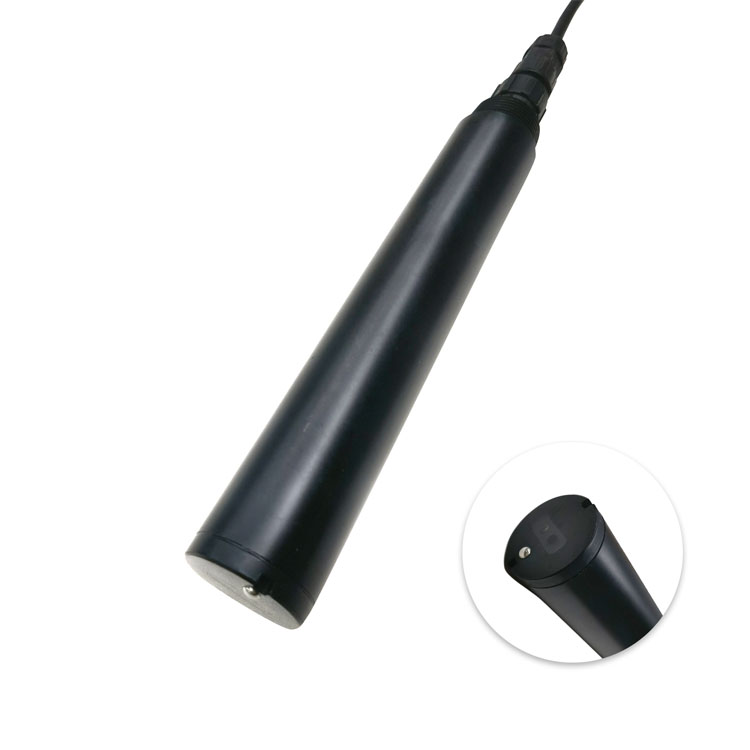
NiuBoL online turbidity sensors are positioned as field measuring nodes for rivers, reservoirs, wastewater outlets, aquaculture sites and industrial process water. They send continuous data to a controller or gateway, allowing operators to see trends, alarms and sudden events between manual samples.
In a water quality station, the sensor is the measuring node between the water body and the data system. It connects to a controller, RTU or gateway, sends stable digital data and gives operators a continuous trend instead of isolated laboratory or handheld readings.
The practical value is highest when the sensor is specified together with power supply, cable length, mounting method, cleaning access, controller protocol and data acceptance rules. A technically correct sensor can still fail in a project if it is installed where the sample is not representative or if the data system cannot read the output reliably.
For industrial projects, RS485 Modbus RTU remains the preferred interface because it supports multi-drop wiring, long cable distance, stable register polling and direct connection to PLC, RTU, data logger or IoT gateway hardware. The buyer should confirm baud rate, parity, Modbus address, register map, unit definition and update interval before ordering.
Integration should also consider grounding, surge protection, waterproof junction boxes and separation from high-current pump or motor cables. Many field faults are not caused by the measuring element itself but by weak wiring practice, shared noisy power supplies or unprotected outdoor terminals.
| Measurement range | 0-1000 NTU typical; higher range available by application | Select range according to raw water, river, wastewater or process effluent turbidity |
|---|---|---|
| Accuracy | Typically +/-5% FS or better after calibration and stable installation | Enough for trend alarms, process control and discharge monitoring |
| Power supply | DC 12-24 V | Works with monitoring cabinets and solar-powered stations |
| Output signal | RS485 Modbus RTU | Supports multi-parameter water quality stations and SCADA collection |
| Protection | IP68 probe body | Supports immersion installation in tanks, channels and monitoring wells |
| Maintenance | Optical window cleaning interval depends on biofilm and suspended solids | Maintenance planning is often more important than nominal accuracy |
Turbidity is highly site-dependent. Bubble interference, biofilm, color and particle size can change readings. The selected range and cleaning plan should be based on actual water conditions rather than a generic catalog value.
Field challenge: Low flow, biofilm and aeration bubbles can disturb readings.
Integration plan: Install sensors away from aerators, provide cleaning access and log DO, pH, EC or ammonia together.
User value: Operators can react before water quality stress becomes visible in stock behavior.
Field challenge: Solids, grease and changing load increase fouling risk.
Integration plan: Select industrial probes, mounting brackets and cleaning or sampling arrangements.
User value: The plant gains continuous trend alarms between laboratory sampling events.
Field challenge: Water level, debris and seasonal algae make maintenance difficult.
Integration plan: Use protected mounting, waterproof cables and Modbus data collection.
User value: The monitoring point supports early warning and long-term trend analysis.
Field challenge: Chemical background and temperature can bias readings.
Integration plan: Confirm wetted materials, temperature compensation and calibration method before order.
User value: The project avoids sensor mismatch and reduces commissioning delays.
Choose a low-to-medium turbidity range for source water and aquaculture where resolution matters. Choose a broader range and stronger cleaning plan for wastewater, construction runoff or industrial discharge where solids can change rapidly.
If the site has heavy sludge or grease, consider whether a flow-through cell, cleaning device or easier lifting bracket is needed. A low-cost probe that cannot be cleaned safely will create higher maintenance cost.
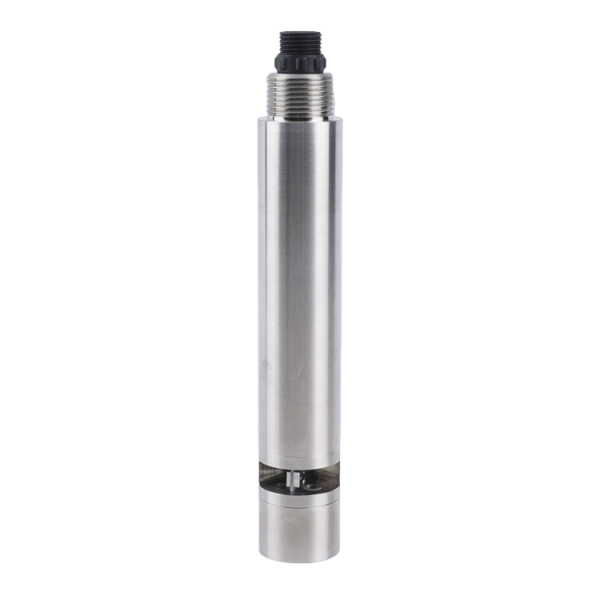
For quotation, provide water source, expected turbidity range, suspended solids level, installation method, flow condition, cable length, power supply, Modbus requirements and whether the project needs a complete cabinet or only the sensor.
Acceptance should include clean-water check, site comparison sample, stable Modbus reading, alarm test and a written maintenance method. The project team should know how to remove and clean the optical window before handover.
An online turbidity sensor should not be used as the only compliance method where certified laboratory sampling is required. It is also weak in sites where the probe window cannot be accessed for cleaning.
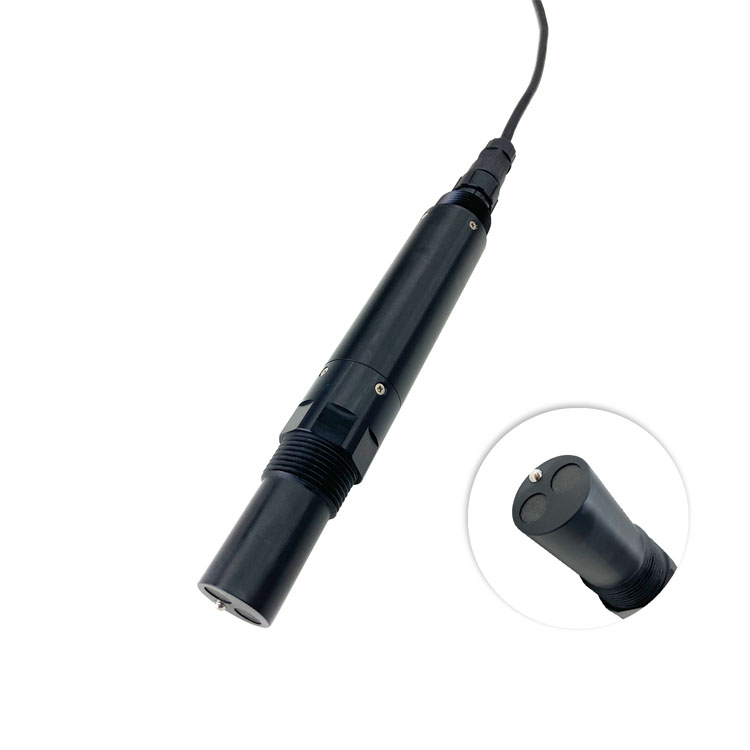
A system integrator can use the article to define signals, Modbus communication, mounting and commissioning checks. A distributor can use it to qualify customer requirements before asking for a price. A project owner can use it to compare complete packages rather than isolated devices. A purchasing team can use the RFQ checklist to reduce revisions and avoid missing accessories.
Turbidity projects fail most often at the installation point. A sensor mounted too close to a pump outlet may read bubbles. A sensor placed in a dead corner may read settled particles rather than the main flow. A probe fixed too deep in a channel may be difficult to clean during flood season. These details should be discussed before the purchase order, because they decide whether the data is trusted after the first month.
For water treatment and discharge monitoring, turbidity is usually a warning parameter. It can show filter breakthrough, sediment disturbance, construction runoff or process instability. The operator still needs sampling and process knowledge, but continuous turbidity data tells the team when to look. This is where an online sensor creates value compared with a handheld instrument.
A buyer should also decide what happens when the sensor crosses an alarm threshold. If the data only appears on a screen that nobody watches, the value is limited. If the Modbus reading triggers a data logger alarm, SMS gateway or SCADA event, the same sensor becomes part of a response workflow.
A turbidity sensor with a wide range is not always the better choice. If the project mainly monitors source water below low turbidity values, resolution near the alarm point matters. If the site monitors wastewater or runoff, overload resistance and cleaning access matter more. The purchase document should describe the normal turbidity band and the expected event value, not only one maximum number.
Cleaning is part of the technical specification. In clear water, manual cleaning during routine inspection may be enough. In wastewater, algae-rich lakes or sediment-heavy runoff, the buyer should consider a wiper, flow-through cell or bracket that allows quick removal. The maintenance method should be safe during high water level and realistic for the site staff.
Q1: Why should an online water quality sensor be selected differently from a handheld meter?
A: A handheld meter is designed for spot checks. An online sensor must handle continuous immersion, cable routing, cleaning, Modbus communication, power stability and maintenance access. Procurement should compare the complete monitoring loop, not only the measuring range.
Q2: Is RS485 Modbus RTU required for all water quality projects?
A: It is not mandatory, but it is the practical default for industrial monitoring because many PLCs, RTUs, data loggers and gateways can read Modbus registers directly. Analog output is useful only when the controller has limited inputs.
Q3: What information is needed before selecting a sensor range?
A: Provide expected minimum and maximum values, water type, temperature, salinity or chemical background, flow condition, installation method and alarm thresholds. Without this information, the selected range may have poor resolution or overload.
Q4: How should sensors be installed in channels or tanks?
A: Install the probe where water is representative and moving enough to avoid stagnant deposits. Avoid bubbles, direct chemical dosing points, dead zones and locations where maintenance staff cannot safely remove the sensor.
Q5: What causes unstable online readings?
A: Common causes include fouling, bubbles, poor grounding, long unshielded cables, incorrect Modbus settings, insufficient warm-up, missing temperature compensation and calibration that does not match the site water.
Q6: What affects quotation for a complete monitoring point?
A: Cost depends on sensor model, range, cable length, mounting bracket, cleaning device, controller, solar power, cabinet, communication gateway, calibration accessories and spare parts.
Q7: When should sample pretreatment be added?
A: Use pretreatment when the water has heavy solids, grease, pressure fluctuation, high temperature or aggressive chemicals that would damage an immersed probe or make cleaning too frequent.
Q8: What should be checked during acceptance?
A: Check wiring, power voltage, Modbus address, register values, calibration record, comparison with a reference sample, alarm output, data upload and whether the maintenance method is practical.
A water turbidity sensor adds value when it is selected as part of a maintainable online monitoring point. The right decision considers NTU range, fouling risk, RS485 Modbus RTU communication, mounting method and field cleaning access.
If the model is not obvious, send NiuBoL the site water or soil condition, expected measuring range, controller interface, power supply, installation method, cable length, quantity and project schedule. With those details, the quotation can match the engineering requirement instead of only naming a product.
Prev:CO2 Sensor Price: What Greenhouse and Environmental Projects Should Compare
Next:Water TDS Checking Meter vs Online Conductivity Sensor: Buyer Selection Guide
Related recommendations
Sensors & Weather Stations Catalog
 Agriculture Sensors and Weather Stations Catalog-NiuBoL.pdf
Weather Stations Catalog-NiuBoL.pdf
Agriculture Sensors Catalog-NiuBoL.pdf
Water Quality Sensor Catalog-NiuBoL.pdf
Related products
 Combined air temperature and relative humidity sensor
 TDR Soil Moisture & Temperature Sensor for irrigation| RS485 |4-20mA| NBL-S-THR
 Soil pH sensor RS485 soil Testing instrument soil ph meter for agriculture |NBL-S-PH
 Wind Speed sensor Output Modbus/RS485/Analog/0-5V/4-20mA
 Tipping bucket rain gauge for weather monitoring auto rainfall sensor RS485/Outdoor/stainless steel
 Pyranometer Solar Radiation Sensor 4-20mA/RS485

Screenshot, WhatsApp to identify the QR code
WhatsApp number:+8615367865107
(Click on WhatsApp to copy and add friends)

