





— Blogs —
—Products—
 Consumer hotline +8618073152920
 WhatsApp:+8615367865107
Address:Room 102, District D, Houhu Industrial Park, Yuelu District, Changsha City, Hunan Province, China
Product knowledge
Time:2026-07-28 10:07:53 Popularity:242
An inline turbidity meter is selected when manual turbidity testing is too slow for process control, discharge monitoring or filtration alarms. The sensor can be reliable, but only when the installation avoids bubbles, sediment pockets, coating and unrepresentative sample flow.
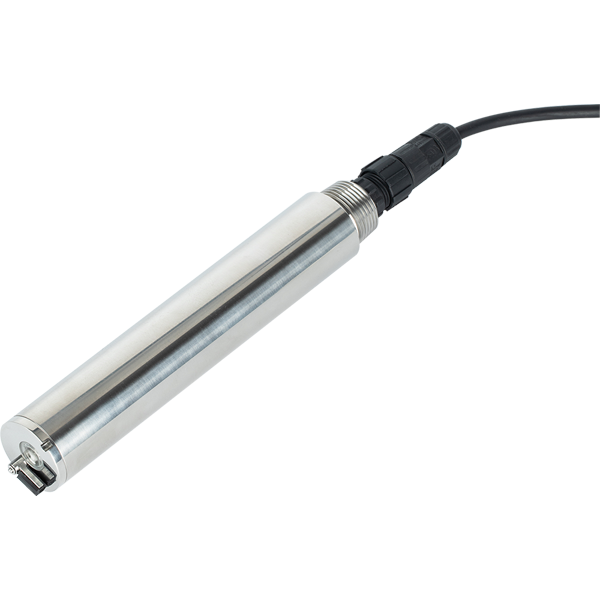
Pipe, tank and open-channel installations are different engineering problems. Buyers should decide the installation form before asking for price, because the sensor, holder, flow cell, cleaning method and cable protection can change.
A pipeline point may need a flow-through sensor or bypass cell. A tank point usually needs an immersion holder with enough distance from the wall, bottom and chemical dosing point. An open channel needs mechanical protection and a location that represents the mixed flow.
If the project has high solids, the buyer should also decide whether turbidity is the right parameter or whether a TSS sensor is needed. Turbidity is an optical clarity measurement, while TSS is closer to suspended solids concentration after site correlation.
| Installation | Main challenge | Better design choice |
|---|---|---|
| Pipe or bypass | Bubbles, pressure and uneven flow. | Use correct flow cell orientation and air release. |
| Tank | Wall reflection, sludge and dosing zones. | Use immersion bracket and representative depth. |
| Open channel | Debris, water level change and access. | Use protective holder and maintenance walkway. |
| High-solids basin | Optical fouling and calibration drift. | Compare turbidity and TSS sensor options. |
Air bubbles scatter light and can produce false high turbidity. Sediment can block the optical path or create a local reading that does not represent the flow. These are common reasons for failed acceptance tests.
A simple field rule is to place the turbidity probe where the water is mixed but not violently aerated. Avoid pump suction points, aerator discharge, chemical dosing jets, sharp pipe elbows and dead corners.
For filtration systems, place the meter where the reading represents the water after the filter or clarifier stage being controlled. If the meter is too close to a valve or air release point, alarms may reflect hydraulics rather than water quality.
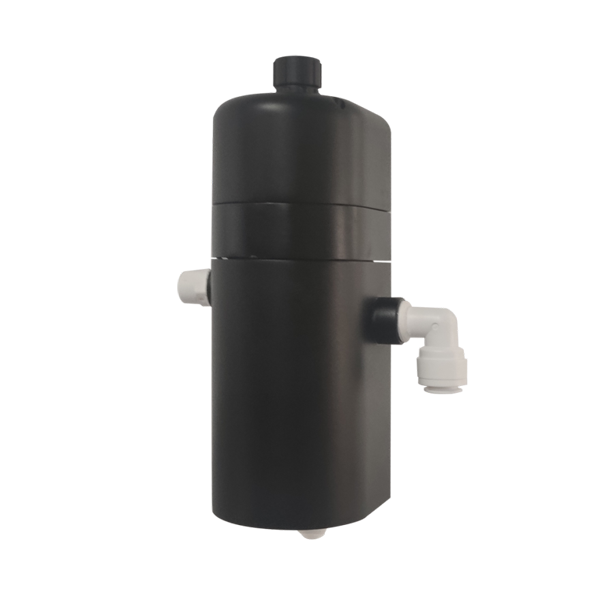
NiuBoL turbidity sensors can be integrated with PLC, RTU, data logger or local controller systems. RS485 Modbus RTU is practical when several water quality parameters share one station, and analog output can suit retrofit panels with existing input cards.
The integrator should request the register map, unit scaling, baud rate, address setting method and wiring diagram before final cabinet design. The project should also define how calibration values and cleaning records are stored.
| Data item | Why it matters | Acceptance check |
|---|---|---|
| Unit | NTU and other units must match the dashboard. | Verify controller scaling against sensor output. |
| Range | Wrong range reduces useful resolution. | Confirm expected normal and alarm values. |
| Cleaning record | Explains drift after fouling. | Log cleaning date and post-clean reading. |
| Alarm delay | Prevents bubbles from triggering false alarms. | Set delay based on process dynamics. |
For drinking water and filtration, resolution and low-range stability matter. For stormwater and surface water, mechanical protection and fouling tolerance are often more important. For wastewater, buyers should evaluate whether self-cleaning or easy manual cleaning is needed.
A distributor can stock a standard online turbidity probe and common installation accessories, but project quotations should still ask for pipe size, tank structure, water depth, expected NTU range and cleaning access.
For packaged equipment builders, the key is repeatable installation. A fixed flow cell and defined flow range make commissioning easier than leaving every site team to improvise a bracket.
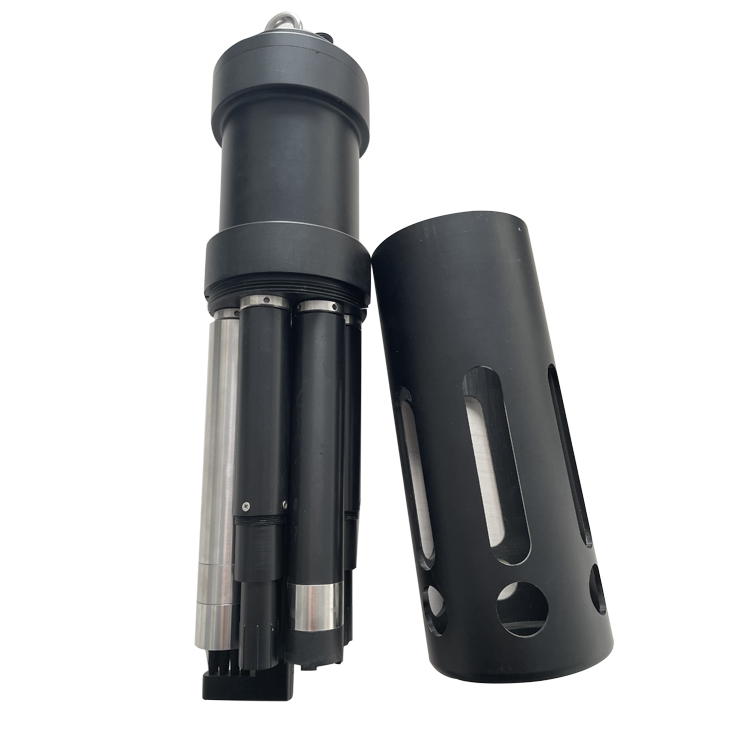
Send expected turbidity range, water source, solids content, pipe diameter or tank drawing, installation method, sample pressure, cable length, power supply, output signal, cleaning method and quantity.
If the project requires compliance reporting, state whether the online meter is for operational trend control or formal reporting. That distinction changes acceptance testing and documentation needs.
For a pipe or bypass installation, the drawing should show sensor orientation, valve position, drain point, air release and maintenance clearance. A turbidity probe mounted where air accumulates will produce unstable readings even when the instrument is correctly calibrated.
The buyer should also confirm whether the pipe stays full during low-flow operation. Partially filled pipes and intermittent pumping create readings that reflect hydraulics rather than turbidity. For these cases, a bypass cell with controlled flow may be a better option.
| Installation detail | Risk if ignored | Buyer check |
|---|---|---|
| Air release | Bubble spikes and false alarms | Place sensor away from bubble collection points |
| Maintenance clearance | Sensor cannot be cleaned without shutdown | Leave room for removal and calibration |
| Representative sample | Reading does not match process water | Avoid dead legs and dosing turbulence |
Tank installation is often better when the process already has a stable mixed basin and operators can safely access the probe. The holder must keep the optical window away from the wall, bottom sludge and surface foam. A long cable alone is not an installation plan.
Open-channel installation can work well for effluent or stormwater monitoring, but the probe needs protection from debris and changing water levels. A simple bracket may be enough for clean channels; harsher channels need stronger protection and a service walkway.
For NiuBoL quotation, send pipe diameter, tank depth, channel width, expected NTU range and photos of the proposed point. These details make the difference between a sensor quote and an installable measuring point.
An inline turbidity meter is useful for filtration plants, industrial water reuse systems, final effluent stations, stormwater monitoring and packaged treatment equipment where the operator needs continuous alarms. It is less useful when water quality is stable and manual turbidity checks already meet the operating need.
The buyer should decide whether the meter is for process control, alarm warning or record keeping. Process control needs faster response and stable installation. Record keeping needs stronger documentation and comparison procedure. Alarm warning needs threshold and delay rules to avoid bubble-related false alarms.
In retrofit projects, check whether the existing pipe has a full-bore section with maintenance access. If not, a tank or bypass installation may reduce risk. For new skids, design the turbidity point before the piping is fabricated.
A complete quotation should show probe, flow cell or holder, cable, controller or digital interface, calibration accessories, spare seals and delivery schedule. If the site is remote, include one spare optical component or probe according to project importance.
For NiuBoL projects, the RFQ should state expected NTU range and whether the water contains algae, iron, sludge, oil or frequent bubbles. These details allow a more accurate recommendation than asking for a generic turbidity tester price.
For projects with several turbidity points, avoid copying one installation detail to every point. Raw water, filtered water, final effluent and stormwater channels have different bubble, sediment and access conditions. Each point should have its own installation note and acceptance range.
If the project is still in design, send the process drawing before the pipework is finished. It is cheaper to reserve a straight section, bypass or service space during design than to rebuild piping after the turbidity meter arrives.
For filtration equipment builders, the turbidity meter should be placed where service technicians can remove it without dismantling the whole skid. This may require a union, bypass valve or removable holder. The small mechanical cost is usually lower than future service labor.
An inline turbidity meter is less suitable where the pipe is not full, the sample contains constant bubbles, or the operator cannot reach the sensor for cleaning. A handheld turbidity tester or a redesigned sample line may be more practical until the installation condition is controlled.
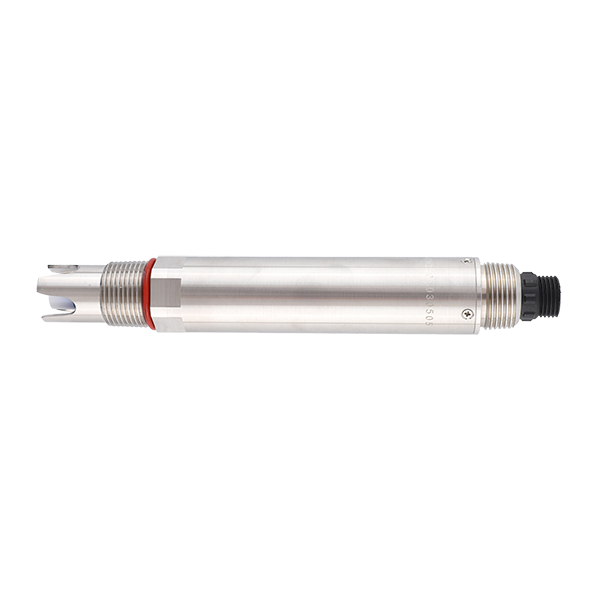
Q1: What is an inline turbidity meter?
A: It is an online optical instrument installed in a pipe, bypass line, tank or channel to measure water turbidity continuously instead of relying only on manual sampling.
Q2: Where should a turbidity probe be installed?
A: Install it in a representative mixed-water location away from bubbles, dosing jets, sediment pockets, pump turbulence and dead zones. The exact holder depends on pipe, tank or channel structure.
Q3: Is turbidity the same as TSS?
A: No. Turbidity measures light scattering and is reported as optical clarity, often in NTU. TSS estimates suspended solids concentration and may require site correlation to laboratory solids data.
Q4: Can an inline turbidity meter connect to SCADA?
A: Yes, when the selected sensor or transmitter supports RS485 Modbus RTU or analog output. Ask for the communication map, scaling and wiring details before integration.
Q5: What causes false high turbidity readings?
A: Air bubbles, dirty optical windows, sediment buildup, poor installation angle, strong turbulence and mismatched range are common causes of false high readings.
Q6: Do turbidity sensors need cleaning?
A: Yes. Cleaning frequency depends on fouling, solids, algae, iron, grease and installation position. Wastewater and surface-water stations usually need more cleaning than treated water points.
Q7: What should be included in a turbidity meter quotation?
A: The quotation should identify the probe, mounting hardware, flow cell if needed, controller or output module, cable length, calibration accessories, spare parts and documentation.
Q8: When should I choose a flow-through turbidity sensor?
A: Choose a flow-through option for controlled pipe or bypass monitoring where stable flow, air removal and service access can be designed into the sample line.
Q9: What acceptance test is practical on site?
A: Check sensor output in clean water or standard solution, verify communication values in the controller, confirm no bubble-related spikes, and record readings before and after cleaning.
Q10: What information helps NiuBoL select the right turbidity solution?
A: Provide water type, expected NTU range, installation drawing, pipe or tank dimensions, flow condition, output requirement, quantity and whether automatic cleaning is needed.
The inline turbidity meter decision is mainly an installation decision. A good sensor installed in a bubble-filled bypass or sludge pocket will not provide useful data.
Before ordering, define the mounting form, expected turbidity range, cleaning access and output requirement. NiuBoL can then match the turbidity probe, holder and integration scope to the project instead of quoting an incomplete part.
Prev:Amperometric Chlorine Sensor Explained: Flow, pH and Calibration Requirements
Next:Conductivity Sensor Selection: Cell Constant, Range and Temperature Compensation
Related recommendations
Sensors & Weather Stations Catalog
 Agriculture Sensors and Weather Stations Catalog-NiuBoL.pdf
Weather Stations Catalog-NiuBoL.pdf
Agriculture Sensors Catalog-NiuBoL.pdf
Water Quality Sensor Catalog-NiuBoL.pdf
Related products
 Combined air temperature and relative humidity sensor
 TDR Soil Moisture & Temperature Sensor for irrigation| RS485 |4-20mA| NBL-S-THR
 Soil pH sensor RS485 soil Testing instrument soil ph meter for agriculture |NBL-S-PH
 Wind Speed sensor Output Modbus/RS485/Analog/0-5V/4-20mA
 Tipping bucket rain gauge for weather monitoring auto rainfall sensor RS485/Outdoor/stainless steel
 Pyranometer Solar Radiation Sensor 4-20mA/RS485

Screenshot, WhatsApp to identify the QR code
WhatsApp number:+8615367865107
(Click on WhatsApp to copy and add friends)

