





— Blogs —
—Products—
 Consumer hotline +8618073152920
WhatsApp:+8615367865107
Address:Room 102, District D, Houhu Industrial Park, Yuelu District, Changsha City, Hunan Province, China
Product knowledge
Time:2026-08-22 09:04:00 Popularity:280
A dirt humidity sensor normally means a soil moisture sensor, but the term is too ambiguous for a purchase specification. State whether the project needs volumetric soil water content, soil water potential or air relative humidity. These measurements use different units and different instruments; an outdoor weather head cannot replace a buried root-zone probe.
For irrigation and agricultural monitoring, a soil moisture channel commonly reports volumetric water content: the volume of water relative to the bulk volume of soil. Air relative humidity describes water vapor relative to saturation at the air temperature. Both may appear as percentages on a dashboard, but their numerical values are not interchangeable.
| Quantity | Typical unit | Question it answers |
|---|---|---|
| Volumetric soil water content | % or m3/m3 | How much water occupies the measured soil volume? |
| Gravimetric soil water content | Mass ratio, often % | What is the water mass relative to dry soil mass? |
| Soil water potential | kPa | What is the energy state of water in the soil? |
| Air relative humidity | %RH | How close is the air to saturation at its temperature? |
For example, 25% volumetric water content means 0.25 m3 of water per m3 of bulk soil. It does not mean 25%RH, nor does it establish that the soil is suitable for a particular crop. Gravimetric results require dry bulk density to convert to a volume basis; a laboratory mass percentage should not be compared directly with a probe's volumetric percentage.
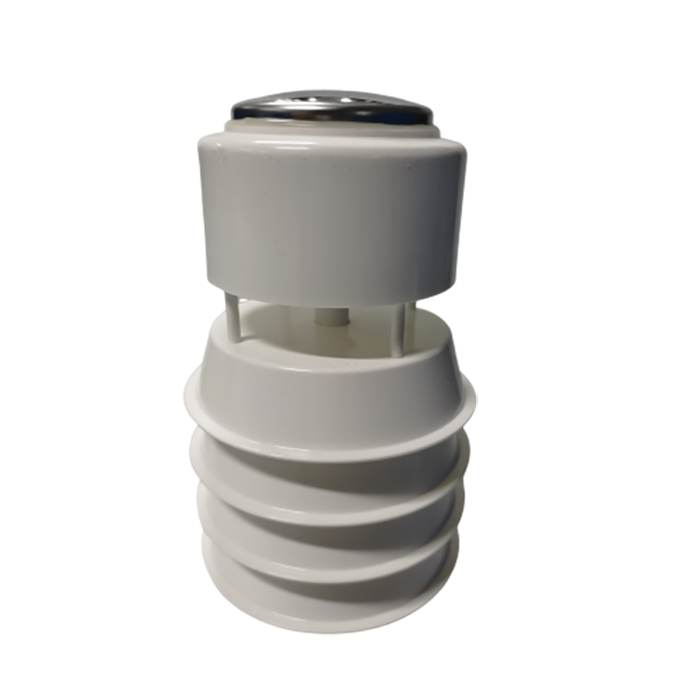
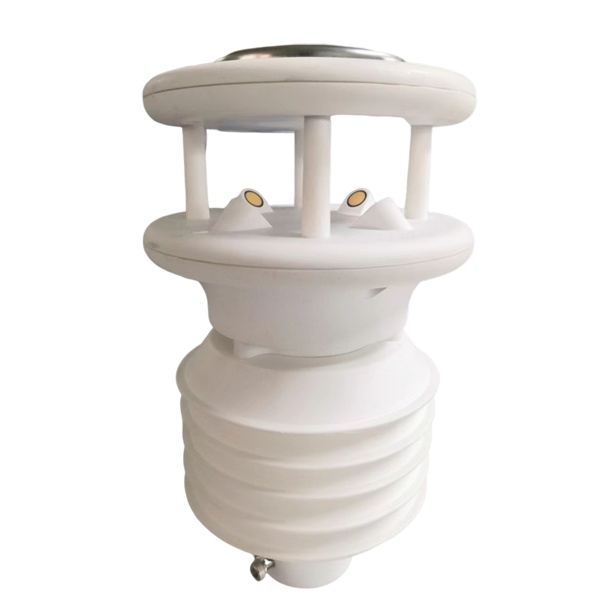
The six-parameter ultrasonic weather assembly below illustrates an above-ground weather instrument. Its air humidity channel belongs in meteorological records, while soil water content needs a separate probe installed in soil.
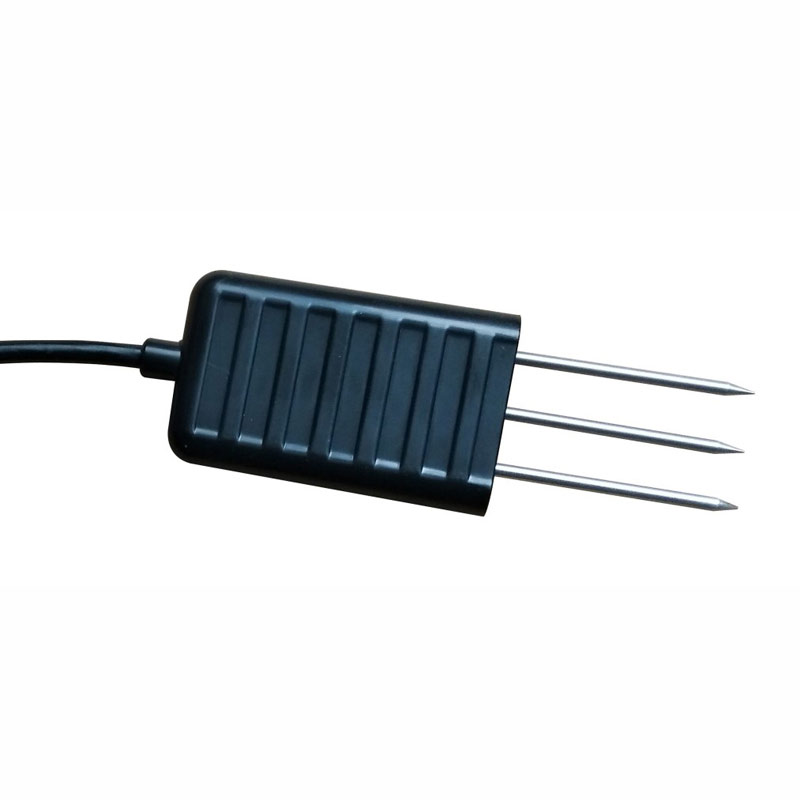
The NiuBoL NBL-S-TM soil temperature and moisture sensor measures two soil quantities using an FDR moisture channel and a temperature channel. It does not measure air humidity, EC, pH or nutrients. The following values apply to this model, not to every device described as a soil sensor.
| Item | NBL-S-TM specification | Selection implication |
|---|---|---|
| Moisture measurement | FDR; 0-100% volumetric soil moisture; 0.1% resolution; stated accuracy +/-5% | Confirm the accuracy basis and applicable soil conditions where a contractual tolerance is required. Resolution is not accuracy. |
| Soil temperature | -40 to 80 C; 0.1 C resolution; +/-0.5 C accuracy | Temperature is measured at the probe, not at weather-screen height. |
| Supply | DC 5-24 V; some configurations DC 12-24 V | Match the ordered configuration to the field supply. Confirm consumption for battery sizing. |
| Output | RS485 Modbus RTU | Provide a compatible controller or logger input and the correct register scaling. |
| Construction | IP68; epoxy-sealed body; special anti-corrosion electrodes | Protect external connections separately and maintain soil contact around the electrodes. |
| Cable and environment | 5 m standard cable, customizable; operating environment -40 to 85 C | Specify cable length and jacket requirements. The operating limit does not extend the soil temperature measurement range. |
Do not buy a tighter-looking percentage solely from a catalog comparison. Different stated tolerances may use different bases or test conditions. Ask how the selected probe performs in the intended soil, including salinity, density and installation conditions, before treating one accuracy figure as an interchangeable acceptance limit.
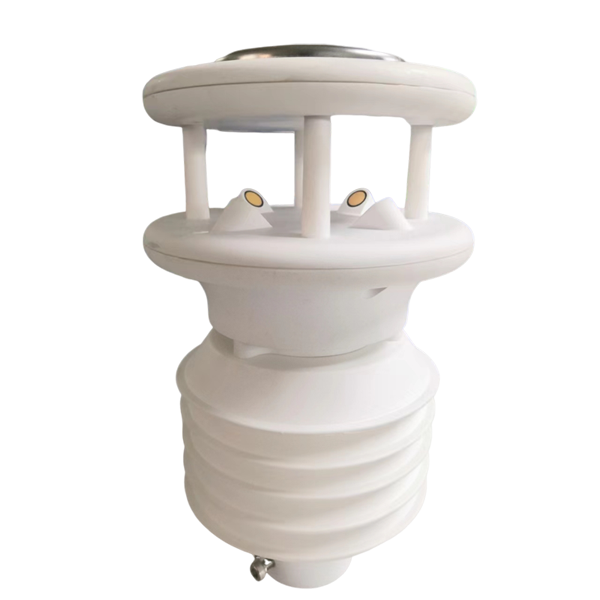
An integrated weather head can add atmospheric context to a soil monitoring project. Its additional weather channels do not alter what the buried NBL-S-TM measures.
In a PLC, RTU or data logger, name the channel explicitly: for example, Soil VWC at 20 cm rather than Humidity 1. Store the unit, depth and sensor model with the channel configuration. Keep air RH on a separate tag even if the historian uses the same numeric storage type for both.
During commissioning, compare the displayed value with a direct reading from the same sensor. Check the register, integer or decimal scaling, sign and unit. A raw value of 250 might represent 25.0% in one register map, but that example is not an NBL-S-TM register definition. Use the map for the delivered device rather than inferring a multiplier from the apparent plausibility of the result.
For a weather station combining an eight-parameter weather head with soil probes, test each channel independently. Changing air RH in a test display must not change the soil-moisture alarm or irrigation calculation.
A buried probe senses the soil around its electrodes, not an entire field. Select representative locations, document the depth and keep close contact with the surrounding soil. Avoid stones, large roots and air gaps; do not enlarge a hole by rocking the probe after insertion. Protect cables from cultivation and avoid exposing the black housing to strong sunlight when temperature is being assessed.
Where a project needs several root-zone depths, budget for several point probes or a suitable multi-depth assembly. Where it needs atmospheric exposure, install a weather head in a suitable above-ground position. Trying to solve both tasks by placing one instrument halfway between them compromises the measurement rather than saving a channel.
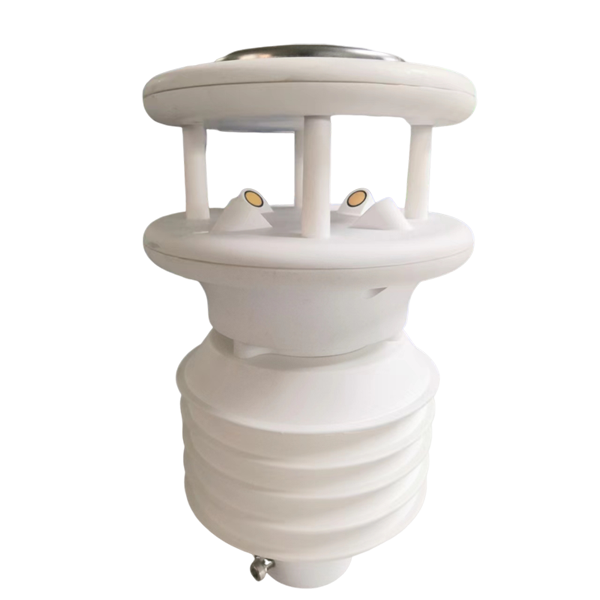
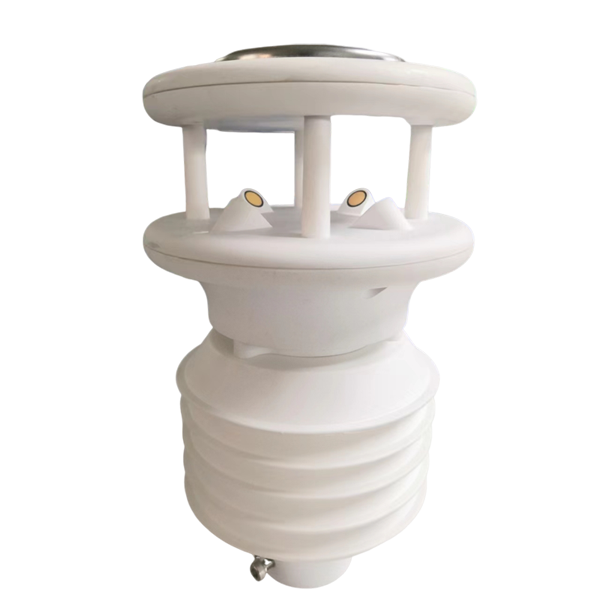
The ten-parameter weather sensor shown below is an atmospheric monitoring option. Specify soil probes separately if the project also requires root-zone water content.
No. For a soil project, specify the intended soil quantity and unit. An air humidity sensor measures water vapor conditions and cannot report root-zone volumetric water content merely by being placed near the soil.
Not with one universal conversion. The relationship depends on the soil's water-retention behavior and conditions. If the decision requires water potential, select a suitable water-potential instrument or establish an appropriate site-specific relationship.
A compatible Modbus RTU master can poll multiple devices when addressing, serial settings, power and wiring are correctly arranged. The software must still use each device's register map and preserve the different units. Sharing a bus does not make the measurements interchangeable.
Send the required quantity, soil type, installation depths, number of points, supply voltage, cable distances and receiving equipment. State whether the request includes an atmospheric head, a buried probe, or both. Ask for consumption and cable material if these affect battery life or installation approval.
No. The range describes the instrument scale, not suitability for every soil. Review soil contact, salinity effects, accuracy conditions and maintenance access, then check a representative installation before a larger deployment.
An all-in-one weather assembly can accompany buried probes in an environmental station. Retain separate channel names and measurement locations for atmospheric and soil records.
A dirt humidity sensor enquiry should become a precise soil measurement specification before equipment is ordered. NBL-S-TM provides soil temperature and volumetric moisture through RS485 Modbus RTU; a weather head provides atmospheric measurements at a different location. NiuBoL can review the probe and logger combination once the required quantities, depths and interfaces are defined.
Prev:Irrigation Soil Moisture Monitoring: Before Changing the Schedule
Next:Multi-Stream Turbidity Monitoring: When One Probe Is Not Enough
Related recommendations
Sensors & Weather Stations Catalog
 Agriculture Sensors and Weather Stations Catalog-NiuBoL.pdf
Weather Stations Catalog-NiuBoL.pdf
Agriculture Sensors Catalog-NiuBoL.pdf
Water Quality Sensor Catalog-NiuBoL.pdf
Related products
 Combined air temperature and relative humidity sensor
 TDR Soil Moisture & Temperature Sensor for irrigation| RS485 |4-20mA| NBL-S-THR
 Soil pH sensor RS485 soil Testing instrument soil ph meter for agriculture |NBL-S-PH
 Wind Speed sensor Output Modbus/RS485/Analog/0-5V/4-20mA
 Tipping bucket rain gauge for weather monitoring auto rainfall sensor RS485/Outdoor/stainless steel
 Pyranometer Solar Radiation Sensor 4-20mA/RS485


Screenshot, WhatsApp to identify the QR code
WhatsApp number:+8615367865107
(Click on WhatsApp to copy and add friends)

