





— Blogs —
—Products—
 Consumer hotline +8618073152920
 WhatsApp:+8615367865107
Address:Room 102, District D, Houhu Industrial Park, Yuelu District, Changsha City, Hunan Province, China
Product knowledge
Time:2026-05-28 15:59:27 Popularity:407
An electrode method BOD fast analyzer uses a biological response and oxygen measurement to assess biodegradable material over a defined short test cycle. It should not be confused with an ordinary dissolved oxygen probe or an optical BOD estimate. Before comparing instruments, establish which method the project requires and whether the result is intended for process screening, research or a specified reporting procedure.
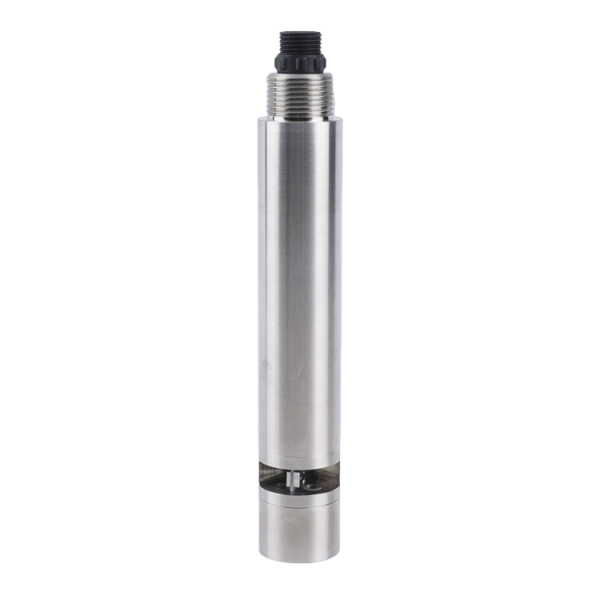
In a microbial-electrode arrangement, biodegradable material interacts with microorganisms associated with the sensor. The instrument detects the resulting oxygen response under controlled conditions. The response depends on the biological element, sample composition and operating procedure. A short instrument cycle does not mean that every compound contributes exactly as it would during a longer incubation.
BOD5 is a defined five-day oxygen-demand measurement, conventionally performed at 20 degrees C under the applicable procedure. A rapid test can be useful for an earlier operating decision, but agreement with BOD5 must be demonstrated for the intended sample stream. Replacing the method name on a report does not establish equivalence.
| Instrument or method | What is observed | Selection consequence |
|---|---|---|
| Microbial-electrode rapid BOD analyzer | A biological oxygen response during the instrument's defined test | Check microbial preparation, response stability, sample inhibition and the validated relationship to the required reference |
| Dissolved oxygen probe | Oxygen concentration in the water | A single DO value is not the oxygen demand of the sample |
| Optical BOD estimator | An optical response correlated with organic matter and a configured BOD estimate | Check the correlation for the actual water; it is not a microbial-electrode test |
| BOD5 reference determination | Oxygen demand over the prescribed incubation and sample preparation procedure | Retain the required method where the project specifies this result |
A low microbial response can mean that little readily biodegradable material is present. It can also occur when the sample inhibits the microorganisms. Industrial wastewater with disinfectants, extreme pH or other inhibitory constituents therefore needs a suitability assessment before a rapid result is used to judge treatment load.
Ask how the proposed analyzer checks for inhibition and verifies that its biological element is responding normally. Specify the permitted pH, salinity, temperature and sample preparation for the actual model. Do not neutralize, dilute or filter a sample without recording the treatment: those operations can change which fraction of the sample is being assessed.
COD and BOD describe different responses to organic and other reactive material. A COD trend can help characterize a wastewater change, but it does not supply a universal conversion to BOD. A fixed BOD-to-COD ratio can change when the contributors to the wastewater or the treatment process change.
Take paired samples at the same location and record collection and analysis times when assessing a rapid method. Include normal operation, relevant load changes and the sample conditions expected in service. A comparison based on one convenient clean sample does not establish performance through an industrial discharge change.
For a process-control trial, identify the decision the result will support. A screening alarm that prompts another sample has a different risk from an automatic process change or a formal compliance report. Agree how an unexpected rapid reading will be checked before the result is connected to an operating action.
| Purchase requirement | Question to resolve |
|---|---|
| Measurement range and repeatability | What range and test conditions apply to the ordered analyzer, including required dilution? |
| Cycle and throughput | Does the stated time include preparation, stabilization, measurement, rinsing and recovery? |
| Biological element | What activation, conditioning, storage and replacement procedures are required? |
| Reference checks | What control solution and checks demonstrate acceptable response before testing samples? |
| Sample restrictions | Which toxicity, temperature, salinity, solids and chemical conditions are permitted? |
| Data connection | Which actual output, export format and result-status fields are supplied? |
There is no single eight-minute cycle or one measurement range that can be assigned to every rapid BOD analyzer. Obtain the performance specification for the named instrument. For an unattended installation, also define how the sample reaches the analyzer, how cleaning waste is handled and what happens when a control check fails.
If results enter a plant database, keep the method identifier, sample point, dilution and quality status with the value. A concentration without its method can be mistaken for a BOD5 result later. Confirm communication from the actual analyzer; do not assume it has RS485 Modbus RTU because nearby field probes use that protocol.
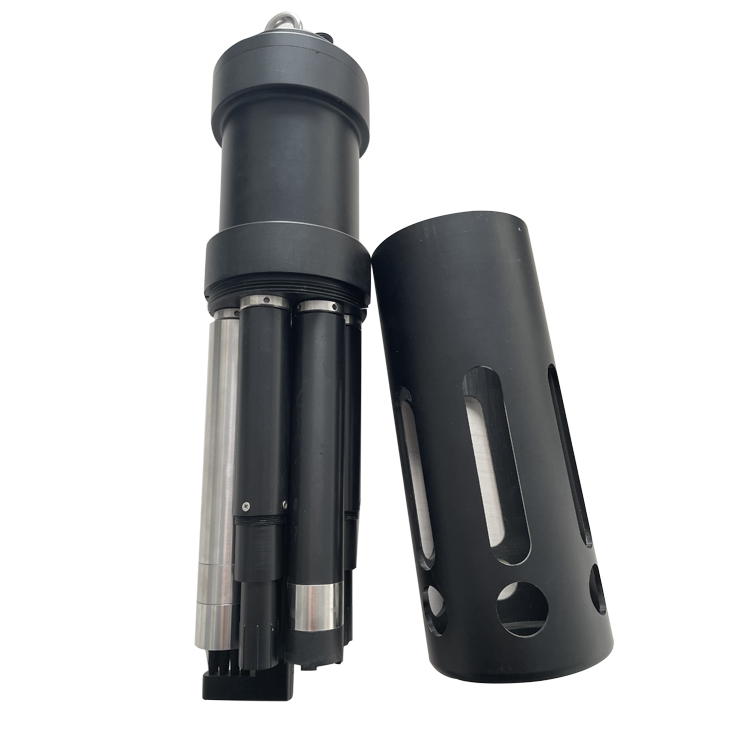
pH, conductivity, temperature, DO and turbidity can help explain a change in the wastewater and identify conditions that need investigation. They do not prove that a microbial element was active during a rapid BOD test. A multi-parameter probe is useful for the surrounding water conditions, not as a substitute for the analyzer's biological control checks.
Keep each channel's purpose clear in the receiving system. For example, a low DO value in an aeration tank can reflect oxygen supply and consumption together; it is not itself a BOD concentration. Likewise, a change in turbidity does not establish a change in biodegradability without the relevant measurement.
The following documents identify separate NiuBoL water-quality instruments and their interfaces. Use the document for the actual model being connected. Their availability does not establish that a microbial-electrode analyzer is included in a sensor package or that its method can be replaced by one of the listed probes.
 NBL-WQ-CL Water Quality Sensor Online Residual Chlorine Sensor.pdf
NBL-WQ-DO Online Fluorescence Dissolved Oxygen Sensor.pdf
NBL-WQ-NHN Ammonia Nitrogen Water Quality Sensor.pdf
NBL-WQ-COD Online Water Quality COD Sensor.pdf
NBL-WQ-PH Online pH Water Quality Sensor.pdf
NBL-WQ-EC water quality conductivity sensor.pdf
NBL-WQ-BOD-4A Online BOD Sensor.pdf
NBL-WQ-TH-4S online total hardness sensor.pdf
The NBL-WQ-BOD-4A provides a fluorescence-based BOD estimate with associated water-quality channels. It does not contain the microbial membrane described above and does not perform a five-day incubation. Consider it when an optical trend has been validated against the required reference method for the actual water.
For an inquiry, identify whether the requirement is a microbial-electrode analyzer, a reference laboratory result or an online optical estimate. Send the sample type, decision to be supported and any required method wording. That distinction prevents an electrically compatible but analytically different instrument from being specified for the wrong task.

No. The project must establish that the proposed method is suitable for the intended use and is accepted where a particular reporting method is required. Demonstrate the relationship with representative samples rather than assuming that matching units make two methods interchangeable.
No. Inhibition or an inactive biological element can suppress the response. Review control checks, sample conditions and the reference comparison before interpreting the result as low biodegradable load.
Use representative normal and changing wastewater conditions, documented sample handling and a suitable reference method. Record preparation, dilution, temperature, control-check results and test timing. Define the acceptable agreement for the actual operating decision before reviewing the trial.
Not necessarily. Throughput also depends on preparation, rinsing, recovery, conditioning and any repeat or control measurements. Request the complete cycle for the required workload rather than estimating daily capacity from one response-time figure.
No. It uses an optical fluorescence response to provide an estimate. Select it for an appropriate validated monitoring task, not as an equivalent replacement for a biological electrode or an incubation method.
State the required method, sample stream, expected concentrations, sample workload, reporting purpose, data interface and available operating environment. Include control materials and biological-element servicing in the quotation scope when a microbial analyzer is required.
Choose an electrode method BOD fast analyzer by its biological method, sample suitability and complete operating cycle. Validate the intended result against the required reference, and distinguish it from DO measurements, COD trends and optical BOD estimates. Method clarity is more important than a short response-time claim when the equipment will support a treatment decision.
Prev:Conductivity vs Conductivity Meter: EC Measurement Guide
Next:Dissolved Oxygen Measurement: Units and Sampling Points
Related recommendations
Sensors & Weather Stations Catalog
Agriculture Sensors and Weather Stations Catalog-NiuBoL.pdf
Weather Stations Catalog-NiuBoL.pdf
Agriculture Sensors Catalog-NiuBoL.pdf
Water Quality Sensor Catalog-NiuBoL.pdf
Related products
 Combined air temperature and relative humidity sensor
 TDR Soil Moisture & Temperature Sensor for irrigation| RS485 |4-20mA| NBL-S-THR
 Soil pH sensor RS485 soil Testing instrument soil ph meter for agriculture |NBL-S-PH
 Wind Speed sensor Output Modbus/RS485/Analog/0-5V/4-20mA
 Tipping bucket rain gauge for weather monitoring auto rainfall sensor RS485/Outdoor/stainless steel
 Pyranometer Solar Radiation Sensor 4-20mA/RS485

Screenshot, WhatsApp to identify the QR code
WhatsApp number:+8615367865107
(Click on WhatsApp to copy and add friends)

