





— Blogs —
—Products—
 Consumer hotline +8618073152920
 WhatsApp:+8615367865107
Address:Room 102, District D, Houhu Industrial Park, Yuelu District, Changsha City, Hunan Province, China
Product knowledge
Time:2026-05-27 16:35:59 Popularity:368
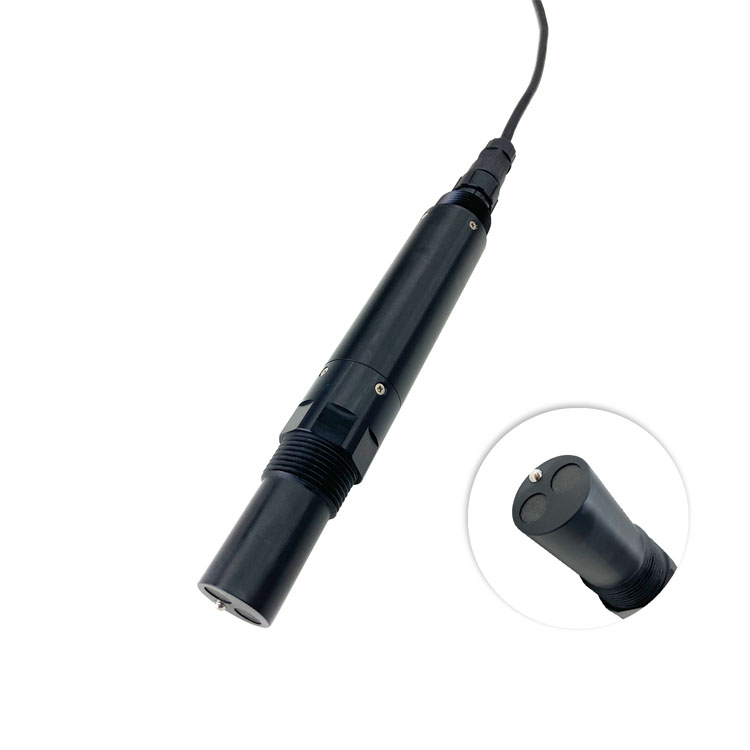
The supplied material distinguishes conductivity as a water-quality parameter from a conductivity meter as the instrument used to measure the conductive ability of a solution. This distinction matters in procurement. A conductivity meter may be handheld, bench-mounted or portable for inspection. An online conductivity sensor is a fixed field device for continuous acquisition and integration with PLC, DCS, SCADA or IoT platforms.
Conductivity reflects the ability of a liquid to conduct electric current and is the reciprocal of resistivity. In water, it is related to ion type and concentration. At the same concentration, different electrolytes show different conductivity. Strong acids generally show high conductivity, strong alkalis and salts formed by strong acids are also conductive, while weak acids and weak bases show lower conductivity.
| Item | Conductivity | Conductivity meter / online conductivity sensor |
|---|---|---|
| Definition | A physical water-quality parameter describing the ability of a solution to conduct electric current. | An instrument or sensor used to measure conductivity and output a value for display, recording or control. |
| Engineering role | Represents dissolved ionic content, salinity tendency, contamination change or concentration level. | Provides measurement, temperature compensation, signal output and system integration. |
| Typical form | A value expressed in uS/cm or mS/cm. | Handheld meter, laboratory meter, panel meter or online RS485 sensor. |
| Use in procurement | Defines measurement requirement, range and alarm threshold. | Defines product model, installation method, protocol, cable and power supply. |
| Relation to TDS | TDS can be estimated from conductivity using a coefficient, but the coefficient varies with ion composition. | Some meters or sensors display conductivity and estimate TDS by internal conversion. |
| System integration | Cannot be connected directly because it is a parameter, not a device. | Online sensors connect to PLC, RTU, SCADA or IoT gateway through RS485 Modbus RTU. |
NiuBoL online conductivity sensors are installed at the field measurement layer. In cooling water, the value supports blowdown control. In boiler feedwater, it can indicate ionic contamination. In agricultural fertigation, EC reflects nutrient solution concentration. In secondary water supply or environmental monitoring, conductivity helps identify abnormal mineralization or contamination changes.
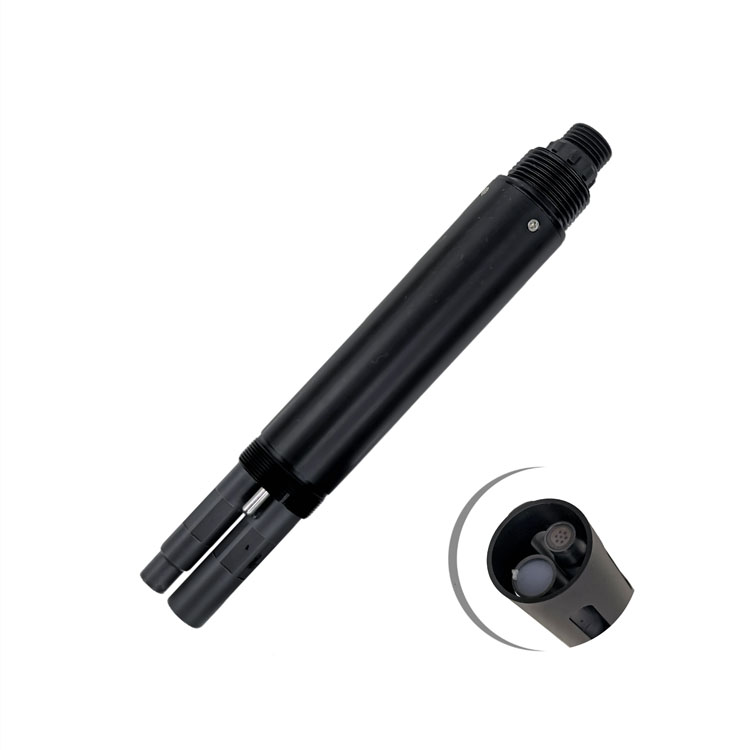
RS485 Modbus RTU allows stable digital acquisition, long cable distance and integration into distributed water-quality cabinets. The integrator should define address, baud rate, register map, engineering unit, temperature compensation and alarm threshold. A handheld conductivity meter cannot replace this continuous integration role.
| Parameter | Specification |
|---|---|
| Model | NBL-WQ-EC / NBL-DDM-206 online water quality conductivity sensor |
| Measurement indicators | Conductivity, TDS, salinity and temperature depending on configuration |
| Conductivity range | 0-5000 uS/cm or 0-200 mS/cm depending on electrode constant |
| Salinity range | 0-70 PSU on salinity configuration |
| Accuracy | Conductivity accuracy 卤1.5% F.S. |
| Resolution | 1 uS/cm, 0.1 mS/cm or 0.1 PSU depending on range |
| Supply voltage | 12-24 VDC |
| Output signal | RS485 Modbus RTU |
| Power consumption | 0.2 W typical for online conductivity sensor |
| Protection rating | IP68 for long-term immersion |
| Working condition | 0-50 C, pressure <0.6 MPa for related online water-quality probes |
| Installation | Immersion or submersible mounting, 3/4 NPT thread |
| Wetted material / cable | SUS316L electrode material for conductive parts; waterproof cable for immersion use |
The source material gives practical examples. Pure water or mineral water may show rising conductivity after long storage because dissolved substances or microbial changes increase. Pure alcohol should have conductivity near zero, and a value greater than zero indicates impurity. TDS can be roughly related to conductivity, but it is an estimated relationship rather than an absolute chemical analysis.
Hard water often contains calcium and magnesium ions, so conductivity is higher and scaling risk increases. Practical references may treat 300-800 as hard-water scaling range and values above 800 as severe scaling or brackish tendency, but engineering alarm values must be defined for each project.
Site environment challenge: evaporation increases dissolved ions and scaling risk.
System integration scheme: install an online EC sensor on circulating water or bypass line and connect it by RS485 Modbus RTU.
User value delivered: operators can control blowdown and dosing from continuous EC trends.
Site environment challenge: ionic contamination creates corrosion and scaling in thermal systems.
System integration scheme: monitor conductivity after water treatment and at condensate return.
User value delivered: maintenance teams can detect resin exhaustion or leakage earlier.
Site environment challenge: treated water quality changes with process load and membrane or ion-exchange condition.
System integration scheme: use conductivity with pH and turbidity to judge treatment stability.
User value delivered: the plant can decide whether water meets reuse requirements.
Site environment challenge: fertilizer concentration must stay within crop tolerance.
System integration scheme: use online EC monitoring in nutrient tanks or irrigation lines.
User value delivered: growers can make nutrient dosing more repeatable.
Accuracy selection: Select electrode range and constant according to expected conductivity. Pure water, cooling water and saline water require different ranges.
Communication selection: Use online RS485 Modbus RTU sensors for continuous monitoring. Use handheld meters for inspection or calibration verification.
Installation environment selection: Avoid bubbles, deposits and dead zones. The electrode should contact representative flowing water.
Power supply selection: Use stable 12-24 VDC cabinet power and consider grounding and surge protection.
Conductivity is temperature dependent. Confirm whether automatic temperature compensation is applied and how the compensated value is reported.
TDS should not be treated as exactly equal to conductivity. It is estimated by multiplying conductivity by a coefficient, which changes with dissolved salt composition.
Electrode fouling changes the effective cell constant and causes drift. Cleaning, calibration and stable-flow installation are required for long-term online measurement.
Q1: What is conductivity?
Conductivity is the ability of a solution to conduct electric current and reflects dissolved ionic content.
Q2: What is a conductivity meter?
It is the instrument used to measure conductivity, either handheld, laboratory-based or online.
Q3: What is the difference between a meter and an online sensor?
A meter is often used for spot checks, while an online sensor provides continuous signal output.
Q4: Does conductivity equal TDS?
No. TDS is estimated from conductivity using a coefficient that depends on ion composition.
Q5: Why does hard water have higher conductivity?
Calcium and magnesium ions increase dissolved ionic content and conductivity.
Q6: Which range should be selected?
Pure water requires a low range; cooling water and saline water need wider or higher ranges.
Q7: What should procurement specify?
Range, accuracy, electrode material, output protocol, power supply, cable length, protection rating and Modbus documentation.
Q8: Can NiuBoL EC sensors integrate with SCADA?
Yes. RS485 Modbus RTU output can be acquired by PLC, RTU, industrial gateway or SCADA system.
Conductivity is the parameter; the conductivity meter or online EC sensor is the device. For industrial projects, NiuBoL online conductivity sensors are appropriate when continuous RS485 Modbus RTU data, stable installation and system expandability are required.
 NBL-WQ-CL Water Quality Sensor Online Residual Chlorine Sensor.pdf
NBL-WQ-DO Online Fluorescence Dissolved Oxygen Sensor.pdf
NBL-WQ-NHN Ammonia Nitrogen Water Quality Sensor.pdf
NBL-WQ-COD Online Water Quality COD Sensor.pdf
NBL-WQ-PH Online pH Water Quality Sensor.pdf
NBL-WQ-EC water quality conductivity sensor.pdf
Prev:Online Turbidity Transmitter Installation Steps for RS485 Modbus Water Quality Projects
Next:Electrode Method BOD Fast Analyzer Requirements for Efficient Wastewater Quality Assessment
Related recommendations
Sensors & Weather Stations Catalog
Agriculture Sensors and Weather Stations Catalog-NiuBoL.pdf
Weather Stations Catalog-NiuBoL.pdf
Agriculture Sensors Catalog-NiuBoL.pdf
Water Quality Sensor Catalog-NiuBoL.pdf
Related products
 Combined air temperature and relative humidity sensor
 TDR Soil Moisture & Temperature Sensor for irrigation| RS485 |4-20mA| NBL-S-THR
 Soil pH sensor RS485 soil Testing instrument soil ph meter for agriculture |NBL-S-PH
 Wind Speed sensor Output Modbus/RS485/Analog/0-5V/4-20mA
 Tipping bucket rain gauge for weather monitoring auto rainfall sensor RS485/Outdoor/stainless steel
 Pyranometer Solar Radiation Sensor 4-20mA/RS485

Screenshot, WhatsApp to identify the QR code
WhatsApp number:+8615367865107
(Click on WhatsApp to copy and add friends)

