





— Blogs —
—Products—
 Consumer hotline +8618073152920
 WhatsApp:+8615367865107
Address:Room 102, District D, Houhu Industrial Park, Yuelu District, Changsha City, Hunan Province, China
Product knowledge
Time:2026-06-30 11:16:27 Popularity:256
The steel frame is the load-bearing core of a multi-span greenhouse. Covering material, ventilation, sensors, screens, irrigation, crop hanging systems and maintenance work all depend on the frame. A low-cost frame can look acceptable during installation but create long-term risk if steel thickness, anti-corrosion treatment, wind load, snow load or connection quality is reduced.
This article is written for buyers and contractors who need to compare greenhouse frame proposals before ordering. It also explains how structural choices affect later smart greenhouse monitoring because sensor brackets, cable routes, control cabinets and equipment loads should be considered during the frame design stage.
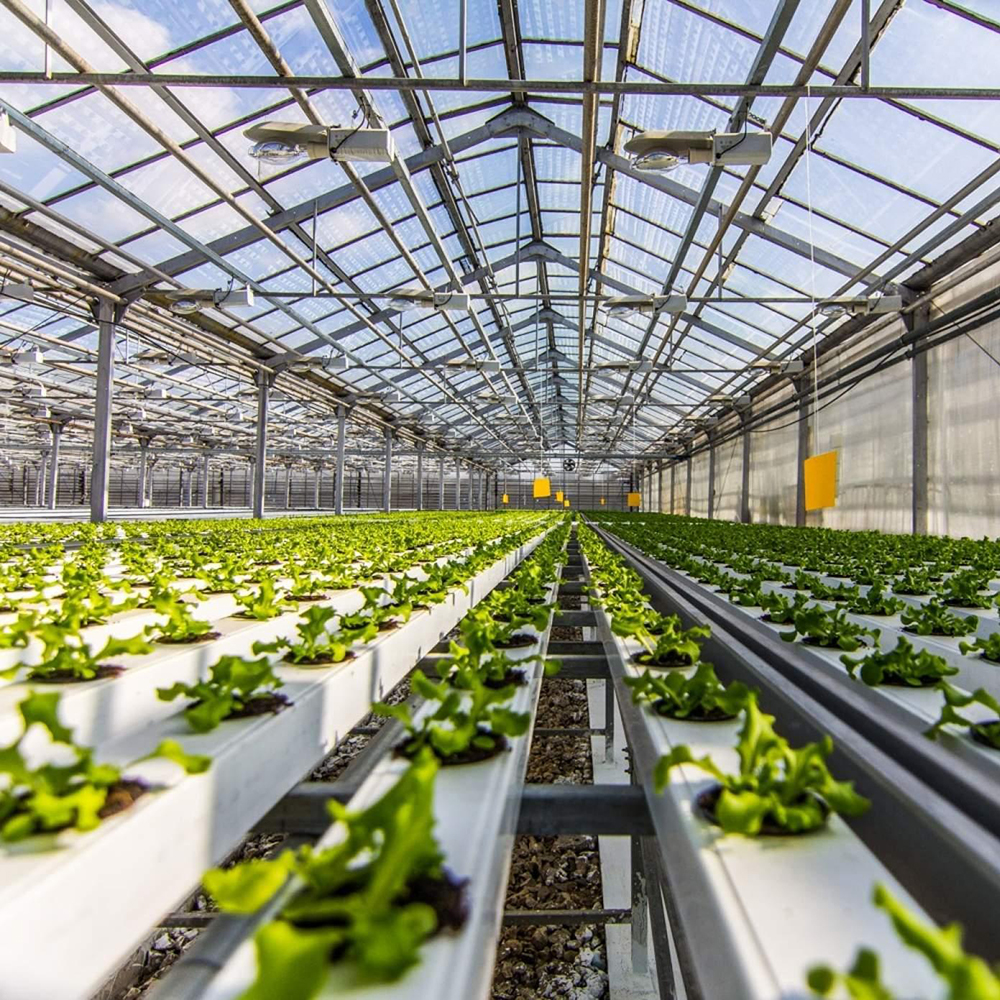
A greenhouse group should be built on an open site with limited shading from tall trees or buildings on the east, south and west sides. The site should avoid strong wind passages where possible and can benefit from natural protection on the north side. Water supply, water quality, drainage, road access and soil conditions are part of the frame decision because they affect foundation, operation and maintenance.
The frame must also match the production plan. A greenhouse used for mechanized operation needs different span and height from a small seedling house. A greenhouse with crop hanging or internal equipment requires additional load consideration.
| Selection Item | Practical Reference | Why It Matters |
|---|---|---|
| Span | Often 8-16 m by greenhouse type and machinery requirement | Determines internal operation space and frame load |
| Height | Selected by crop, ventilation and equipment layout | Affects air volume and machinery access |
| Frame surface | Smooth surface preferred | Reduces damage to covering film or panels |
| Material | Hot-dip galvanized steel pipe is common for main load-bearing structure | Improves corrosion resistance |
| Wind resistance | Project material notes resistance around level 10 wind for suitable structures | Must be checked against local code and site risk |
| Snow load | Northern projects should consider design snow load not less than 0.35 kN/m2 where applicable | Protects winter operation safety |
| Coating option | Powder coating on galvanized frame can add corrosion protection | Improves appearance and may extend service life |
| Coating thickness | Powder coating may be around 80-120 microns by process | Affects cost and corrosion protection |
| Additional loads | Equipment, crop hanging and maintenance loads | Prevents under-designed structures |
| Cable readiness | Reserved cable paths and cabinet mounting points | Supports later sensors and control systems |
Standard greenhouse frames often use hot-dip galvanized square tubes or pipes. Components are cut, punched, welded where required and galvanized to improve corrosion resistance. Some projects use an additional powder-coated surface over the galvanized frame. Powder coating gives a cleaner white appearance, increases light reflection inside the greenhouse and may extend corrosion protection by several years under suitable conditions.
The added finish also increases process complexity and cost. Buyers should ask whether the coating is applied after galvanized treatment, what coating thickness is used, and which parts are treated. A white frame should not be accepted only by appearance; the underlying steel, galvanizing and connection details still matter.
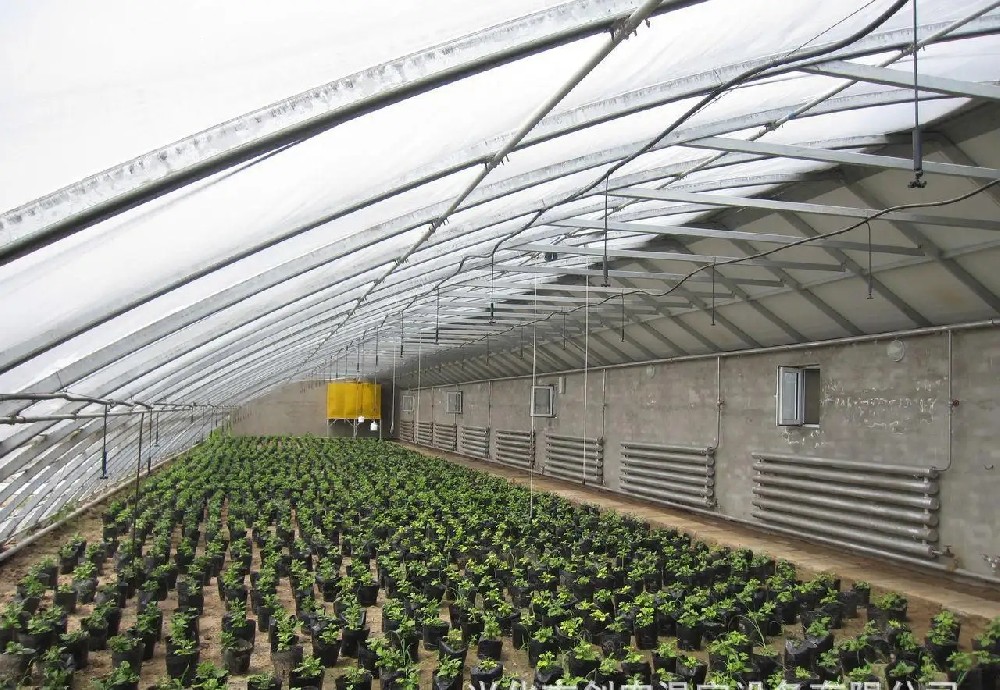
Open terrain with limited shading from buildings and trees.
Avoidance of wind outlets and strong wind corridors where possible.
Reliable water supply, drainage capacity and suitable water quality.
Fertile and loose soil, low groundwater and no salt or pollution issue when crop production is planned.
No nearby smoke, harmful gas or major pollution source.
Access to main roads for material delivery and product logistics.
Coordination between protected cultivation and open-field production areas when both exist.
Sensors need stable mounting positions, representative locations and protected cable routes. If the frame design ignores monitoring, later installation may force sensors onto unsuitable locations such as near vents, doors or structural shadows. For RS485 Modbus sensors, cable routing should avoid high-power motor lines and provide enough terminal space in the control cabinet.
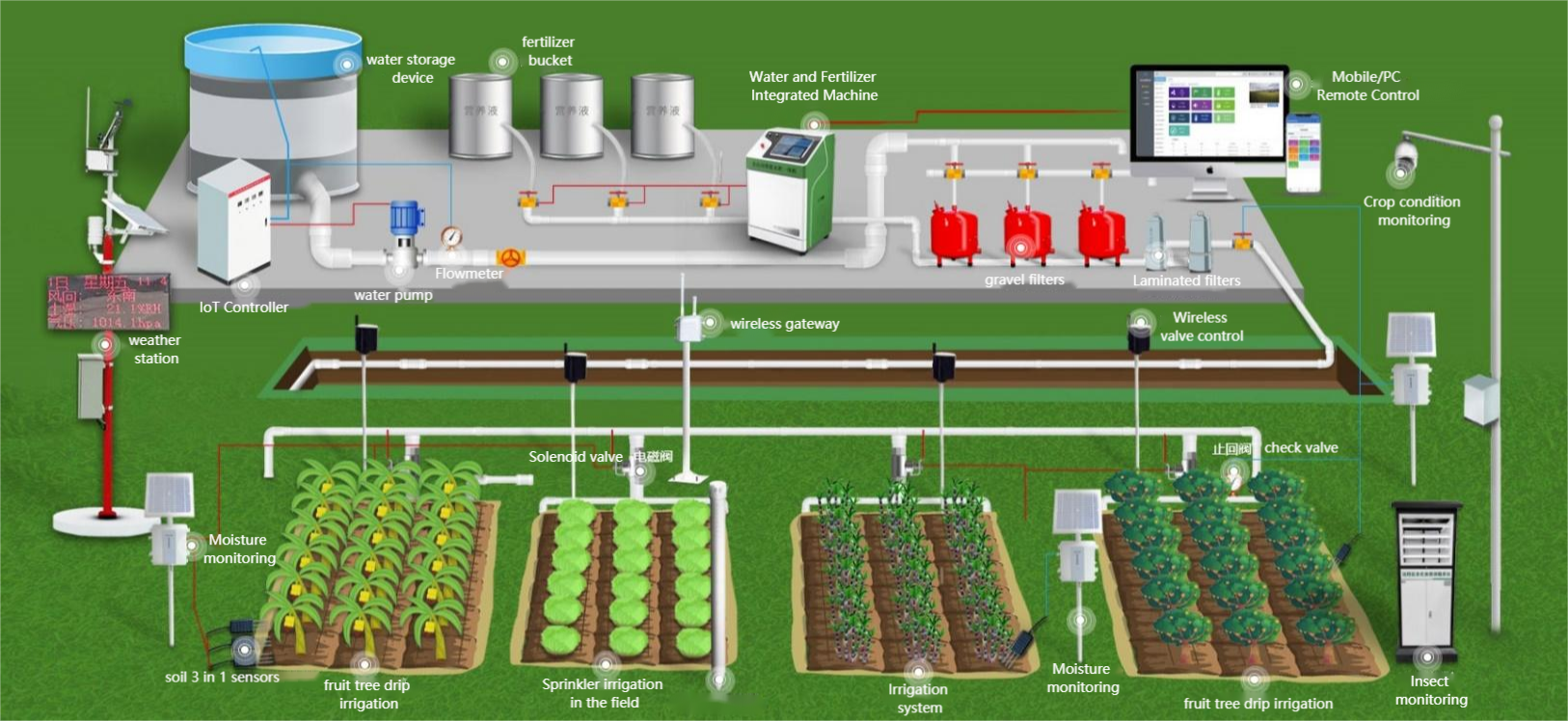
The greenhouse frame can also support weather stations, indoor temperature and humidity sensors, light sensors, CO2 sensors, soil monitoring devices, cameras and LED displays. The project drawing should reserve bracket points and cabinet positions before construction.
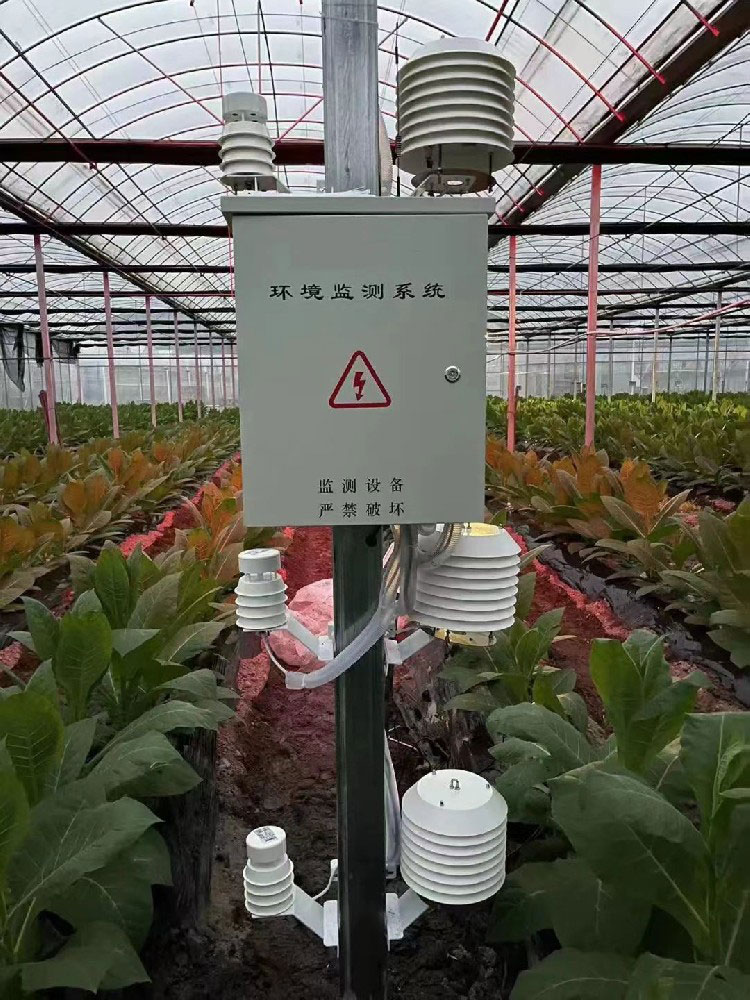
Field environment challenge: The structure must support seasonal ventilation, irrigation, crop load and daily worker movement.
System integration scheme: Select span, height and frame strength according to crop type and machinery access, then reserve sensor locations.
User value: The owner receives a production house that can later support monitoring and automated control.
Field environment challenge: Light uniformity and interior appearance affect production and visitor experience.
System integration scheme: Consider powder-coated galvanized frames and structured sensor mounting for light and climate monitoring.
User value: The greenhouse maintains a cleaner appearance and better operational data.
Field environment challenge: Snow load and winter insulation are primary structural risks.
System integration scheme: Confirm local snow load, frame thickness, purlin spacing and covering material before ordering.
User value: The project reduces structural risk during winter operation.
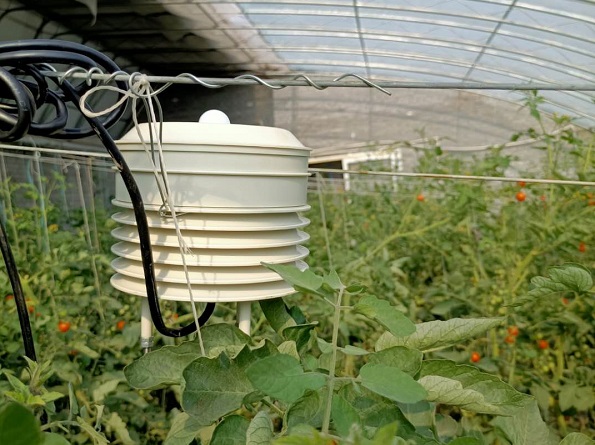
Field environment challenge: The project needs structure, equipment and data to look organized and be maintainable.
System integration scheme: Plan frame, cable tray, controller cabinet, sensor brackets and platform display together.
User value: The site can be operated and demonstrated without messy retrofit wiring.
When comparing greenhouse steel frame quotations, request steel specification, galvanizing method, coating method, connection hardware, wind and snow design basis, span and height drawings, foundation assumptions and installation scope. If powder coating is included, request process details and expected additional cost. A quotation that only lists total area and price is not enough for an engineering decision.
A greenhouse frame project can prepare for smart agriculture even when the first phase is structure only. Cable sleeves, cabinet foundations, sensor mounting points and mast locations can be reserved during construction. This preparation is inexpensive compared with later drilling, exposed cable runs and improvised brackets. It also improves data quality because sensors can be placed where the greenhouse environment is representative.
For example, indoor temperature and humidity sensors should not be mounted on a column that receives direct sunlight through the covering for long periods. Light sensors should not sit under a permanent truss shadow. CO2 sensors should not be too close to doors or vents. These location rules are easier to follow when frame and monitoring design are discussed together.
Before signing, the buyer should review whether wind load, snow load, steel specification, galvanizing method, coating method, foundation assumption, support layout and installation responsibility are written clearly. If the supplier only provides a total price per square meter, ask for the structural details behind that price.
A frame is not finished when installation ends. Bolts, coating surfaces, gutters, film contact points, doors and vents should be inspected periodically. Corrosion often begins at cuts, welds, scratches or water-retaining areas. If the greenhouse uses sensors and cabinets, cable ties and brackets should also be checked because loose cables can rub against the frame and become failure points.
For owners planning phased smart greenhouse upgrades, keeping the frame clean and documented is practical. A later installer can add sensors, screens or control equipment more safely when drawings and load assumptions remain available.
Automation equipment adds small but real requirements to the structure: cable trays, sensor brackets, control boxes, screens, fans, curtains, pumps and lighting fixtures all need attachment points or space. A frame designed only for covering material may become crowded when smart equipment is added. Early coordination reduces installation conflicts.
For high-humidity greenhouses, avoid placing control cabinets where condensation, spray or drainage water can affect electrical equipment. The frame layout should allow safe service access to both structural components and monitoring devices.
A: It carries the covering, equipment, wind load, snow load, crop hanging load and maintenance load, so it directly affects construction quality and service life.
A: Hot-dip galvanized steel pipe or square tube is commonly used because it provides strength and corrosion resistance for greenhouse structures.
A: Powder coating can improve appearance, increase internal light reflection and add corrosion protection, but it also increases process complexity and cost.
A: Span depends on crop, machinery, ventilation and structural cost. Some greenhouse construction designs use adjustable spans around 8-16 m, depending on crop, machinery and structure.
A: Check shading, wind exposure, water supply, drainage, soil condition, pollution sources, road access and coordination with production layout.
A: Frame design determines where sensors, cables, cabinets and displays can be installed. Poor planning can force sensors into unrepresentative locations.
A: Yes. Wind and snow load requirements should be documented according to local conditions and applicable design standards.
A: Yes, but it is better to reserve cable routes, brackets and cabinet space during construction to reduce retrofit work.
A: Ask for drawings, material specification, anti-corrosion process, load assumptions, installation method and warranty terms.
A: No. Lower price may come from thinner material, weaker coating, fewer supports or unclear load design, which increases long-term risk.
Greenhouse steel frame selection should be based on site condition, span, load, corrosion protection, covering material and future equipment needs. A well-planned frame supports not only the greenhouse covering but also sensors, controllers, ventilation equipment and long-term maintenance. Buyers should compare engineering documents, not only price.
Prev:Weather Station Equipment List: Sensors, Power, Communication, and Selection Criteria
Next:How Sensors and Cloud Platforms Are Applied in Greenhouse Planting
Related recommendations
Sensors & Weather Stations Catalog
 Agriculture Sensors and Weather Stations Catalog-NiuBoL.pdf
Weather Stations Catalog-NiuBoL.pdf
Agriculture Sensors Catalog-NiuBoL.pdf
Water Quality Sensor Catalog-NiuBoL.pdf
Related products
 Combined air temperature and relative humidity sensor
 TDR Soil Moisture & Temperature Sensor for irrigation| RS485 |4-20mA| NBL-S-THR
 Soil pH sensor RS485 soil Testing instrument soil ph meter for agriculture |NBL-S-PH
 Wind Speed sensor Output Modbus/RS485/Analog/0-5V/4-20mA
 Tipping bucket rain gauge for weather monitoring auto rainfall sensor RS485/Outdoor/stainless steel
 Pyranometer Solar Radiation Sensor 4-20mA/RS485

Screenshot, WhatsApp to identify the QR code
WhatsApp number:+8615367865107
(Click on WhatsApp to copy and add friends)

