





— Blogs —
—Products—
 Consumer hotline +8618073152920
WhatsApp:+8615367865107
Address:Room 102, District D, Houhu Industrial Park, Yuelu District, Changsha City, Hunan Province, China
Product knowledge
Time:2026-09-17 10:00:00 Popularity:213
A hospital wastewater residual chlorine analyzer price comparison is meaningful only when the offers measure the same chlorine fraction in the same sample conditions. A probe, a flow-cell measuring point and a complete analyzer panel are different purchases. Establish whether the project requires free or total residual chlorine, the expected concentration and the reporting basis before comparing the instrument cost, installation work and recurring service expenses.
Free chlorine, combined chlorine and total chlorine are not interchangeable names. In chlorinated water, free chlorine includes hypochlorous acid and hypochlorite; combined residual can include chloramines. Total residual is the sum of free and combined fractions. Wastewater chemistry can change their relative proportions, so the word "residual" alone is insufficient for selecting an analyzer.
The EPA's disinfection guidance for small wastewater systems identifies ammonia, organic matter, pH and suspended solids as factors affecting chlorination. This is relevant to instrument selection: a low response from a free-chlorine or HOCl-responsive sensor does not establish that total chlorine is equally low. Nor does one residual value establish that the required disinfection performance has been achieved.
Identify the measuring location precisely. A point after contact treatment serves a different purpose from a point after dechlorination. The expected range, required sensitivity and operator response can differ substantially. Obtain the applicable reporting requirement from the project engineer or responsible authority; do not select a range from a generic hospital-water recommendation.
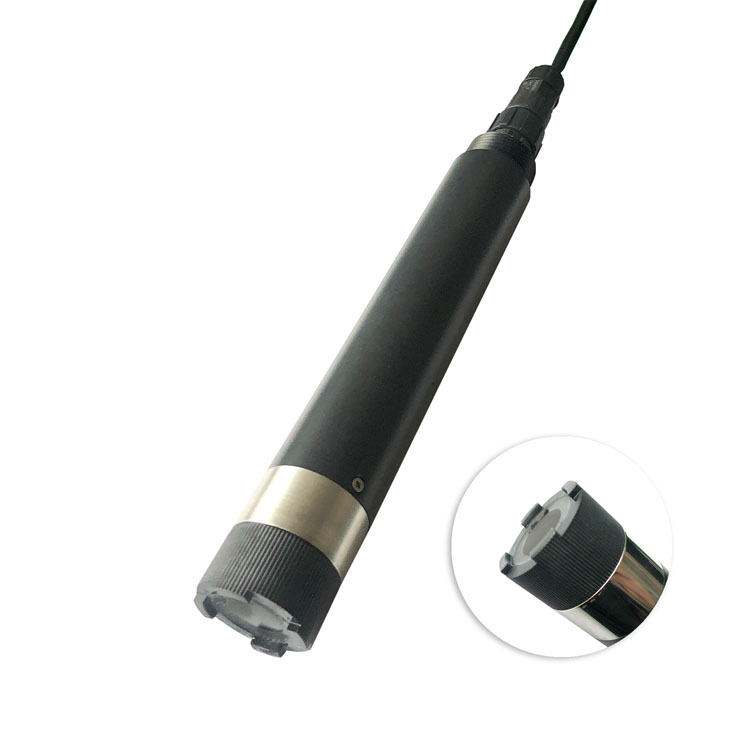
Upstream biological-treatment instruments belong to a separate part of the budget. A dissolved oxygen probe can support aeration operation, but its result cannot quantify chlorine residual. Keeping those functions separate prevents a quotation for a wider wastewater station from being mistaken for a more expensive version of the chlorine measuring point alone.
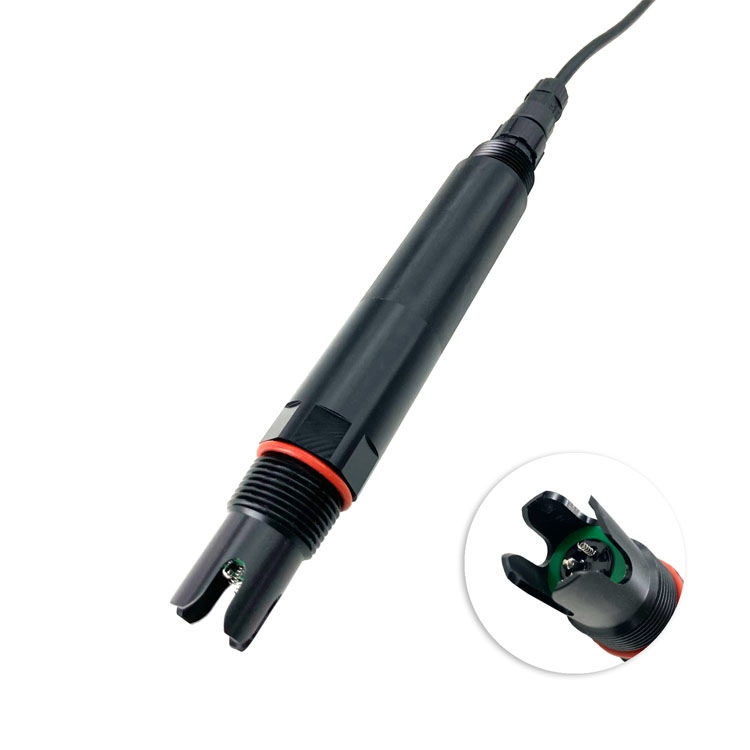
The NiuBoL NBL-WQ-CL is a constant-voltage residual chlorine sensor with a specified HOCl measurement range and a matching circulation-cell installation. It can be evaluated for a suitable conditioned sample where that measurement basis meets the project's need. It should not be specified as a total-chlorine analyzer or for a concentration above its range without a separately verified configuration.
| NBL-WQ-CL characteristic | Technical value | Cost or suitability consequence |
|---|---|---|
| Measurement basis and range | Constant-voltage method; 0-2.000 mg/L HOCl | Confirm the required chlorine fraction and concentration basis before comparing prices |
| Resolution | 0.001 mg/L | Display resolution is not a detection limit or proof of trace-level accuracy |
| Accuracy | +/-5% or +/-0.05 mg/L | Agree the percentage basis and rule for applying these terms in the acceptance specification |
| Medium conditions | pH 4-9; 5-50 C; pressure below 0.1 MPa | Provide a suitable sample branch; the pH operating range does not establish pH-independent response |
| Flow | 30-60 L/h through the circulation cell | Include flow regulation, a flow check and a suitable discharge route |
| Power | 12-24 V DC +/-10%; 0.2 W at 12 V | Controller, pump and communication loads are additional |
| Output and protection | RS485, Modbus RTU; IP68 probe | Confirm host compatibility and protect external terminations independently |
| Wetted construction | POM and PTFE | Check compatibility with the sample and cleaning chemicals |
| Cable termination | Approximately 6 mm cable outer diameter; shield connection | Specify gland fit, cable length and jacket requirements in the order |
Automatic temperature compensation is not the same as automatic compensation for changes in chlorine speciation with pH. Agree how the HOCl response will be related to the project's required residual result, including any additional measurement or calculation. If that relationship cannot be validated for the wastewater, choose a different analytical configuration before discussing accessories.
Turbidity can help investigate solids carryover into the disinfection stage. It is not a chlorine reading and should not be used to infer a residual concentration. Where solids create a sample-conditioning problem, verify that the proposed treatment of the sample does not materially change the chlorine reaching the analyzer.
| Offer type | What to identify | What may remain outside the price |
|---|---|---|
| Sensor package | Exact sensor, measuring range, circulation cell, cable and documentation | Power supply, local display, sample plumbing and control programming |
| Installed measuring point | Sensor package plus sample takeoff, pressure and flow control, mounting and drain connection | Plant-wide data integration, remote communication or specialist acceptance testing |
| Analyzer panel integrated with the plant | Measuring point plus controller, alarm interfaces and defined PLC or RTU integration | Civil works, broader treatment modifications and recurring service items unless listed |
Ask each supplier to identify inclusions on the same item list. For the NBL-WQ-CL package, verify the matching circulation cell in the offer rather than assuming it must be bought twice. Conversely, a circulation cell does not mean that the isolation valves, pressure regulator, sample tubing and drain installation are included.
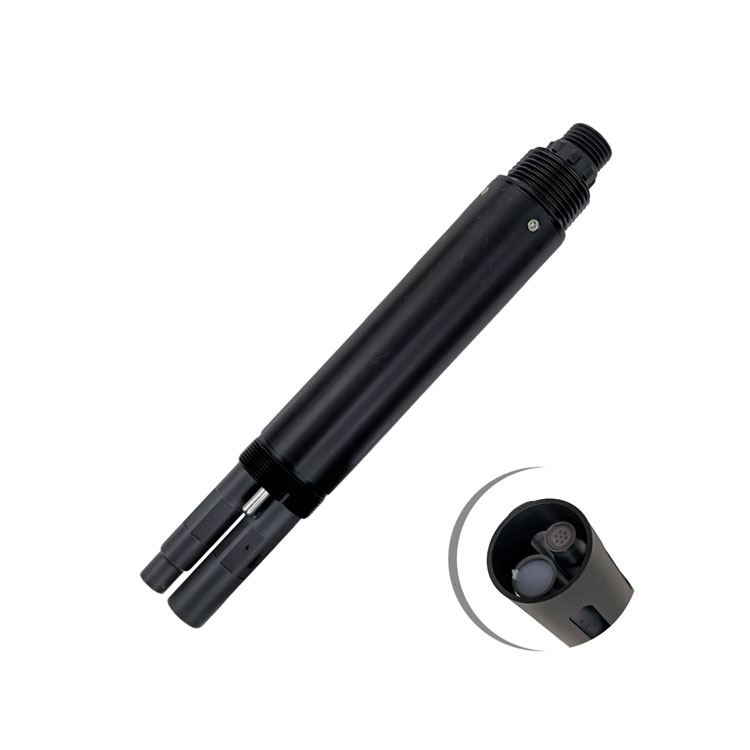
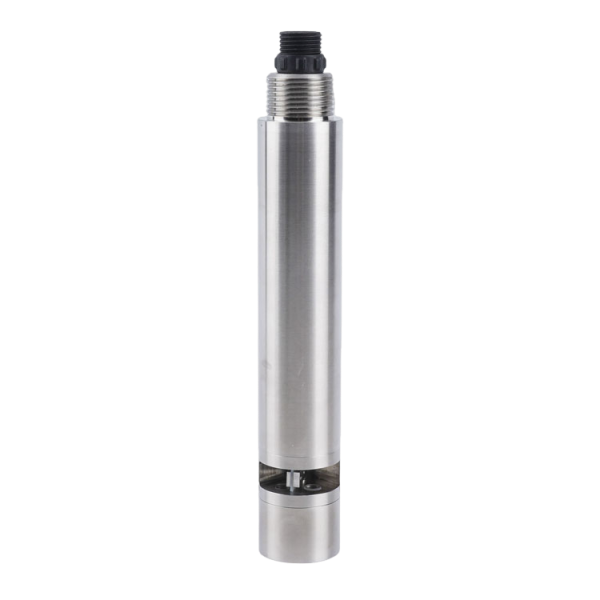
A multi-parameter probe may be useful elsewhere in the station, but it is not automatically a chlorine analyzer. The NBL-WQ-MPS-5B pictured below can support selected upstream water measurements; it does not establish that a chlorine channel is fitted. Price those channels separately when they have a defined operating purpose.

Sample water is a measurable cost. At a continuous flow of 30-60 L/h, the circulation cell uses 0.72-1.44 m3 per day, or approximately 263-526 m3 over 365 days. These figures assume continuous operation and exclude additional flushing. Multiply the applicable volume by the site's supply and disposal costs; do not assume the sample can be returned to the process without an engineered return arrangement.
Include the labor needed to inspect the cell, verify flow, clean deposits and compare readings. A remote dashboard does not remove these tasks. Ask which service items belong to the exact sensing design instead of budgeting a generic membrane or electrolyte kit that may not apply. Obtain replacement-part prices and the recommended storage procedure for the supplied electrode.
Commissioning can also include a stabilization period and site comparison work. Schedule that work while representative effluent is available. A successful electrical test with no suitable sample verifies wiring, not measurement performance. Repeat visits caused by an incomplete sample connection or unavailable comparison method can cost more than a modest difference in sensor purchase price.
For the comparison, record pH and sample flow with paired residual results. If free and total chlorine differ, compare the online sensor only with the result matching its validated measurement basis. Adjusting calibration until an HOCl-responsive channel matches an unrelated total-residual result can conceal a method mismatch rather than correct an instrument error.
Where ammonia varies, an upstream ammonia-nitrogen measurement may help explain changing chlorine behavior. It does not by itself measure chloramine or determine the required dose. Add that channel for a defined investigation or operating task, with its own validation, rather than treating it as a mandatory accessory to every residual analyzer.
Request a drawing of the takeoff, pressure reduction, flow indication, measuring cell and discharge. Position the sample point to represent the intended treatment stage, and evaluate transport time and chlorine loss along the tubing. Materials, deposits and residence time can change a reactive residual before it reaches the electrode. Reducing that problem is part of the installation, not a calibration adjustment.
For an RS485 Modbus RTU connection, include the exact register mapping and scaling in the integration work. If the existing panel accepts only 4-20 mA, confirm a suitable output configuration or interface rather than assuming the standard digital probe provides it. A gateway is useful when a data-transfer requirement exists; a nearby PLC with a compatible interface may connect directly.
Agree how the plant handles stopped sample flow, sensor servicing and communication loss. Do not let the last valid residual remain indistinguishable from a current result. The dosing response to an invalid measurement must be determined by the plant's control and safety design, not by a generic sensor default. Test those conditions with the operator before routine automatic operation.
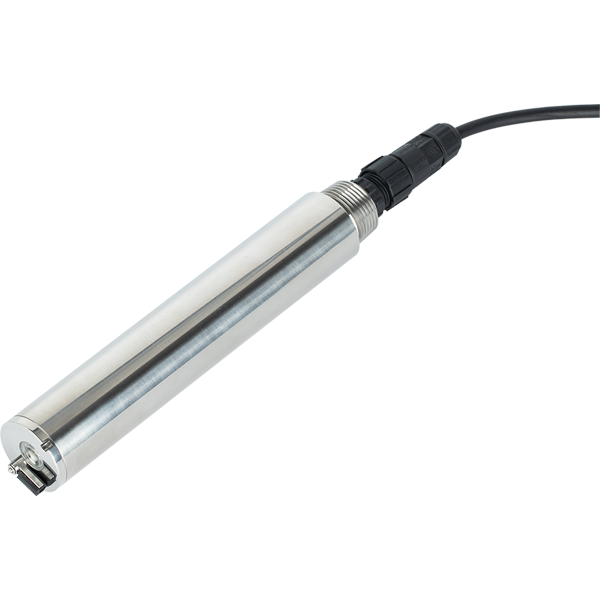
COD monitoring can help characterize a changing upstream organic load after site correlation, but it cannot supply a direct chlorine-demand or residual measurement. Keep this related instrument outside the chlorine analyzer price unless the project actually requires it. Its value is additional process context, not a replacement for the specified residual method.
The price depends on the selected analytical method and installation. Request a dated quotation for the chlorine fraction, range, cell, controller and sample connection required. Compare delivered equipment cost and recurring service costs separately, using the same inclusions and exclusions for each offer.
Do not assume so. Its specified range is 0-2.000 mg/L HOCl. A total-residual requirement needs an analytical configuration that measures the required fraction and is suitable for the wastewater. Confirm that capability explicitly before placing an order.
Only if the actual measurement basis and all required operating conditions fit that range. Contact-stage and final-discharge points can have different requirements. Provide representative results and credible excursions rather than selecting the range from the facility type alone.
No. A residual reading is one operating measurement. Disinfection assessment also depends on the treatment design, contact conditions and the required verification tests. Use the instrument within the site's approved operating and monitoring procedure.
Use existing compatible power and PLC capacity where suitable, avoid duplicate display or communication equipment, and place the cell where it can be serviced efficiently. Do not remove flow control or method validation simply to lower the initial price.
Send the chlorine fraction required, sampling point, range, pH, temperature, pressure and sample-condition information. Include the existing controller inputs and site photographs. Ask NiuBoL to identify the offered sensor configuration and any conditions that require an alternative method.
Obtain a configuration-specific delivery schedule and identify available replacement electrodes, accessories and commissioning assistance. Confirm warranty coverage for the instrument and consumables separately. A generic delivery promise or warranty headline does not describe the support needed for the installed measuring point.
Compare hospital wastewater chlorine equipment only after matching the analytical duty. The useful quote identifies the chlorine fraction, range, sample arrangement, integration work and recurring costs. NiuBoL can review the NBL-WQ-CL against those conditions and identify where its HOCl range or installation limits do not meet the requested duty.
Prev:Class I Surface Water COD Limit: 15 mg/L and Monitoring Choices
Next:Drinking Water Quality Parameters by Treatment and Distribution Point
Related recommendations
Sensors & Weather Stations Catalog
 Agriculture Sensors and Weather Stations Catalog-NiuBoL.pdf
Weather Stations Catalog-NiuBoL.pdf
Agriculture Sensors Catalog-NiuBoL.pdf
Water Quality Sensor Catalog-NiuBoL.pdf
Related products
 Combined air temperature and relative humidity sensor
 TDR Soil Moisture & Temperature Sensor for irrigation| RS485 |4-20mA| NBL-S-THR
 Soil pH sensor RS485 soil Testing instrument soil ph meter for agriculture |NBL-S-PH
 Wind Speed sensor Output Modbus/RS485/Analog/0-5V/4-20mA
 Tipping bucket rain gauge for weather monitoring auto rainfall sensor RS485/Outdoor/stainless steel
 Pyranometer Solar Radiation Sensor 4-20mA/RS485


Screenshot, WhatsApp to identify the QR code
WhatsApp number:+8615367865107
(Click on WhatsApp to copy and add friends)

