





— Blogs —
—Products—
 Consumer hotline +8618073152920
 WhatsApp:+8615367865107
Address:Room 102, District D, Houhu Industrial Park, Yuelu District, Changsha City, Hunan Province, China
Product knowledge
Time:2026-09-08 13:00:00 Popularity:224
Quick Answer: A PV weather station supports solar plant performance analysis by separating changes in sunlight and module temperature from changes in electrical output. When generation falls, first validate the weather measurements and inverter operating state. Then compare synchronized, representative intervals. Weather data can identify which investigation to start; it cannot, by itself, prove soiling, degradation or an equipment fault.
A cloudy week and a failed inverter can both reduce daily energy. The corrective actions are different. A useful performance investigation therefore starts with the affected block, the time of the change and the electrical measurement boundary. Compare AC output with an AC model or DC output with a DC model. A revenue meter also includes losses and consumption that an inverter terminal measurement may exclude.
Use plane-of-array irradiance and module temperature with inverter output to investigate performance ratio; weather data alone cannot increase generation. For a suspected fault, the more useful first question is often narrower: did all comparable blocks lose output together, or did one block diverge while the others continued normally?
For equipment configuration and installation responsibilities, see the photovoltaic weather monitoring station configuration guide. A station can be correctly assembled yet still produce misleading performance comparisons if its data are used without checking operating conditions.
Join weather measurements, inverter power, energy counters and operating status by acquisition time. Check whether each timestamp marks the beginning or end of an interval. A ten-minute energy total must not be compared with one irradiance sample taken at the end of that interval, particularly during passing clouds.
Keep raw records and add quality flags to the analysis copy. Remove invalid intervals from the relevant calculation, not from the historical record. Report the amount of usable data alongside the result. A monthly performance figure based on a few clear afternoons does not describe the whole month's availability or energy delivery.
| Observation | Check before calculating a loss | Reason |
|---|---|---|
| Power is low across the site | POA irradiance, grid restrictions and inverter status | Reduced sunlight or a plant-wide operating limit can affect every block. |
| One block differs from its peers | Orientation, installed capacity, shading and availability | Only comparable blocks provide a useful electrical reference. |
| Power reaches a flat midday ceiling | AC rating, export setpoint and clipping indicators | Output may be deliberately or physically limited while sunlight continues rising. |
| Performance improves immediately after sensor cleaning | Irradiance before and after cleaning | A changed reference measurement can move the ratio without changing plant output. |
| Apparent loss grows during fast cloud transitions | Clock alignment, averaging and sensor response | Mismatched intervals can create false short-term residuals. |
Clipping and curtailment should be identified separately from unrestricted operation. They remain relevant to delivered energy, but should not silently become evidence of module deterioration. Research on inverter clipping and PV losses also shows why an AC output comparison needs to account for the inverter limit.
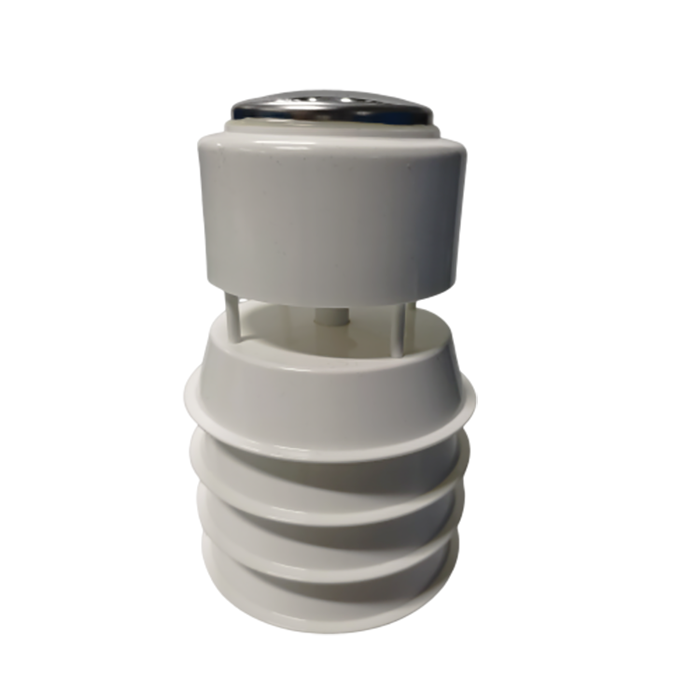
A contaminated pyranometer can under-read irradiance. Dividing electrical output by that smaller reference can make normalized performance appear better, masking a real problem. Shading from a new antenna or a slipped bracket can create a repeating daily pattern. Examine irradiance against solar time and maintenance dates before using it to justify a cleaning campaign or warranty claim.
Inspect the instrument in its actual measuring plane. A horizontal sensor and a tilted array receive different irradiance, especially at low solar elevation. East- and west-facing blocks need references or a validated transformation appropriate to their orientations. For trackers, check whether the measured plane follows the represented array during normal operation and stow events.
Module temperature deserves a separate check. A detached back-surface probe may continue reporting plausible air-like temperatures. Inspect adhesion, cable strain and the daytime difference between module and ambient temperature. A compact weather sensor can provide ambient context, but it cannot measure module back-surface temperature merely by being mounted near the panels.
| NiuBoL component | Relevant specification | Consequence for analysis |
|---|---|---|
| NBL-W-HPRS pyranometer | 0-2000 W/m2; response time up to 35 s to 99% | Very short cloud-edge comparisons may include sensor response differences. Range is not an uncertainty guarantee. |
| NBL-W-PPT module probe | Range options -50 to 100 degrees C or -20 to 50 degrees C; accuracy +/-0.5 degrees C | Check the installed range and thermal contact before applying a temperature correction. |
| NBL-W-LBTH ambient sensor | Temperature -40 to 80 degrees C, +/-0.5 degrees C; humidity 0-100% RH, +/-5% RH | Provides local air conditions. It does not replace the module-temperature input. |
The available RS485, current and voltage versions require the correct logger configuration. For RS485 Modbus RTU, a successful response is not enough: verify the decoded unit, scaling and channel identity. For a raw thermopile output, retain the individual sensitivity used in conversion. Replacing a sensor without updating that coefficient can create a step in irradiance that resembles a plant performance change.
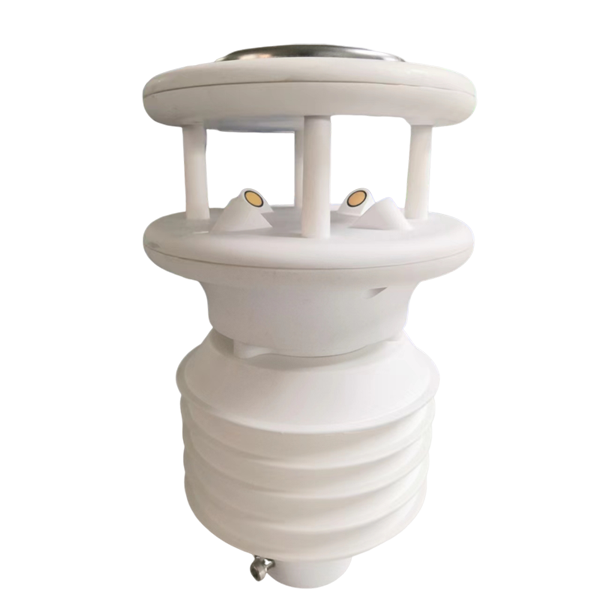
For an initial comparison at similar irradiance, a simple temperature factor is 1 + gamma x (T - Tref), where gamma is the module power temperature coefficient expressed per degree C. Use the coefficient for the installed module and the temperature definition required by the performance model. A back-surface measurement is not automatically the cell temperature used by that model.
As an illustrative calculation, take gamma = -0.0035 per degree C and a temperature rise from 25 to 55 degrees C. The factor is 1 - 0.0035 x 30 = 0.895. That is a 10.5% reduction in the temperature-dependent power term under the example assumptions. It is not a measured plant loss, a NiuBoL sensor specification or a prediction that AC energy will fall by exactly 10.5%.
Inverter clipping, operating-point changes and other losses prevent this simple factor from being a complete plant model. Do not adjust the coefficient until the result matches expectations. If the residual remains large, examine the electrical data and temperature measurement rather than using an arbitrary correction to remove it.
A sudden change confined to one inverter suggests a different investigation from a slow site-wide trend. Review inverter alarms, string currents and maintenance work for a local step. For a broad trend, inspect sensor cleanliness and calibration history as well as module condition. The weather station narrows the possibilities; electrical testing establishes the equipment fault.
A recurring morning or afternoon deficit may indicate shading, an orientation mismatch or tracker behavior. Compare several days with suitable irradiance and inspect the affected time window on site. A deficit that appears only during variable cloud conditions is a reason to check synchronization and spatial cloud differences before sending technicians to test strings.
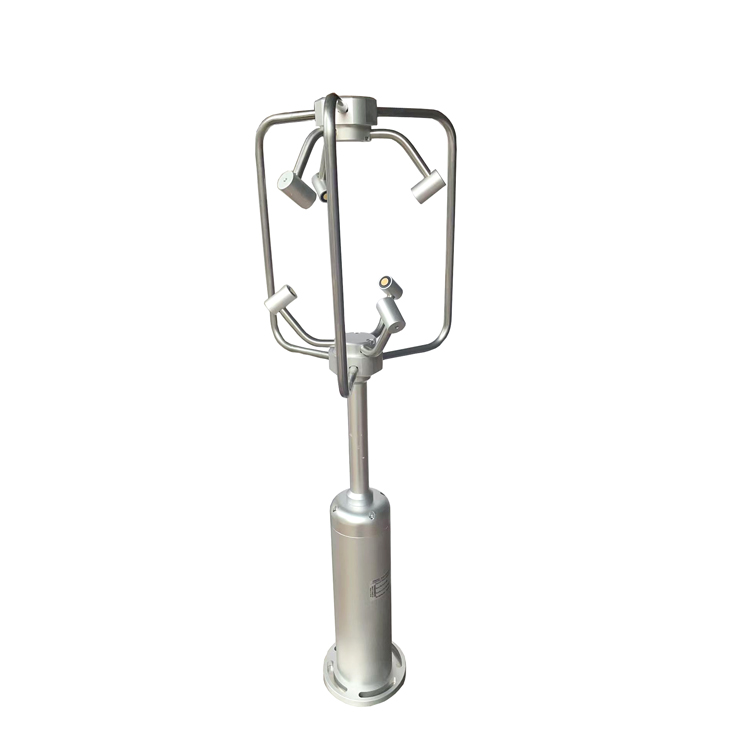
Wind helps interpret module cooling. A cooler module at comparable sunlight may be responding to stronger airflow rather than an electrical improvement. Wind measured above a mast is not identical to airflow through every row. A three-dimensional anemometer is useful for a specific airflow study, but additional wind components are not a substitute for correctly attached module probes.
For suspected soiling, identify a representative comparison area and record exactly what was cleaned and when. Compare equivalent operating conditions, excluding known clipping or curtailment as appropriate to the test. Rainfall alone does not quantify cleaning effectiveness, and cleaning the irradiance instrument at the same time as modules can change both sides of the comparison.
Separate the sensor-maintenance event from the module-maintenance event in the log. Where a loss decision has significant financial consequences, use a dedicated soiling measurement or a controlled comparison accepted by the project team. A weather station's humidity and rain records provide context, not a direct percentage soiling loss.
For a suspected measurement fault, compare a suitable reference instrument beside the installed sensor under matched exposure. Avoid declaring failure from one instantaneous reading during fast changes. Document the comparison interval, instrument condition and observed difference. Replace or recalibrate only after distinguishing a sensor problem from mounting and data-processing errors.
A useful NiuBoL inquiry includes a short export covering normal and abnormal operation, the affected array orientation, sensor models and output versions, and photographs showing irradiance alignment and module-probe attachment. Include inverter status for the same period. Screenshots alone often hide missing samples, scaling changes and timestamp conventions.
For an upgrade, describe the unresolved question: a second array orientation, unreliable module contact, insufficient sampling or a missing plant interface. This makes it possible to discuss a targeted sensor or logger change. There is no need to replace a functioning station simply because another package has more channels.

Not on its own. Both can reduce output relative to weather conditions. Sensor drift, shading and availability can produce similar trends. Use the weather data to identify the pattern, then apply a controlled cleaning comparison, electrical tests or a validated degradation analysis suited to the question.
Under-reading irradiance reduces the denominator in a normalized output calculation. The resulting ratio can rise even if generation does not. Inspect and clean the reference sensor on a documented schedule, and treat changes in its condition as measurement events.
That depends on the calculation. Inverter startup, small signal levels and model uncertainty can make low-light intervals unsuitable for a specific efficiency comparison. Keep those intervals in energy and availability records where relevant, and state the filtering rule rather than silently removing poor results.
Yes, when the reference represents both blocks sufficiently for the intended analysis. Different orientations, terrain, shading or moving clouds may invalidate short-interval comparisons. Check these differences before interpreting a block-to-block residual as a fault.
No. Better measurements can reduce uncertainty and guide maintenance, but generation changes only when operating conditions or plant actions change. Specify the diagnostic gap the upgrade must close and test whether the new measurements actually resolve it.
Solar plant performance analysis needs a trustworthy weather reference and a clear electrical comparison. Check sensor condition, time alignment and operating limits before assigning a loss. Use the remaining discrepancy to choose a specific field test, then verify the result under comparable conditions.
Prev:Photovoltaic Weather Monitoring Station: System Scope for Solar Plants
Next:Environmental Water Quality Buoy Installation and Commissioning Guide
Related recommendations
Sensors & Weather Stations Catalog
 Agriculture Sensors and Weather Stations Catalog-NiuBoL.pdf
Weather Stations Catalog-NiuBoL.pdf
Agriculture Sensors Catalog-NiuBoL.pdf
Water Quality Sensor Catalog-NiuBoL.pdf
Related products
Combined air temperature and relative humidity sensor TDR Soil Moisture & Temperature Sensor for irrigation| RS485 |4-20mA| NBL-S-THR
 Soil pH sensor RS485 soil Testing instrument soil ph meter for agriculture |NBL-S-PH
 Wind Speed sensor Output Modbus/RS485/Analog/0-5V/4-20mA
 Tipping bucket rain gauge for weather monitoring auto rainfall sensor RS485/Outdoor/stainless steel
 Pyranometer Solar Radiation Sensor 4-20mA/RS485

Screenshot, WhatsApp to identify the QR code
WhatsApp number:+8615367865107
(Click on WhatsApp to copy and add friends)

