





— Blogs —
—Products—
 Consumer hotline +8618073152920
WhatsApp:+8615367865107
Address:Room 102, District D, Houhu Industrial Park, Yuelu District, Changsha City, Hunan Province, China
Product knowledge
Time:2026-08-22 09:01:00 Popularity:234
An IoT water monitoring system should make remote observations accessible without giving every viewer permission to change the probes. Calibration commands, communication settings and conversion factors can alter measurement meaning or stop acquisition. Separate routine data collection from authorised service access before the station is connected to a remote platform.

A dashboard user may be unable to edit a visible value while a transparent network-to-serial service still permits field commands. Review the whole path: remote account, network access, gateway application, local PLC or data logger and RS485 devices. Identify where writing is possible and which layer actually restricts it.
The NIST Guide to Operational Technology Security addresses monitoring and control systems in their operational context. For a water station, access controls must fit measurement continuity and field service, not just access to a cloud chart. A security claim needs assessment of the configured system, not an inference from its protocol names.
For example, an ammonium probe can continue supplying a plausible trend after a setting changes, but its interpretation may no longer match the previous record. Treat remote configuration as a controlled service activity, not as an ordinary part of viewing that trend.
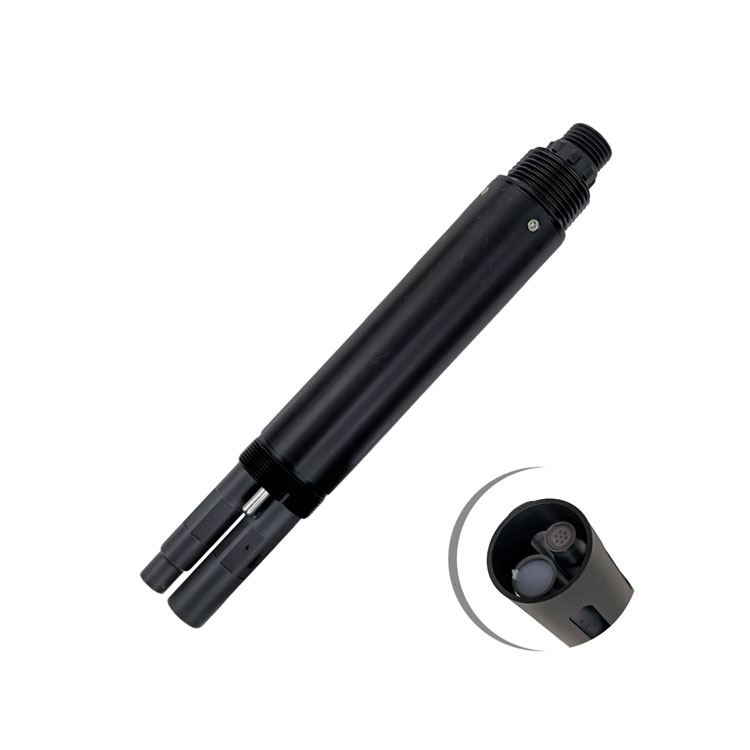
| Activity | Required access boundary | Record to retain |
|---|---|---|
| View and export observations | Measurement access without probe-setting changes | User access scope and exported units, times and validity |
| Change calibration or compensation | Authorised service access under a defined procedure | Device, setting, old and new values, reason, operator and time |
| Change address or serial settings | Controlled configuration with a recovery route | Updated field map, receiver settings and successful readback |
| Administer gateway software or connectivity | Restricted admin access distinct from routine observation | Configuration version, access changes and recovery information |
These boundaries are requirements for the selected application and infrastructure. Do not assume every gateway provides user roles, per-register filtering, authenticated field writes or an audit trail. Ask the integrator to identify which functions are included and demonstrate the ones required by the project.
On an optical oxygen channel, a remote salinity-setting change affects the compensation basis rather than measuring salinity. Retain that change with the DO history so an operator does not interpret a configuration step as a physical oxygen event.
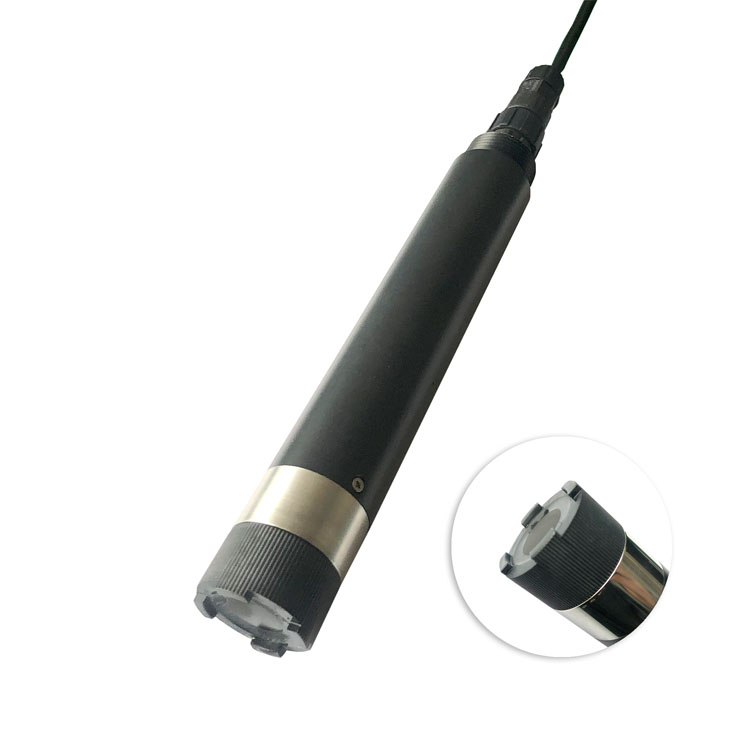
NiuBoL probes can connect to compatible receiving equipment through RS485 Modbus RTU. A configurable logger such as the TG462 / TG462S provides acquisition and networking interfaces. Its support for networking or Modbus gateway functions does not establish the access-control behavior of every software configuration.
| Component | Relevant specifications | Service implication |
|---|---|---|
| TG462 / TG462S logger | 5-35 V DC input; 3 RS485 ports; 2 Ethernet ports; IP30; -35 to 75 degrees C | Provide a suitable cabinet and confirm the actual networking, access and recovery software |
| NBL-WQ-DO | 0-20 mg/L; +/-2% FS; 12-24 V DC; below 0.3 W at 12 V; 0-45 degrees C; IP68 | Preserve the model-specific calibration and compensation settings |
| NBL-WQ-EC | Selected spans from 0-20.00 uS/cm to 0-200.0 mS/cm; +/-1% FS; 12-24 V DC +/-10%; 0.2 W at 12 V; 0-50 degrees C; IP68 | Retain the selected range, scaling and TDS conversion basis |
| NBL-WQ-PH | 0-14 pH; +/-0.1 pH; 12-24 V DC; 0.2 W at 12 V; 0-65 degrees C; IP68 | Keep calibration and temperature configuration specific to the delivered pH model |
The base DO, EC and pH probes have 5 m standard cables with other lengths configurable. Protect wet field joints separately. A probe's IP68 rating does not apply to the IP30 logger or make the station cabinet suitable for standing water.
The EC configuration supports write operations as well as reading. A serial address selects a device; it is not a user credential. Use the actual device protocol when designing restrictions rather than assuming a generic list of safe registers applies to every water instrument.
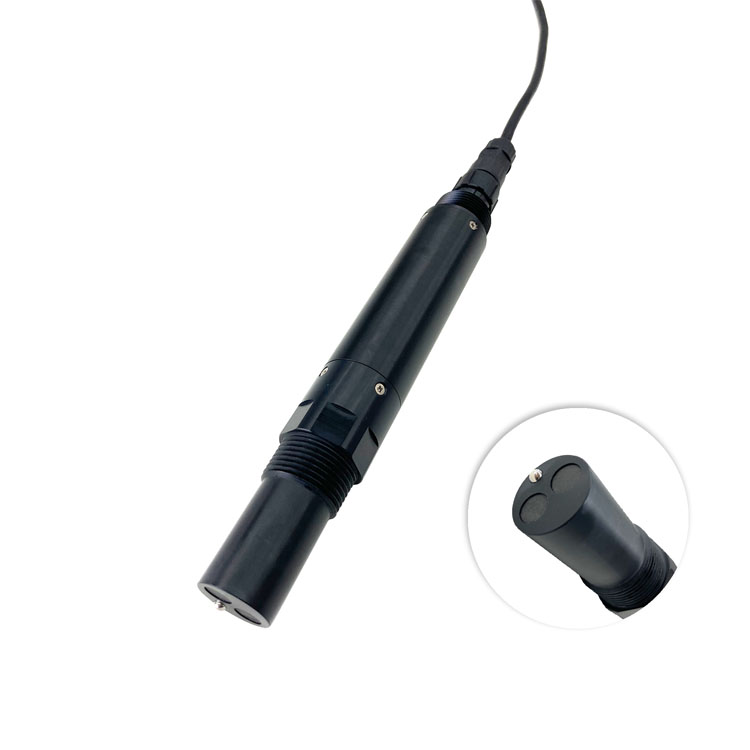
A COD instrument on the same station needs its own service procedure and command mapping. Broad write access to a shared bus can affect more than the channel visible on the service screen. Limit the target and permitted activity to the intended device wherever the selected architecture supports it.
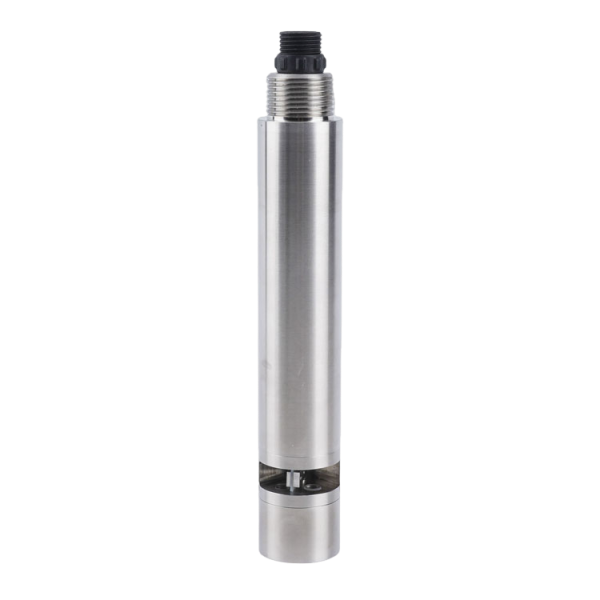
For EC, a coefficient or unit change may affect TDS while the underlying conductivity remains consistent. Check both configuration and decoded values before approving the result. A successful write acknowledgement alone is not a measurement verification.
Do not assume it does. Assess the actual devices and receiving architecture. A device address or supported function code does not establish individual authorisation, encryption or an auditable service session.
A command may be remote, but calibration still requires the correct physical reference conditions and model procedure. Arrange competent local verification when the task requires buffers, standards, cleaning or handling.
Only if all other configuration paths are appropriately controlled too. Review serial passthrough, administration, local tools and the actual gateway application rather than checking the visible screen alone.
Verify settings and fresh data through the intended receiver, update the field map and confirm the recovery route. A changed address or baud rate can leave a healthy probe unreachable if the receiver is not updated correctly.
Provide the sensor list, receiving platform, required remote activities, network arrangement, account responsibilities and recovery constraints. Request a demonstration of the access and change-record functions included in the offered configuration.
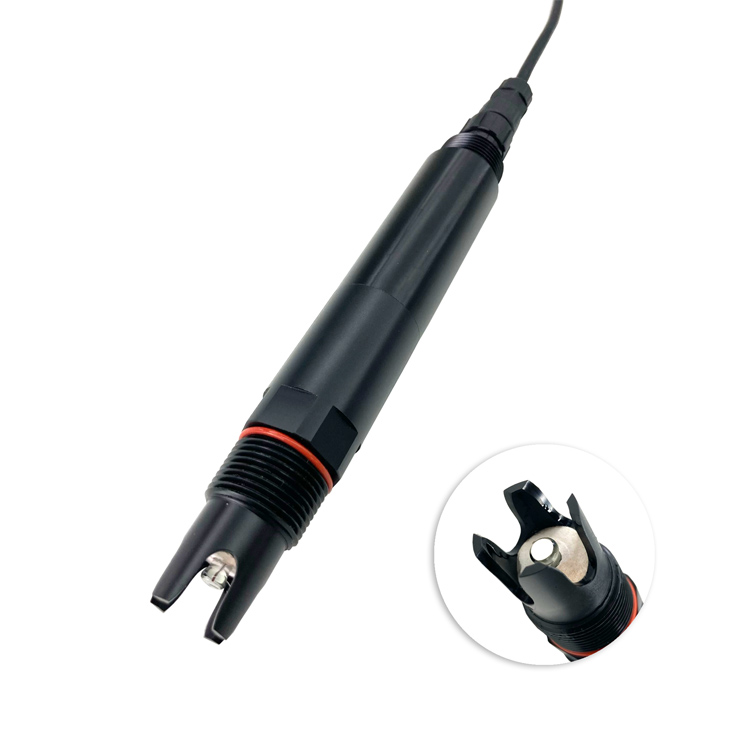
An IoT water monitoring system needs a deliberate boundary between observing measurements and modifying instruments. Match NiuBoL probes and receiving hardware to the water and interface requirements, then verify the configured access controls and service workflow. Remote convenience should not obscure who changed a setting or whether the measurement was physically checked.
Prev:Weather Alarm Station for Wind-Sensitive Sites: Design and Tests
Next:Anemometer for Wind Speed: Check Pulse Counts and Time Windows
Related recommendations
Sensors & Weather Stations Catalog
 Agriculture Sensors and Weather Stations Catalog-NiuBoL.pdf
Weather Stations Catalog-NiuBoL.pdf
Agriculture Sensors Catalog-NiuBoL.pdf
Water Quality Sensor Catalog-NiuBoL.pdf
Related products
 Combined air temperature and relative humidity sensor
 TDR Soil Moisture & Temperature Sensor for irrigation| RS485 |4-20mA| NBL-S-THR
 Soil pH sensor RS485 soil Testing instrument soil ph meter for agriculture |NBL-S-PH
 Wind Speed sensor Output Modbus/RS485/Analog/0-5V/4-20mA
 Tipping bucket rain gauge for weather monitoring auto rainfall sensor RS485/Outdoor/stainless steel
 Pyranometer Solar Radiation Sensor 4-20mA/RS485


Screenshot, WhatsApp to identify the QR code
WhatsApp number:+8615367865107
(Click on WhatsApp to copy and add friends)

