





— Blogs —
—Products—
 Consumer hotline +8618073152920
WhatsApp:+8615367865107
Address:Room 102, District D, Houhu Industrial Park, Yuelu District, Changsha City, Hunan Province, China
Product knowledge
Time:2026-08-20 09:07:00 Popularity:323
A pH sensor for water quality monitoring can continue returning plausible numbers while it is being cleaned or checked in buffer solution. If the historian treats those numbers as process measurements, daily charts and exception reports can become misleading. The solution is to preserve the observations while recording when the probe is actually measuring the process.
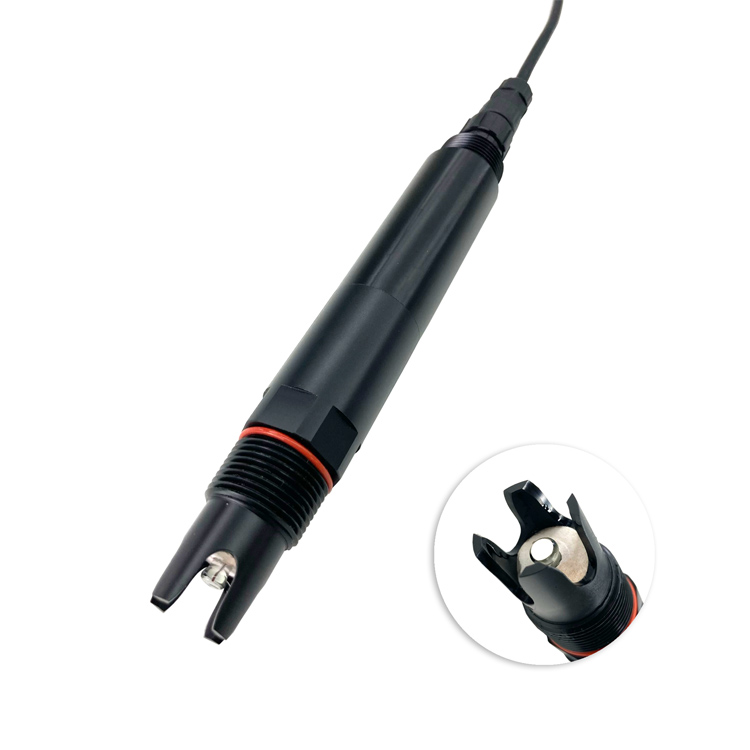
Consider a probe removed from a treatment tank and placed in a pH buffer. Its value may be within the normal operating range, its temperature may look reasonable and its Modbus replies may be correct. None of those checks identifies its location. A range alarm alone cannot distinguish the buffer reading from tank water.
Use a service state in the receiving system to distinguish process measurement, maintenance, reference checking, communication failure and return-to-service verification. These states must be implemented in the PLC, RTU, data logger or historian as appropriate. Do not assume the sensor automatically knows it has been removed or provides a dedicated maintenance-status register.
A dissolved oxygen probe on the same station can remain in service during pH maintenance. Its own quality state should remain independent. Marking the entire station invalid when only pH is under service can discard useful oxygen history; leaving every channel valid can contaminate the pH report.
| Channel state | What to retain | How to use it |
|---|---|---|
| Normal process measurement | Value, unit, time, device identity and validity | Include in the intended process trend and defined summaries |
| Cleaning or buffer check | Observed value with service state and event times | Keep available for maintenance review; distinguish from process observations |
| Communication failure | Failure time, status and last valid observation time | Show missing or invalid current data rather than a fresh-looking held value |
| Returned but not yet accepted | New observations with a pending verification state | Resume process use only after the required installation and channel checks |
Do not erase a suspect period or replace it with a flat line simply to make the chart look continuous. Preserve the raw series and an identifiable correction or exclusion record. Process reports should show the applicable valid-data coverage and service gaps, following the site's reporting rules. This is not permission to remove unfavourable process results or substitute for regulatory reporting requirements.
For example, an average calculated only from valid observations is incomplete without its coverage period. A short valid interval should not silently stand in for a full day. Define the summary method, minimum coverage and treatment of gaps before operators use the report for acceptance or investigation.
A salinity channel has its own unit and conversion basis. If it is maintained separately, preserve that distinction in both raw exports and reports. Shared power or a common gateway does not make the measurement histories interchangeable.
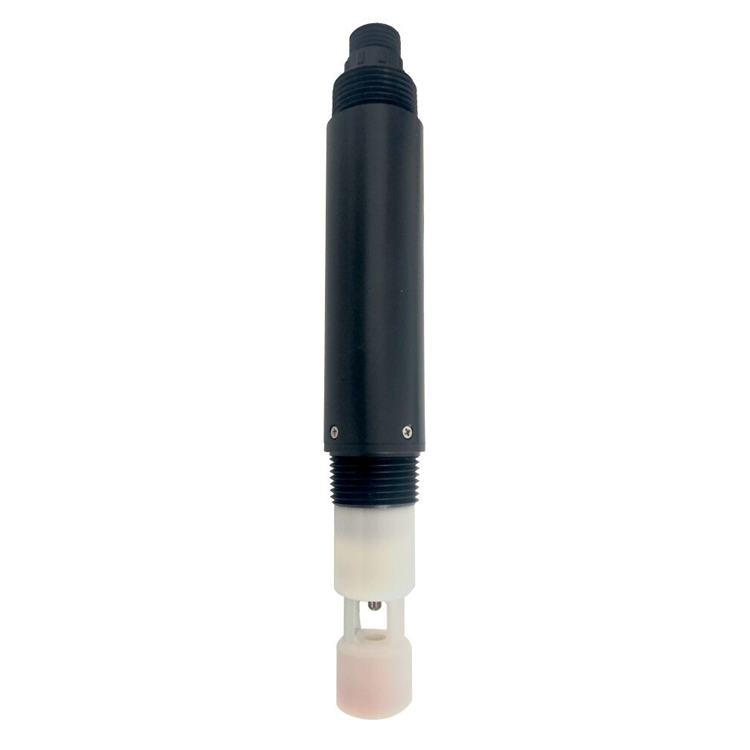
The NiuBoL NBL-WQ-PH supplies pH and temperature through RS485 Modbus RTU. Its integrated electronics simplify the acquisition path, but reporting quality still depends on correct decoding, installation and the receiving application's state handling.
| Specification | NBL-WQ-PH value | Reporting consequence |
|---|---|---|
| pH span and accuracy | 0-14 pH; +/-0.1 pH; resolution 0.01 pH | Do not report display increments as measurement accuracy |
| Temperature | Accuracy +/-0.3 degrees C; NTC automatic compensation | Keep the temperature observation and correct model configuration with pH data |
| Water conditions | 0-65 degrees C; pressure below 0.2 MPa | A plausible pH number does not validate use outside the process limits |
| Supply and consumption | 12-24 V DC; 0.2 W at 12 V | Check power interruptions separately from maintenance events |
| Interface | RS485 Modbus RTU | Use the delivered pH and temperature register definitions and scaling |
| Construction | POM wetted material; 3/4 NPT; IP68; 5 m standard cable, customizable | Confirm the actual medium and installation; protect external terminations |
Do not copy this model's temperature compensation or limits to a different pH assembly. Likewise, a companion BOD instrument requires its own interpretation and service record. Its trend cannot validate a pH electrode that is still in a reference solution.

Test what happens if the PLC, logger or reporting service restarts during maintenance. A reboot must not silently turn a channel still in a buffer into an accepted process point. The required recovery state is a site control decision; it is not a built-in guarantee of an RS485 interface.
When turbidity is collected alongside pH, keep its optical cleaning intervals separate. One shared maintenance button is convenient only if the application records which measurements were actually taken out of service and when each returned.
No. A buffer can produce a plausible value with healthy communication. Use an authorised service state and installation verification; a numerical range check cannot establish measurement location.
Preserve them with service context and distinguish them from process observations. Retain a traceable record of corrections or exclusions and follow the applicable reporting rules rather than silently rewriting history.
Do not assume so. Confirm the actual protocol and diagnostic fields. The receiving system may need to generate maintenance, stale-data and pending-verification states independently.
Verify that the probe is back at the intended point, fresh pH and temperature are credible, the host decodes them correctly and the service state has been released under the site's procedure.
Provide the water conditions, selected probe, receiving platform, report interval, required quality states and restart behavior. Include an example export showing how values, timestamps and validity are currently stored.
For multiparameter projects, an ammonium probe remains a separate measurement with its own service needs. NiuBoL can review the sensor interfaces and model limits; the reporting and control supplier should identify the state-handling functions included in its application.
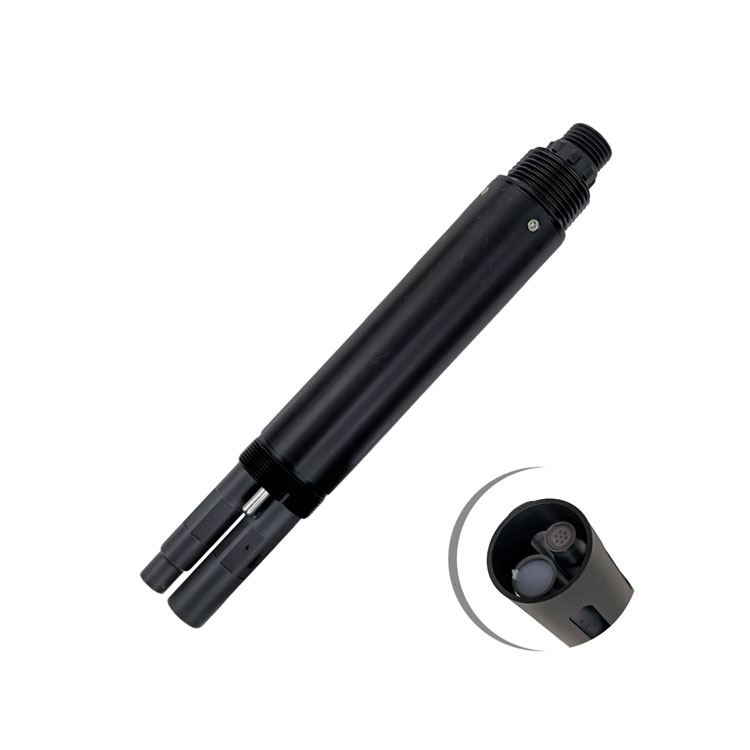
A pH sensor for water quality monitoring needs a clear distinction between a successful reading and a valid process observation. Keep raw records, identify service periods and verify how quality states survive reporting and restart. Select the NiuBoL probe for the actual water conditions, then test the data path through the final report.
Prev:Conductivity Probes for Liquids: When Not to Share One Probe
Next:Inline Dissolved Oxygen Meter: Cost of Isolation and Service Access
Related recommendations
Sensors & Weather Stations Catalog
 Agriculture Sensors and Weather Stations Catalog-NiuBoL.pdf
Weather Stations Catalog-NiuBoL.pdf
Agriculture Sensors Catalog-NiuBoL.pdf
Water Quality Sensor Catalog-NiuBoL.pdf
Related products
 Combined air temperature and relative humidity sensor
 TDR Soil Moisture & Temperature Sensor for irrigation| RS485 |4-20mA| NBL-S-THR
 Soil pH sensor RS485 soil Testing instrument soil ph meter for agriculture |NBL-S-PH
 Wind Speed sensor Output Modbus/RS485/Analog/0-5V/4-20mA
 Tipping bucket rain gauge for weather monitoring auto rainfall sensor RS485/Outdoor/stainless steel
 Pyranometer Solar Radiation Sensor 4-20mA/RS485


Screenshot, WhatsApp to identify the QR code
WhatsApp number:+8615367865107
(Click on WhatsApp to copy and add friends)

