





— Blogs —
—Products—
 Consumer hotline +8618073152920
WhatsApp:+8615367865107
Address:Room 102, District D, Houhu Industrial Park, Yuelu District, Changsha City, Hunan Province, China
Product knowledge
Time:2026-08-23 09:01:00 Popularity:221
A water quality monitoring device can reveal an abnormal event between manual rounds, but the next decision is whether the alarm reflects the water, the measuring point or the data path. Follow the site's required protective response first. Then preserve the event and investigate the cause before resetting the alarm or changing calibration.
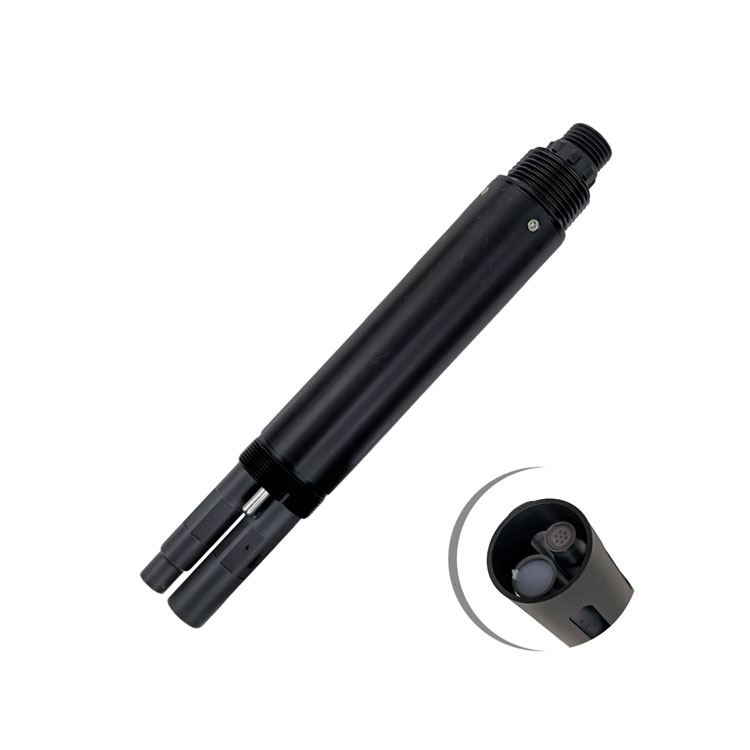
Save the value, unit, measurement time, alarm time and quality state. Retain nearby measurements and operating events such as dosing, aeration, pumping or water exchange. If the dashboard receives data later than the logger, record both times rather than treating network arrival as the moment the water changed.
Do not clear an excursion by recalibrating the probe until the original condition has been assessed. Recalibration changes the measurement relationship and may remove evidence of a real process event. Acknowledging that an operator has seen an alarm is also different from establishing that the process has recovered.
The NBL-WQ-NHN ammonium ion-selective sensor illustrates why the parameter must be identified precisely. Before comparing its result with another method, establish the reported analyte, nitrogen basis and relevant water conditions. An ammonia-related number without its measurement basis is not an adequate comparison.
| Observed event | First investigation | What it does not prove |
|---|---|---|
| Several unrelated probes stop updating together | Check shared supply, acquisition and communications, including the last valid timestamps. | It does not establish that every probe failed or that the water remained stable. |
| One value jumps while related measurements remain plausible | Inspect its raw source value, scaling, installation and local process exposure. | It does not automatically establish calibration drift. |
| Alarm follows pumping or aeration | Check whether the sensing point changed exposure, mixing, depth or bubble contact. | It does not justify dismissing the event as interference without checking the water. |
| Portable check is normal after the alarm ended | Compare sampling time and location with the original event. | It cannot disprove a short event that occurred earlier. |
For dissolved oxygen, inspect the sensing cap for fouling, sediment and persistent bubbles, while retaining the local trend. A portable meter at the surface may disagree with a fixed probe deeper in a pond because the water is genuinely different. Take a safe, representative comparison at the intended measurement point; do not force agreement by moving the fixed probe to a convenient location.
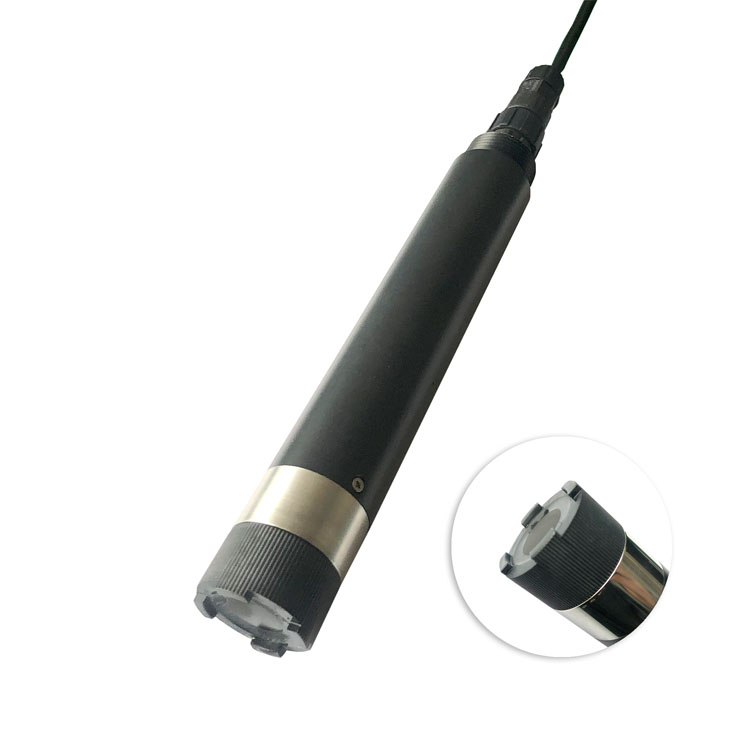
Portable testing remains useful for spot checks and troubleshooting. Online sensors supply records between those checks. To investigate an alarm, define whether the portable instrument is checking the current water condition, the installed probe's measurement or the sampling arrangement. One check may not answer all three.
A collected sample can change during handling. Oxygen may exchange with air, particles may settle and temperature may change. A laboratory or portable result is valuable only when its sampling and measurement conditions are understood. For regulatory duties, retain the method and reporting process required for that project.
An online COD sensor needs its own comparison method and water-matrix assessment. Do not treat a different analytical method as automatically equivalent, or use agreement in conductivity to validate a COD excursion.
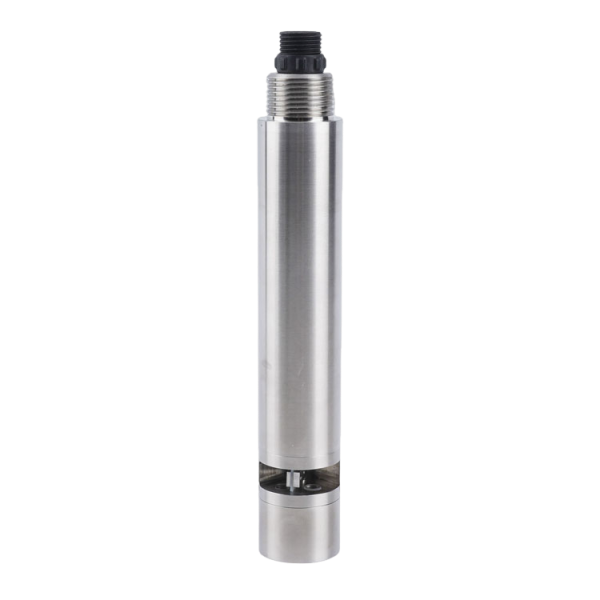
The following examples show why model-specific limits matter. They are separate NiuBoL probes, not one universal multiparameter specification. The alarm must be achievable within the selected instrument's performance and the installed measurement conditions.
| Probe | Relevant limits | Alarm review |
|---|---|---|
| NBL-WQ-DO optical oxygen | 0-20.00 mg/L; +/-2% FS, equivalent to +/-0.4 mg/L; 0-45 C; pressure below 0.2 MPa | A 0.01 mg/L resolution is not a 0.01 mg/L accuracy claim. Check salinity compensation where applicable. |
| NBL-WQ-PH | 0-14 pH; +/-0.1 pH; 0-65 C; pressure below 0.2 MPa | Account for the probe tolerance and installation condition when assessing a narrow alarm band. |
| NBL-WQ-EC | Four range options from 0-20.00 uS/cm to 0-200.0 mS/cm; +/-1% FS; 0-50 C; pressure below 0.6 MPa | Use the ordered range's full scale and retain EC units and any TDS conversion setting. |
| Interfaces and supply | These three probes use RS485 Modbus RTU, 12-24 V supply and IP68 probe construction | Verify the delivered wiring and register maps; external terminations and the logger need separate environmental protection. |
Compare the probe's direct value with the PLC, RTU or data logger value before changing the sensor. If the direct reading is correct but the host is wrong, investigate decoding, scaling and stale values. If both agree, continue with the water and installation checks; agreement across software does not independently verify the measurement.
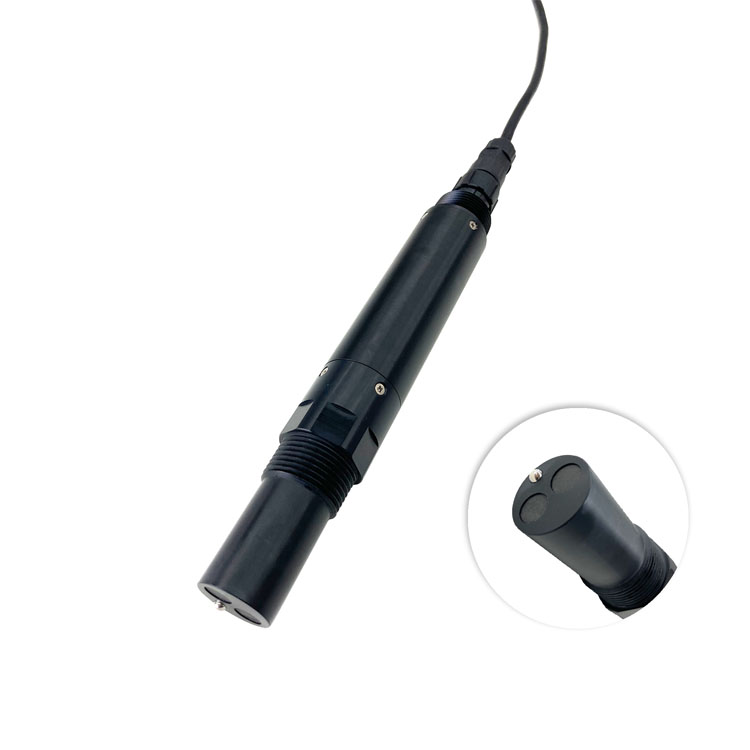
The NBL-WQ-EC conductivity probe can provide useful context during a water-source change. Conductivity still does not identify a specific contaminant, so it cannot establish that an unrelated alarm is harmless.
Not where the approved operating procedure requires an immediate protective response. Investigation should clarify the cause without delaying required safety, stock-protection or process actions. Define that response before unattended monitoring begins.
No. It establishes conditions at the time and location of the spot check. Review the earlier record and operating events to determine whether a transient occurred or whether the measurement path was faulty.
After installation, cleanliness, reference conditions and data decoding have been assessed and a suitable check indicates a measurement error. Keep the as-found result and service record so the adjustment does not erase the reason for intervention.
Demonstrate a representative measurement, correct units and timestamps, the intended alarm recipient and response, fault indication and recovery. Test with an approved simulation or safe procedure rather than deliberately creating harmful water conditions.
Send the probe model and range, timestamped trend, raw and displayed values, installation photographs, maintenance history and details of the comparison method. Include water conditions and recent process changes rather than only a screenshot of the alarm banner.
The NBL-WQ-PH probe requires its own cleaning, storage and buffer checks. Keep those service details with the channel history when investigating a pH event.
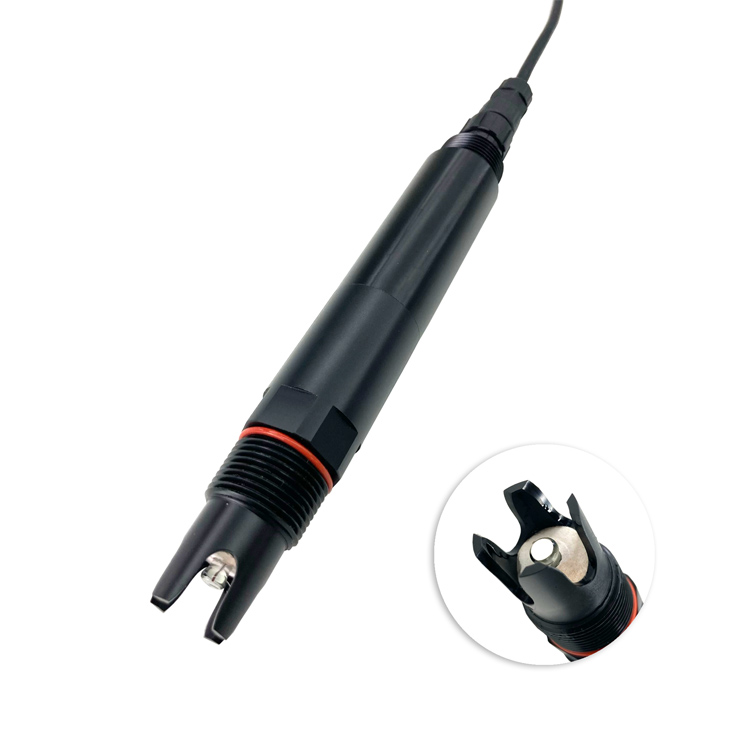
A water quality monitoring device should make an abnormal event easier to investigate, not simply generate a number to reset. Preserve the event, follow the required response and separate process changes from sampling and data faults. NiuBoL probe selection can then focus on the measurement and comparison conditions that the site can actually maintain.
Prev:5-in-1 Weather Station Replacement: Match Channels Before Upgrading
Next:Anemometer in Crane Installations: Recheck Exposure After Boom Changes
Related recommendations
Sensors & Weather Stations Catalog
 Agriculture Sensors and Weather Stations Catalog-NiuBoL.pdf
Weather Stations Catalog-NiuBoL.pdf
Agriculture Sensors Catalog-NiuBoL.pdf
Water Quality Sensor Catalog-NiuBoL.pdf
Related products
 Combined air temperature and relative humidity sensor
 TDR Soil Moisture & Temperature Sensor for irrigation| RS485 |4-20mA| NBL-S-THR
 Soil pH sensor RS485 soil Testing instrument soil ph meter for agriculture |NBL-S-PH
 Wind Speed sensor Output Modbus/RS485/Analog/0-5V/4-20mA
 Tipping bucket rain gauge for weather monitoring auto rainfall sensor RS485/Outdoor/stainless steel
 Pyranometer Solar Radiation Sensor 4-20mA/RS485


Screenshot, WhatsApp to identify the QR code
WhatsApp number:+8615367865107
(Click on WhatsApp to copy and add friends)

