





— Blogs —
—Products—
 Consumer hotline +8618073152920
WhatsApp:+8615367865107
Address:Room 102, District D, Houhu Industrial Park, Yuelu District, Changsha City, Hunan Province, China
Product knowledge
Time:2026-09-15 13:00:00 Popularity:205
Quick Answer: Select water quality online monitoring equipment by separating measurement, local recording and remote transfer. A digital sensor provides readings; a data logger preserves observations; a gateway transfers them to another system. One device may combine functions, but those functions must be demonstrated. An RS485 socket or a live dashboard does not establish offline storage, historical export or safe configuration access.
An existing treatment plant may already have a PLC, historian and operator display. Adding another logger and cloud subscription can duplicate those functions without improving the measurement. A remote river point may have none of them. Begin with the receiving system and decide where the authoritative record will be held before choosing new station electronics.
Draw a simple route from each probe to the operator. Label who supplies power, polls the sensor, applies the engineering unit, keeps the clock, stores missed transmissions and delivers alarms. If two devices perform the same function, identify which is authoritative. If no device performs it, the project has an omission rather than an optional upgrade.
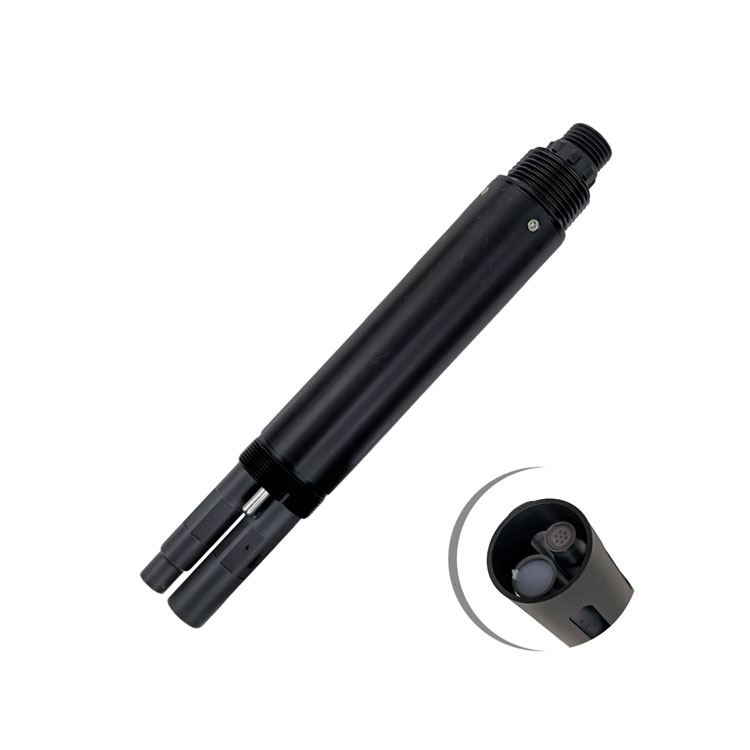
An ammonia probe illustrates this boundary. The NiuBoL NBL-WQ-NHN communicates through RS485 Modbus RTU, but that interface does not provide a modem, storage service or user account. Select the appropriate host around the probe's actual measurement duty. The same separation applies to pH, conductivity, COD and other digital channels.
| Function | Where it can reside | What to demonstrate |
|---|---|---|
| Sensor acquisition | PLC, RTU or compatible data logger | Correct values and units from the selected probe configuration |
| Local historical record | Logger or another explicitly specified storage device | Records survive the required communication outage and a controlled restart |
| Remote transfer | Gateway or integrated communications module | Transfer to the intended receiving service, including reconnect behavior |
| Alarm routing | Local controller, platform or coordinated arrangement | A valid event reaches the assigned operator and can be acknowledged |
| Configuration control | Local software and supported remote management functions | Only authorized users can change the relevant settings |
A gateway that forwards each current value may be suitable where another device stores history. It is unsuitable as the only recorder if observations must survive a cellular outage and it has no suitable buffer. Ask for the retained duration at the intended channel count and acquisition interval, not simply whether the product has memory.
For an illustrative storage calculation, one station record of 96 bytes every minute produces 138,240 bytes per day, or about 4.15 MB in thirty days using decimal megabytes. This assumes one record contains all required channels and metadata. File headers, indexes, retries and a safety allowance increase the requirement. These are calculation inputs, not a claim about any NiuBoL logger's capacity.
Also establish the overwrite policy. A circular buffer may replace the oldest records when full; a stop-on-full configuration may stop preserving new observations. Either can be inappropriate if the operator is unaware. Demonstrate the warning and recovery procedure, including what happens when the remote link remains unavailable beyond the planned retention period.
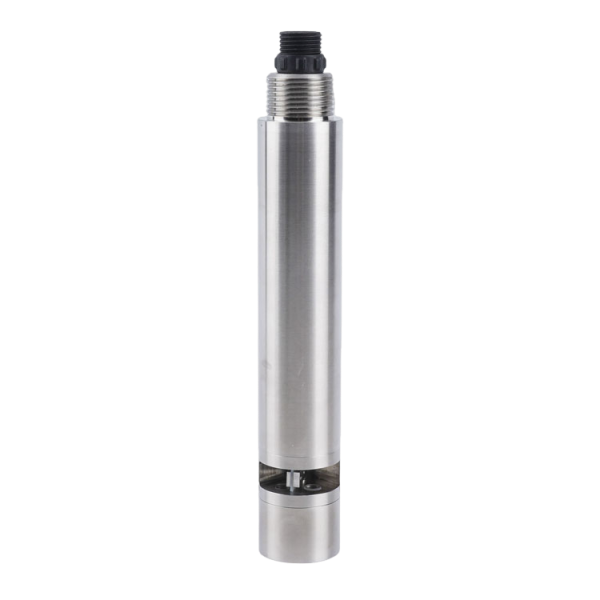
An optical COD channel below still needs the host to preserve its unit and method identity. Storing a number indefinitely does not make it equivalent to another analytical method. Keep configuration identifiers with the historical series so a changed range or revised site calibration does not silently alter its interpretation.
After an outage, a station may upload yesterday's observations alongside current values. The platform must distinguish when the water was measured from when the server received the message. Otherwise, an old concentration peak can appear as a new event at reconnection, and the operator may investigate the wrong period.
Request a sample export containing the station identifier, measuring-point identifier, parameter, value, unit, acquisition timestamp and validity state. Define the time zone and behavior after clock correction. Where several devices keep separate clocks, check their alignment before interpreting the apparent order of changes at different points.
Duplicates need an explicit treatment too. A retry after uncertain delivery should not create a second observation with a new timestamp. Check how the receiving system recognizes an already stored record. Do not assume that enabling a named network protocol automatically resolves duplicate delivery, clock alignment or historical reconciliation.
Conductivity shows why export detail matters. A bare value of 1200 is ambiguous without its unit and compensation basis. A replacement configuration using mS/cm rather than uS/cm can produce a large apparent change even though communication remains successful. Retain enough channel information to interpret older records after equipment changes.
A successful cellular connection says nothing about whether the sensor receives the correct voltage. Read the power requirements of each field device and verify voltage at the load. A cabinet described as 24 V does not justify connecting every sensor directly to that rail. Likewise, a gateway's RS485 port does not establish that it can power the connected probes.
| NBL-WQ-NHN item | Specification | Host-selection consequence |
|---|---|---|
| Measurement range versions | 0-10.00, 0-100.00 or 0-1000.0 mg/L | Identify the supplied range and the reported concentration basis |
| Resolution | 0.01 mg/L for the two lower ranges; 0.1 mg/L for the highest | Preserve decimal handling without treating resolution as accuracy |
| Stated accuracy | +/-10% or +/-0.5 mg/L | Agree the percentage basis and how the alternatives apply before defining an alarm tolerance |
| Supply and consumption | 12-24 V DC; 0.2 W at 12 V | Budget host and communications loads separately |
| Interface | RS485 Modbus RTU | Requires compatible master functionality and the model-specific map |
| Water conditions | 0-40 C; pH 4-10; pressure below 0.1 MPa | A working data connection cannot make an unsuitable installation valid |
| Construction | PVC/POM wetted materials; IP68; standard 5 m cable | Protect external connections and confirm cable-jacket suitability |
The NHN measurement response includes decimal-place information. Check its interpretation using the supplied instrument rather than applying one scaling factor to every NiuBoL channel. The multi-parameter bus mapping and recovery guide covers the local acquisition checks; apply the register definitions for the exact supplied model.
Reading data and changing a sensor are different permissions. An operator may need to view a trend without being allowed to alter calibration, device addresses or alarm limits. Determine which settings are stored in the probe, which belong to the logger and which belong to the platform. Back up the configuration required to restore the installed point.
Do not equate a Modbus RTU checksum with encryption or user authentication. Protection of remote traffic and accounts belongs to the selected communications and management arrangement. Ask which security functions are actually available; avoid assigning encrypted transport, access logs or remote updates to a bare sensor without evidence.
Apply the same distinction to optical BOD monitoring. A remote command cannot establish a relationship with laboratory BOD5 or clean a sensing surface. The platform may expose configuration functions, while the physical verification still requires suitable water, reference procedures and authorized site work.

Use the owner's intended receiving account and export destination during acceptance. A supplier's working dashboard proves only that its demonstration route works. Confirm that the owner can view history, retrieve records and manage the agreed users after handover, including when the original commissioning laptop is absent.
Disconnect the remote link while leaving measurement powered, then restore it and reconcile the record count. Test a power interruption separately, under a controlled procedure. Finally, inspect a real exported file. The operator should be able to distinguish current readings, recovered history and invalid observations without relying on a screenshot of the live value.
For an inquiry, send NiuBoL the existing PLC or logger details, required record interval, channel list, receiving platform and expected communication gaps. Identify whether local autonomy or remote alarm delivery is the priority. This allows equipment to be selected around the missing functions instead of adding overlapping devices.
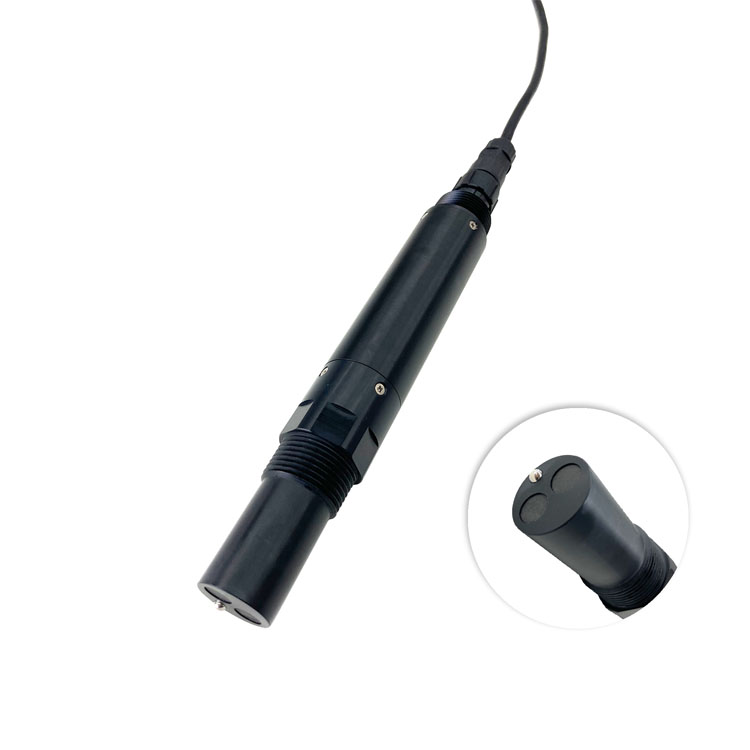
The suspended-solids probe below is another field instrument rather than a recording device. Its concentration trend needs an appropriate relationship with the particles being measured. Preserve that channel's identity when adding it to the host; a new input should not overwrite an existing turbidity tag merely because both instruments use optical methods.

No. Existing equipment or an integrated device may provide both functions. Verify acquisition, local retention and remote transfer separately, then remove duplicated hardware from the proposed scope. A forwarding gateway without retention still needs another recorder if outage history matters.
That depends on the local recording arrangement and its capacity. Demonstrate storage throughout the required outage, then verify historical upload with original acquisition times. No communications device can recover measurements that were never acquired because the probe or host lost power.
Not directly on that basis alone. A suitable local master must acquire the model's registers, decode values and transfer them through a supported upstream path. The platform also needs the correct channel identities and units.
Include normal records, an invalid measurement and observations recovered after an outage. Check station identity, parameter, unit, acquisition time and validity. Confirm that retries do not create duplicate events or replace historical timestamps with upload time.
Only if explicitly included in the offer. Separate sensor hardware, local acquisition, network connectivity and platform service. Clarify account ownership, export access and any recurring charges before comparing complete packages.
It needs spare acquisition capacity, supported drivers, sufficient power and storage, and a receiving application that can identify new channels. A spare connector alone does not establish those capabilities. Check expansion without changing the identity or meaning of existing records.
Useful water quality online monitoring equipment preserves a clear route from sensor reading to an accessible record. Choose the logger and gateway around existing functions, outage retention, timestamps and owner access. NiuBoL probe compatibility should be verified locally while storage and remote services are accepted as their own parts of the installation.
Prev:Water Quality Online Monitoring Equipment Price: Factors and RFQ Scope
Next:Online Water Quality Monitoring: Benefits, Coverage and Blind Spots
Related recommendations
Sensors & Weather Stations Catalog
 Agriculture Sensors and Weather Stations Catalog-NiuBoL.pdf
Weather Stations Catalog-NiuBoL.pdf
Agriculture Sensors Catalog-NiuBoL.pdf
Water Quality Sensor Catalog-NiuBoL.pdf
Related products
 Combined air temperature and relative humidity sensor
 TDR Soil Moisture & Temperature Sensor for irrigation| RS485 |4-20mA| NBL-S-THR
 Soil pH sensor RS485 soil Testing instrument soil ph meter for agriculture |NBL-S-PH
 Wind Speed sensor Output Modbus/RS485/Analog/0-5V/4-20mA
 Tipping bucket rain gauge for weather monitoring auto rainfall sensor RS485/Outdoor/stainless steel
 Pyranometer Solar Radiation Sensor 4-20mA/RS485


Screenshot, WhatsApp to identify the QR code
WhatsApp number:+8615367865107
(Click on WhatsApp to copy and add friends)

