





— Blogs —
—Products—
 Consumer hotline +8618073152920
WhatsApp:+8615367865107
Address:Room 102, District D, Houhu Industrial Park, Yuelu District, Changsha City, Hunan Province, China
Product knowledge
Time:2026-09-15 12:00:00 Popularity:225
Quick Answer: Water quality online monitoring equipment price depends on what is being supplied: a sensor, an installed measuring point or a complete station. Start with the required parameters and water conditions, then separate the price of sensing hardware from mounting, sampling, power, data collection and commissioning. Compare totals only after both offers cover the same measurement duty.

A probe connected to an existing PLC and an unattended river station are not equivalent purchases. Both may measure pH and conductivity, but the river station may also require a logger, remote communications, an enclosure, independent power and a safe retrieval arrangement. A price difference can therefore reflect omitted equipment rather than a difference in sensor quality.
The first question is whether the buyer needs a component or an operating measuring point. Contractors often already own part of the system. A plant with suitable power and a programmable host may need only sensors and mechanical fittings. A new remote installation needs those functions supplied elsewhere in the project, even if they do not appear on the sensor supplier's invoice.
| Purchase boundary | Typical items to price | Costs that can remain outside the offer |
|---|---|---|
| Sensor or probe | Exact model, measurement range, cable and included accessories | Mounting, power conversion, host programming, display and site installation |
| Complete measuring point | Sensor plus required support, sample arrangement, controller and local power provisions | Site civil work, network services, central software and extended commissioning |
| Remote monitoring station | Selected measuring points, logger, communication equipment, enclosure and power system | Permissions, foundations, field labour, recurring connectivity and operating support |
These boundaries are comparison tools, not fixed NiuBoL packages. The actual quotation should identify included items and exclusions. A buyer should not assume that a product photograph showing an assembled installation means every visible accessory is included in a probe price.
A current amount must be quoted for the chosen configuration, quantity and delivery destination. A broad online price range is of little use if its low end is a single electrode and its high end includes a complete station. Request a configured offer and keep options separately priced so that changes can be evaluated without rebuilding the entire budget.
Two six-channel descriptions may represent different equipment. Temperature can count as a parameter, and derived values do not necessarily require separate sensing elements. Conversely, ammonia nitrogen and optical COD require different measurement hardware from basic temperature or conductivity. Count the installed sensing modules and requested outputs rather than comparing only the number advertised.
The expected water also affects the choice. A channel intended to detect small changes near the lower end of a range needs appropriate performance there. Selecting a wide-range instrument solely because it covers more conditions can be unsuitable when its uncertainty is too large for the normal operating region. Price the range that supports the decision, with a reasonable allowance for expected excursions.
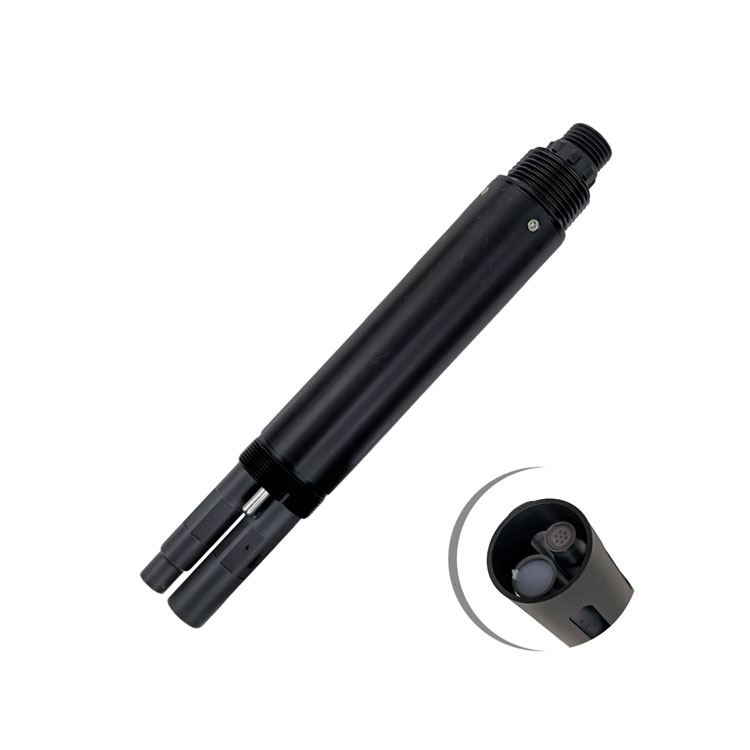
NiuBoL's NBL-WQ-MPS-5A and NBL-WQ-MPS-5B are different multi-parameter platforms. They should not be treated as the same item with a different label. The following specifications affect the associated equipment budget as well as the sensor selection.
| Configuration item | NBL-WQ-MPS-5A | NBL-WQ-MPS-5B |
|---|---|---|
| Parameter capacity | Up to eight, including temperature | Up to six, including temperature |
| Supply | 12 V DC +/-5% | 12 V DC |
| Power consumption | 5 W at 12 V | 2 W at 12 V |
| Communication | RS485, Modbus RTU | RS485, Modbus RTU |
| Cleaning | Automatic cleaning with adjustable intervals and cycles | Cleaning brush with adjustable intervals and cycles |
| Standard cable | 5 m | 5 m |
| Optional pH measurement | 0-14 pH, +/-0.1 pH | 0-14 pH, +/-0.1 pH |
| Module selection | Can include COD or ammonia nitrogen among the available choices | Available choices include pH, ORP, oxygen, conductivity/salinity and turbidity |
Capacity does not mean that all possible modules are supplied. Ask for the installed channel list and the exact range of each module. The power figures are reference consumption specifications, not a verified cleaning-current profile or a complete station energy budget. Power conversion, logger demand and communications consumption must be considered separately.
A shared body can reduce the number of supports and cables at one location. Separate probes may be more suitable when measurements belong at different points or when one must remain operating while another is serviced. Compare the required arrangement, not an assumption that a multi-parameter body is always less expensive.
A reagent-based analyzer and an immersed optical COD sensor have different physical requirements. An analyzer may need sample delivery, reagent handling and waste arrangements. An optical probe needs a suitable measuring location, clean optical surfaces and a validated relationship to the water being monitored. Neither cost structure should be copied automatically to the other.
For NBL-WQ-COD optical monitoring, discuss water composition, expected COD, turbidity and the intended use of the trend before pricing installation accessories. A bracket cannot resolve an unsuitable measurement relationship. Likewise, adding a filter to protect equipment may remove particles relevant to the measurement and change what the monitoring point represents.
Confirm available communication ports and the ability to add the required tags. A compatible PLC can avoid a separate display or logger when the plant already provides those functions. Allow for configuration and testing rather than assuming a digital sensor will appear automatically on the operator screen after wiring.
Allow for a retrievable support, cable protection and a suitable enclosure location. Independent power and a remote link may be needed, but they should be sized for the actual station load and site conditions. An apparently small sensor saving can be outweighed by a mounting arrangement that requires difficult access on every visit.
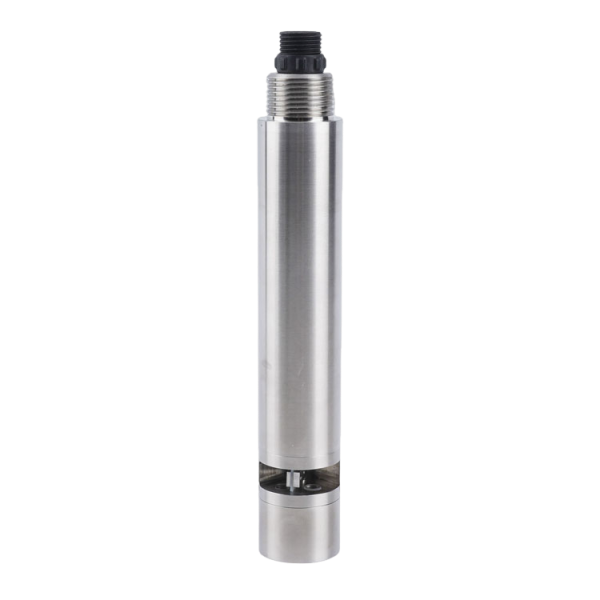
Check the instrument limits before treating the probe as a direct pipeline fitting. A sample bypass, pressure reduction or cooling arrangement may be necessary. Those additions affect materials, valves, drainage and service access. If the required conditions cannot be maintained reliably, a different instrument arrangement may be more appropriate.
Budget for representative measurement evaluation and access for cleaning. Colour, deposits, solids and changing chemistry can make a low-cost installation unsuitable for the intended decision. Additional sample preparation must be justified by what it does to the measured parameter, not added merely to make the water look cleaner.
A Modbus RTU connection can carry several values over an RS485 link. The host still needs the correct address plan, register mapping, units and unavailable-data handling. If an older panel accepts only analog inputs, determine whether an appropriate output option or interface is required before comparing hardware prices.
For remote transfer, distinguish a local data logger from a gateway and an online platform. These functions can be combined in some equipment, but they are not implicit in a sensor specification. Identify any software or recurring service charges separately, including connectivity where applicable. Avoid buying a second device for a function already provided by the existing system.
Use one comparison sheet with rows for each required item. Mark every row as included, separately priced, supplied by the contractor or excluded. Do not treat a blank row as free. Add the quoted cost of missing mandatory items before comparing totals, and keep optional upgrades outside the base comparison.
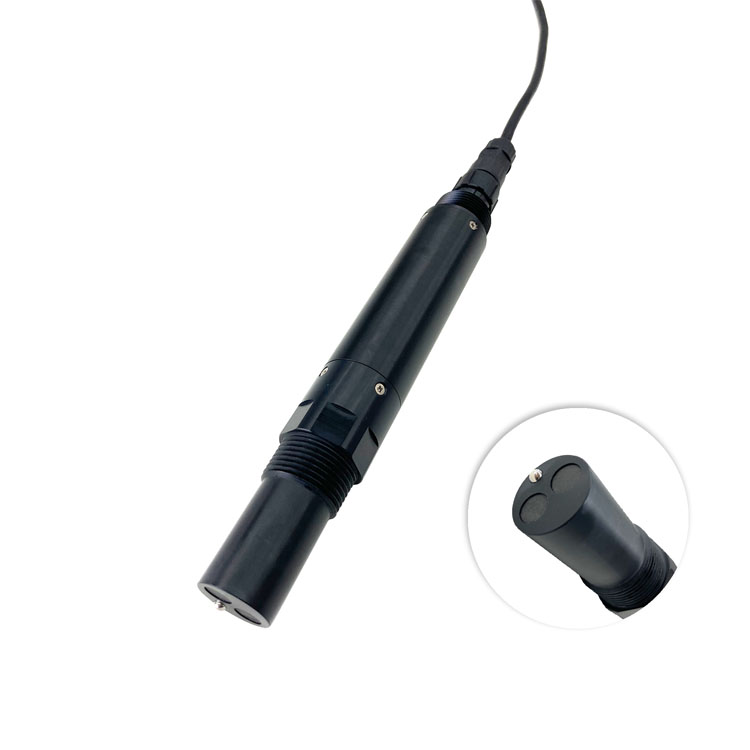
For example, an offer with a probe and five-metre cable cannot be compared directly with one that includes the same probe, a controller and an installation holder. Remove optional items from the second offer or obtain matching prices for the first. The point is to compare the same working arrangement, not to make every supplier's total look identical.
Separate equipment delivery from site completion. A sensor arriving on schedule does not establish that foundations, electrical work, host programming or water access are ready. Ask who performs each task and which acceptance activities are included in the price. Where on-site work is excluded, the contractor needs a corresponding allowance.
Also keep recurring expenses outside the initial equipment subtotal: service visits, reference materials, replaceable sensing elements and any network fees. They matter to the operating budget, but mixing several years of estimated running costs into one supplier's hardware total creates another misleading comparison.
Describe the water and required parameters first, then provide normal ranges and expected extremes. Include the number of measuring locations, immersion or bypass arrangement, available power and existing controller. State the approximate cable route and whether the enquiry is for probes only or a complete point. A simple site sketch can clarify whether the same assembly can serve all requested channels.
For COD or BOD-related enquiries, identify whether the project needs a continuous optical trend or a particular laboratory or analytical method. These are different requirements even when the display uses similar units. Finally, give quantity, destination and required timing so the offer can distinguish standard equipment, selected options and delivery arrangements.

The amount depends on the installed measurements and station equipment. Request a configuration-specific quotation with sensing hardware, mounting or sampling, power, host equipment and commissioning separated. A probe-only price is not a reliable estimate for an unattended station.
Not when mandatory equipment or integration work is missing. Add the cost of completing the same measuring duty to each offer, then compare. Reject unsuitable configurations before negotiating price; accessories cannot make an inappropriate measurement method suitable.
Yes, if it has suitable interfaces and can provide the required data handling. Check port capacity, programming effort and operator-display needs. Reusing the PLC does not eliminate configuration, testing or the need for a correctly designed sensor power supply.
No. Unused channels still create calibration and maintenance work. Buy parameters that support an operating decision or a defined monitoring requirement. Include temperature when counting platform capacity and distinguish calculated outputs from separate physical modules.
Confirm total route length, electrical requirements, jacket exposure, connectors and waterproof joints. A cable extension is part of the power and communication design, not just a cost per metre. Check the resulting supply voltage at the instrument.
Yes, but prioritize required measurements and reuse suitable existing infrastructure first. Reduce optional functions before sacrificing measurement suitability or service access. Ask for a base configuration and separately priced additions so the tradeoffs remain visible.
A useful water quality online monitoring equipment price covers a defined working arrangement. Identify the measurements, installation conditions and existing infrastructure, then compare complete offers on that basis. NiuBoL can discuss individual probes or selected multi-parameter configurations without assuming that every enquiry needs a new complete station.
Prev:Water Quality Meter Maintenance Methods for Reliable Field Data
Next:Water Quality Online Monitoring Equipment: Logger and Gateway Selection
Related recommendations
Sensors & Weather Stations Catalog
 Agriculture Sensors and Weather Stations Catalog-NiuBoL.pdf
Weather Stations Catalog-NiuBoL.pdf
Agriculture Sensors Catalog-NiuBoL.pdf
Water Quality Sensor Catalog-NiuBoL.pdf
Related products
 Combined air temperature and relative humidity sensor
 TDR Soil Moisture & Temperature Sensor for irrigation| RS485 |4-20mA| NBL-S-THR
 Soil pH sensor RS485 soil Testing instrument soil ph meter for agriculture |NBL-S-PH
 Wind Speed sensor Output Modbus/RS485/Analog/0-5V/4-20mA
 Tipping bucket rain gauge for weather monitoring auto rainfall sensor RS485/Outdoor/stainless steel
 Pyranometer Solar Radiation Sensor 4-20mA/RS485


Screenshot, WhatsApp to identify the QR code
WhatsApp number:+8615367865107
(Click on WhatsApp to copy and add friends)

