





— Blogs —
—Products—
 Consumer hotline +8618073152920
WhatsApp:+8615367865107
Address:Room 102, District D, Houhu Industrial Park, Yuelu District, Changsha City, Hunan Province, China
Product knowledge
Time:2026-08-27 09:07:00 Popularity:328
Water quality testing meters often supply field checks for a continuous online station. Those results belong in the same investigation history, but they must remain identifiable as separate measurements. A value entered after a site visit must not appear to be a fresh reading from the installed probe. Specify record identity, sampling time and verification status before accepting data transfer.
A handheld meter result, a laboratory result, a calibration-standard check and an online probe reading have different meanings. Putting them in one spreadsheet does not make them comparable. At minimum, retain the parameter, unit, point, instrument identity, measurement time, method and record type.
Some meters export stored observations; others provide a live interface or require manual entry. A USB file transfer is not automatically a continuous sensor connection. Ask for a sample export from the exact meter and check what it includes. If the meter does not store operator or sample-point information, the field procedure must supply it.
| Record type | What it represents | How it should be labeled |
|---|---|---|
| Online probe observation | A fixed point at the recorded acquisition time | Channel, instrument identity, time and data quality |
| Portable field check | An operator's measurement at a specified point and depth | Field check, operator, meter and stabilization conditions |
| Collected-sample result | A sample tested after collection | Collection time and point, test time, method and sample identity |
| Standard-solution check | Instrument response to a reference, not process water | Reference identity, value, temperature and check purpose |
Do not overwrite the fixed channel with a portable result to make the trend look complete. If the online sensor is out of service, retain that gap and attach the separate field check as supporting evidence. The same applies to a later laboratory result used during investigation.
An operator may take a reading in the morning and upload it after returning to the office. Store the observation time and the import time separately. Otherwise a graph can place the field result beside the wrong online event and suggest a disagreement that never occurred.
For a collected sample, retain collection time as well as analysis time. Some parameters change during transport or exposure; later measurement is not automatically equivalent to an in-situ probe reading. DO is particularly sensitive to sampling and handling, so record whether the check was made directly in the water or in a vessel.
Synchronize instrument and logger clocks where supported, record the time zone and check whether exported timestamps include it. If a meter cannot maintain a reliable clock, use a controlled field record rather than inventing precision in the imported timestamp.
Keep conductivity, calculated TDS and salinity as distinct parameters. A salinity result in PSU must not be inserted into an EC channel because both instruments respond to dissolved salts. For TDS comparisons, retain the conductivity units, conversion coefficient and temperature basis used by each device.
For turbidity, confirm the measurement method and unit before treating a portable and an online instrument as equivalent. For BOD, distinguish an optical estimate from the specified laboratory method. A convenient label such as "water quality" cannot replace the actual measured parameter.
| NiuBoL online example | Selected specifications | Comparison requirement |
|---|---|---|
| NBL-WQ-DO-4A oxygen probe | 0-20.00 mg/L; 0.01 mg/L resolution; +/-2% of reading; 0-50 C | Compare oxygen concentration, temperature and compensation conditions; do not infer accuracy from displayed decimals |
| NBL-WQ-TS turbidity probe | Selected 0-20.00, 0-100.0 or 0-1000.0 NTU; range-specific percentage and absolute accuracy limits | Confirm how the accuracy limits apply and whether the reference method suits the acceptance duty |
| DO-4A installation | DC 12-24 V; 0.2 W at 12 V; RS485 Modbus RTU; IP68; standard 5 m cable | These are fixed-probe specifications, not a portable meter battery or memory specification |
| TS installation | DC 12-24 V; 0.2 W at 12 V; 0-50 C; pressure below 0.2 MPa; IP68; standard 5 m cable | Keep representative water contact and optical clearance during the comparison |
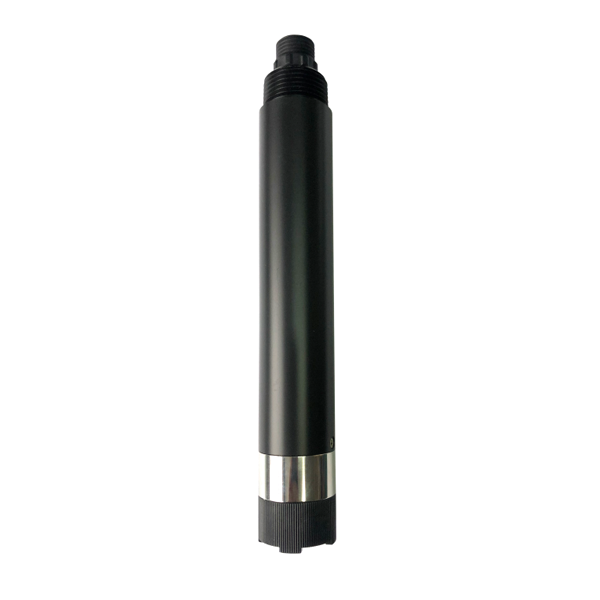
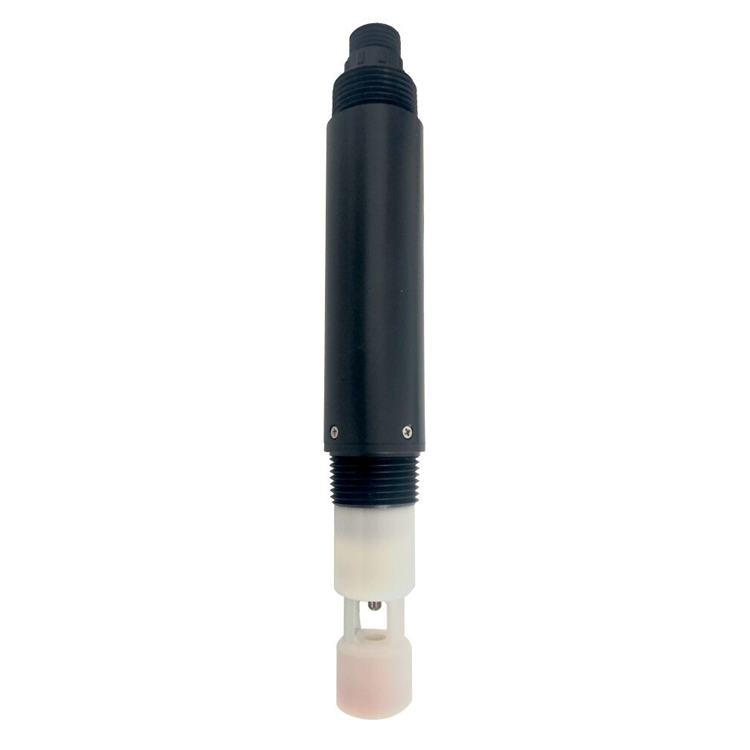
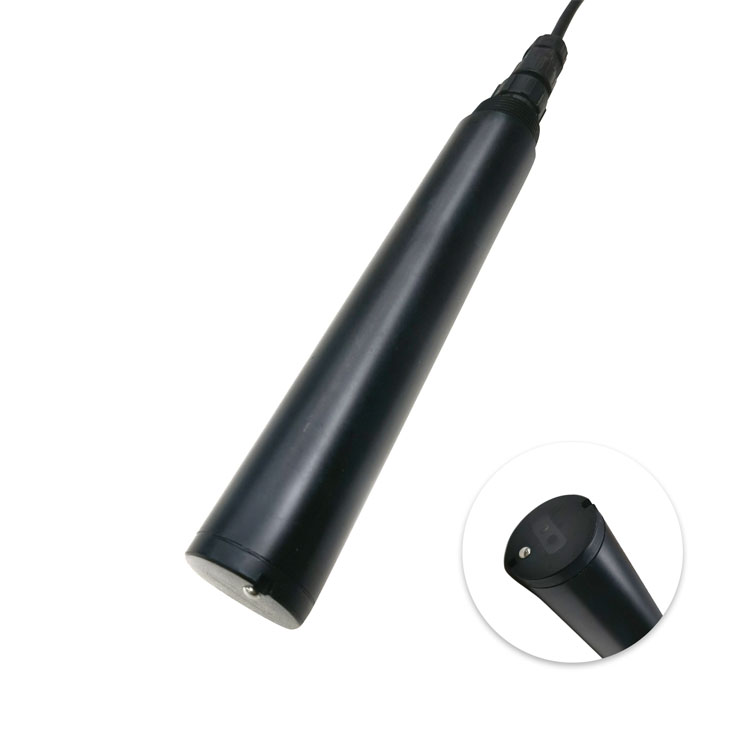
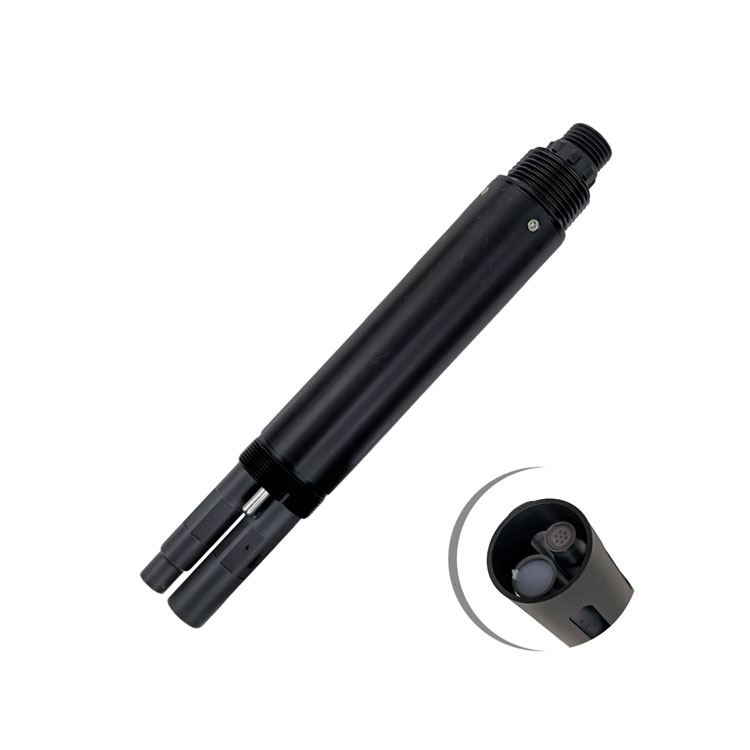
The photographs show NiuBoL online probes used at fixed points. They do not establish that a handheld testing kit is included. Specify portable reference equipment separately, including its method, accessories and export capability, when that equipment is part of the purchase.

Use a staging table or a separate field-check dataset where the receiving platform supports it. An operator can then review point identity and units before releasing the result to a comparison view. Do not claim that the meter, logger or platform provides this function until it has been demonstrated on the ordered configuration.
When a field check and online value differ, compare location, depth, time, temperature, sample handling and instrument condition first. A portable reading near the surface is not necessarily a reference for a deeper fixed probe. A standard-solution check is not a water sample from the site.
Retain the original readings and add the investigation outcome. If an instrument was cleaned or calibrated, record the time so the trend can be interpreted across service. The useful result is an explained comparison, not two numbers forced to match by an undocumented offset.
Send NiuBoL the fixed parameters, installed probe models, comparison purpose and receiving data format. State whether the project needs a portable kit, an online station or only integration of existing meter records. Include the site's method and acceptance requirements so a reference check is not reduced to a comparison of decimal places.
Assign review responsibility and retain a practical record of instrument service and reference solutions. If ammonia is included, keep the reported chemical basis explicit; an ammonium measurement should not be imported under a different ammonia definition without a documented method. Each added parameter needs its own comparison rule.
It can provide a separately labeled observation during the gap. It should not be inserted as an automatic fixed-probe measurement because its position, timing and procedure may differ.
Use the actual observation or sample-collection time appropriate to the record, and retain upload and analysis times separately. The graph must not imply that an office upload was a new field measurement.
No. Test point identity, parameter names, units, numeric formatting, timestamps and duplicate handling in the receiving system. A readable file can still be mapped incorrectly.
No. Evaluate them under comparable conditions and against the agreed method and uncertainty allowance. Sampling differences or water changes can explain disagreement without either instrument being defective.
Do not allow that by default. A reviewed field observation and a live process input have different freshness and availability characteristics. Any control use requires explicit engineering and operating approval.
Retain the original export, field notes, mapping version, imported result and the outcome of duplicate, missing-value and timestamp tests. That evidence lets a later software change be checked against the same examples.
Water quality testing meters add useful evidence when field checks remain distinct from continuous online observations. Preserve point identity, method, units and original timing, then test the actual import workflow. The NiuBoL fixed-probe configuration and the portable reference scope should be specified separately so buyers receive a comparison process they can repeat.
Prev:Weather Station Mast Installation: Loads, Cabling and Acceptance
Next:Ultrasonic Anemometer: Review Wind Exposure After Site Work
Related recommendations
Sensors & Weather Stations Catalog
 Agriculture Sensors and Weather Stations Catalog-NiuBoL.pdf
Weather Stations Catalog-NiuBoL.pdf
Agriculture Sensors Catalog-NiuBoL.pdf
Water Quality Sensor Catalog-NiuBoL.pdf
Related products
 Combined air temperature and relative humidity sensor
 TDR Soil Moisture & Temperature Sensor for irrigation| RS485 |4-20mA| NBL-S-THR
 Soil pH sensor RS485 soil Testing instrument soil ph meter for agriculture |NBL-S-PH
 Wind Speed sensor Output Modbus/RS485/Analog/0-5V/4-20mA
 0.2mm Tipping Bucket Rain Gauge for Weather & Hydrology | NiuBoL
 Pyranometer Solar Radiation Sensor 4-20mA/RS485


Screenshot, WhatsApp to identify the QR code
WhatsApp number:+8615367865107
(Click on WhatsApp to copy and add friends)

