





— Blogs —
—Products—
 Consumer hotline +8618073152920
WhatsApp:+8615367865107
Address:Room 102, District D, Houhu Industrial Park, Yuelu District, Changsha City, Hunan Province, China
Product knowledge
Time:2026-09-25 09:00:00 Popularity:216
Chlorophyll and blue-green algae sensors should observe comparable water before their trends are interpreted together. Mount paired probes at a defined depth, preserve each output unit and verify that the holder does not disturb either optical path. A chlorophyll concentration scale and a fluorescence-equivalent cell scale are different observations, not two interchangeable counts of the same organisms.
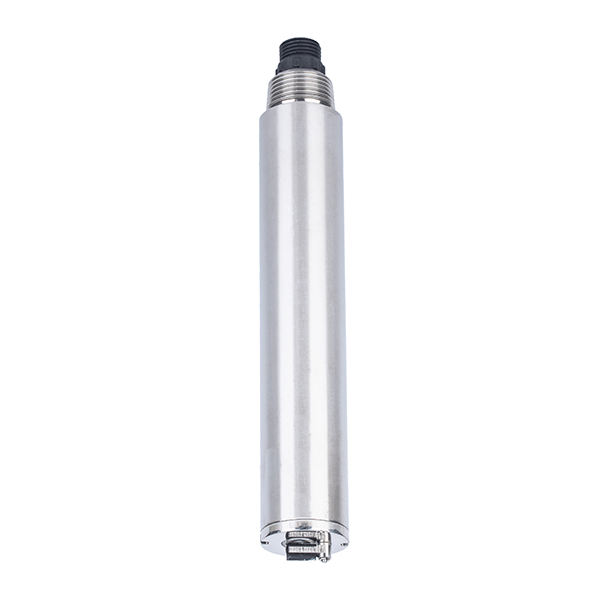
A reservoir intake, a shoreline station and an aquaculture pond do not necessarily need the same placement. An intake project needs observations representative of the water being withdrawn. A pond operator may need a point that reflects the culture area rather than a sheltered corner. A research survey may need several depths instead of one permanently mounted pair.
Identify whether the objective is a local trend, an intake observation or a vertical comparison. Write the depth reference on the installation drawing: below the changing surface, at a fixed elevation or relative to the intake. A probe attached to a floating structure follows surface level; one fixed to a pier does not. That distinction can change which water layer is observed.
The USGS guidance on algal fluorescence sensors covers instrument principles, interferences, quality assurance and reporting. Use fluorescence data with an appropriate comparison program rather than assuming that an online number independently establishes algal species or toxin concentration.
Place chlorophyll and blue-green algae probes close enough to sample comparable water, while respecting optical clearances and service access. Do not hide one behind a bracket or put the pair on opposite sides of a stagnant divider. Record the separation and optical-window elevations so a later replacement can reproduce the arrangement.
A separate turbidity channel can help identify particle changes during a comparison. The TS probe below provides that observation; it does not measure chlorophyll or cyanobacterial toxins. High particle loading can also move the water outside the conditions selected for an algae instrument. Adding turbidity data does not, by itself, correct either fluorescence channel.
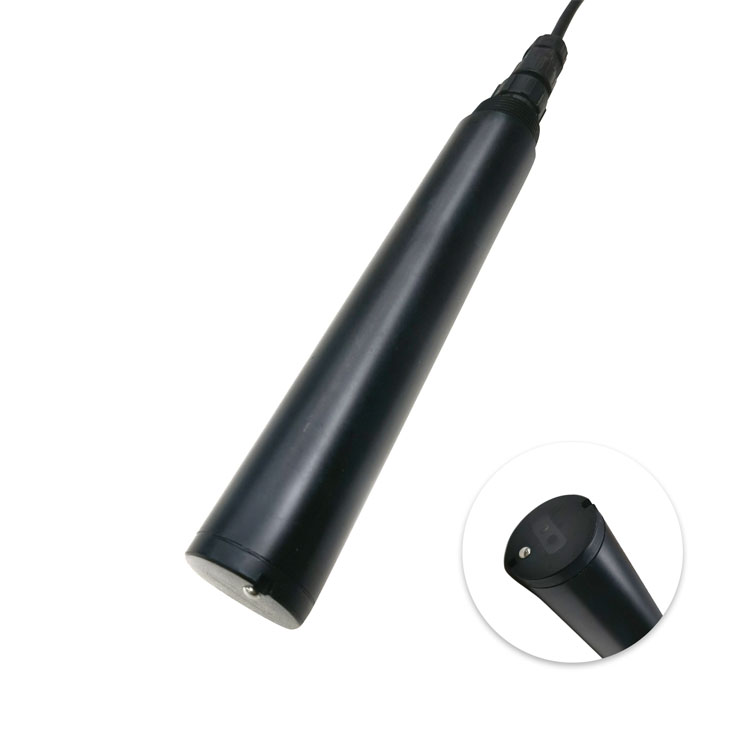
| Item | CHLO-408-S | BGA-408-S |
|---|---|---|
| Measuring scale | 0–400 ug/L; resolution 0.1 ug/L | 0–300.0 Kcells/mL; resolution 0.1 Kcells/mL |
| Accuracy basis | ±3% FS for the selected specification; temperature ±0.3 °C | ±3% of reading; temperature ±0.3 °C |
| Low-level interpretation | A 0.1 ug/L increment is not a detection limit or proof of low-level accuracy. | Listed detection limit 1 Kcells/mL; the scale remains fluorescence-related, not direct microscopy. |
| Working exposure | 0–50 °C; maximum depth 20 m; IP68 | 0–50 °C; pressure <0.2 MPa; IP68; turbidity below 50 NTU |
| Mounting clearance | More than 3 cm from a side wall and 10 cm from the bottom | More than 5 cm from a side wall and 20 cm from the bottom |
| Power and interface | 12–24 VDC; 0.2 W at 12 V; RS485 Modbus RTU; optional 4–20 mA | 12–24 VDC; 0.2 W at 12 V; RS485 Modbus RTU; optional 4–20 mA |
| Body and cable | 316 stainless steel; standard 5 m cable | 316L housing configuration; standard 5 m cable; confirm wetted components and cable jacket |
For CHLO-408-S, 3% of the 400 ug/L span is 12 ug/L. A fine display increment therefore cannot justify a requirement to distinguish very small chlorophyll changes. Review the offered configuration and representative comparison results before accepting a low-concentration duty.
Use the ordered model's mounting drawing, including the location of its optical window. CHLO-408-S and CHLO-4S are separate configurations; a similar body does not establish identical optics, error basis or cleaning hardware. The CHLO-408-S product shown next belongs to the paired design only when that model is actually selected.
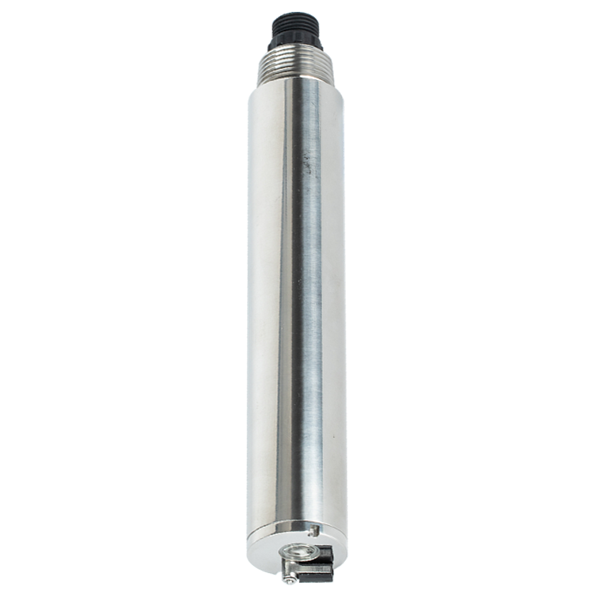
For a variable-level reservoir, check the lowest and highest operating levels against the installation envelope. For a pond, verify that aeration bubbles, feeding activity or bed disturbance do not dominate the chosen point. These checks determine whether a paired station produces comparable observations after installation.
Give each PLC, RTU or data logger tag a parameter, location and depth. Keep CHLO in ug/L and BGA in Kcells/mL as configured. Record their acquisition times. A chart that overlays both channels should show separate units rather than relabeling both as algae concentration.
Dividing the BGA number by the chlorophyll number does not yield a universal percentage of cyanobacteria. The units, calibration relationships and biological responses differ. A local interpretation requires independent evidence and a defined range of conditions.
Mark cleaning and removal periods so a service event is not interpreted as a biological change. Where multiple depths are surveyed sequentially, retain the depth and time of each observation instead of displaying them as simultaneous samples.
Send NiuBoL the observation objective, water body, proposed locations and depths, operating level variation, expected turbidity and required comparison method. Include a holder sketch and the required output. Identify whether the project needs a fixed pair, several independent points or a survey arrangement.
The chlorophyll sensor selection guide addresses fluorescence interpretation and model suitability. For a paired installation, also specify the repeatable position and access needed to service both probes without losing their measurement relationship.
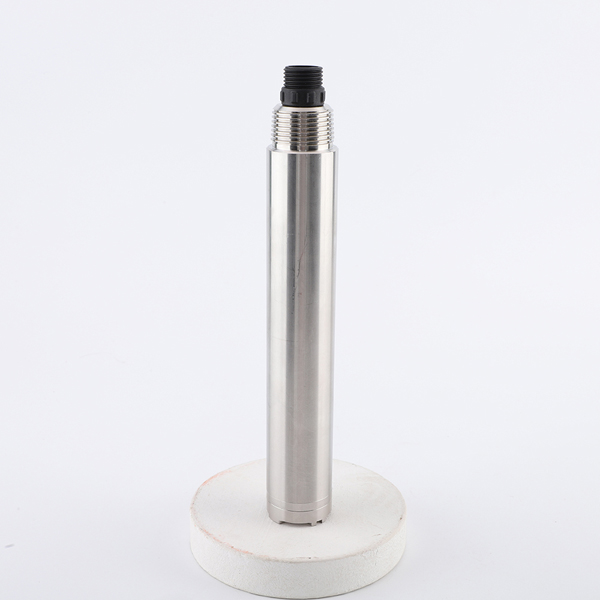
No. They need comparable water and adequate optical clearance. A common holder can help reproduce depth, but it must not obstruct either window or make service impractical.
Not without a representativeness study. Match coverage to the intake, survey or operational question; spatial or depth differences may require additional observations.
For this fluorescence instrument, it is the calibrated output scale. Verify its relationship to local organisms before treating it as equivalent to direct counting.
No universal percentage follows from those two numbers. They use different units and response relationships; any local indicator requires validation.
Apply each model's requirement and leave sufficient clearance for the complete pair. CHLO-408-S and BGA-408-S have different minimum distances.
No. Pigment-related trends do not replace species identification, toxin testing or the site's water-safety assessment. Define the investigation triggered by a changing trend separately.
Chlorophyll and blue-green algae sensors are most useful together when their location, depth, units and service history remain clear. Approve the paired holder and actual water comparison before deployment. Buy coverage for the water layer that matters, rather than assuming two probes automatically describe the whole water body.
Related recommendations
Sensors & Weather Stations Catalog
 Agriculture Sensors and Weather Stations Catalog-NiuBoL.pdf
Weather Stations Catalog-NiuBoL.pdf
Agriculture Sensors Catalog-NiuBoL.pdf
Water Quality Sensor Catalog-NiuBoL.pdf
Related products
 Combined air temperature and relative humidity sensor
 TDR Soil Moisture & Temperature Sensor for irrigation| RS485 |4-20mA| NBL-S-THR
 Soil pH sensor RS485 soil Testing instrument soil ph meter for agriculture |NBL-S-PH
 Wind Speed sensor Output Modbus/RS485/Analog/0-5V/4-20mA
 Tipping bucket rain gauge for weather monitoring auto rainfall sensor RS485/Outdoor/stainless steel
 Pyranometer Solar Radiation Sensor 4-20mA/RS485


Screenshot, WhatsApp to identify the QR code
WhatsApp number:+8615367865107
(Click on WhatsApp to copy and add friends)

