





— Blogs —
—Products—
 Consumer hotline +8618073152920
WhatsApp:+8615367865107
Address:Room 102, District D, Houhu Industrial Park, Yuelu District, Changsha City, Hunan Province, China
Product knowledge
Time:2026-09-25 10:00:00 Popularity:213
Quick Answer: A cabinet-type online water quality monitoring station brings sample handling, instruments, power distribution and data collection into an accessible enclosure. Its usefulness depends on whether the water reaching each sensor still represents the source. Specify the sampling route, drainage, maintenance clearance and restart sequence before selecting cabinet dimensions. A protected cabinet cannot compensate for a blocked intake, stagnant sample or unsuitable sensor range.
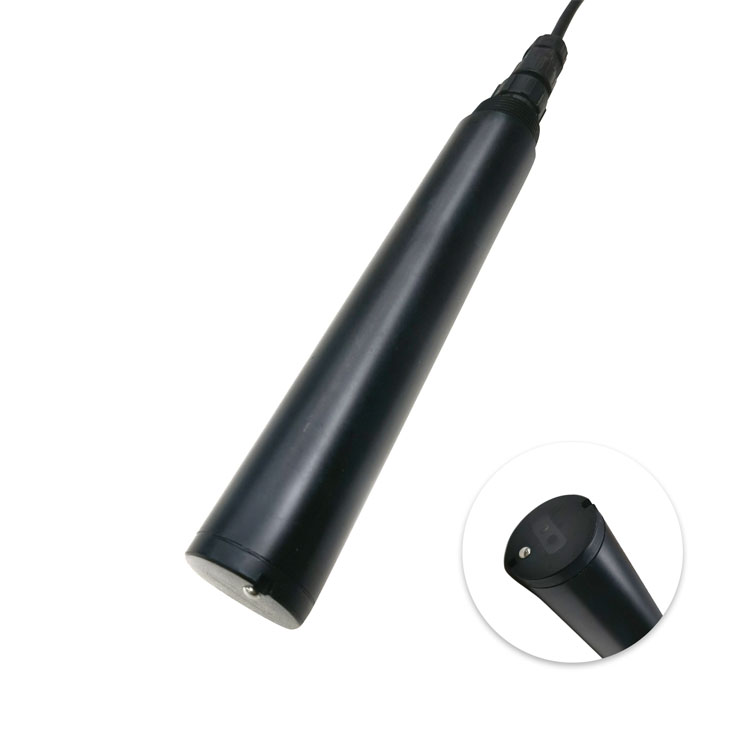
There are two different arrangements. In one, the sensors remain immersed in the river, tank or channel, while the cabinet houses electrical equipment and communications. In the other, a pump brings water into the cabinet for measurement. These arrangements have different plumbing, power and service needs, even if the operator sees the same parameters on screen.
A pumped station can make instruments easier to reach, especially where direct access to the water is difficult. It also introduces an intake, pump, tubing, valves, measurement chambers and drain. Every added component needs a reason. A fine filter ahead of a turbidity sensor, for example, may protect equipment while removing the particles the station was intended to measure.
For a river or reservoir intake, define which changes should trigger field sampling or an operating response. For an industrial outlet, identify the process stream and the required comparison method. The cabinet is an installation format; it does not determine whether a measurement is suitable for intake protection, process control or discharge reporting.
Trace the water from its extraction point to its final discharge. Mark the intake elevation, tubing diameter and length, pump location, pressure reduction, flow indication, sensor chambers and sampling tap. Show how a technician will isolate and empty each section. A drawing that ends at the cabinet inlet leaves several important measurement errors unresolved.
| Part of the route | Design question | Failure to look for |
|---|---|---|
| Intake | Does it remain submerged at low water level and clear of deposited sediment? | Intermittent air intake or a sample drawn from settled material |
| Transfer tubing | Can it deliver representative water at the required rate? | Delayed changes, settled particles, growth or air exchange |
| Instrument branches | Does each sensor receive its required flow and pressure? | One open branch starving another, or excessive pressure at a probe |
| Comparison tap | Can staff collect the same water measured by the instrument? | A laboratory comparison made against a different stream |
| Drain or return | Can water leave freely under all expected conditions? | Backpressure, overflow or contamination of the source |
Do not assume that all parameters tolerate the same handling. A settling vessel changes a suspended-solids sample. Air contact can alter dissolved oxygen and pH. Treatment chemicals used in a reagent analyzer may make its waste unsuitable for return to the source. Separate analyzer waste from untreated sample water where the measurement method requires it.
Calculate the transfer volume as an initial design check. A 15 m tube with an 8 mm internal diameter contains about 0.754 L. At 0.25 L/min, its nominal volume exchange time is approximately 3.0 minutes. This example excludes the pump, chambers, mixing and sensor response, so it is not a guaranteed station response time.
A common fast-flow supply with smaller instrument branches can reduce transport delay, but it increases water use and pump duty. Confirm the flow at the farthest branch and during routine service. If a station is intended to detect a short event, test how the event appears after passing through the complete sample system rather than relying on the sensor's electronic response alone.
Individual probes allow different ranges, flow arrangements and replacement schedules. They can be useful when one channel needs frequent service or when the parameters require different sample conditions. A multi-parameter assembly reduces the number of probe bodies and cable connections at one immersed point, but removing it may interrupt several measurements together.
The NiuBoL NBL-WQ-MPS-5B is an immersion assembly with selectable modules and an automatic cleaning brush. It is not a complete cabinet station. In a cabinet-based project it can remain at the water source, with its power and data connections inside the enclosure. Installation in a purpose-designed measurement vessel requires sufficient water exchange, clearance and access; a narrow generic flow cell is not automatically suitable.
| NBL-WQ-MPS-5B item | Technical basis | Effect on cabinet design |
|---|---|---|
| Channel configuration | Up to six parameters including temperature; modules selected for the order | Define the fitted channels rather than assuming every possible parameter is included |
| pH and ORP modules | pH 0-14, accuracy +/-0.1 pH; ORP -1500 to +1500 mV, accuracy +/-6 mV | Check each channel against its intended operating decision |
| Output and supply | RS485 Modbus RTU; 12 VDC | Provide the specified supply even if other instruments operate on 24 VDC |
| Power consumption | 2 W at 12 V | Budget pumps, controller and thermal equipment separately |
| Working conditions | 0-50 C; pressure at or below 0.2 MPa; IP68 | These limits apply to the assembly, not to the completed cabinet |
| Housing and support | POM and 316L; lifting ring or top-cover mounting points | Support the instrument mechanically rather than suspending it by the cable |
| Cable | Standard 5 m cable; four-core shielded twisted pair | Plan a dry, accessible termination and a strain-relieved route |
Range and accuracy remain channel-specific. A wide-range conductivity module may not suit a low-conductivity water acceptance point, and a turbidity option suitable for a changing river is not necessarily suitable for a very low turbidity limit. Make these decisions before allocating cabinet space. More parameters do not correct an unsuitable measurement range.
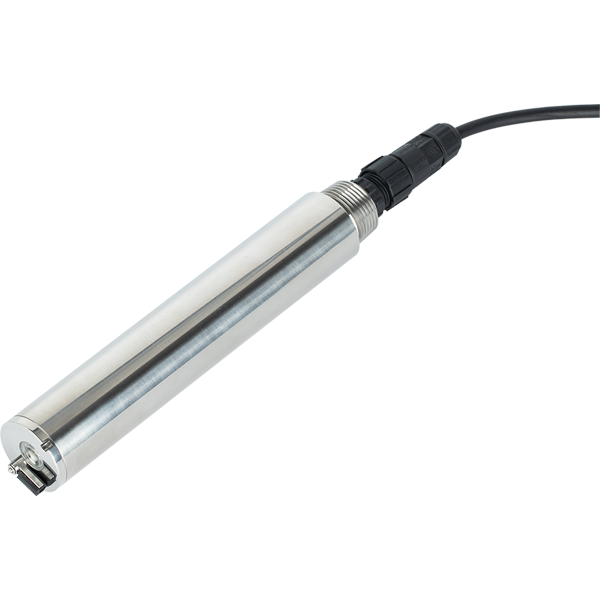
Arrange wet components so a leaking connection cannot discharge onto the power supply, terminal blocks or communications equipment. Keep electrical and wet service areas separated. Show the drain path and leak detection where required, and ensure that opening a sample connection does not spray neighboring instruments. An enclosure rating applies only under its specified assembled conditions; an open door during maintenance creates a different exposure.
Check extraction space, not just installed dimensions. A probe may fit vertically but be impossible to remove without disconnecting the pipe above it. Leave space for standards, a comparison vessel and safe handling of the removed sensor. Isolation valves should be reachable without leaning over live electrical parts or dismantling another instrument.
For an NBL-WQ-TS-408-S optical turbidity probe, allow more than 5 cm from a side wall and more than 10 cm from the bottom around the measurement arrangement. Its cleaning brush also needs unobstructed movement. A compact chamber that ignores these requirements can produce an optical or cleaning problem even when the plumbing holds pressure.
Cabinet siting matters as much as the internal layout. Set the mounting elevation against the site's flood exposure, keep cable entries and drain outlets above inappropriate backflow paths, and check door access after nearby equipment is installed. Solar heating, condensation and freezing require a site-specific thermal design. The temperature of water inside the probe is not necessarily the temperature around the data logger.
List continuous and intermittent loads separately. The measuring probe may be a small part of the demand once pumping, heating or cooling is included. Check pump starting current and instrument supply voltage at the end of the cable run. A station that reboots whenever the pump starts will not be repaired by changing its upload interval.
Provide individually identifiable circuits so maintenance staff can isolate a pump without unnecessarily removing power from the logger. Decide which records must survive loss of mains or battery power. If backup power keeps the electronics alive but stops sampling, the station must report loss of fresh sample rather than continue presenting the last value as current water quality.
After a restart, establish sample flow, renew stagnant water and allow the relevant readings to settle before returning them to normal service. Keep the reason for any invalid interval visible. Do not use one arbitrary waiting time for every cabinet: sample volume, flow rate and measurement method determine how long recovery actually takes.
For pricing, distinguish an enclosure-and-electronics package from a pumped sampling station. Intake hardware, conditioned branches, waste handling, thermal control and site installation can materially change the package. Send NiuBoL the sample drawing, parameter list and available utilities so the quotation describes the required assembly rather than an enclosure containing an unspecified collection of probes.
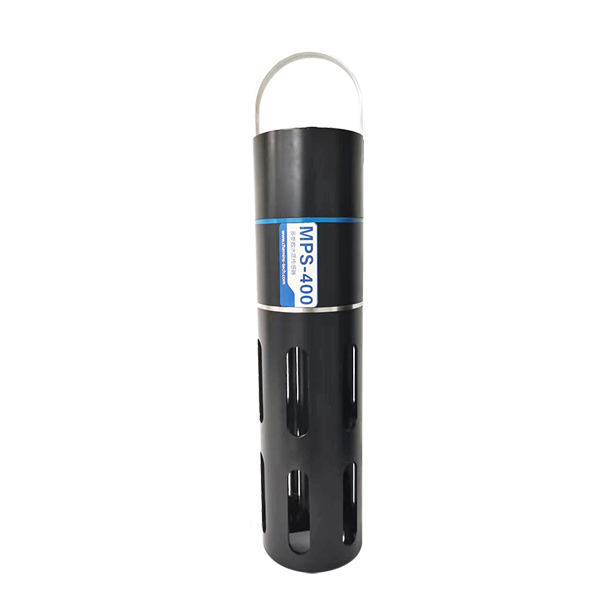
No. Immersed probes can remain at the source while the enclosure protects power and data equipment. Pumping water into the cabinet is justified when access or analyzer requirements warrant it. Compare the service benefit against sample delay, pumping demand and possible changes to the water.
Potentially, if its capacity and operating range support separately controlled branches. Verify each branch flow under normal operation and during service. Instruments with incompatible pressure or flow requirements should not simply be connected in series.
No. The brush acts on its intended sensor surfaces. It does not clear an intake screen, drain, pump or transfer line. Inspect those components independently and compare readings before and after cleaning to identify where fouling is affecting the measurement.
Select it for the actual rain, spray, dust and installation conditions, including cable entries and ventilation. A probe's IP68 rating cannot be assigned to the cabinet. Flood exposure and thermal management require separate design decisions, even for a weather-resistant enclosure.
Provide the water source, parameters and decision levels, intake distance and elevation, sample pressure, ambient extremes, drain destination and host interface. Include available access space and whether automatic sampling or reagent analyzers are required. These details determine the cabinet's practical size and equipment content.
A cabinet-type online water quality monitoring station should deliver representative water to serviceable instruments and clearly distinguish valid measurements from sampling faults. Select the sensing arrangement first, then design the wet layout, electrical separation and recovery sequence. That approach gives the operator an accessible station whose results remain understandable after cleaning, an intake blockage or a power interruption.
Prev:Chlorophyll and Blue-Green Algae Sensors: Paired Depth and Placement
Next:Drinking Water Monitoring Points: Sample Location, Flow and Delay
Related recommendations
Sensors & Weather Stations Catalog
 Agriculture Sensors and Weather Stations Catalog-NiuBoL.pdf
Weather Stations Catalog-NiuBoL.pdf
Agriculture Sensors Catalog-NiuBoL.pdf
Water Quality Sensor Catalog-NiuBoL.pdf
Related products
 Combined air temperature and relative humidity sensor
 TDR Soil Moisture & Temperature Sensor for irrigation| RS485 |4-20mA| NBL-S-THR
 Soil pH sensor RS485 soil Testing instrument soil ph meter for agriculture |NBL-S-PH
 Wind Speed sensor Output Modbus/RS485/Analog/0-5V/4-20mA
 Tipping bucket rain gauge for weather monitoring auto rainfall sensor RS485/Outdoor/stainless steel
 Pyranometer Solar Radiation Sensor 4-20mA/RS485


Screenshot, WhatsApp to identify the QR code
WhatsApp number:+8615367865107
(Click on WhatsApp to copy and add friends)

