





— Blogs —
—Products—
 Consumer hotline +8618073152920
 WhatsApp:+8615367865107
Address:Room 102, District D, Houhu Industrial Park, Yuelu District, Changsha City, Hunan Province, China
Product knowledge
Time:2026-04-17 11:33:50 Popularity:390
Under the background of continuously tightening environmental protection standards in the cement industry, wet flue gas desulfurization (WFGD) has become the mainstream choice for controlling sulfide emissions from kiln tail gas. However, the terminal wastewater generated during the desulfurization process has become a bottleneck restricting the green development of enterprises due to its extremely high corrosiveness, high salt content, and complex heavy metal composition.
As a professional service provider in the fields of industrial sensors and environmental governance, NiuBoL has proposed a new zero liquid discharge path for desulfurization wastewater based on the process characteristics of abundant waste heat at the kiln head in cement production lines. This article provides in-depth reference for engineering contractors and system integrators from the perspectives of technical difficulties, process comparison, and practical application logic.
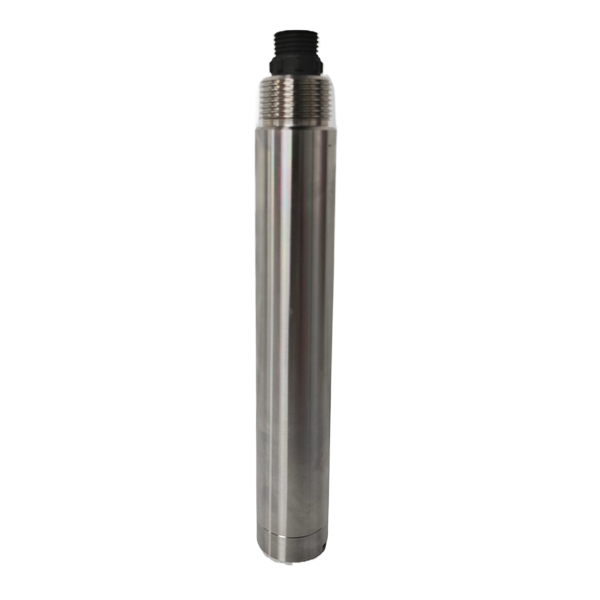
The wastewater generated by wet desulfurization of cement kiln tail gas has extremely poor water quality stability and contains a large amount of inorganic salts that inhibit biological activity. If directly reused without treatment, it will cause “poisoning” of the desulfurization slurry and significantly reduce desulfurization efficiency. If directly discharged, it faces the risk of severe environmental penalties.
Main Physicochemical Characteristics of Desulfurization Wastewater
According to measured data from a 5,000 t/d cement production line, its desulfurization wastewater usually has the following characteristics:
High corrosiveness and scaling tendency: pH is usually between 4 and 6, and it contains extremely high concentrations of chloride ions, calcium, and magnesium ions, which easily form hard scale on the inner wall of pipelines.
Large suspended solids (SS) load: Concentration is usually 9,000–12,700 mg/L; traditional sedimentation processes struggle to achieve solid-liquid separation in a short time.
Complex pollutant composition: In addition to sulfates and chlorides, it also contains heavy metals such as lead (Pb), mercury (Hg), and chromium (Cr), as well as non-metallic harmful elements such as arsenic (As) and fluorides.
Triple-box process (traditional chemical precipitation): Large chemical dosing volume, almost no removal effect on soluble high salts, and the system is extremely prone to collapse when facing water quality fluctuations.
Standard evaporation and crystallization process: Although it can achieve zero liquid discharge, equipment investment is expensive, energy consumption is extremely high, and the treatment cost of secondary solid waste (waste salt) is huge.
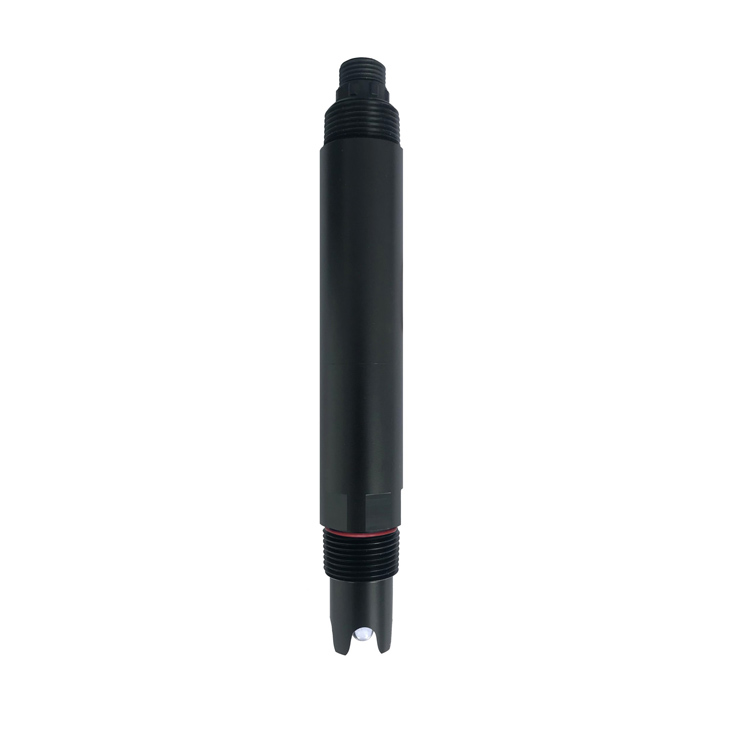
In response to the above challenges, NiuBoL recommends the grate cooler flue gas evaporation technology. The core logic of this solution is to utilize the existing waste heat resources (kiln head exhaust gas) of the cement production line to replace high-energy mechanical evaporators, and to solidify the evaporated residues into cement clinker, achieving closed-loop resource utilization.
1. Enhanced Pretreatment and Salt Separation System
Wastewater first enters the raw water tank for equalization, then passes through primary/secondary high-density sedimentation tanks. In this stage, most suspended solids are removed and hardness is reduced by adding sodium hydroxide, sodium carbonate, and NiuBoL special flocculants.
2. Nanofiltration (NF) Salt Separation
Using the selective permeability of nanofiltration membranes, wastewater is divided into permeate containing monovalent salts and concentrate containing divalent salts (calcium, magnesium). The divalent salt concentrate is returned to the desulfurization system to participate in gypsum crystallization, fundamentally reducing the scaling risk of subsequent membrane systems.
3. High-Pressure Membrane (RO/DTRO) and Membrane Distillation (MD) Concentration
The desalted wastewater enters the high-pressure membrane system for volume reduction. The produced clear liquid has extremely low salt content and can be directly reused for production water or chemical preparation. Subsequently, the membrane distillation system further concentrates the concentrate, minimizing the final volume of wastewater that needs to be treated.
4. Grate Cooler Flue Gas Spray Evaporation
This is the key link for zero liquid discharge. The concentrated high-salt waste liquid is sprayed into the grate cooler flue gas through dual-fluid atomizing nozzles. Under the action of high-temperature flue gas at 250°C–350°C, the water evaporates rapidly, and the salts crystallize and enter the back end with clinker particles or are captured by the dust collector.
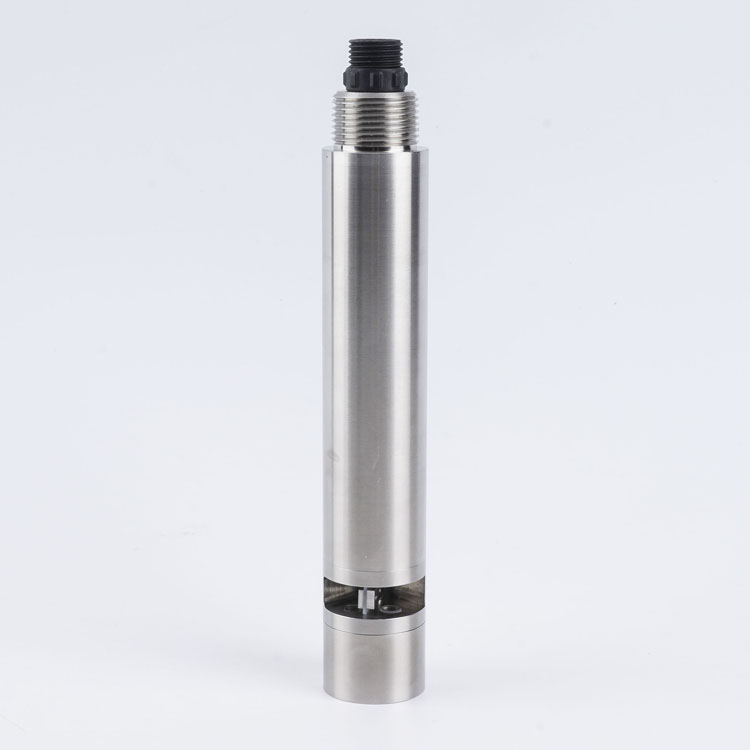
To ensure system operation stability, NiuBoL has integrated high-precision water quality monitoring and fluid control equipment at key nodes. The following are typical design parameters for a 20 m³/h scale system.
| Parameter Item | Technical Specification / Indicator | Remarks |
|---|---|---|
| Design Treatment Capacity | 20 m³/h | Suitable for 5,000 t/d production line |
| Suspended Solids (SS) after Pretreatment | < 10 mg/L | Protect membrane system |
| Nanofiltration Divalent Ion Separation Rate | ≥ 98% | Reduce scaling risk |
| High-Pressure Membrane Water Recovery Rate | 60% – 70% | Produced water can be used as production make-up water |
| Membrane Distillation Final Concentration Ratio | 2.0 – 2.5 times | Significantly reduce liquid volume entering the flue |
| Flue Gas Inlet Temperature | 250°C – 450°C | Utilize waste heat from middle/end section of grate cooler |
| Nozzle Type | Dual-fluid pneumatic atomizing nozzle | Anti-clogging, high-fineness atomization |
| Communication Protocol | RS485 / Modbus RTU | Supports access to central control system |
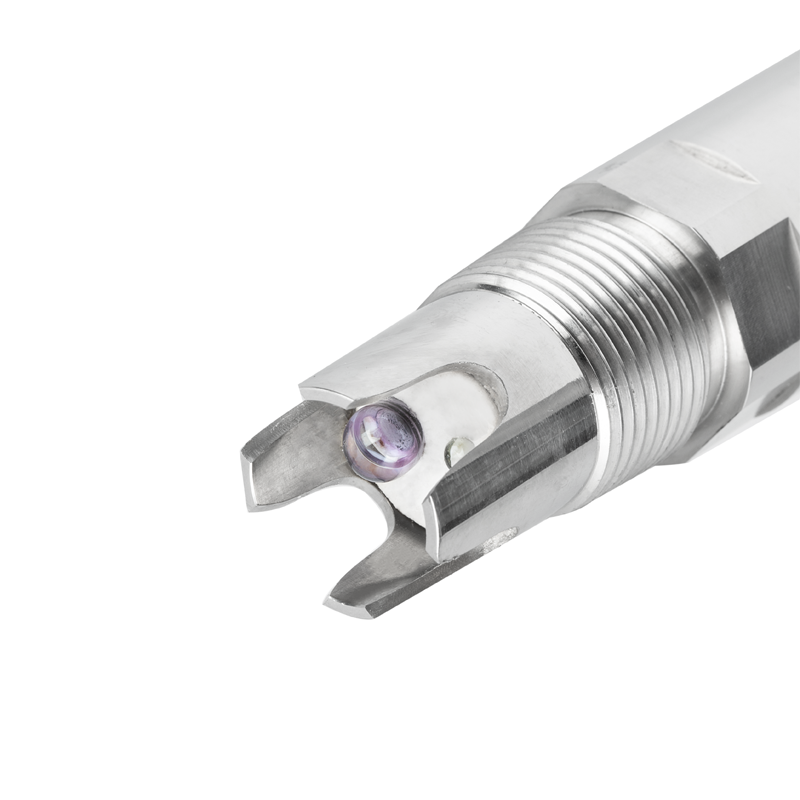
1. Waste heat coupling, reducing operating costs
Compared with traditional evaporation towers or MVR mechanical compression technology, this process does not require additional consumption of live steam. Power consumption is only concentrated in lift pumps and membrane systems. According to calculations, the treatment cost per ton of water is reduced by more than 40% compared with traditional thermal crystallization.
2. Salt solidification in clinker, no secondary pollution
The crystallized salt after evaporation enters the mill with the clinker. Due to the strong chemical solidification effect of cement clinker on chloride ions and heavy metals, the problem of industrial waste salt disposal is successfully solved while meeting the “Cement Product Quality Standard”.
3. Extremely high system redundancy
Due to the long operating cycle and large thermal capacity of cement kilns, the flue gas evaporation system has strong tolerance to wastewater flow fluctuations, avoiding process shutdowns caused by sudden water quality changes.
Q1: Will spraying wastewater into the grate cooler flue gas affect the quality of cement clinker?
After membrane concentration, the final wastewater volume sprayed into the flue is only about 15% of the original water (approximately 3 m³/h). In large cement kilns, this water volume has negligible impact on thermal balance, and the salt content is far below the cement chloride ion limit standard.
Q2: How to prevent dual-fluid nozzles from clogging in high-temperature flue gas?
NiuBoL adopts specially designed high-hardness alloy nozzles combined with automatic compressed air purging function. When the system stops or pressure abnormality is detected, the purging program is automatically triggered to prevent salt crystallization from clogging.
Q3: How does the high-pressure membrane system prevent scaling when treating high-hardness wastewater?
Through the combination of the front-end high-density sedimentation tank and nanofiltration (NF) system, more than 95% of calcium and magnesium ions have been pre-removed. In addition, combined with chemical scale inhibitors and regular chemical cleaning (CIP), the service life of membrane elements can be guaranteed to be more than 2 years.
Q4: Is this technology applicable to dry desulfurization?
Dry desulfurization itself does not produce wastewater. This technology is specifically designed for cement production lines equipped with “wet desulfurization” processes to solve the high-salt terminal wastewater they generate.
Q5: What is the system footprint? Is a large-scale production shutdown required for renovation?
The membrane treatment system adopts a modular skid-mounted design with a small footprint. The installation of the flue spray device only requires opening and welding on the grate cooler flue, which can be completed during planned maintenance without affecting normal production.
Q6: The concentrated wastewater is extremely corrosive. How to select pipeline materials?
NiuBoL recommends using duplex stainless steel (such as 2205) or high-grade lined plastic pipes for the membrane concentrate pipelines to resist pitting corrosion from high-concentration chloride ions.
Q7: Does the system support remote monitoring and automated operation?
Yes. The entire system integrates Modbus RTU communication protocol, which can transmit real-time data such as flow, pressure, and conductivity to the central control room (DCS), enabling one-click start/stop and fault warning.
Q8: How to treat the sludge generated by pretreatment?
The sludge generated by the high-density sedimentation tank can be pumped to the gypsum dewatering machine of the desulfurization system and mixed with gypsum as a cement additive, achieving full utilization of solid waste.
Zero liquid discharge of desulfurization wastewater in the cement industry is no longer a pure environmental cost item but a systematic waste heat utilization process. Through the “pretreatment + salt separation and concentration + grate cooler flue gas evaporation” solution recommended by NiuBoL, enterprises can not only achieve zero liquid discharge (ZLD) but also significantly improve overall operational efficiency through water resource recycling and solid waste treatment in the kiln.
For system integrators seeking high-performance, low-maintenance desulfurization wastewater treatment solutions, NiuBoL provides complete technical consultation and core monitoring equipment support to ensure that every project can precisely match the operating conditions of cement kilns.
 NBL-RDO-206 Online Fluorescence Dissolved Oxygen Sensor.pdf
NBL-COD-208 Online COD Water Quality Sensor.pdf
NBL-CL-206 Water Quality Sensor Online Residual Chlorine Sensor.pdf
NBL-DDM-206 Online Water Quality Conductivity Sensor.pdf
NBL-CLI-206A online chloride ion sensor.pdf
NBL-NHN-302 Industrial-grade Multi-parameter Online Ammonia Nitrogen Sensor.pdf
NBL-ORP-206 Industrial-grade High-stability Online ORP Sensor.pdf
Prev:Power Plant Water Treatment Methods and Characteristics Analysis: NiuBoL Professional Solutions
Related recommendations
Sensors & Weather Stations Catalog
Agriculture Sensors and Weather Stations Catalog-NiuBoL.pdf
Weather Stations Catalog-NiuBoL.pdf
Agriculture Sensors Catalog-NiuBoL.pdf
Water Quality Sensor Catalog-NiuBoL.pdf
Related products
 Combined air temperature and relative humidity sensor
 Soil Moisture Temperature sensor for irrigation|NBL-S-THR
 Soil pH sensor RS485 soil Testing instrument soil ph meter for agriculture |NBL-S-PH
 Wind Speed sensor Output Modbus/RS485/Analog/0-5V/4-20mA
 Tipping bucket rain gauge for weather monitoring auto rainfall sensor RS485/Outdoor/stainless steel
 Pyranometer Solar Radiation Sensor 4-20mA/RS485

Screenshot, WhatsApp to identify the QR code
WhatsApp number:+8615367865107
(Click on WhatsApp to copy and add friends)

