





— Blogs —
—Products—
 Consumer hotline +8618073152920
 WhatsApp:+8615367865107
Address:Room 102, District D, Houhu Industrial Park, Yuelu District, Changsha City, Hunan Province, China
Product knowledge
Time:2026-01-23 10:15:26 Popularity:293
In an era where water resource protection and pollution prevention are increasingly critical, online water quality monitoring has become an indispensable means for environmental management, drinking water safety assurance, and industrial production. The NiuBoL online water quality monitoring station adopts a high-precision multi-parameter sensor integrated design, capable of collecting key water body indicators around the clock in real time, including temperature, pH, conductivity, dissolved oxygen, ammonia nitrogen, turbidity, COD, ORP, and more. Data is stably transmitted to the cloud platform via GPRS/4G/5G wireless networks or wired methods, allowing users to view real-time curves, historical trends, and anomaly alarms at any time. The system is widely applicable to river and lake monitoring, drinking water source protection, aquaculture optimization, wastewater treatment plant operation management, and industrial wastewater discharge monitoring, providing reliable data support for scientific decision-making.
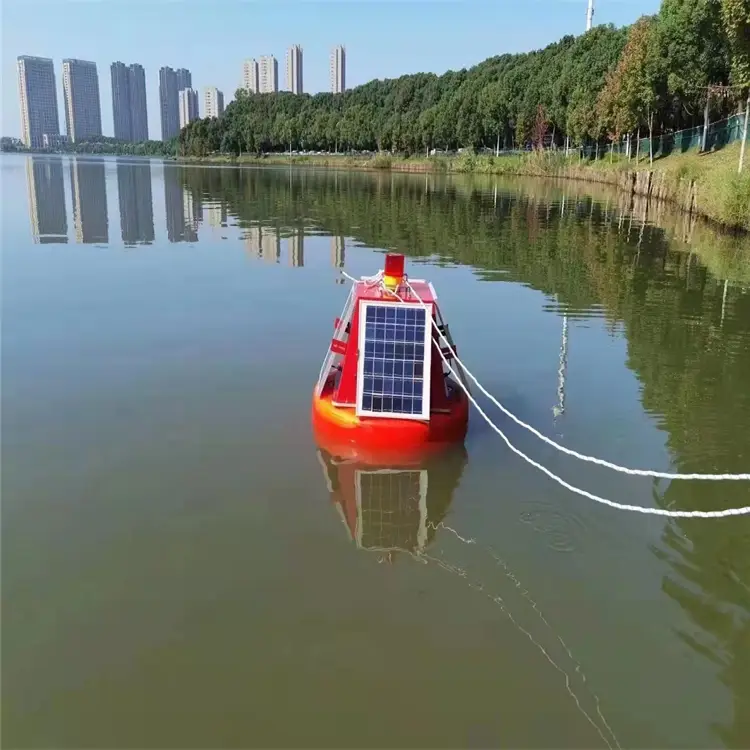
With industrial development, urbanization, and the impact of climate change, water pollution risks persist. Timely and accurate water quality data is the core basis for identifying pollution sources, evaluating treatment effectiveness, and ensuring drinking water safety. Traditional manual sampling methods suffer from delays, limited frequency, and significant errors, whereas the NiuBoL online water quality monitoring station significantly improves monitoring efficiency and data reliability through automation and continuous monitoring.
Typical application scenarios include:
Surface water and drinking water sources: Compliant with standards such as “Environmental Quality Standards for Surface Water” (GB 3838-2002), enabling long-term online monitoring of conventional five parameters plus extended indicators.
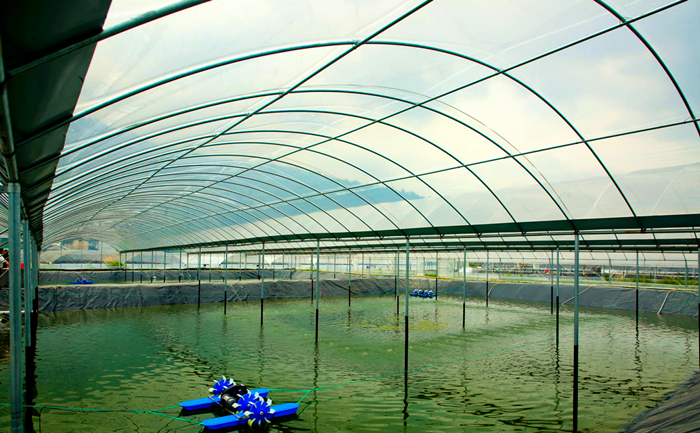
Aquaculture: Real-time tracking of dissolved oxygen, ammonia nitrogen, pH, etc., to optimize water environment and reduce disease risks.
Wastewater treatment and industrial discharge: Monitoring key pollutants such as COD, ammonia nitrogen, turbidity to ensure compliant discharge.
Ecological restoration projects: Providing continuous data support to evaluate river and lake water quality improvement effectiveness.
The NiuBoL system features a highly integrated all-in-one cabinet design, compact size, and protection rating above IP65, adapting to various outdoor climate conditions. Installation requires no fixed station house — simply secure the equipment on a shore platform or buoy and immerse the sensor probes in the water for quick deployment. This flexibility is particularly suitable for remote water areas, multi-point deployment, or temporary monitoring projects.
The equipment requires no dedicated personnel on duty, no frequent addition of reagents or manual calibration, significantly reducing operation and maintenance costs. Sensors include automatic compensation functions (such as temperature and conductivity compensation) and built-in self-cleaning mechanisms to effectively resist biofilm and dirt adhesion, ensuring long-term stable operation.
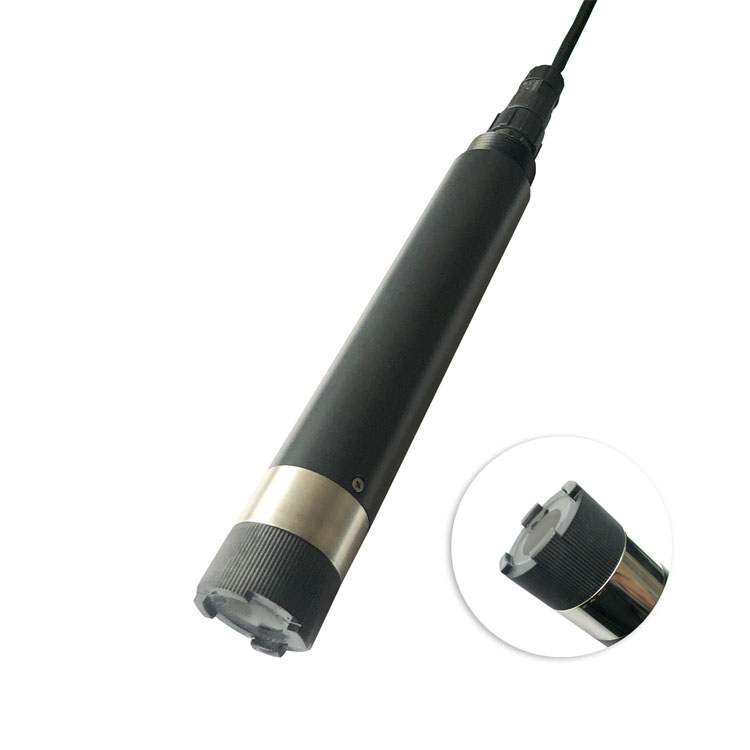
The NiuBoL online water quality monitoring station supports simultaneous monitoring of more than 8 parameters. The following are the technical specifications of the main sensors in standard configuration:
| No. | Sensor Type | Measurement Range | Measurement Principle | Measurement Accuracy |
|---|---|---|---|---|
| 1 | Temperature | 0~50℃ | High-precision digital sensor | ±0.3℃ |
| 2 | Conductivity | 0~5000μS/cm or 0~10000μS/cm | Contact electrode method | ±1.5% |
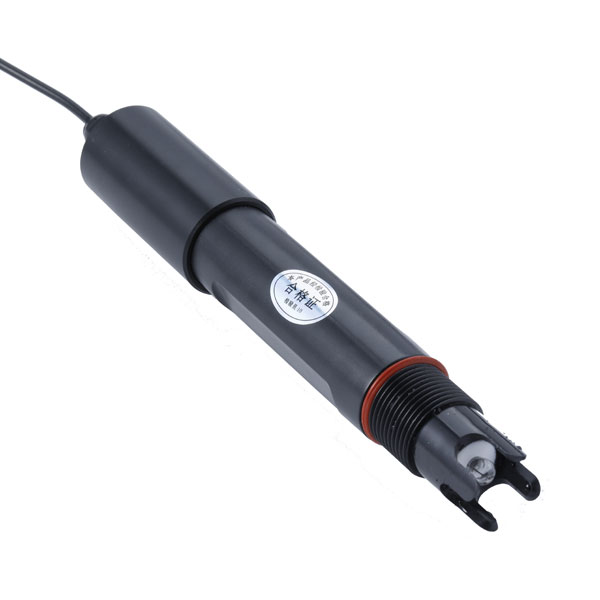
| 3 | pH | 0~14 | Electrochemical (salt bridge) | ±0.1 pH |
| 4 | Dissolved Oxygen | 0~20 mg/L | Fluorescence lifetime method | ±2% |
| 5 | Ammonia Nitrogen | 0~1000.00 mg/L (default) 0~100.00 mg/L (customizable) | Ion-selective electrode method | 10% of reading |
| 6 | Turbidity | 0~40 NTU (optional) | Scattering light method | ±1% |
| 7 | COD | 0~500 mg/L | UV254 absorption method | ±5% |
| 8 | ORP | -2000~+2000 mV (optional) | Electrochemical electrode method | ±10 mV |
Note: The above parameters can be flexibly combined or expanded according to actual needs (e.g., adding total phosphorus, total nitrogen, residual chlorine, etc.). All sensors support automatic temperature compensation and feature anti-fouling coatings and mechanical self-cleaning functions.
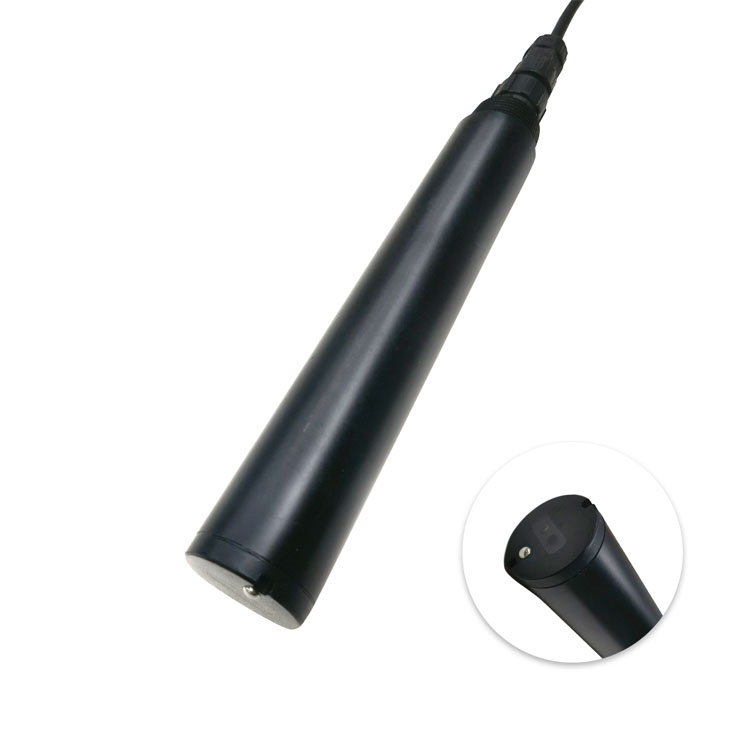
Acquisition frequency can be set from 1 minute to 1 hour, with local caching supported (automatic re-transmission after network disconnection). Data is uploaded via GPRS/4G/5G, RS485/RS232, or Ethernet, supporting Modbus RTU/TCP protocols for easy integration with third-party SCADA or environmental platforms. The cloud platform provides:
Real-time data curves and multi-point comparison;
Historical data query and export (Excel/CSV);
Exceedance threshold SMS/email/WeChat alarms;
Big data analysis and trend prediction reports.
Optional solar + battery power supply solution ensures continuous operation in remote areas.
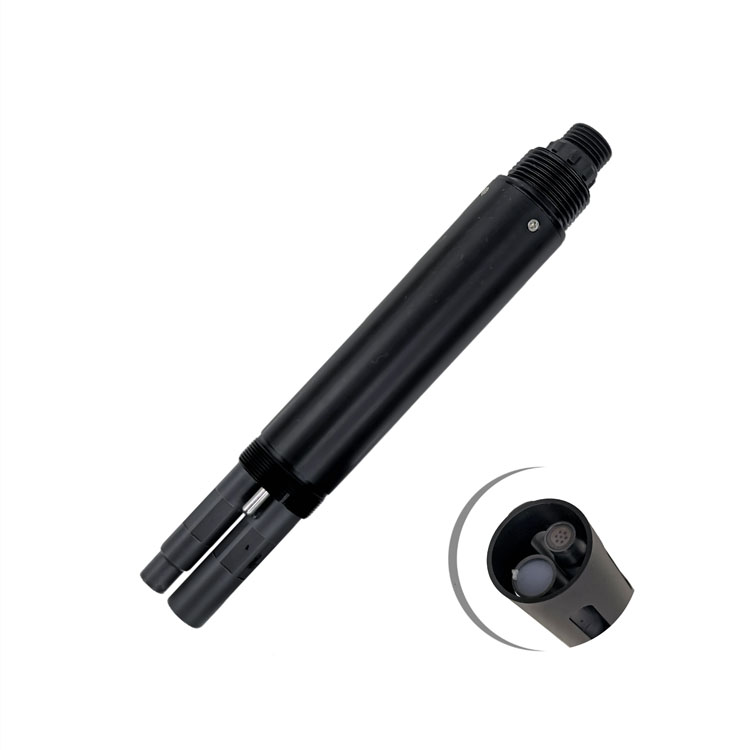
Installation process is simple and efficient:
Select the monitoring point and secure the cabinet to a stable shore foundation;
Immerse the sensor probes in the water body (recommended immersion depth ≥30 cm);
Connect power supply (AC220V or solar) and communication module;
Perform initial calibration and networking test via mobile phone/computer.
The entire process typically takes 1~2 hours and requires no large-scale engineering equipment. Maintenance cycle is calibration every 3~6 months. The system includes built-in sensor health diagnostics, automatically pushing reminders for anomalies. High protection rating, withstands operating environment of -20℃~60℃, suitable for outdoor deployment in most regions of China.
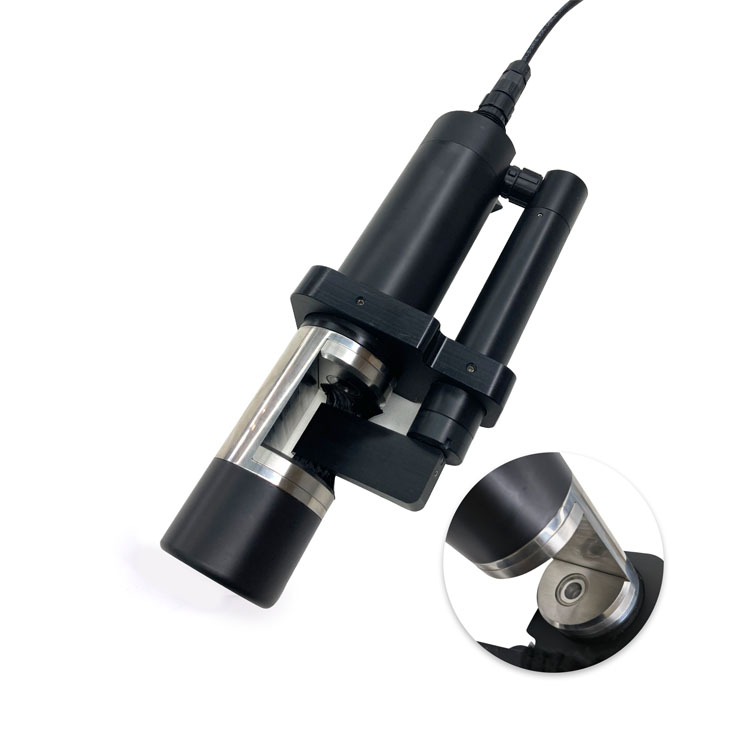
A southern river monitoring project: After deploying the NiuBoL station, it successfully captured a sudden ammonia nitrogen exceedance event, enabling the environmental department to quickly trace the source and rectify it, avoiding risks to downstream drinking water.
East China aquaculture base: Through real-time monitoring of dissolved oxygen and pH, aeration strategies were adjusted, increasing fish survival rate by approximately 12%~18%.
Industrial park wastewater treatment plant: COD and turbidity data used for process optimization, resulting in significant annual reduction in chemical costs.
These cases demonstrate the outstanding performance of the NiuBoL system in accuracy, stability, and cost-effectiveness.
High precision and reliability: Adopts international mainstream measurement principles, traceable data, compliant with environmental monitoring specifications.
Low operation and maintenance costs: Unattended design reduces labor input.
Flexible expansion: Supports parameter customization and open interfaces for future upgrades.
Data security: Encrypted transmission + local backup, dual protection.
Rapid deployment: No complex infrastructure required, suitable for quick deployment in various water areas.
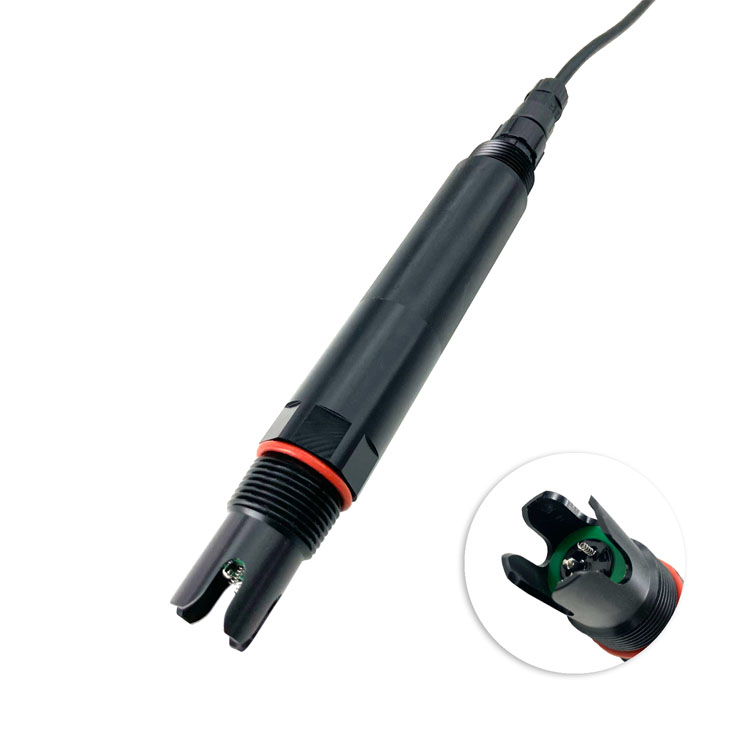
Q1. What is the difference between an online water quality monitoring station and traditional sampling?
Online monitoring stations enable continuous, automated collection with strong real-time performance and high frequency, avoiding delays and errors from manual sampling.
Q2. What communication methods does the NiuBoL system support?
Supports GPRS/4G/5G wireless, RS485/RS232 wired, Ethernet, and more, adapting to different site conditions.
Q3. Can the equipment operate normally in low winter temperatures?
Operating temperature range -20℃~60℃, with optional heating module to ensure stable operation in cold regions.
Q4. How to ensure long-term sensor accuracy?
Built-in self-cleaning + regular calibration reminders, combined with automatic temperature compensation, with average mean time between failures exceeding 5000 hours.
Q5. Does the data platform support mobile viewing?
Supports web, WeChat mini-program, and dedicated APP for viewing real-time data and alarm information anytime, anywhere.
Q6. Can it be linked with other environmental equipment?
Supports Modbus protocol for seamless integration with PLC, alarms, or third-party platforms to achieve linkage control.
The NiuBoL online water quality monitoring station, with precise collection, stable transmission, and low maintenance costs as its core advantages, provides efficient and reliable technical support for water environment management. In the context of increasingly strict water quality standards and the mainstream adoption of data-driven decision-making, selecting a well-balanced, easy-to-deploy online monitoring device is an important step toward achieving sustainable water resource utilization. If you are planning a water quality monitoring project, the NiuBoL team can provide customized solutions and on-site support to further advance your water environment protection efforts.
 NBL-RDO-206 Online Fluorescence Dissolved Oxygen Sensor.pdf
NBL-COD-208 Online COD Water Quality Sensor.pdf
NBL-CL-206 Water Quality Sensor Online Residual Chlorine Sensor.pdf
Prev:Optical Water Quality Monitoring Sensors: Basic Principles, Main Types, and Parameters
Next:Classification, Working Principles, and Industry Applications of Smart Water Quality Sensors
Related recommendations
Sensors & Weather Stations Catalog
 Agriculture Sensors and Weather Stations Catalog-NiuBoL.pdf
Weather Stations Catalog-NiuBoL.pdf
Agriculture Sensors Catalog-NiuBoL.pdf
Related products
 Combined air temperature and relative humidity sensor
 Soil Moisture Temperature sensor for irrigation
 Soil pH sensor RS485 soil Testing instrument soil ph meter for agriculture
 Wind Speed sensor Output Modbus/RS485/Analog/0-5V/4-20mA
 Tipping bucket rain gauge for weather monitoring auto rainfall sensor RS485/Outdoor/stainless steel
 Pyranometer Solar Radiation Sensor 4-20mA/RS485

Screenshot, WhatsApp to identify the QR code
WhatsApp number:+8615367865107
(Click on WhatsApp to copy and add friends)

