





— Blogs —
—Products—
 Consumer hotline +8618073152920
 WhatsApp:+8615367865107
Address:Room 102, District D, Houhu Industrial Park, Yuelu District, Changsha City, Hunan Province, China
Product knowledge
Time:2026-03-03 13:59:15 Popularity:765
A small water quality monitoring buoy should be tested as a complete loaded assembly before it is taken to the deployment site. Individually working probes do not prove that the final frame floats at the intended level, leaves optical paths clear or maintains power during cleaning and transmission. A controlled pre-deployment test can expose these faults while the equipment is still accessible.
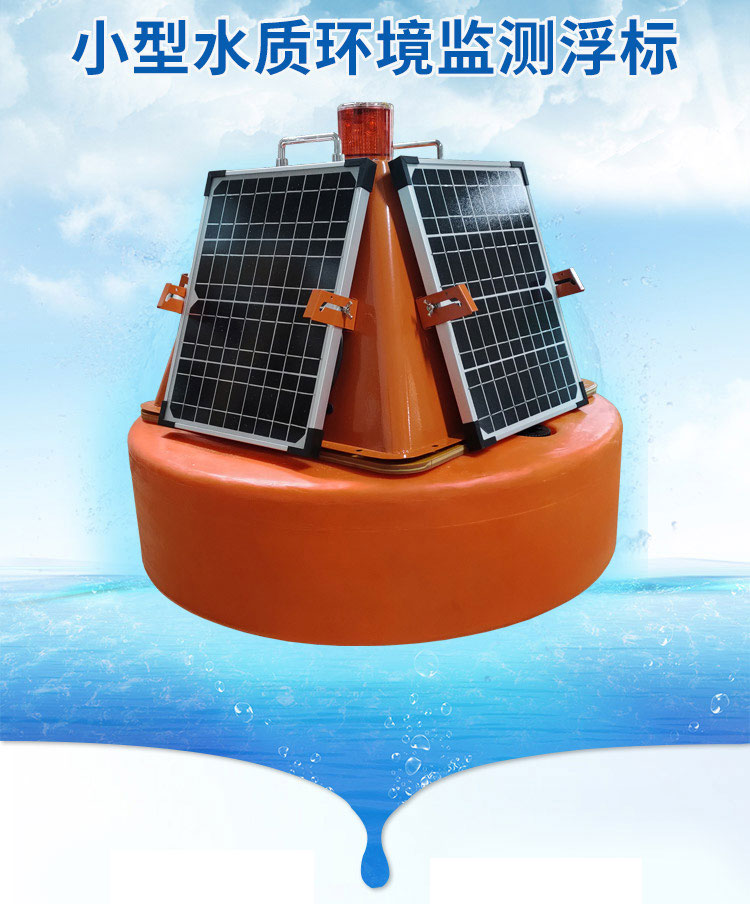
Prepare a component list covering the buoy body, battery, panels, sensor frame, every probe, cable, logger, communications equipment and any cleaning mechanism. Include accessories that will remain on the deployed buoy. A float test without the final battery or hanging sensor frame does not represent the working assembly.
Identify the actual purpose of each channel. Dissolved oxygen may support an aquaculture observation, turbidity may describe suspended-material changes, and an ammonia channel addresses a different chemical measurement. Do not describe every pictured probe as a standard sensor in one universal buoy package.
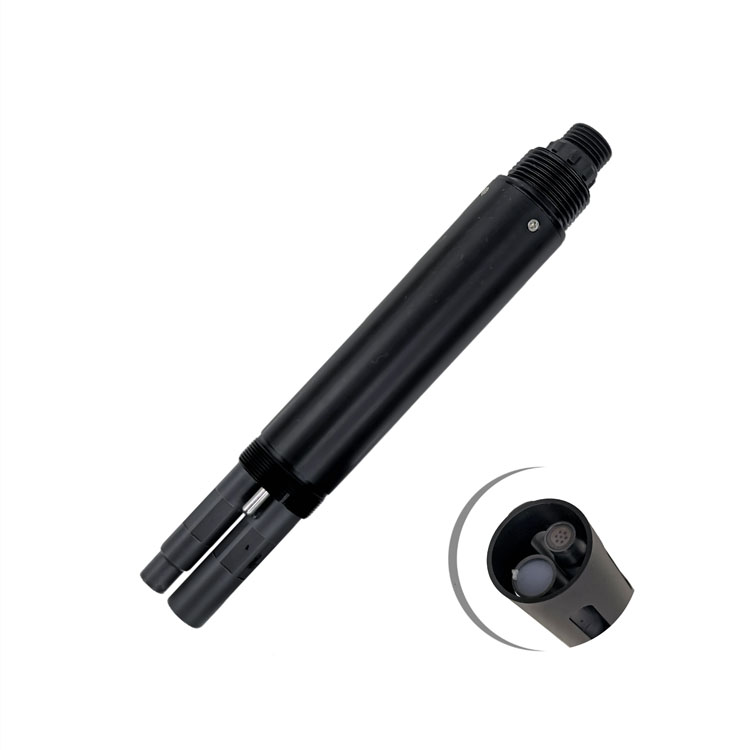
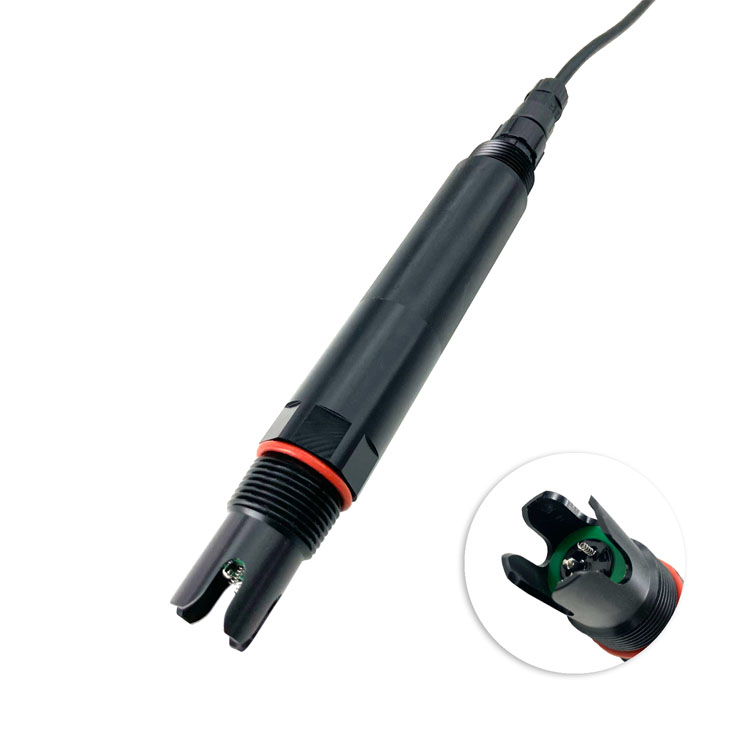
The NiuBoL NBL-WQ-NHN ammonia nitrogen sensor has range options and medium restrictions that need to match the water body. Its lower-range configuration cannot be assumed to have the same relative performance at very low concentrations as at higher ones. Review the stated error specification and interfering ions for the application.
| Example sensor | Model-specific parameters | Loaded-assembly check |
|---|---|---|
| NBL-WQ-NHN | Range options 0-10.00, 0-100.00 or 0-1000.0 mg/L; stated accuracy ±10% or ±1 mg/L | Identify the ordered range and whether the error requirement suits the expected water |
| NBL-WQ-NHN installation | 12-24 VDC; RS485 and 4-20 mA outputs; -5 to 40 C operating temperature; medium pH 4-10; POM and 316L wetted materials | Confirm water compatibility, selected output and mechanical support |
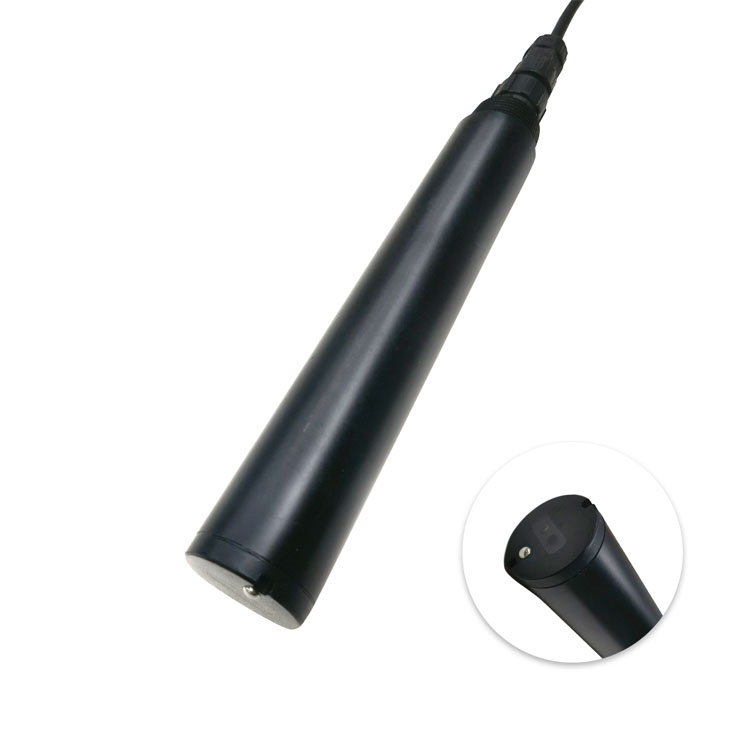
| NBL-WQ-TS turbidity sensor | Range options 0-20.00, 0-100.0 or 0-1000.0 NTU; 12-24 VDC; 0.2 W at 12 V | Use the specific range, resolution and accuracy for the delivered probe |
| NBL-WQ-TS interface and protection | RS485 Modbus RTU and 4-20 mA; 0-50 C; pressure below 0.2 MPa; IP68; standard 5 m lead | Keep the sensor immersed appropriately and protect cable connections separately |
The turbidity sensor configuration needs a clear optical region, while an electrode may have conditioning and storage requirements. Do not apply one cleaning method or startup routine to all probes. Cable jacket suitability and extension joints also need to be specified for repeated immersion and the local water chemistry.
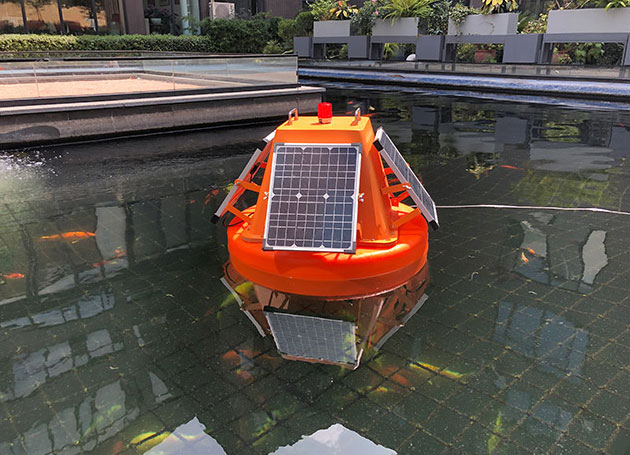
Use a controlled water area and a safe handling plan appropriate to the assembly. Record the loaded mass, floating attitude and waterline. Inspect whether cable entries, hatches and equipment intended to remain dry are above the water as designed. Compare the result with the buoy supplier's load and stability limits.
A buoy that floats in calm water is not thereby qualified for waves, vessel wash, ice or a particular current. Do not infer an anti-capsize rating from a low centre of gravity or a photograph. Deployment in more demanding water requires an appropriate carrier and mooring assessment beyond this controlled assembly check.
Check how the probes hang when cables take their final route. The frame should carry the mechanical load rather than the electrical leads. Verify that a probe cannot rub against the body or contact a moving cleaner through the movement anticipated by the design. Repeat the check after any battery, bracket or probe change.
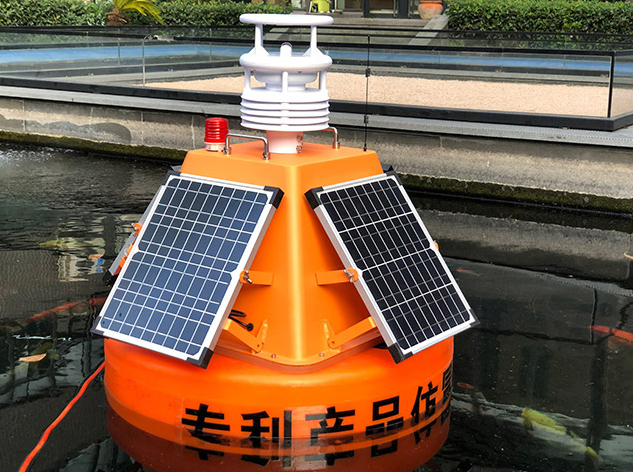
An arbitrary separation distance cannot cover every optical and electrochemical instrument. The required clearance depends on the sensing path, mounting hardware and cleaning movement. For the NBL-WQ-TS configuration, the installation guidance requires more than 5 cm from a side wall and more than 10 cm from the bottom. Treat nearby frame members and guards as possible obstructions, not just the test tank.
Review the entire optical path of a transparency sensor. Its measurement is not identical to turbidity merely because both respond to the optical properties of water. With the frame in the water, inspect for trapped bubbles, shading or hardware in the relevant path before accepting a stable numerical output.
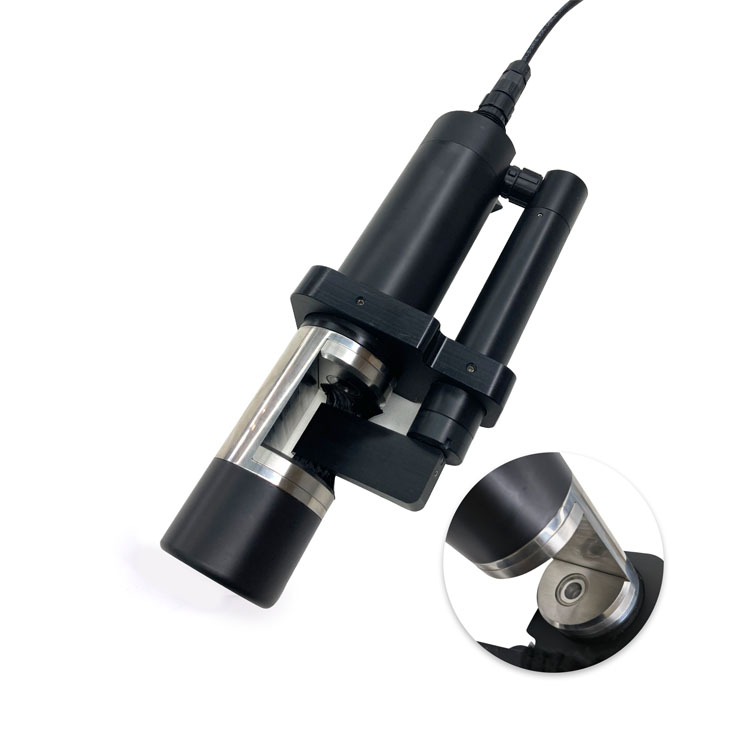
A residual chlorine sensor belongs in a configuration with a defined chlorine-monitoring need, such as an appropriate treatment-water application. Its presence in the sensor range is not a reason to add it to every lake or fish-pond buoy. Confirm the measurand and sample conditions before including it in the order.
The same discipline applies to COD, conductivity, chlorophyll and other possible channels. Check the actual instrument method and operating conditions. An optical COD estimate is not a direct total-nitrogen measurement, and no single sensor package establishes every surface-water assessment result. Keep optional channels separate in the equipment schedule and quotation.
Measure the complete assembly through acquisition, normal transmission, unsuccessful connection attempts and any fitted cleaning cycle. Observe voltage at the logger and the most demanding sensor, not only at the battery terminals. A static standby current omits the very loads most likely to expose weak wiring or inadequate regulation.
As an illustrative energy calculation, a continuous 0.8 W load uses 19.2 Wh/day. An additional 4 W load running for ten seconds every ten minutes adds 1.6 Wh/day, for a total of 20.8 Wh/day before other losses. These are assumed test loads, not buoy or cleaner specifications. Use measured operating demand to size the actual battery and charging system.
Confirm restart behaviour using a suitable controlled test procedure. An intended sleep or low-voltage state must be distinguishable from a verified water-quality observation. Do not claim a fixed number of no-charge days from panel watts and battery amp-hours without usable energy, environmental conditions and duty-cycle information.
Connect each sensor individually first, identify its output version and set unique digital addresses where applicable. Then assemble the bus and verify each channel under the intended polling arrangement. RS485 Modbus RTU compatibility still requires the correct map, units, range settings and status interpretation for the delivered devices.
Run a short network interruption test if local storage and retransmission are included. Check whether readings retain their original observation time and whether restarting creates gaps or duplicate records. A connected gateway does not prove a year of local storage, a particular cloud protocol or remote firmware access.
Before launch, save an example record for every channel together with sensor identity, mounting position, immersion depth and configuration. Check a suitable reference or independent sample comparison using the appropriate method. Define timing and location so a sample taken later or at another depth is not mistaken for a failed sensor check.
In a reservoir project, use these tests to confirm that the intended depth and frame clearances survive the final fit-out. In aquaculture, verify that observations and any external aeration control remain separate functions with an agreed fault response. In a lake network, repeat the same identified tests for each assembled buoy rather than assuming that the first unit qualifies every later configuration.
Keep initial cleaning inspections closer together until the local fouling pattern is known. A cleaning brush does not remove every deposit or eliminate reference checks. Optical dissolved-oxygen probes and membrane-based instruments have different service needs; do not prescribe membrane replacement for a fluorescence probe simply because both report dissolved oxygen.
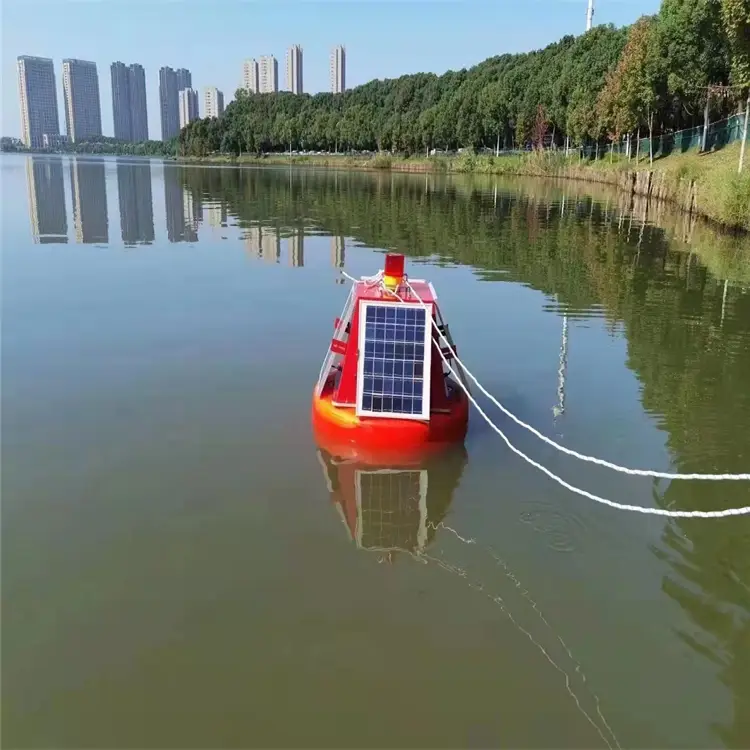
Battery, frame, probes and cable routing can change floating attitude and mechanical clearance. The final load also changes power demand. Testing a partial assembly cannot demonstrate those properties for the complete deployed system.
No. Probe ingress protection does not qualify a cable splice, hatch, logger enclosure or complete carrier. Check every submerged connection and dry compartment against its own installation requirements. Floating stability and site exposure are separate questions.
Use the sensing-volume and cleaning-clearance requirements of the actual instruments. For the specified NBL-WQ-TS, maintain its side and bottom clearance even inside a guard or frame. Do not apply one universal spacing to unrelated optical paths and electrode assemblies.
Not by itself. Charging conditions, usable battery energy, connection retries, cleaning loads and sensor duty cycles determine operation. A larger panel cannot correct a poor cable connection, an unsuitable charging arrangement or a fouled probe.
Only if a separately specified control interface and operating design are included. Receiving a dissolved-oxygen value is not proof of an aerator output. Define the controller, permissions, feedback and unavailable-data behaviour before enabling automatic operation.
Record the final component list, loaded condition, probe locations, clearances, supply behaviour, channel checks and interruption-test results where applicable. Keep configuration files and representative observations with the unit identity so a later replacement can be compared against the tested assembly.
Send the water-body conditions, required measurements, expected concentrations, intended depth, maintenance access and receiving system. Ask NiuBoL to identify sensor supply, carrier fit-out, power, communications and commissioning separately. This allows the proposed small water quality monitoring buoy to be evaluated as an assembled project rather than a list of probes.
A controlled loaded-assembly test makes power, mounting and data faults easier to resolve before field work. Confirm each probe's purpose and operating limits, then test the final frame, supply and acquisition path together. Treat calm-water flotation as one check, not evidence that the buoy is suitable for every deployment condition.
 NBL-RDO-206 Online Fluorescence Dissolved Oxygen Sensor.pdf
NBL-COD-208 Online COD Water Quality Sensor.pdf
NBL-CL-206 Water Quality Sensor Online Residual Chlorine Sensor.pdf
Prev:Dust Monitoring System: Check Mist, Humidity and the Sampling Path
Next:Industrial VOC Monitoring: PID, FID and Sampling Requirements
Related recommendations
Sensors & Weather Stations Catalog
Agriculture Sensors and Weather Stations Catalog-NiuBoL.pdf
Weather Stations Catalog-NiuBoL.pdf
Agriculture Sensors Catalog-NiuBoL.pdf
Water Quality Sensor Catalog-NiuBoL.pdf
Related products
 Combined air temperature and relative humidity sensor
 TDR Soil Moisture & Temperature Sensor for irrigation| RS485 |4-20mA| NBL-S-THR
 Soil pH sensor RS485 soil Testing instrument soil ph meter for agriculture |NBL-S-PH
 Wind Speed sensor Output Modbus/RS485/Analog/0-5V/4-20mA
 Tipping bucket rain gauge for weather monitoring auto rainfall sensor RS485/Outdoor/stainless steel
 Pyranometer Solar Radiation Sensor 4-20mA/RS485

Screenshot, WhatsApp to identify the QR code
WhatsApp number:+8615367865107
(Click on WhatsApp to copy and add friends)

