





— Blogs —
—Products—
 Consumer hotline +8618073152920
WhatsApp:+8615367865107
Address:Room 102, District D, Houhu Industrial Park, Yuelu District, Changsha City, Hunan Province, China
Product knowledge
Time:2025-03-28 16:28:15 Popularity:1310
Ultrasonic weather station light channels provide different measurements depending on the fitted option. Select a W/m² channel for the specified irradiance observation or a lux channel for visible-light monitoring. In the NiuBoL NBL-W-71GUWS, these are alternative seventh parameters, not two simultaneous outputs. Neither channel measures snow depth or replaces a dedicated plant-light measurement simply because the instruments share a weather station.
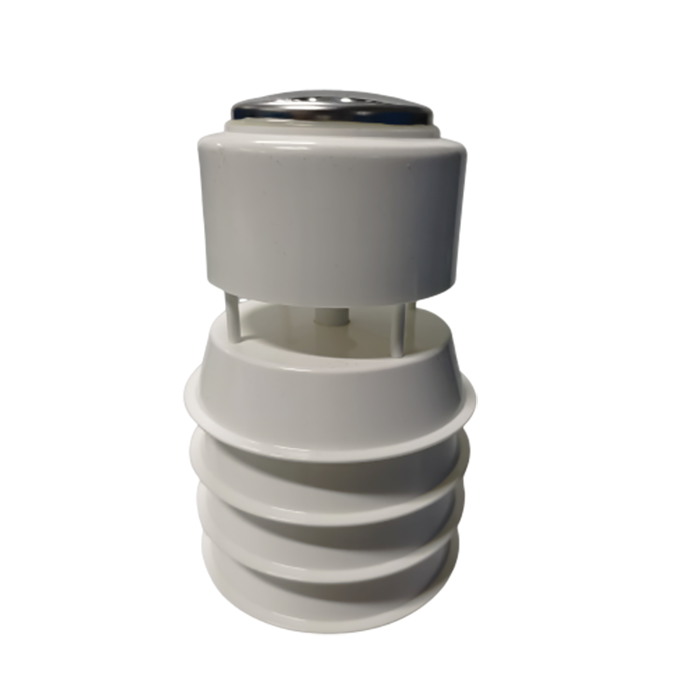
A specification that says only seven-in-one leaves an important question unanswered: which seventh quantity is required? A station intended to report visible lighting conditions has a different task from one feeding a solar-energy analysis. Adding more dashboard labels cannot change what the installed sensing elements measure.
The same boundary applies to the separate ultrasonic snow-depth sensor pictured above. It measures distance for a snow-depth application; it is not a light channel or a standard function of every ultrasonic weather head. Define each required quantity before comparing integrated and separate instruments.

| Required result | Measurement | What the result does not establish |
|---|---|---|
| Solar irradiance at the sensing plane | Radiant power per area, W/m², within the instrument's response | Electrical power produced by a PV module |
| Visible-light illuminance | Photometrically weighted light, lux | An interchangeable solar-energy input in W/m² |
| Plant photon-flux observation | A suitable dedicated PAR/PPFD instrument and defined units | A value measured directly by an ordinary lux channel |
| Ultraviolet exposure or UV index | A suitable UV instrument and specified response or index | A separate UV result from a broadband solar channel alone |
Illuminance weights light according to a defined visual response; irradiance does not use that same weighting. The distinction is set out in the BIPM principles governing photometry. A fixed lux-to-W/m² factor cannot be assumed valid across changing spectra. Do not enter one into a PLC simply to fill an otherwise missing irradiance field.
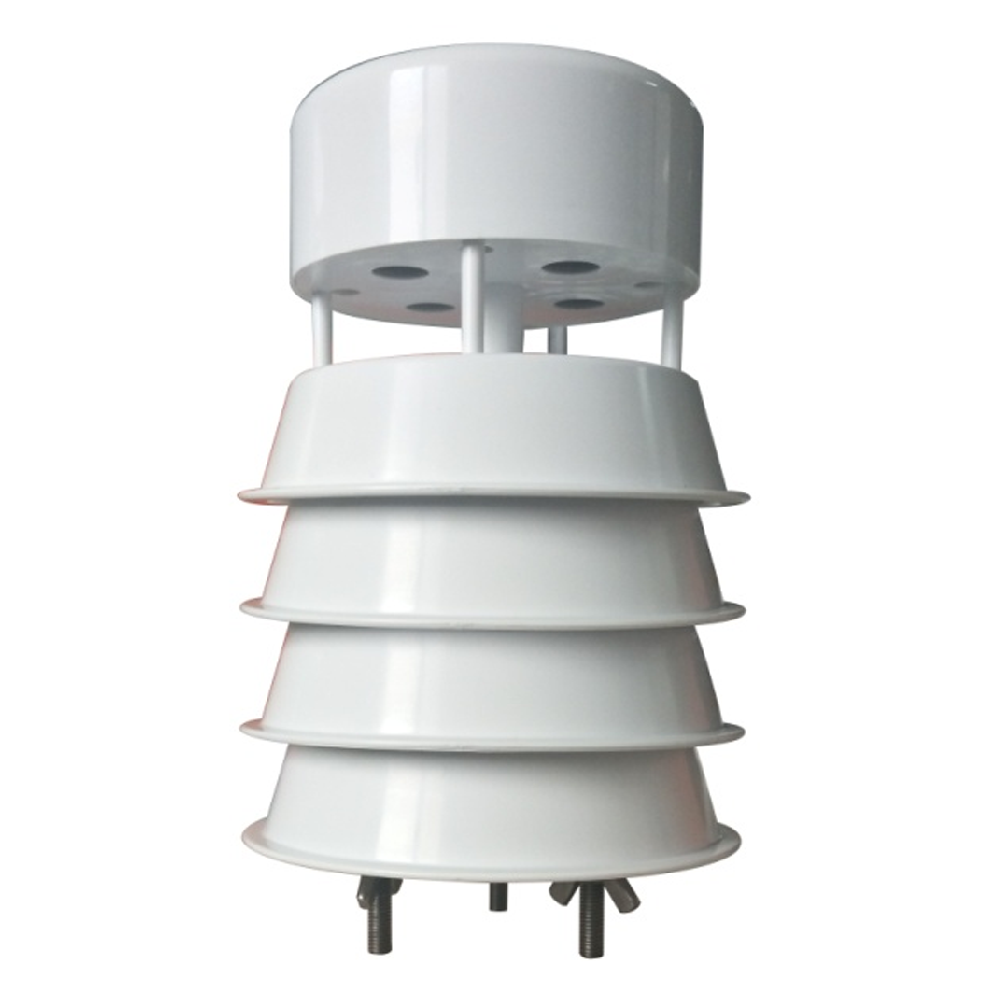
The NBL-W-71GUWS combines wind speed, direction, air temperature, humidity, pressure and rainfall with the selected light quantity. Its light options have different ranges, stated accuracies and resolutions. Confirm the option in the order and channel schedule, not just the family name on a drawing.
| Item | Specification | Selection consequence |
|---|---|---|
| Solar-radiation option | 0-1500 W/m²; stated accuracy ±10%; resolution 1 W/m² | Assess against the irradiance requirement; do not infer a precision class from the display resolution. |
| Illuminance option | 0-200,000 lux; stated accuracy ±7%; resolution 10 lux | Specify visible-light monitoring rather than relabelling the output as solar energy. |
| Communication | RS485 Modbus RTU; 9600 bps; minimum communication interval 1000 ms | Use the supplied configuration's map and scaling. |
| Supply | DC 9-24 V or DC 12-24 V version; average power 0.4 W | Confirm the delivered supply version and any additional loads. |
| Environmental limits | IP65; operating -40°C to 80°C; 0-95% RH | Still provide appropriate exposure, cabling and maintenance access. |
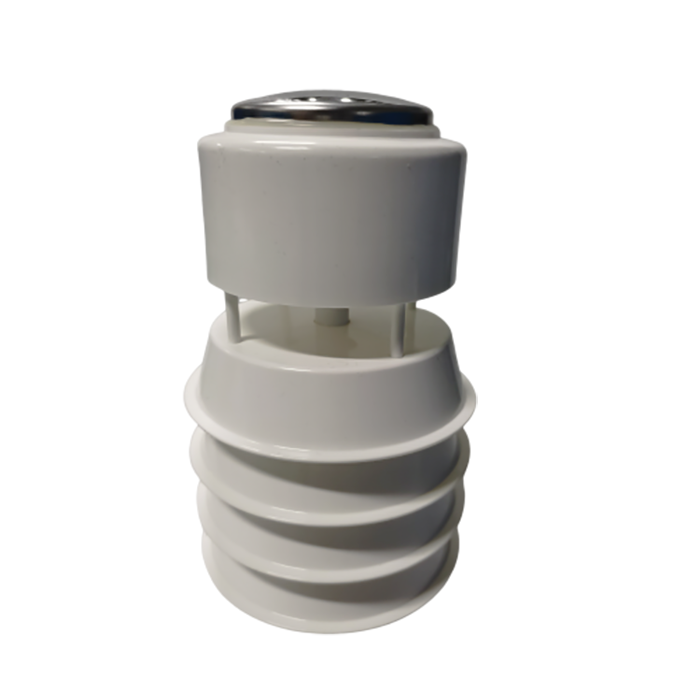
NiuBoL integrated heads include different combinations. The five-parameter option and NBL-W-61MUWS six-parameter option do not include a solar-radiation channel merely because a similar-looking product does. The latter's six quantities include rainfall, not a seventh solar measurement.
The NBL-W-71MUWS includes illuminance among its seven quantities; it should not be confused with the selectable light option of the NBL-W-71GUWS. Compare the exact model specifications rather than assuming a common connector or Modbus family establishes identical hardware behind every data position.
An integrated head puts several measurements at one location. Review the intended exposure for each: surrounding obstructions can shade the light channel while also affecting wind. Record whether the reading is intended to represent open-sky conditions or a deliberately shaded local environment. A location chosen for easy cable access may not represent either.
For a PV project needing irradiance in the array plane, assess whether the integrated head's arrangement can deliver that observation while retaining the required wind and rain installation. A separate appropriately oriented pyranometer may be the more suitable component. Do not tilt the whole weather head without checking the installation requirements of its other channels.
A receiver may expose data positions for more options than are physically fitted. An unused position is not evidence that a second light quantity exists. During commissioning, compare the supplied configuration with the PLC, RTU or data logger channel list and hide or explicitly mark unavailable quantities.
Check unit, scale, valid range and status handling through the final destination. A lux reading presented with a W/m² label can look credible in daylight and still be the wrong measurement. Reading the register successfully proves communication, not the physical meaning assigned to the value.
Use a dedicated instrument where the required spectral response, uncertainty, sensing plane or calibration scope cannot be met by the integrated option. This can apply to solar-performance assessment, crop-light research or UV work. Specify the acceptance requirement first; a higher parameter count is not evidence of suitability.
The broader weather station sensor range allows separate components to be considered alongside compact heads. Account for their power, inputs, mounting and service arrangements. A dedicated sensor is useful only if its location and acquisition path preserve the measurement it was selected to provide.
Send NiuBoL the required quantity and unit, measurement plane, expected exposure, acceptance limits and receiving interface. Identify the other weather channels needed at the same point. State whether a separate PAR, UV or pyranometer instrument is required rather than adding those names to a generic weather-station request.
For repeat orders, retain the selected light option with the model and configuration record. Confirm it again when replacing a head, even if the housing fits the old bracket. Review the final display labels before accepting the replacement into the historical series.
A project for outdoor lighting control may need illuminance at the work area, expressed in lux. A PV performance project needs solar irradiance at a defined plane, expressed in W/m². The two numbers respond differently to the spectrum of incoming light. A dashboard that labels both as 'light' hides a procurement error: the first is a photometric quantity and the second is radiometric. Put the required physical quantity, unit and measurement plane in the request before discussing how many parameters a compact head advertises.
Ask the supplier to identify the exact NBL-W-71GUWS configuration and the installed seventh channel. The receiving software should map only fitted measurements and display unavailable channels as unavailable, not as zero. If the site needs both lux for lighting and irradiance for a PV calculation, specify a separate suitable instrument or an agreed combination. A shared RS485 bus does not turn one optical element into two independently validated measurements.
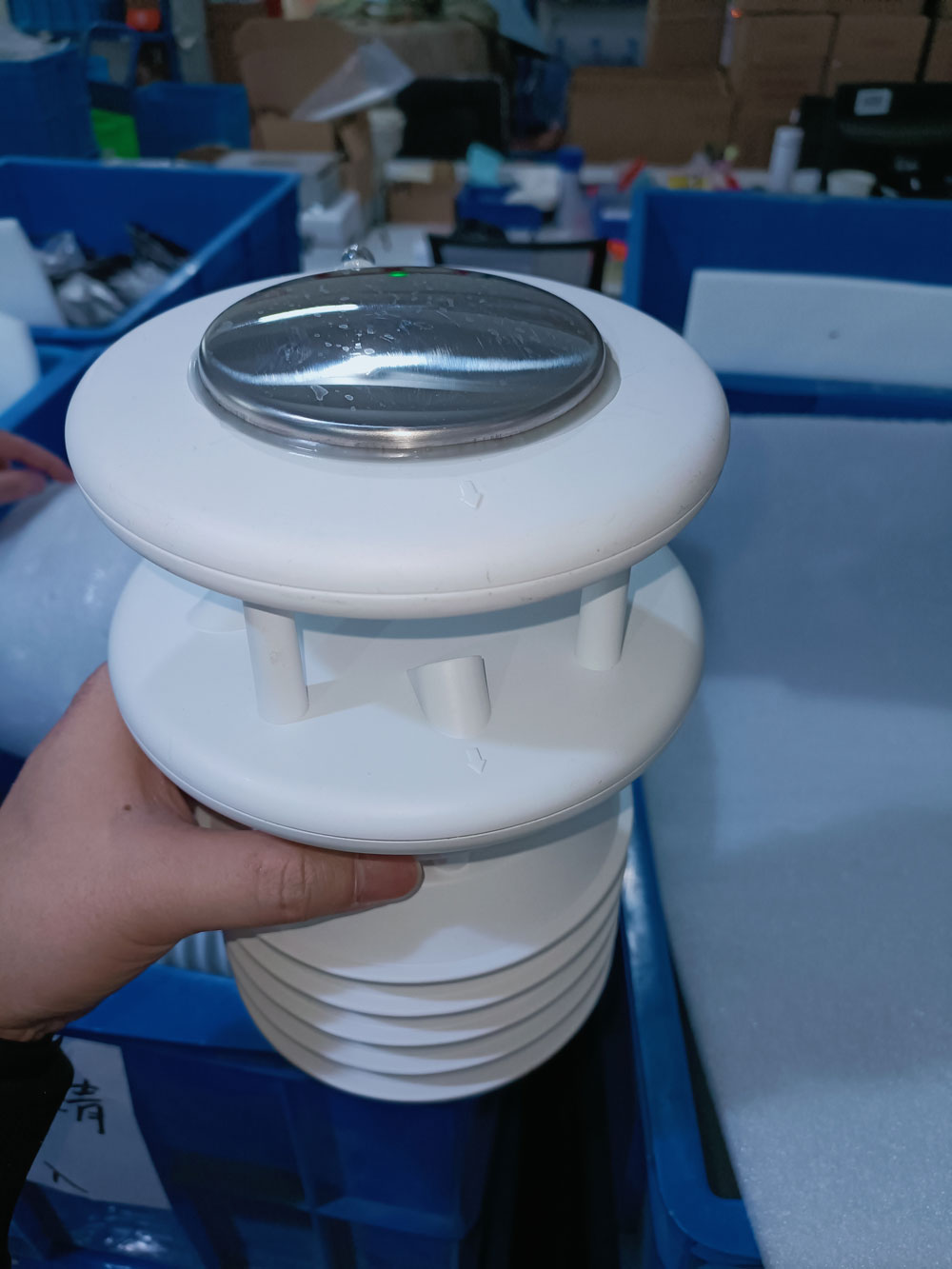
Commissioning should include the ordered model, serial settings, register interpretation and a screen capture with units. Compare the displayed light channel with the actual fitted option and document its location. Moving a compact station from an open field to a wall can change the relevance of the light reading even if the electronics continue to answer polls. Where the buyer is comparing quotations, require each offer to state the channel list explicitly; 'seven-in-one' without that list is not a comparable technical specification.
If a quotation says only 'light sensor', ask for a sample of the actual display and register label. The installed option, unit and use case should agree before the mast is installed; changing a dashboard label later cannot repair an illuminance-versus-irradiance mistake.
At the site, photograph the head and record whether nearby structures shade the optical channel at the times the customer will use the data. A lux reading for lighting management and an irradiance reading for PV analysis may each be technically valid yet unsuitable if the sensor is mounted where the relevant light field is obstructed. The installation drawing should therefore identify both the selected quantity and the intended exposure.
No. They are alternative seventh parameters in that configuration. If both measurements are needed, specify them separately and confirm the equipment combination rather than assuming both register positions represent fitted sensors.
Not with an assumed universal factor. The relationship depends on spectral conditions and instrument response. Select a suitable irradiance measurement for the analysis instead of treating illuminance as an equivalent quantity.
No separate UV-index capability follows from a solar-radiation channel. A UV requirement needs the appropriate instrument, response definition and output specification.
No. Resolution describes the reported increment. The stated accuracy, calibration and installation effects must be assessed independently against the project's acceptance requirement.
Mark it unavailable or omit it. Do not turn an unselected option into a valid zero, or calculate a replacement without an explicitly defined and accepted method.
Confirm the light option, exact model, output definition and exposure as well as mechanical fit. Recheck decoding and labels; the same-looking enclosure does not guarantee the same measured quantities.
Label illuminance in lux and solar irradiance in W/m², matching the fitted instrument and its register interpretation. A register with a number is not proof of the physical quantity. The acceptance sheet should record the ordered seventh channel, its unit and a sample reading under a documented condition.
Potentially, if the logger has a compatible input, power budget and suitable mounting position. Confirm the chosen pyranometer's output version and mapping, then give it its own channel identity. Adding it is not a software switch that turns the weather head's illuminance value into irradiance.

Ultrasonic weather station light channels should be selected by quantity and application. Keep lux, solar irradiance, plant-light measurements and UV requirements distinct. Confirm the fitted option, exposure and final data labels before accepting a compact head into the monitoring system.
 All-in-One-Ultrasonic-Weather-Sensor-Instruction-Manual.pdf
NBL-W-61MUWS-Ultrasonic-Weather-Station-Instruction-Manual.pdf
Prev:PV Weather Station Measurements vs Electrical Tests: Define the Scope
Next:Ultrasonic Anemometer: Technical Analysis and Applications in Various Industries
Related recommendations
Sensors & Weather Stations Catalog
Agriculture Sensors and Weather Stations Catalog-NiuBoL.pdf
Weather Stations Catalog-NiuBoL.pdf
Agriculture Sensors Catalog-NiuBoL.pdf
Water Quality Sensor Catalog-NiuBoL.pdf
Related products
 Combined air temperature and relative humidity sensor
 TDR Soil Moisture & Temperature Sensor for irrigation| RS485 |4-20mA| NBL-S-THR
 Soil pH sensor RS485 soil Testing instrument soil ph meter for agriculture |NBL-S-PH
 Wind Speed sensor Output Modbus/RS485/Analog/0-5V/4-20mA
 Tipping bucket rain gauge for weather monitoring auto rainfall sensor RS485/Outdoor/stainless steel
 Pyranometer Solar Radiation Sensor 4-20mA/RS485


Screenshot, WhatsApp to identify the QR code
WhatsApp number:+8615367865107
(Click on WhatsApp to copy and add friends)

