





— Blogs —
—Products—
 Consumer hotline +8618073152920
WhatsApp:+8615367865107
Address:Room 102, District D, Houhu Industrial Park, Yuelu District, Changsha City, Hunan Province, China
Product knowledge
Time:2025-01-17 15:46:43 Popularity:1629
Scenic spot weather station maintenance needs a plan for periods when paths, roads or facilities are closed. Remote data access does not clean a rain collector, remove vegetation from a sensor or make a damaged mast safe. Before the operating season, define which checks staff can perform safely, who services the installation and how unavailable readings appear on visitor displays.
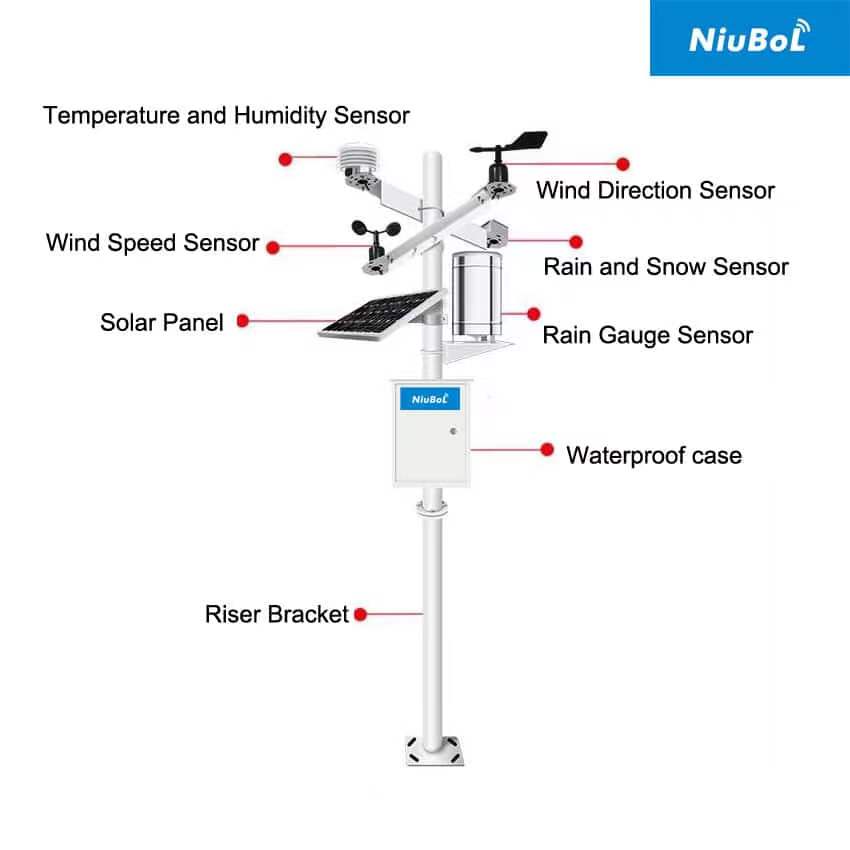
A scenic spot weather station collects local weather observations for the site's staff and information systems. Its equipment may remain outdoors during winter closure, seasonal shutdown or restricted access after severe weather. The first maintenance question is therefore practical: can someone inspect and service the station when the normal visitor route is unavailable?
A solar-powered unit may continue transmitting while its rain collector is blocked or nearby vegetation changes its wind exposure. Communication success is not a complete condition check. Assign responsibility for the instruments, field power, data service and display separately so a working screen does not conceal an unattended field problem.
Keep an equipment list with model, output version, cable route and service contact. Record the last inspection and any changes to the surroundings. Grounds work, temporary signs, new lighting and construction can affect observations even when no component has failed.
| Component | Relevant specification or construction | Maintenance decision |
|---|---|---|
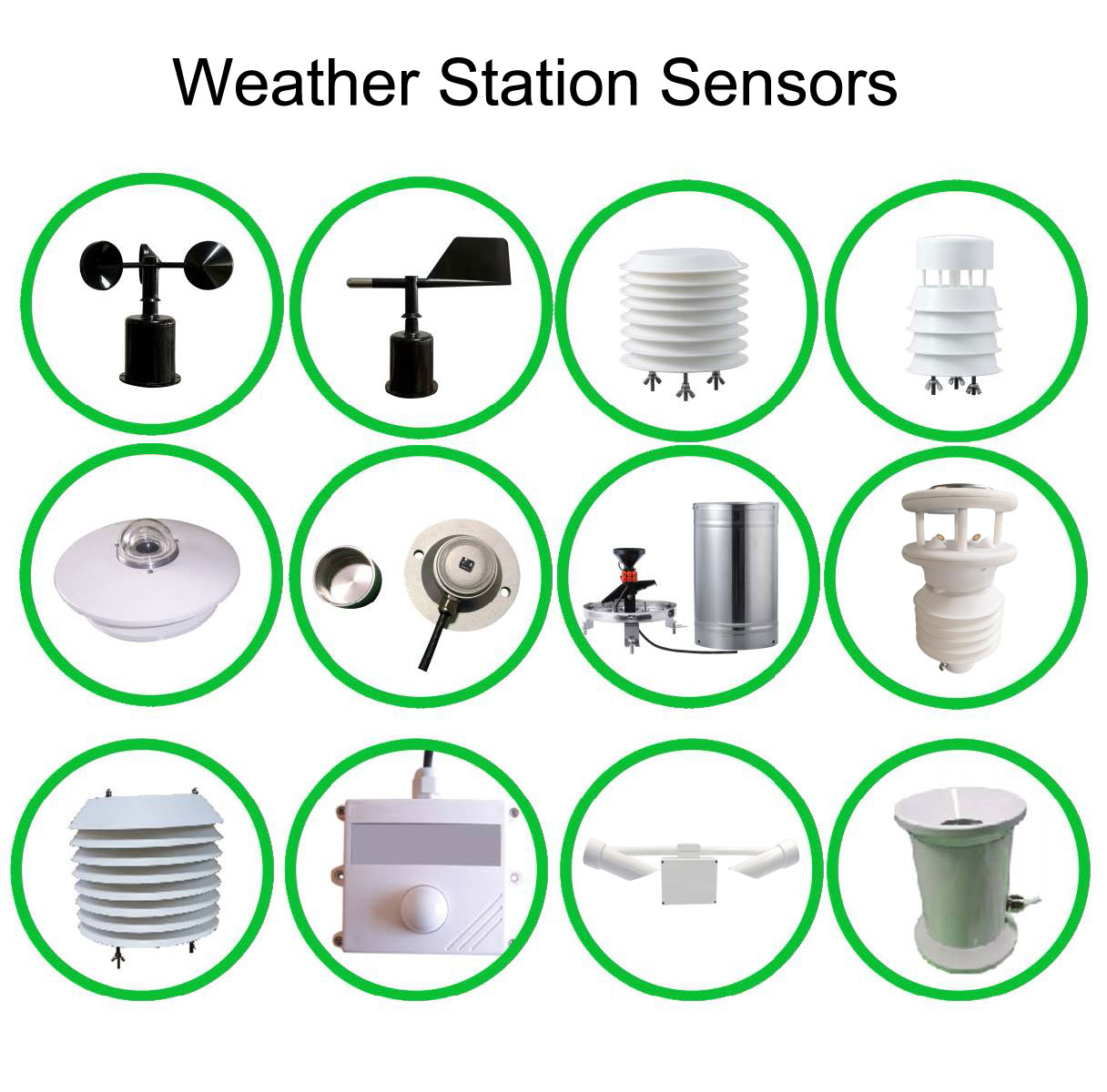
| NBL-W-SS wind speed and NBL-W-DS wind direction | Separate cup and vane instruments; IP65 | Inspect clearance and mounting without treating hand movement as calibration |
| NBL-W-LBTH air sensor | Temperature, humidity and pressure inside a ventilated radiation shield; digital version DC 12-24 V, RS485 Modbus RTU | Keep ventilation representative and avoid newly introduced heat or spray sources |
| NBL-W-RS tipping bucket rain gauge | 0.2 mm resolution; liquid-rain operation at 0-50 C | Check collector condition and freezing suitability before the season |
| TG462 / TG462S acquisition unit | IP30 enclosure; external protection needed outdoors | Maintain a suitable field cabinet rather than exposing the logger directly |
The NBL-W-SS and NBL-W-DS need room for their moving parts. A branch or loose cable can interfere mechanically. The NBL-W-LBTH instead depends on airflow through its shield. A maintenance checklist should reflect those differences rather than applying one generic cleaning instruction to every instrument.
Decide whether the station will keep collecting through closure or be taken out of observation service. If it remains active, arrange an accessible inspection route and a person responsible for reviewing faults. If it stops, identify the resulting gap in the archive and do not display old measurements as current conditions.
Review vegetation, collector exposure, cabinet condition and cable support before access becomes difficult. Check the complete power arrangement against the site's closure period and expected service availability. A sensor's low electrical load is not a guarantee that the battery, logger and modem can operate for an arbitrary number of cloudy days.
For the rain channel, confirm whether freezing weather falls outside the selected instrument's operating conditions. Do not count snowfall caught by an unsuitable unheated rain arrangement as validated liquid-equivalent precipitation. A different measurement configuration may be needed for that purpose.
The staff dashboard should identify observation time and equipment status. A value that has not changed because the connection failed is different from a stable, current observation. Decide how the public screen will show unavailable or outdated data, and test that behavior before the site closes.
Also verify the channel labels against the actual equipment. Particulate matter, UV and negative-air-ion readings require their own instruments when included. A configurable dashboard is not evidence that every optional channel is fitted, and an ion reading should not be presented as a complete air-quality or visitor-health assessment.
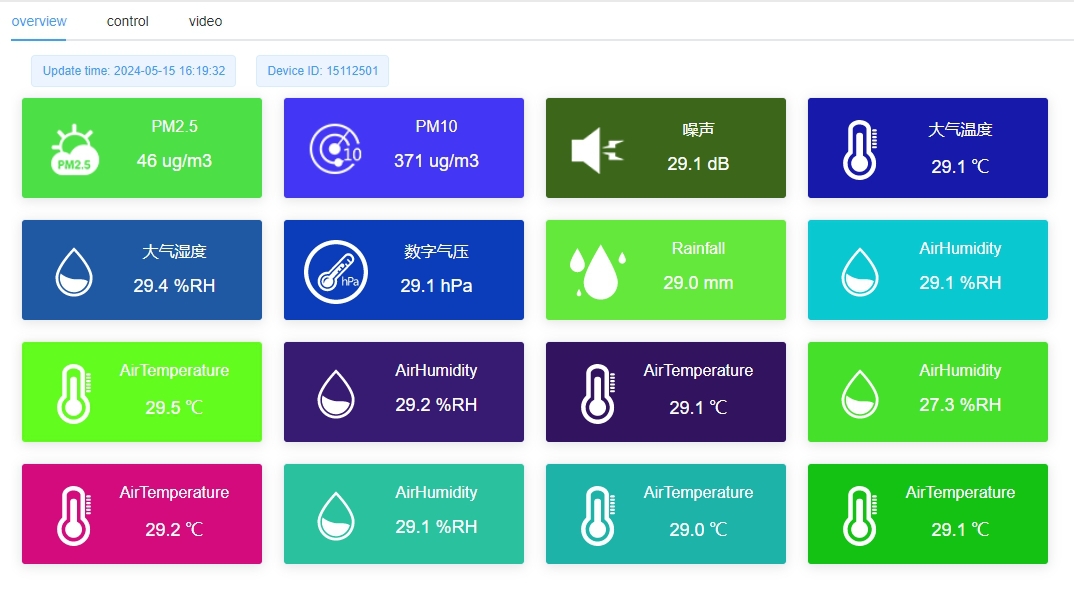
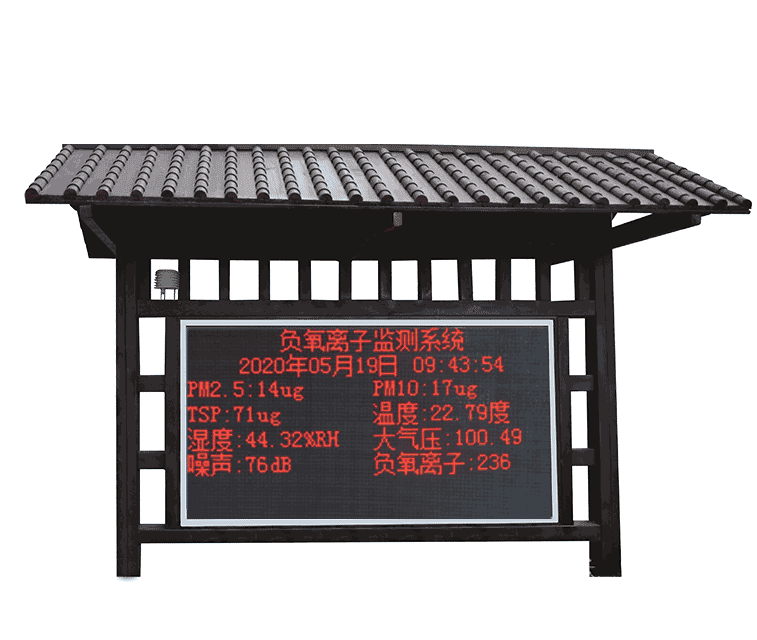
If the gateway receives current sensor data but a visitor board is blank, investigate the display path rather than replacing sensors. Conversely, a functioning information board does not prove that each field channel is healthy. Keep a simple mapping from sensor to logger channel to displayed label for the installed system.
A compatible data logger or gateway connects RS485 Modbus RTU sensors or other selected outputs to the receiving software. Public-board integration, fault presentation and any historical recovery depend on the configured system. These functions should be demonstrated, not inferred from the presence of a modem.
Service staff also need to know which readings are observations and which messages are issued by the site's operating team. A general weather station does not become a lightning detector or a flash-flood prediction system simply because its display can show an alert.
Arrange inspection by appropriate personnel after a prolonged closure or suspected damage. Structural, electrical or access hazards need to be resolved before instrument servicing. Remote readings are not permission to approach an unstable mast, exposed wiring or an unsafe route.
Once the installation is safe, check that sensors remain correctly positioned, the collector is clear and the station time is correct. Compare local acquisition with the public display. Confirm that periods of downtime remain identifiable rather than being filled with invented observations.
When asking NiuBoL for maintenance support or a replacement quotation, provide the actual model, output, recent valid records, fault symptoms and site-access restrictions. Include photographs of the installation and any changed surroundings. This helps distinguish a failed component from an exposure, power, communication or display problem.
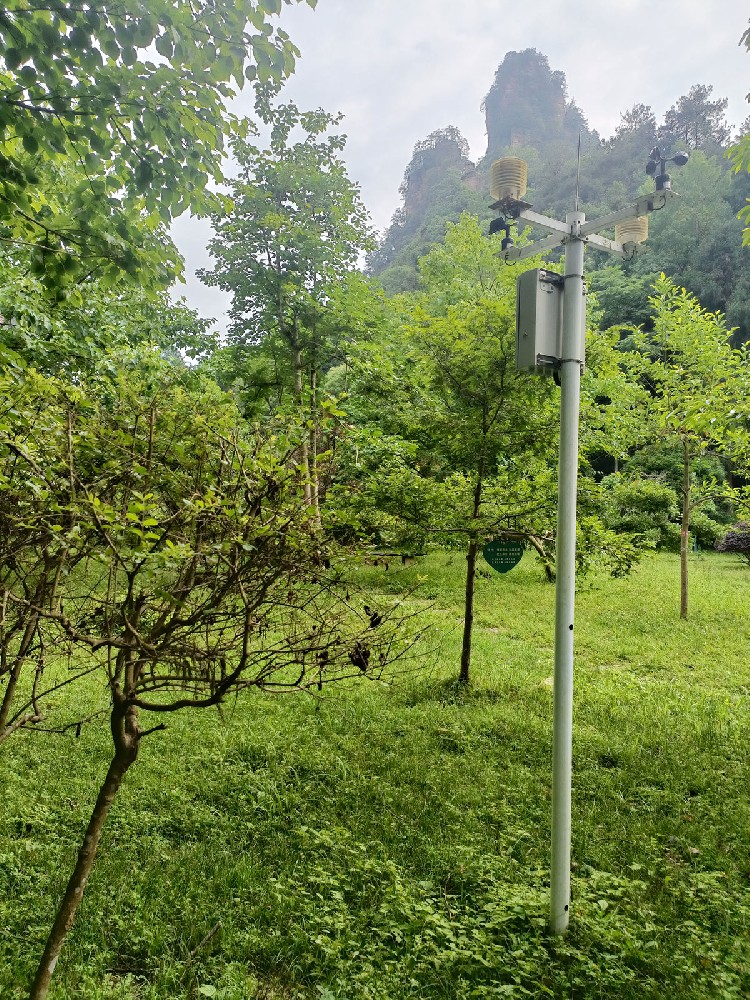
Only within a service plan suited to the actual site. Remote transmission does not prevent blocked collectors, vegetation interference or physical damage. Assign inspection and fault-response responsibilities before access is restricted.
Use the site's contamination, vegetation, weather exposure and inspection findings to set intervals. Include checks before shutdown and reopening where applicable; one universal interval is not appropriate for every attraction.
No. The NBL-W-SS and NBL-W-DS have IP65 protection, but moving clearance, mounting and cable condition still matter. The rating does not make the complete station maintenance-free.
No. A valid zero-rain observation is different from a stopped or faulty channel. Preserve the gap and its known cause so later users do not mistake missing observations for dry weather.
Provide model, output version, supply, connector and cable details, receiver settings and the required installation date. Confirm compatibility before changing the sensor, and retain a record of the replacement in the observation history.
Scenic spot weather station maintenance should remain workable when normal visitor access is closed. Give field instruments, power, communications and displays clear service responsibilities, then verify the observation chain before reopening. The result is a station whose readings remain interpretable, rather than a screen that appears active while its field condition is unknown.
Prev:Agricultural IoT Data Usage: Sensor Records, Images and Cellular Plans
Next:Campus Meteorological Station Project: A Rainwater Harvesting Lesson
Related recommendations
Sensors & Weather Stations Catalog
 Agriculture Sensors and Weather Stations Catalog-NiuBoL.pdf
Weather Stations Catalog-NiuBoL.pdf
Agriculture Sensors Catalog-NiuBoL.pdf
Water Quality Sensor Catalog-NiuBoL.pdf
Related products
 Combined air temperature and relative humidity sensor
 TDR Soil Moisture & Temperature Sensor for irrigation| RS485 |4-20mA| NBL-S-THR
 Soil pH sensor RS485 soil Testing instrument soil ph meter for agriculture |NBL-S-PH
 Wind Speed sensor Output Modbus/RS485/Analog/0-5V/4-20mA
 Tipping bucket rain gauge for weather monitoring auto rainfall sensor RS485/Outdoor/stainless steel
 Pyranometer Solar Radiation Sensor 4-20mA/RS485


Screenshot, WhatsApp to identify the QR code
WhatsApp number:+8615367865107
(Click on WhatsApp to copy and add friends)

