





— Blogs —
—Products—
 Consumer hotline +8618073152920
 WhatsApp:+8615367865107
Address:Room 102, District D, Houhu Industrial Park, Yuelu District, Changsha City, Hunan Province, China
Product knowledge
Time:2026-01-20 09:03:39 Popularity:891
A liquid level sensor vs water level sensor comparison is mainly a comparison of application scope, not two separate measuring principles. A water level sensor measures water-related service such as a tank, well or reservoir. Liquid level is the broader category and can include oils, process solutions and other fluids. Neither name proves that an instrument is chemically compatible with a particular liquid or suitable for a sealed vessel.
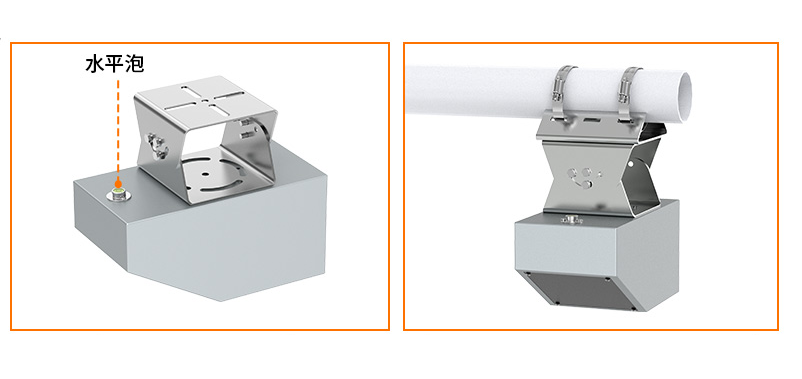
Both terms describe instruments used to detect a liquid surface position or a defined threshold. They may use hydrostatic pressure, sound, radar, buoyancy or another suitable effect. The wording on a product page often reflects the intended application rather than a unique internal technology.
For example, an immersion probe offered for groundwater and a probe offered for an oil tank can both use hydrostatic pressure. That shared principle does not establish identical seals, cable jackets, density settings or approvals. A water-level installation cannot be transferred to oil simply by changing its label in a controller.
| Term in an enquiry | Useful meaning | What still needs specifying |
|---|---|---|
| Water level sensor | The intended medium is water-related. | Water chemistry, solids, temperature, access and required output. |
| Liquid level sensor | The instrument category includes water and other liquids. | The actual liquid, concentration, density and vessel conditions. |
| Continuous level transmitter | A varying level value is required. | Span, reference, uncertainty and receiver interface. |
| Point-level switch | A state at a defined position is required. | Switching height, contact duty, failure response and test access. |
The categories overlap. A continuous transmitter can be a water level sensor, and a point switch can be a liquid level sensor. If the project only says “level sensor,” ask whether the required output is a measurement or a switching state before comparing products.
Clean storage water, saline groundwater and a wastewater wet well can place quite different demands on an instrument. Dissolved salts affect material selection; solids and grease can obstruct a pressure inlet or moving mechanism. Hot water may exceed the limit of a cable or seal even when the sensing principle is otherwise suitable.
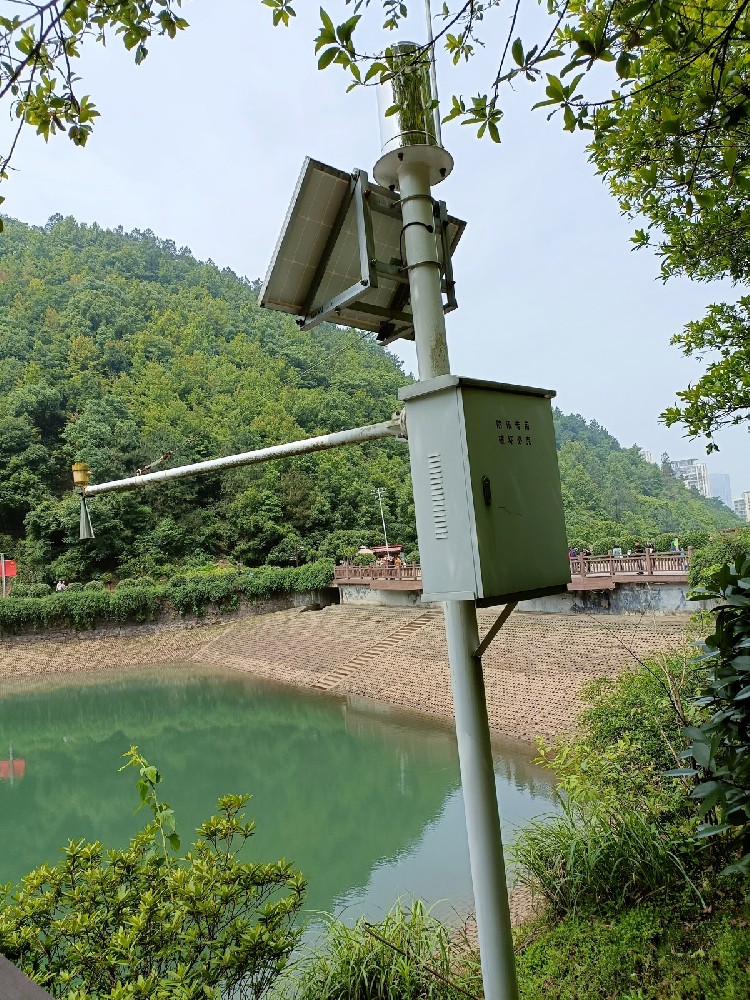
For a groundwater enquiry, include the expected high and low water positions and the route to a dry cable termination. For a wastewater tank, add the likely deposits, access for retrieval and cleaning constraints. For purified process water, identify any material-contact or cleaning requirements rather than assuming all water-service products are acceptable.
A protection rating addresses an enclosure's defined ingress performance. It does not establish corrosion resistance, sanitary suitability or unlimited immersion depth. Keep the rating, wetted-material assessment and permissible pressure or depth as separate checks.
A hydrostatic instrument calculates head from pressure using liquid density. If the actual density differs from the value used for conversion, the indicated height changes even though the true surface has not moved. Composition and temperature variation therefore belong in the application description, not just the calibration discussion.
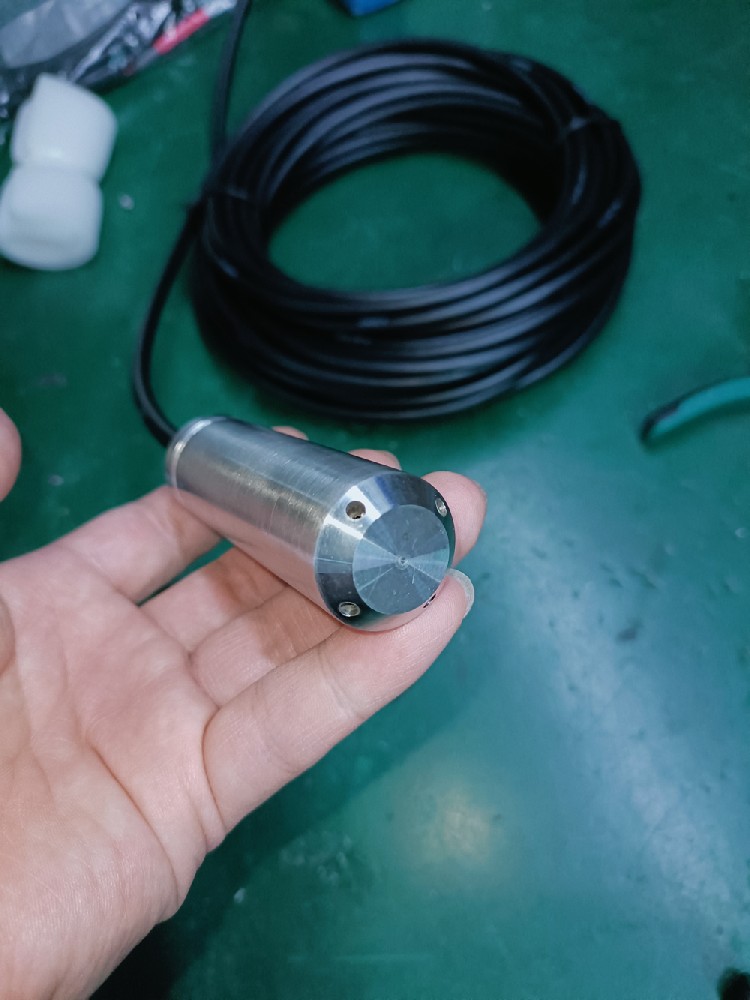
Also identify pressure above the liquid. An ambient-referenced probe in a sealed tank can respond to headspace pressure as well as liquid head. A vented cable is useful for an atmospheric reference; it does not automatically compensate a pressurised vessel.
Material compatibility concerns the entire wetted assembly. A stainless-steel body may still contain a seal, diaphragm or cable jacket that is unsuitable for the medium. Supply the chemical name, concentration and temperature rather than an adjective such as “mildly corrosive.” For unknown mixtures, obtain the necessary analysis before selecting materials.
The NBL-L-WLPS RS485 configuration is a vented hydrostatic transmitter for liquids compatible with its selected assembly. It provides Modbus RTU data to a suitable powered receiver. A separate local display, analog output or radio terminal should be specified as its own configuration rather than inferred from the broader liquid-level category.
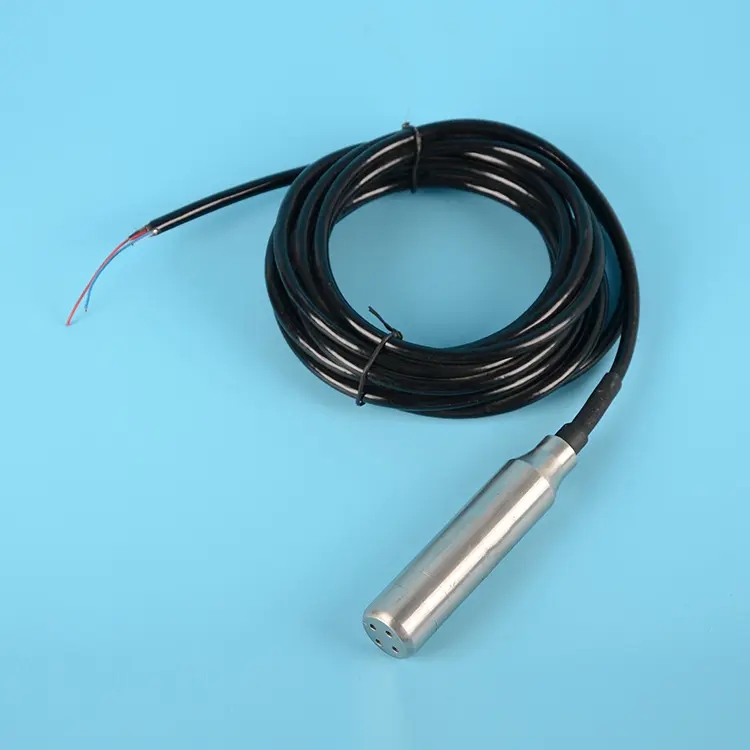
| NBL-L-WLPS characteristic | Application boundary |
|---|---|
| Head range | Order for the maximum expected liquid column above the probe. |
| Accuracy grade | 0.5%FS standard; 0.2%FS configuration available. |
| Power and output | DC 10–30 V, typical 24 V; maximum 0.2 W; RS485 Modbus RTU. |
| Immersed probe | IP68; 26.8 mm outside diameter. |
| Temperature | Circuit -20 to 80°C; liquid at or below 60°C for long-term measurement. |
| Materials and cable | Stainless-steel probe and vented cable; agree exact materials, jacket and length for the service. |
This configuration illustrates why a general product name is insufficient. A requirement for a 4–20 mA input needs a suitable analog transmitter or a separately assessed conversion arrangement. The RS485 probe is not a direct analog-loop replacement, and its interface does not include an internet connection.
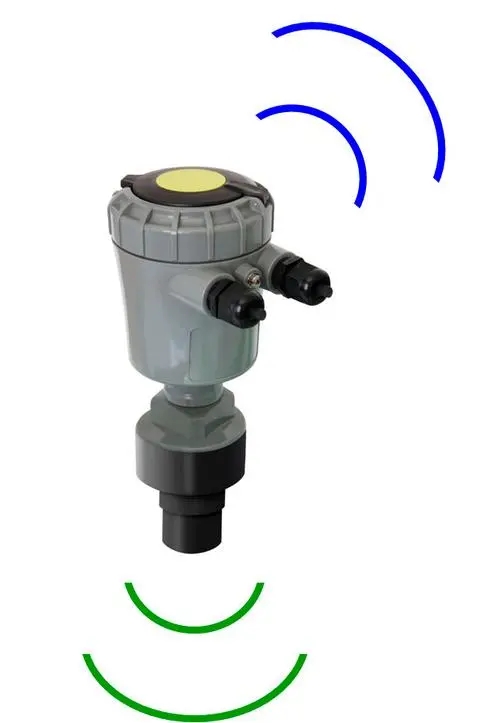
An ultrasonic or radar instrument avoids an immersed sensing element. That can reduce exposure to deposits or moving debris in the water, but the sensor face, mounting and connections remain exposed to the surrounding conditions. Vapour, condensation and chemical fumes may still matter.
Check the near-field limit and beam path across the full expected surface range. A narrow opening, an inlet stream or a structural brace can make a proposed position unsuitable. Non-contact selection should follow those conditions, not a rule that every corrosive liquid must use the same technology.
Likewise, non-contact measurement is not automatically a hygienic or hazardous-area approval. A process that restricts wetted materials, cleaning methods or electrical equipment needs the relevant device and installation assessment. Do not infer those qualifications from the absence of immersion.
A useful enquiry might specify an open water reservoir, its maximum head at the proposed probe, water temperature, cable route and RS485 receiver. Another might specify a closed process tank, liquid composition, headspace pressure and a required local analog input. Both need level measurement, but they are not the same installation.
For NiuBoL model review, provide those conditions with a sketch of the mounting and access. If the process may change liquids later, describe the planned change before ordering. A sensor qualified for today's medium is not automatically a suitable spare for every tank in the facility.
Not necessarily. Water level is an application within the wider liquid-level category. The measuring principle and construction must be identified separately from the application name.
Only after checking density conversion, wetted materials, temperature and installation requirements. Display units do not change the physical compatibility of the probe or its pressure reference.
No. Solids, grease, cleaning chemicals and corrosion conditions can differ substantially from clean water. Check the pressure inlet or sensing face, retrieval access and complete material combination for that wastewater.
No. Ingress protection and chemical resistance are separate properties. Confirm both for the selected assembly, together with the permissible depth and operating temperature.
No. RS485 Modbus RTU is a local acquisition interface. Remote viewing requires the appropriate logger or gateway, communications arrangement and server functions to be specified separately.
Provide all planned media, concentrations and temperatures for material assessment. For hydrostatic measurement, also address density variation and conversion. Do not qualify the instrument using only the easiest liquid in the list.
The difference between liquid level and water level is primarily scope. The actual medium, vessel conditions and required output determine whether a particular sensor is suitable. Use the category name to start the enquiry, then specify the operating duty closely enough for a meaningful model and material review.
Prev:Liquid Pressure Sensor Working Principle: Diaphragm to Data
Next:Water Level Sensor Failure Modes: Missing, Frozen and Plausible Data
Related recommendations
Sensors & Weather Stations Catalog
 Agriculture Sensors and Weather Stations Catalog-NiuBoL.pdf
Weather Stations Catalog-NiuBoL.pdf
Agriculture Sensors Catalog-NiuBoL.pdf
Water Quality Sensor Catalog-NiuBoL.pdf
Related products
 Combined air temperature and relative humidity sensor
 TDR Soil Moisture & Temperature Sensor for irrigation| RS485 |4-20mA| NBL-S-THR
 Soil pH sensor RS485 soil Testing instrument soil ph meter for agriculture |NBL-S-PH
 Wind Speed sensor Output Modbus/RS485/Analog/0-5V/4-20mA
 Tipping bucket rain gauge for weather monitoring auto rainfall sensor RS485/Outdoor/stainless steel
 Pyranometer Solar Radiation Sensor 4-20mA/RS485

Screenshot, WhatsApp to identify the QR code
WhatsApp number:+8615367865107
(Click on WhatsApp to copy and add friends)

