





— Blogs —
—Products—
 Consumer hotline +8618073152920
 WhatsApp:+8615367865107
Address:Room 102, District D, Houhu Industrial Park, Yuelu District, Changsha City, Hunan Province, China
Product knowledge
Time:2026-04-14 17:06:51 Popularity:464
In the field of sewage treatment engineering, ammonia nitrogen emission non-compliance in winter is a core pain point troubling system integrators and operators. Nitrifying bacteria, as typical autotrophic microorganisms, exhibit extremely high sensitivity to temperature changes. When the ambient temperature decreases, microbial enzyme activity is inhibited, leading to a significant decline in nitrification rate.
As a brand deeply engaged in industrial water quality monitoring and environmental governance, NiuBoL recommends building a closed-loop solution from four dimensions — physical compensation, process optimization, biological enhancement, and digital monitoring — to address the technical challenges brought by low winter temperatures.
The biological denitrification process relies on the metabolic activities of nitrite bacteria and nitrate bacteria. Research shows that the optimal temperature range for nitrification is 20°C to 35°C. When the water temperature drops below 15°C, the nitrification rate begins to slow down significantly; when the water temperature is below 5°C, biological activity tends to stagnate.
The impact of low temperature on the system is mainly reflected in:
Reduced Enzyme Activity: Catalytic enzymes in microbial metabolism have weakened molecular motion at low temperatures, and the biochemical reaction kinetic constant K value decreases.
Slower Proliferation Rate: The generation cycle of nitrifying bacteria is significantly prolonged in winter, making sludge loss extremely likely.
Oxygen Transfer Efficiency: Although saturated dissolved oxygen in water increases at low temperatures, the actual aeration mass transfer efficiency is disturbed due to increased water viscosity.
In cold regions (such as northern China or high-latitude areas), physical temperature control is the basic premise for maintaining the operation of nitrification reactors.
1. Insulation Design of Structures
Physical barriers: Use foam polyurethane or extruded boards for insulation on the walls of aeration tanks and secondary sedimentation tanks, with brick enclosure structures on the outer layer and slag or expanded perlite filling the middle layer.
Pool top covering: Reduce heat exchange and evaporation heat dissipation on the pool surface. According to engineering calculations, covering measures can increase the water temperature in the pool by 2°C - 3°C.
2. Preheating System Integration
Air preheating: Set up an air preheating chamber in the blower room, using waste heat or electric heating to preheat winter ambient air from -15°C to above 5°C, avoiding thermal shock to microorganisms from direct aeration of cold air.
Steam heating: For industrial parks with waste heat conditions, low-pressure steam can be introduced directly into the inlet end — this is the fastest way to raise the temperature of the biochemical pool.
Since nitrifying bacteria proliferate slowly at low temperatures, adjusting operating parameters to achieve “quantity to compensate for efficiency” is a common engineering practice.
1. Increase Sludge Age (SRT)
Extending sludge age can provide sufficient retention time for slowly growing nitrifying bacteria. In winter, it is recommended to increase SRT to 2-3 times that of summer to ensure nitrifying bacteria can form a dominant population in the system.
2. Increase Sludge Concentration (MLSS)
By reducing excess sludge discharge, raise the MLSS in the aeration tank to a higher level. Although the metabolic intensity of individual microorganisms decreases, the overall biomass of the system increases, which can compensate for the efficiency loss caused by temperature reduction.
Biological immobilization technology (Fixed-Film Process) significantly enhances microbial stress resistance by fixing microorganisms on carriers.
Carrier Advantages: Use combined fillers or suspended fillers (MBBR) to provide stable growth attachment points for nitrifying bacteria.
Impact Resistance: Microorganisms after immobilization treatment are less disturbed by external environmental temperature fluctuations and can effectively prevent hydraulic scouring loss caused by low temperatures.
Rapid Start-up: Functional microorganisms after embedding and immobilization can recover activity more quickly when temperatures rise in spring, shortening the reactor commissioning period.
Acclimation is an effective means to change the microbial population structure and adapt it to a specific environment. By gradually reducing the load during the temperature drop period and continuously performing subculture, it is possible to induce and screen spontaneous mutants with low-temperature tolerance.
Cell Membrane Lipid Regulation: Acclimated microorganisms can adjust the lipid composition of the cell membrane to maintain cell fluidity at low temperatures.
Enzyme System Optimization: Long-term low-temperature operation can prompt microorganisms to secrete more low-temperature enzymes to maintain basic biochemical degradation functions.
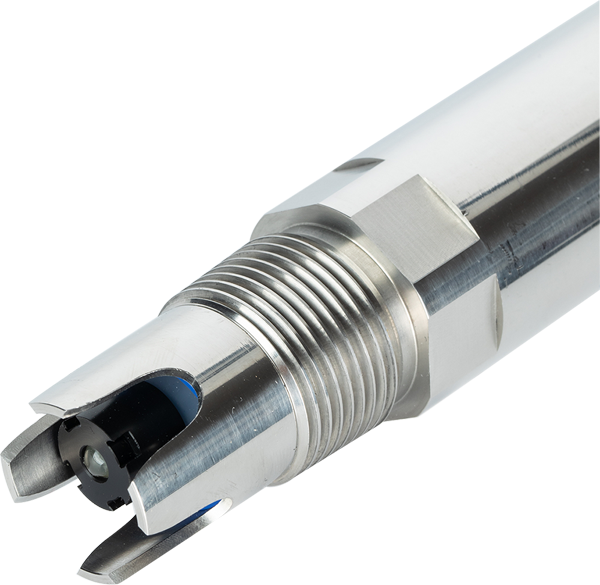
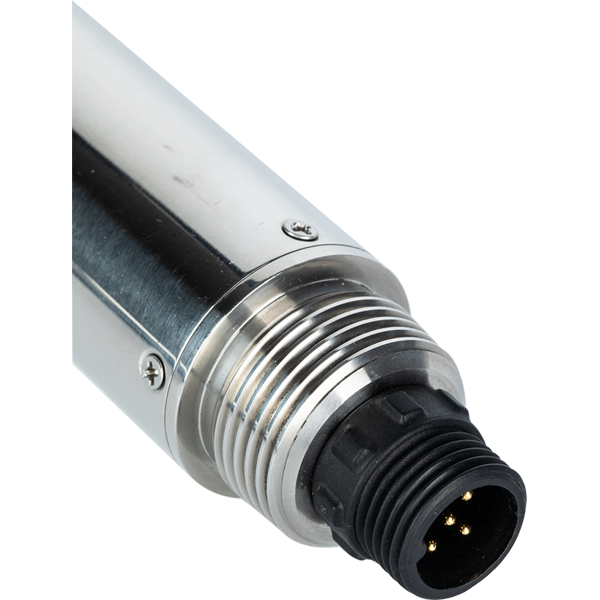
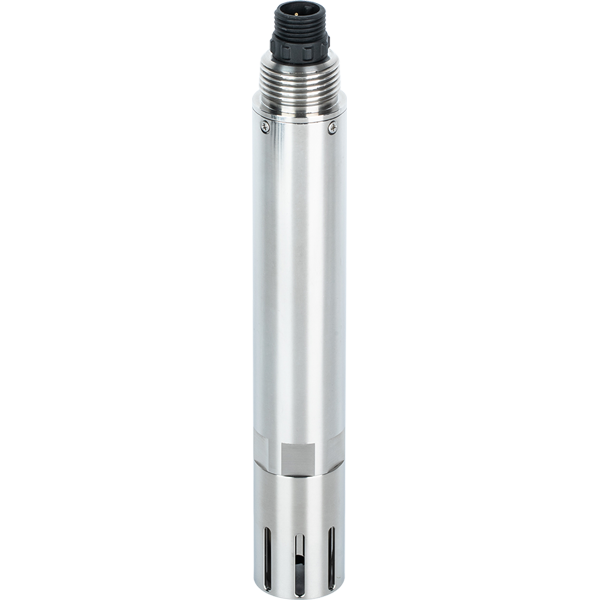
In the process of coping with low winter temperatures, real-time mastery of ammonia nitrogen, dissolved oxygen, and temperature data is the key to precise regulation. The professional-grade water quality monitoring sensors provided by NiuBoL can provide accurate data support for system integrators.
| Parameter Item | Ammonia Nitrogen Sensor | Dissolved Oxygen Sensor | pH/Temperature Integrated Sensor |
|---|---|---|---|
| Measurement Principle | Ion Selective Electrode Method (ISE) | Fluorescence Method (Optical) | Glass Electrode / PT1000 |
| Range | 0 - 1000 mg/L (customizable) | 0 - 20 mg/L | 0 - 14 pH / 0 - 60°C |
| Accuracy | ±5% F.S. | ±0.1 mg/L | ±0.02 pH / ±0.3°C |
| Communication Protocol | RS485 (Modbus-RTU) | RS485 (Modbus-RTU) | RS485 (Modbus-RTU) |
| Protection Level | IP68 | IP68 | IP68 |
| Working Pressure | Ammonia Nitrogen Sensor" align="center" valign="middle">< 0.3 MPa | < 0.2 MPa | < 0.4 MPa |
| Housing Material | POM/Stainless Steel | 316L Stainless Steel | PPS/PC |
Q1: When ammonia nitrogen exceeds the standard in winter, is simply increasing aeration effective?
A1: The effect is limited. Although increasing aeration can increase dissolved oxygen, the bottleneck at low temperatures lies in the enzyme activity of microorganisms rather than oxygen supply. Excessive aeration will instead increase the heat dissipation rate of water, leading to further decreases in water temperature and even causing sludge bulking or disintegration.
Q2: How to determine whether the system needs to add low-temperature special bacterial species?
A2: If the existing process has an ammonia nitrogen removal rate drop of more than 50% when the temperature drops below 10°C and adjusting sludge age is ineffective, it is recommended to introduce screened low-temperature nitrifying bacterial agents. After dosing, observe the ammonia nitrogen decline curve in combination with the NiuBoL monitor.
Q3: Will RS485 signal transmission be affected by the environment at low temperatures?
A3: The RS485 protocol itself has strong anti-interference ability, but in winter, the physical characteristics of cables become brittle, and condensed water may enter the junction box causing short circuits. It is recommended to use high-quality shielded twisted-pair cables with waterproof sealing performance during engineering implementation and ensure the sensor protection level reaches IP68.
Q4: Does NiuBoL’s ammonia nitrogen online monitor require frequent calibration?
A4: Our ion-selective electrode sensors are equipped with automatic compensation algorithms and can maintain relatively long-term stability under standard working conditions. However, in cases of large temperature differences in winter, it is recommended to perform calibration once a month to offset the impact of temperature drift on electrode potential.
Q5: Will biological immobilized fillers increase system resistance?
A5: There will be a slight increase, but it can be optimized by calculating hydraulic load and flow rate during the design stage. Compared with the environmental protection penalty risk caused by ammonia nitrogen exceedance, the increase in operation and maintenance costs brought by fillers is almost negligible.
Q6: Are there non-biological methods to quickly treat ammonia nitrogen exceedance in winter?
A6: In emergency situations, chemical breakpoint chlorination or ion exchange methods can be used, but such methods are extremely costly and prone to secondary pollution. For systems with long-term stable operation, biochemical methods are still recommended as the main approach, supplemented by precise real-time monitoring and regulation.
Stable compliance of ammonia nitrogen in winter sewage treatment is a systematic project involving thermodynamics, kinetics, and microbiology. Through reasonable pool insulation, increased MLSS concentration, application of immobilized carriers, and gradual acclimation of microorganisms, the impact of low-temperature cold waves on the nitrification system can be effectively resisted.
In this process, deploying high-precision monitoring hardware is crucial. Using NiuBoL’s RS485/Modbus-RTU communication protocol water quality analysis instruments, engineering personnel can achieve 24-hour monitoring of biochemical reaction status, timely adjust reflux ratio and heating load according to data fluctuations, ensure water quality compliance, and avoid environmental protection risks.
If you are looking for professional industrial water quality online monitoring solutions, please contact NiuBoL. We will provide comprehensive technical support from sensor selection to system integration.
Prev:NiuBoL Agricultural IoT Four-Condition Monitoring Solution Helps Precision Agriculture Management
Next:The Necessity of Installing Online Water Quality Monitoring Systems in Urban Sewage Pumping Stations
Related recommendations
Sensors & Weather Stations Catalog
 Agriculture Sensors and Weather Stations Catalog-NiuBoL.pdf
Weather Stations Catalog-NiuBoL.pdf
Agriculture Sensors Catalog-NiuBoL.pdf
Water Quality Sensor Catalog-NiuBoL.pdf
Related products
 Combined air temperature and relative humidity sensor
 Soil Moisture Temperature sensor for irrigation|NBL-S-THR
 Soil pH sensor RS485 soil Testing instrument soil ph meter for agriculture |NBL-S-PH
 Wind Speed sensor Output Modbus/RS485/Analog/0-5V/4-20mA
 Tipping bucket rain gauge for weather monitoring auto rainfall sensor RS485/Outdoor/stainless steel
 Pyranometer Solar Radiation Sensor 4-20mA/RS485

Screenshot, WhatsApp to identify the QR code
WhatsApp number:+8615367865107
(Click on WhatsApp to copy and add friends)


