





— Blogs —
—Products—
 Consumer hotline +8618073152920
WhatsApp:+8615367865107
Address:Room 102, District D, Houhu Industrial Park, Yuelu District, Changsha City, Hunan Province, China
Product knowledge
Time:2026-09-17 12:00:00 Popularity:206
A drinking water source monitoring system should detect changes in the water approaching an intake early enough for an operator to investigate and act. Start with the intake depth, upstream risks and available response time, then select measurement points and sensors. A multi-parameter probe can track several conditions at one location, but it does not identify every contaminant or certify that untreated water is safe to drink.

A reservoir station and an intake station answer different questions. A reservoir station observes conditions in the waterbody; an intake station observes the water being abstracted. A surface buoy can show a warming surface layer while a deeper intake draws colder water with different dissolved oxygen. Neither record is necessarily wrong. The error is treating them as measurements of the same water.
Map the intake openings, seasonal water levels, tributary entrances and access routes. Compare candidate locations during contrasting operating conditions before choosing a permanent depth. Where the intake depth changes, retain the selected opening and water level with the measurements. Otherwise, a step in the trend may look like a pollution event when the operator has simply changed the water being withdrawn.
For an upstream warning station, estimate the shortest plausible travel time to the intake, not only the average travel time. Deduct sampling delay, instrument stabilization, communications delay and the time needed to verify an alert. If those delays consume the available warning period, moving the station or changing the response procedure may be more useful than adding another sensor.
| Location | Question it can answer | Limitation to address |
|---|---|---|
| Tributary or upstream channel | Is a changing inflow approaching the reservoir or intake? | Travel time and dilution vary; establish how an alert reaches intake staff |
| Reservoir depth near the intake | Are conditions changing in the layer likely to be abstracted? | One fixed depth may miss vertical differences or a moving intake level |
| Raw-water intake pipe or accessible bypass | What water is entering the treatment works? | Offers less advance warning; sample transport can alter some measurements |
| Alternative source or intake | Would switching sources improve the current operating situation? | Compare readings taken at the same time, not yesterday's values from another source |
Turbidity helps detect particle-related changes after rainfall or sediment disturbance. Conductivity can show a change in dissolved-ion composition or source blending. Temperature and dissolved oxygen help interpret depth-related differences. pH adds acid-base context. These channels are useful together because their patterns can narrow an investigation; they should not be presented as a chemical identification system.
Add ammonia measurement when catchment history or intake operation gives it a clear purpose. Specify the concentration at which staff need to investigate and the uncertainty acceptable at that concentration. A broad-range ammonia sensor may suit a substantial excursion while being unsuitable for a small background change. Confirm low-level performance before assigning a drinking-water source alarm to the channel.
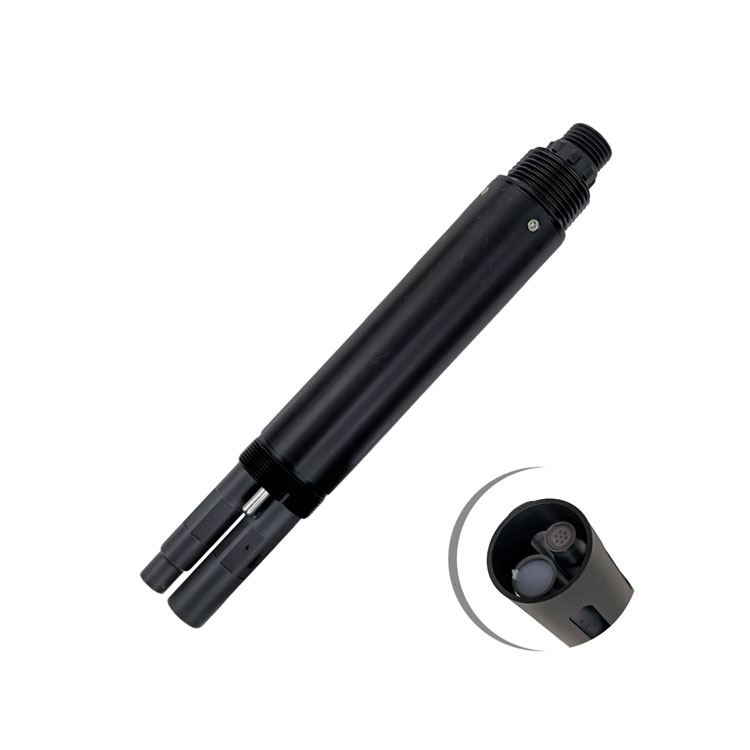
Optical COD can provide a rapid organic-load indicator where the relationship with the site's reference method has been established. Natural organic matter, particles and changing water composition can affect interpretation. The COD probe below is a candidate for that separate measurement task, not a detector for an individual pesticide, solvent or toxin. Keep targeted laboratory analysis available for the contaminants identified in the catchment risk assessment.
Algal activity also needs a defined question. Daily pH and oxygen variation may justify closer inspection, but those measurements do not quantify cyanotoxins. If bloom surveillance is an explicit requirement, evaluate the appropriate biological or pigment measurements and confirmatory testing separately. Do not label a conventional multi-parameter package as an algae-identification station simply because several trends change during a bloom.
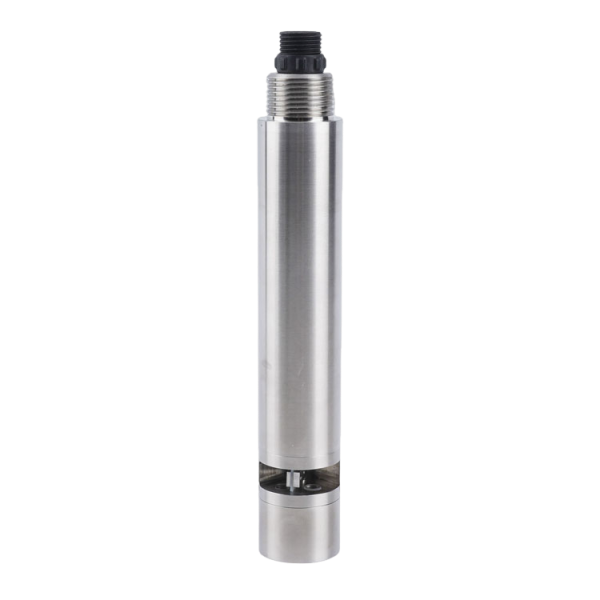
The NBL-WQ-MPS-5A supports a selected combination of up to eight parameters including temperature. Available channels include dissolved oxygen, COD, pH, ORP, conductivity/salinity, ammonia nitrogen and turbidity. Use it when those measurements need the same water and can share a retrieval and maintenance visit. A separate instrument is preferable when its required location, sensitivity or service interval differs substantially.
The MPS-5B pictured at the beginning is a different assembly with a different channel selection; it should not be ordered on the assumption that it includes the MPS-5A's COD and ammonia options. Specify the complete model and fitted channels, rather than requesting an unspecified multi-parameter sensor. The following details apply to the MPS-5A configuration.
| MPS-5A item | Specification | Source-water design consequence |
|---|---|---|
| pH channel | 0-14 pH; accuracy +/-0.1 pH; resolution 0.01 pH | Use with temperature and site history when investigating a change |
| Conductivity options | 0-5000 uS/cm or 0-200 mS/cm; accuracy +/-1.5% FS | Select a range that can resolve the intake's normal variation |
| ORP channel | -1500 to +1500 mV; accuracy +/-6 mV | Interpret as a redox indicator, not a contaminant concentration |
| Ammonia options | 0-100 or 0-1000 mg/L; accuracy +/-10% or +/-2 mg/L | Clarify percentage basis and application of the two error terms; do not assume trace-level capability |
| Power | 12 V DC +/-5%; 5 W at 12 V | Provide regulated supply at the probe, including cable voltage drop |
| Digital interface | RS485, Modbus RTU | Connect to a compatible RTU or data logger; telemetry is a separate function |
| Cable | 5 m standard; four-core twisted-pair shielded construction | Specify extension and jacket requirements for immersion and shore exposure |
| Cleaning and mounting | Configurable automatic cleaning; lifting ring or 4 NPT mounting | Provide retrieval access and mechanical support independent of the cable |
Confirm the assembled probe's permitted immersion depth, pressure, wetted materials and temperature limits for the installation. Do not copy a standalone sensor's protection rating onto the whole assembly. A temperature channel's measurement span also does not establish the operating limit of every fitted electrode or connector.
Immersion avoids a long transfer line and measures the local water directly. It requires a mount that remains submerged at low water, avoids bed deposits and can be recovered safely at high water. Position the sensing surfaces away from a stagnant protective enclosure. The mount must also allow the cleaning mechanism to move freely.
A pumped station places instruments near staff, power and calibration equipment. Its disadvantage is sample travel and conditioning. Long warm tubing, trapped air, sediment settlement or a stopped pump can make the sample unlike the intake water. Record sample flow and distinguish a lost sample from an unusually stable reservoir. A pump-running signal alone does not prove water reaches the sensor.
For illustration, a 20 m tube with 6 mm internal diameter holds about 0.57 L. At 0.5 L/min, nominal displacement takes about 68 seconds before adding cell volume or instrument response. This is a hydraulic estimate, not a guaranteed response time or a recommended flow for every probe. Measure the installed delay under the actual sampling arrangement.
Separate equipment alarms from water-quality alarms. Loss of sample flow, failed communications and a probe lifted for cleaning require different responses from a verified conductivity or turbidity excursion. In the PLC, keep the last valid value with its timestamp and quality flag; do not turn an unavailable channel into a reassuring zero.
Establish normal patterns by intake selection and season. A fixed threshold may remain necessary, but a rapid-change warning can prompt investigation before it is crossed. Tune persistence against the event duration that matters, and test with recorded data. Excessive averaging can hide a short inflow event; an unfiltered alarm can repeatedly trigger during a cleaning cycle.
A conductivity probe can help compare an incoming-water change with the existing intake baseline. It cannot identify which ions changed. After an alert, check instrument condition, obtain a time-matched sample, review upstream information and follow the operator's approved intake procedure. Automatic source switching needs its own hydraulic and treatment review; it should not be inferred from a sensor's relay capability.
No. Test for vertical differences and seasonal changes before relying on one depth. A fixed probe can be appropriate when it represents the selected withdrawal layer. Where intake levels change or the reservoir stratifies, use additional depth measurements or periodic profiles and record which intake opening is active.
No. It measures the installed parameters and supports operational surveillance. It cannot exclude all microbiological or chemical hazards. The EPA's online monitoring resources provide separate guidance for source-water and distribution applications. The project must retain the testing and response arrangements appropriate to its supply.
Compare co-located measurements before installation, then repeat comparisons at the intake. Test sample interruption, probe removal, cleaning and communication loss. Measure alert delivery time to the operator, including acknowledgement. Verify that each displayed value has the correct unit, depth or intake identifier and timestamp after data passes through the RTU.
The MPS-5A's 5 W rating gives 120 Wh over 24 hours if operated continuously at that load. This excludes the logger, modem, pump and conversion losses. Size autonomy from the complete load and site solar conditions. A nominal 12 V battery is not automatically a regulated 12 V supply within +/-5%.
No. Inspect deposits, brush movement, electrodes and the mounting arrangement. Compare readings before and after cleaning so drift is not mistaken for a source-water improvement. Set visit intervals from observed fouling and access constraints, particularly after storms or bloom periods, rather than assuming one interval works throughout the year.
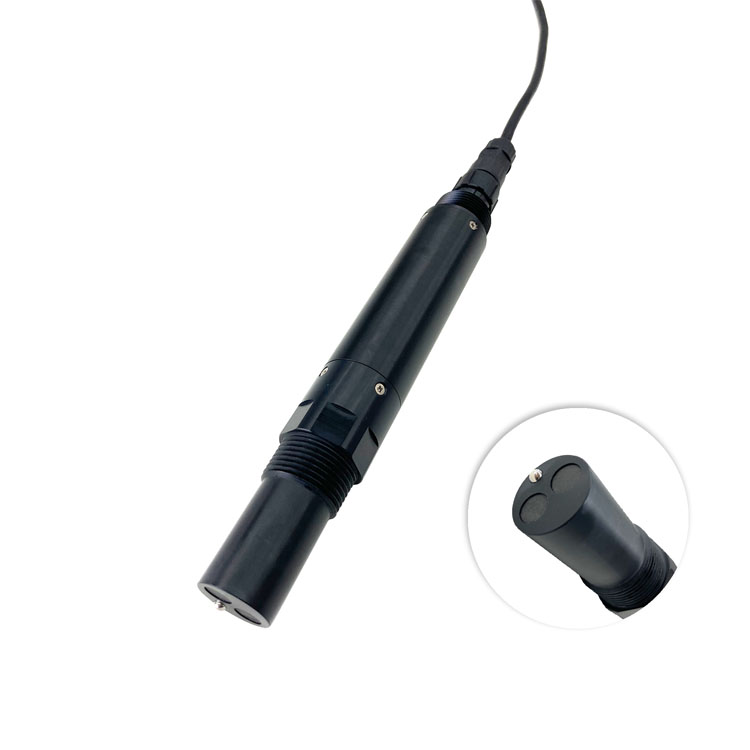
Provide an intake drawing, seasonal depths, historical ranges, the smallest change requiring action and available warning time. Include the planned access method and existing RTU. These details determine whether a shared probe, separate measuring points or a pumped station is appropriate. Organic-load channels such as the BOD sensor below require their own site validation; they are not default additions to every reservoir station.

An effective drinking water source monitoring system links a representative location to a timely intake decision. Select channels for known catchment risks, check sensitivity at the concentrations that matter and test the full delay from water arrival to operator action. NiuBoL can evaluate the sensor configuration against those requirements; extra channels should earn their place by answering a specific source-water question.
Prev:Drinking Water Quality Parameters by Treatment and Distribution Point
Next:Swimming Pool Water Quality Online Monitoring Advantages and Selection Notes
Related recommendations
Sensors & Weather Stations Catalog
 Agriculture Sensors and Weather Stations Catalog-NiuBoL.pdf
Weather Stations Catalog-NiuBoL.pdf
Agriculture Sensors Catalog-NiuBoL.pdf
Water Quality Sensor Catalog-NiuBoL.pdf
Related products
 Combined air temperature and relative humidity sensor
 TDR Soil Moisture & Temperature Sensor for irrigation| RS485 |4-20mA| NBL-S-THR
 Soil pH sensor RS485 soil Testing instrument soil ph meter for agriculture |NBL-S-PH
 Wind Speed sensor Output Modbus/RS485/Analog/0-5V/4-20mA
 Tipping bucket rain gauge for weather monitoring auto rainfall sensor RS485/Outdoor/stainless steel
 Pyranometer Solar Radiation Sensor 4-20mA/RS485


Screenshot, WhatsApp to identify the QR code
WhatsApp number:+8615367865107
(Click on WhatsApp to copy and add friends)

