





— Blogs —
—Products—
 Consumer hotline +8618073152920
WhatsApp:+8615367865107
Address:Room 102, District D, Houhu Industrial Park, Yuelu District, Changsha City, Hunan Province, China
Product knowledge
Time:2026-09-17 13:00:00 Popularity:209
Swimming pool water quality online monitoring is useful when it detects a residual or pH change between manual checks and gives the operator a reliable basis for action. Its value depends on representative recirculation sampling, a chlorine method suited to the pool chemistry and independent chemical-feed interlocks. A sensor with RS485 output is a measurement component, not a complete pool dosing controller or a substitute for required manual testing.
A hotel pool, a public leisure pool and a separate spa may share a plant room without sharing the same water. Identify each circulation circuit, its treatment equipment and the proposed sampling point. One sample from a common service area cannot represent hydraulically separate basins. For each circuit, define the residual measurement, pH measurement and physical conditions needed to keep those readings valid.
State whether the disinfectant is chlorine or bromine and whether cyanuric acid is used. Include salt-water chlorination and any supplemental treatment. These details affect method selection and comparison testing. Do not specify a generic residual sensor and assume that identical mg/L units establish compatibility with every disinfectant.
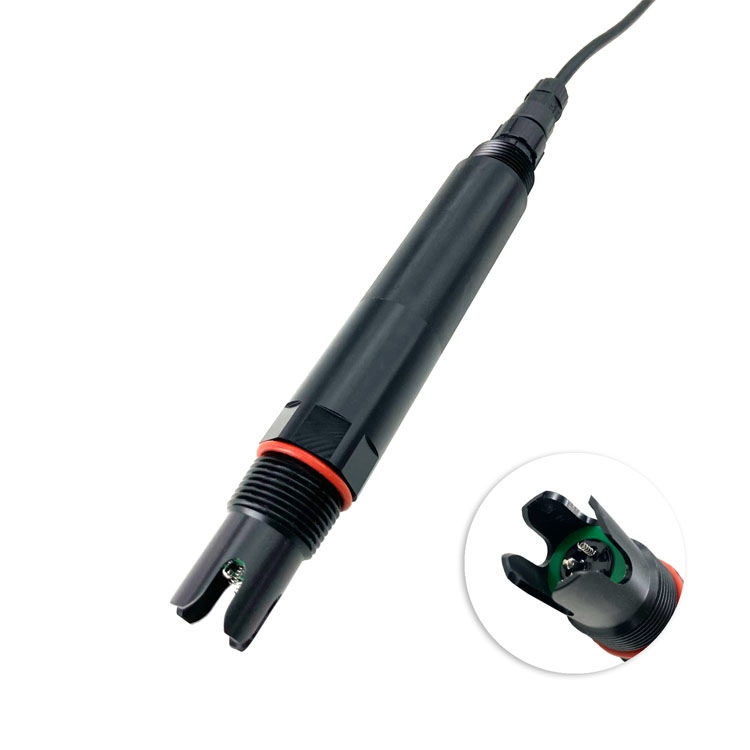
Ammonia measurement is not a substitute for a chlorine residual measurement. The ammonia probe below may be relevant to a separate investigation of incoming water or nitrogen loading, but it is not a routine replacement for pool chlorine and pH channels. A contractor should not add it to the control loop merely because nitrogen compounds can participate in chlorine demand.
A free-chlorine result, a total-chlorine result and an ORP value answer different questions. Total chlorine includes combined forms; ORP indicates the electrode's redox response rather than a chlorine mass concentration. A fixed conversion from millivolts to mg/L should not be entered into the building management system as though it were an analytical calibration.
The NiuBoL NBL-WQ-CL uses a constant-voltage method with a specified 0-2.000 mg/L HOCl range. HOCl is hypochlorous acid, a species within free chlorine. Before selecting this model, establish the required reporting basis, pH compensation and comparison method. Do not relabel its output as total chlorine or assume that the range covers every commercial pool's normal and abnormal conditions.
Where stabilized chlorine is used, ask for evidence of performance in water containing the site's cyanuric acid concentration. Validate against the selected reference method across actual operating conditions. A successful comparison in clean calibration water does not settle performance in the pool. If the specified measurand or required range cannot be demonstrated, select another analytical configuration rather than forcing the control setpoint to fit the probe.
| NBL-WQ-CL item | Technical detail | Selection consequence |
|---|---|---|
| Principle and range | Constant-voltage method; 0-2.000 mg/L HOCl | Check chlorine species, reporting basis and required operating range |
| Resolution and accuracy | 0.001 mg/L; +/-5% or +/-0.05 mg/L | Clarify the percentage basis and how the error terms apply; resolution is not accuracy |
| Sample conditions | 5-50 C; pH 4-9; pressure below 0.1 MPa | The pH operating range does not establish pH-independent response |
| Cell flow | 30-60 L/h through the matching circulation cell | Provide stable flow, a visible indication and low-flow detection |
| Electrical supply | 12-24 V DC +/-10%; 0.2 W at 12 V | Size the controller and feed equipment separately |
| Communication | RS485, Modbus RTU | Confirm the receiver supports the actual register format; do not assume an analog output |
| Construction | POM and PTFE; IP68 probe | Protect the separate controller, terminals and power supply for the plant room |
| Cable | Approximately 6 mm outside diameter; shield connection | Specify length and jacket compatibility for the installation |
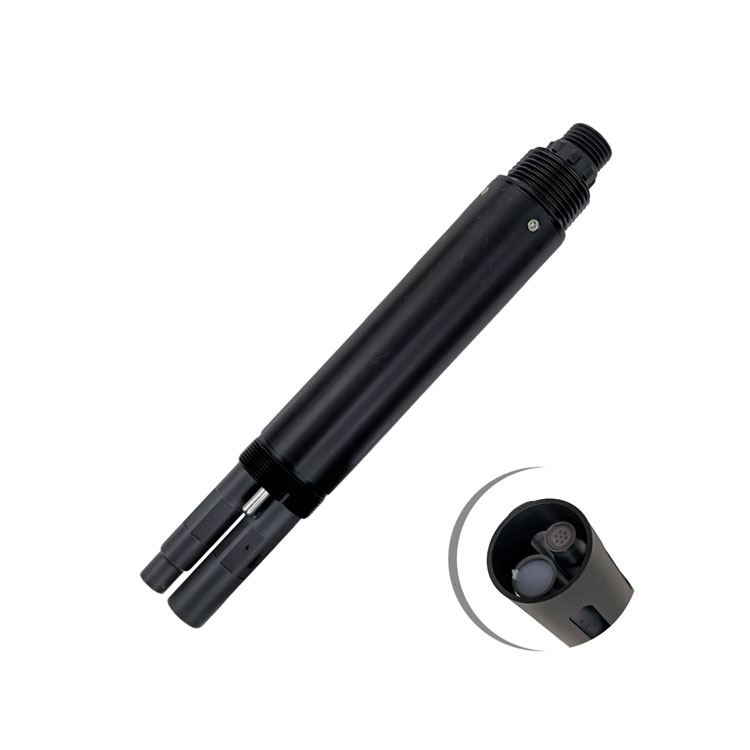
Organic-load instruments answer another question. The optical COD sensor pictured below may support a separately validated study of treatment loading; it does not measure free chlorine, combined chlorine or pathogen removal. For a normal pool monitoring retrofit, first establish whether the existing chlorine and pH measurements are representative before expanding into additional analytical channels.
A sample drawn beside a chemical injection point can show the dosing plume instead of circulated pool water. The CDC Model Aquatic Health Code, 2024 edition, places probe sampling upstream of treatment injection points or devices in section 5.7.3.7.2. Apply the locally adopted requirements and have the pool-system designer approve the actual connection.
Keep the sample route short and accessible. Check inlet pressure with clean and loaded filters, because the available pressure can change between service visits. The NBL-WQ-CL's 30-60 L/h corresponds to 0.5-1.0 L/min. A cell that flows correctly during commissioning but loses flow as the filter loads will not provide dependable control feedback.
Identify where the cell outlet goes and whether backpressure can occur. Avoid air pockets and inspect for deposits that restrict the inlet. Install a means of isolating the cell for service without defeating the monitoring alarm. On the display, distinguish a sensor fault from a low residual and from no sample flow; these conditions require different operator investigations.
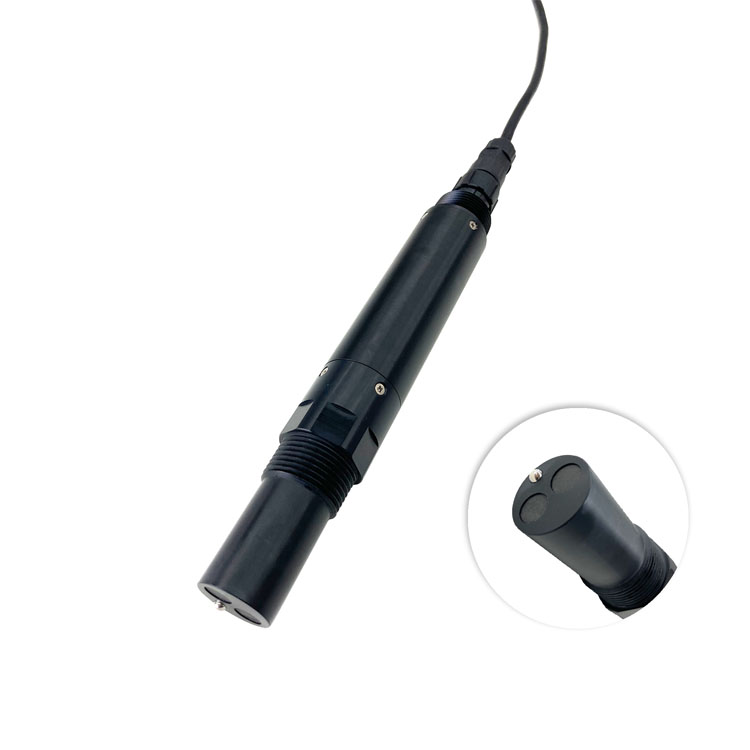
Conductivity can be useful in a salt-water pool or when investigating make-up-water changes. The conductivity probe below measures dissolved-ion response, not disinfectant effectiveness. Any conversion to salt concentration must suit the water composition and temperature compensation. Select its range for the pool, rather than applying a low-conductivity freshwater configuration to a salt-water circuit.
The local controller or PLC should evaluate chlorine and pH values only while their sample conditions are valid. The building management system can receive trends and alarms, but a network connection should not be the sole protection against chemical feed during circulation failure. Pump status, measured flow and chemical-feed permissives need an engineered cause-and-effect schedule.
The CDC's 2024 model code requires chemical feed to be interlocked against low or absent recirculation flow. This is a design reference, not a claim that a particular probe provides that protection. The installer must implement and test the required interlocks for the jurisdiction and equipment. A simulated fault should demonstrate the intended feed shutdown without creating an unsafe chemical release.
For RS485 Modbus RTU integration, the NBL-WQ-CL's default format is 9600 baud, eight data bits, no parity and one stop bit. Its measurement block includes values and decimal-place information. Decode the specified integer fields; do not assume a generic floating-point register. Compare the local reading and PLC tag at more than one concentration before enabling automatic control.
Set stale-data detection from the actual polling interval and response behavior. If a probe disconnects, the host may still display its last number. Show that value as unavailable for control rather than repeatedly treating it as current. Recovery should also be deliberate: an electrode being cleaned or activated must not immediately resume dosing authority because communication has returned.
Trends can reveal changes between scheduled checks and show whether an event follows heavy use, a circulation interruption or a treatment adjustment. Compare timestamps with operating records before blaming the probe. A short excursion visible online but absent in a later grab sample may reflect a real event that has already passed, not necessarily a calibration failure.
Conversely, persistent disagreement needs a structured check. Take the reference sample at the measurement point at the same time, verify reagent condition and test the correct chlorine fraction. Then inspect flow, bubbles, electrode condition and pH. Adjust calibration only after establishing that the comparison is valid. Repeated offsets can conceal a sampling defect without correcting it.
BOD monitoring, illustrated below, is a separate organic-load task. An optical BOD estimate should not be presented as a direct substitute for laboratory BOD or as a pool hygiene certificate. For most control retrofits, budget first for dependable chlorine and pH testing, accessible cells and verified interlocks. Add specialty measurements only when an identified investigation justifies them.

No. Its 0-2.000 mg/L HOCl specification must match the intended measurement and operating conditions. Check the disinfectant, reporting basis, required upper range, pH and any stabilizer. If the pool requires a different chlorine fraction or performance outside that envelope, choose an appropriate analyzer instead of assuming software can correct the mismatch.
No automatic replacement should be assumed. Retain testing required by the applicable pool code and operating procedure. Online measurements provide continuity, while independent checks help detect sampling or electrode problems. The operator also needs to inspect the installation; a plausible displayed value does not prove that sample water is flowing.
ORP and chlorine concentration are not the same measurand. Review pH, water chemistry and both electrode conditions before deciding that one is faulty. Do not adjust an ORP reading merely to reproduce a chlorine number. Establish the role of each channel and its own comparison procedure.
Demonstrate representative sampling, valid reference comparisons and correct PLC scaling. Test sample-flow loss separately from circulation-flow loss, then prove the approved feed-inhibit behavior. Repeat the checks after restarting the system. Record which actions require operator acknowledgement so an automatic restart cannot bypass the intended protection.
Compare the same analytical duty and number of circulation circuits. Include the matched flow cell, flow indication, isolation hardware, controller inputs and required commissioning tests. Request a NiuBoL quotation with the disinfectant chemistry and existing panel details. A low probe price is not useful if another measurement method is needed to satisfy the pool's requirement.
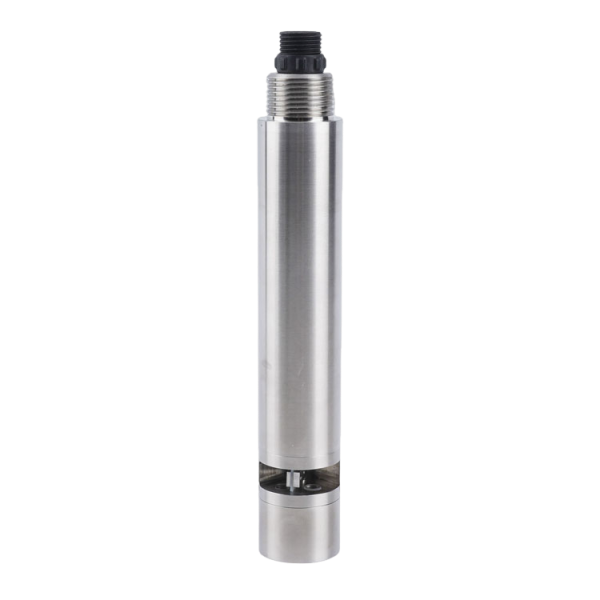
Not by default. The TSS instrument below measures a different property from an NTU turbidity measurement. Where clarity monitoring is required, select the appropriate low-range optical method and compare it with the facility's assessment procedure. Do not convert suspended-solids mass concentration to turbidity using an assumed universal factor.

Swimming pool water quality online monitoring works when the analytical method, sample circuit and feed controls agree. For NiuBoL sensor selection, begin with the pool chemistry and required residual measurement, then verify flow and data validity at the installation. Useful trends and dependable alarms matter more than a long list of channels that cannot guide pool operation.
Prev:Drinking Water Source Monitoring System for Reservoirs and Intake Stations
Next:Fish Pond Ammonia Nitrogen Monitoring Range and Alarm Selection Guide
Related recommendations
Sensors & Weather Stations Catalog
 Agriculture Sensors and Weather Stations Catalog-NiuBoL.pdf
Weather Stations Catalog-NiuBoL.pdf
Agriculture Sensors Catalog-NiuBoL.pdf
Water Quality Sensor Catalog-NiuBoL.pdf
Related products
 Combined air temperature and relative humidity sensor
 TDR Soil Moisture & Temperature Sensor for irrigation| RS485 |4-20mA| NBL-S-THR
 Soil pH sensor RS485 soil Testing instrument soil ph meter for agriculture |NBL-S-PH
 Wind Speed sensor Output Modbus/RS485/Analog/0-5V/4-20mA
 Tipping bucket rain gauge for weather monitoring auto rainfall sensor RS485/Outdoor/stainless steel
 Pyranometer Solar Radiation Sensor 4-20mA/RS485


Screenshot, WhatsApp to identify the QR code
WhatsApp number:+8615367865107
(Click on WhatsApp to copy and add friends)

