





— Blogs —
—Products—
 Consumer hotline +8618073152920
 WhatsApp:+8615367865107
Address:Room 102, District D, Houhu Industrial Park, Yuelu District, Changsha City, Hunan Province, China
Product knowledge
Time:2026-06-10 10:00:34 Popularity:358
Quick Answer: Hospital wastewater monitoring needs separate definitions for treatment control, disinfection observation and final discharge assessment. A residual chlorine sensor reports a specified chemical measurement; it does not measure pathogens or establish effluent compliance by itself. Choose each sample point and analytical method around the hospital's treatment process and applicable discharge requirements.
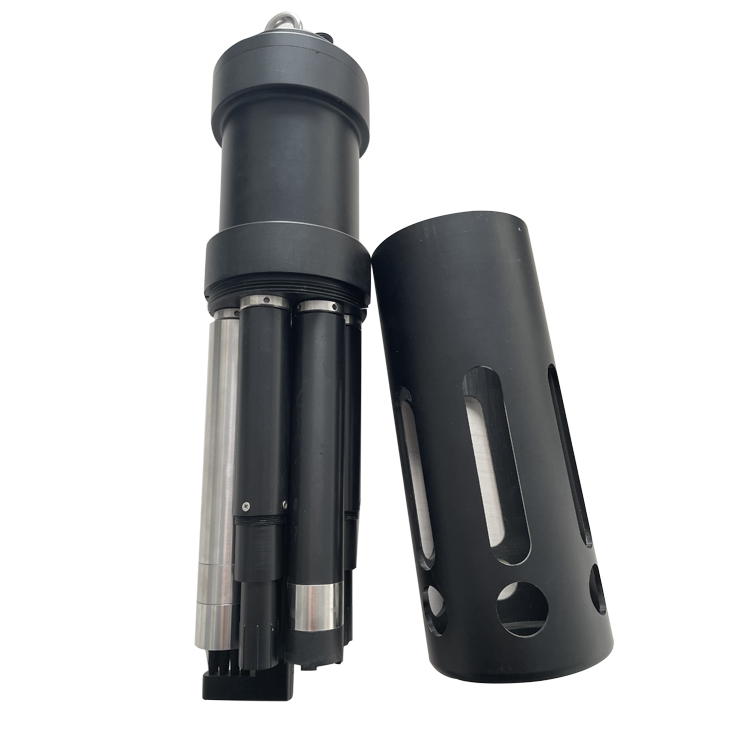
A disinfection-process sample and a final discharge sample may be taken from different locations. If dechlorination, storage, blending or another step lies between them, the readings answer different questions. Put those locations on the process drawing before specifying the monitoring cabinet.
The contact-outlet observation may support review of disinfectant residual after the intended treatment path. The final outlet describes water at the defined discharge boundary. A sample taken immediately beside a dosing point does not establish the residual after contact, and a downstream dechlorinated result cannot be used interchangeably with that process observation.
| Monitoring duty | Location question | Required distinction |
|---|---|---|
| Process pH or organic-load observation | Which treatment stage is being followed? | Operating indication versus required analytical result |
| Disinfection residual | Has water passed through the defined contact path? | Disinfectant species and residual method |
| Final discharge assessment | Where is the actual outlet boundary? | Applicable parameters, methods and sampling rules |
| Flow and volume | Does the flow record describe the same discharge stream? | Concentration, volume and calculated load are different quantities |
Do not copy numerical discharge limits from an unrelated hospital, country or receiving system. Confirm the applicable requirements with the project authority. A sensor's full-scale range is not an allowed effluent concentration.
A chlorine residual is useful process information, but microorganisms are a different measurement. Contact conditions, water quality and the required microbiological results cannot be inferred from a single chemical residual value. The EPA wastewater chlorine-disinfection fact sheet discusses disinfection and residual concerns; it is technical background, not a hospital-specific approval or universal limit.
Similarly, pH, turbidity, COD or an optical COD estimate does not directly report a pathogen count. List the required tests and distinguish them from optional operational channels. If an official reporting method is required, confirm instrument and method eligibility before purchase.
A multiparameter instrument can reduce the number of separate mounting bodies, but its fitted channels remain individual measurements. A general probe such as the one illustrated below should not be described as a complete hospital effluent analyzer without its actual parameter and method specification.
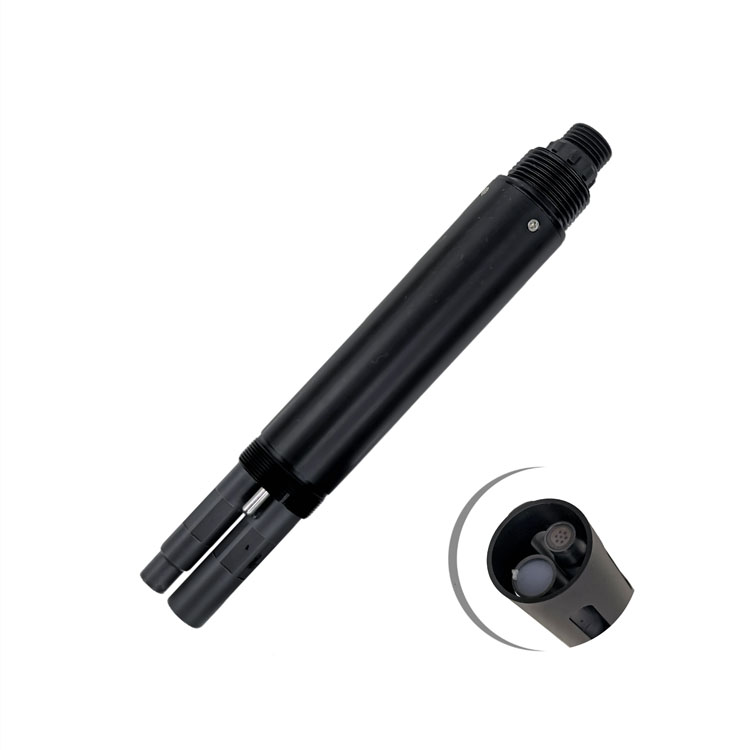
The NiuBoL NBL-WQ-CL is a constant-voltage HClO-based option. If a project requires total chlorine, chloramine, chlorine dioxide or another result, resolve that requirement instead of changing the channel label to match the requested term.
| Basic CL characteristic | Specification |
|---|---|
| Range / resolution | 0-2.000 mg/L HClO; 0.001 mg/L |
| Accuracy expression | +/-5% or +/-0.05 mg/L; confirm applicable basis and acceptance rule |
| Sample conditions | 5-50 degrees C; pressure below 0.1 MPa; pH 4-9 |
| Flow and installation | Matching flow cell; steady 30-60 L/h |
| Supply / consumption | 12-24 V DC; 0.2 W at 12 V |
| Signal | RS485 Modbus RTU |
| Construction / protection | POM and PTFE; IP68 |
| Cable | Standard 5 m; confirm jacket compatibility and protected wet-site connections |
This low-range configuration may not cover every disinfection-process concentration. Review normal and peak values before selecting it. Its probe protection rating does not authorize an unrestricted pressurized-main installation or establish the cabinet's ingress protection.
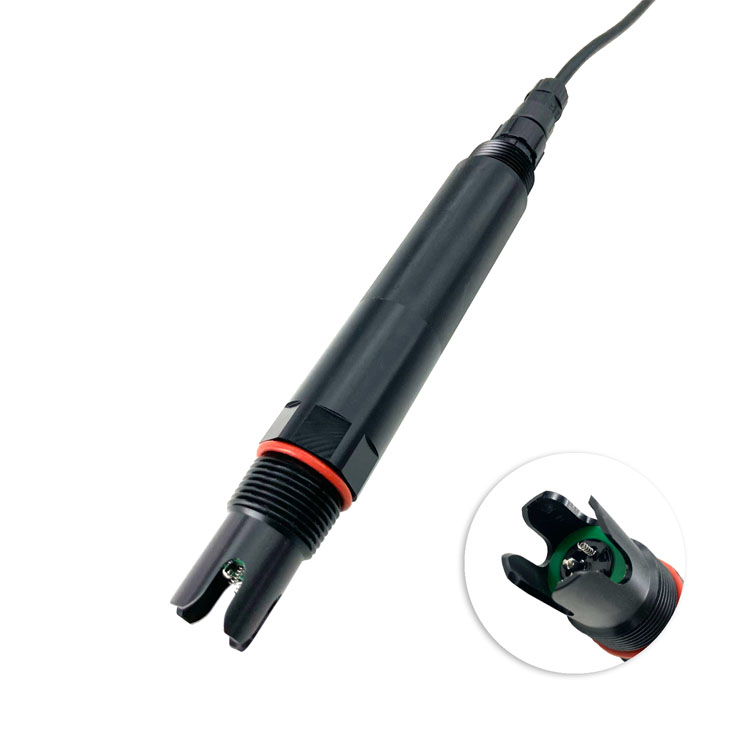
Keep the sample route representative and document its delay. Long tubing, stagnant sections or reactive surfaces can change a disinfectant residual before it reaches the cell. Provide suitable flow indication and regulation rather than relying only on the position of a valve.
Collect a fresh comparison sample close to the online measuring point and align the time and analytical basis. A bottle taken earlier at another outlet is not a reliable calibration target. Use the project's specified handling method for microbiological or other samples; do not assume the chlorine comparison bottle is suitable for every test.
Design safe isolation, drainage and access for potentially contaminated wastewater. The sampling arrangement should let trained staff service the equipment under the site's infection-control and chemical-handling procedures. Do not route a drain or improvise a sampling connection without the responsible site review.
RS485 Modbus RTU provides a field communication path to a PLC, RTU or data logger. It does not by itself establish compatibility with an authority's reporting platform. Confirm identifiers, units, time basis, required status information, upload format and acceptance testing with the receiving system.
A local channel can be valid while its upload is unavailable, or the network can work while no fresh sample reaches the cell. Keep those states distinct. Store acquisition time and available sample-flow information so a retained old number does not appear as current outlet quality.
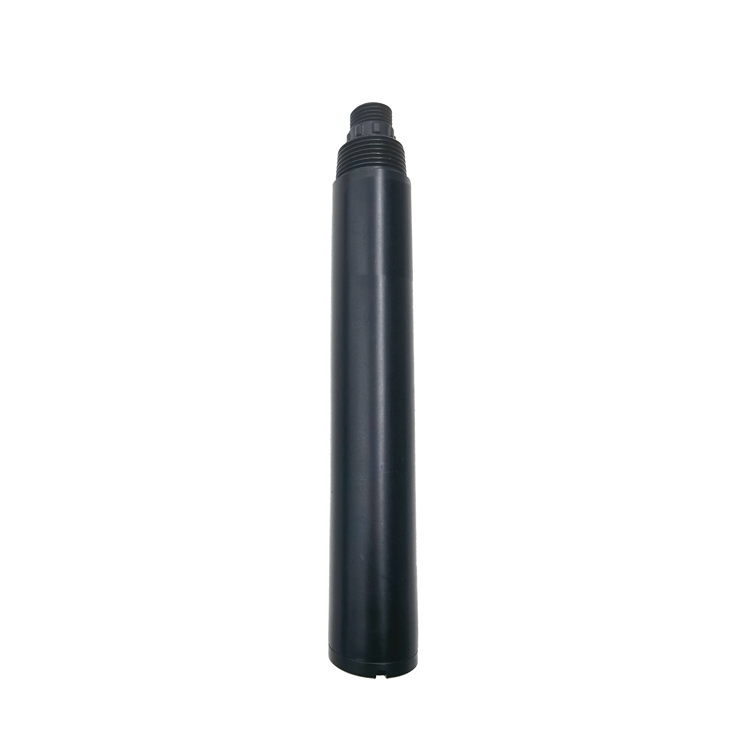
When pollutant load is calculated, identify the concentration method and corresponding flow period. A continuous optical estimate should not silently replace a required analytical result. The turbidity probe below measures an optical particle response, not disinfectant effectiveness or a microbiological indicator.
No. It is one chemical process observation. Evaluate the required contact conditions, analytical results and microbiological evidence under the applicable project requirements.
Not automatically. Intermediate dechlorination or other downstream steps can make the final outlet different from the disinfection observation point. Define both duties on the process drawing.
Not by relabeling its output. Confirm the required chlorine species and a suitable method. A different instrument or supported measurement arrangement may be necessary.
No. A compatible acquisition system and the receiving platform's specified data format and acceptance process are still required.
Identify measuring points, required methods and limits, expected concentrations, sample conditions, flow-cell and sample-panel scope, safe service access and the receiving data system. Request separate confirmation of instrument suitability and reporting acceptance.
No. Record it as an unavailable or delayed data condition according to the reporting procedure. A communications fault is not a measured zero concentration.
Hospital wastewater monitoring works when process observations, final outlet samples and reporting duties are clearly separated. Match the disinfectant species and range, provide representative sampling and retain the required independent tests. NiuBoL sensors can contribute defined measurements without being presented as proof of pathogen removal or automatic regulatory acceptance.
Prev:Pharmaceutical Wastewater Monitoring After Advanced Oxidation
Next:Textile Dyeing Wastewater Monitoring: Color, Turbidity and Batch Changes
Related recommendations
Sensors & Weather Stations Catalog
 Agriculture Sensors and Weather Stations Catalog-NiuBoL.pdf
Weather Stations Catalog-NiuBoL.pdf
Agriculture Sensors Catalog-NiuBoL.pdf
Water Quality Sensor Catalog-NiuBoL.pdf
Related products
 Combined air temperature and relative humidity sensor
 TDR Soil Moisture & Temperature Sensor for irrigation| RS485 |4-20mA| NBL-S-THR
 Soil pH sensor RS485 soil Testing instrument soil ph meter for agriculture |NBL-S-PH
 Wind Speed sensor Output Modbus/RS485/Analog/0-5V/4-20mA
 Tipping bucket rain gauge for weather monitoring auto rainfall sensor RS485/Outdoor/stainless steel
 Pyranometer Solar Radiation Sensor 4-20mA/RS485

Screenshot, WhatsApp to identify the QR code
WhatsApp number:+8615367865107
(Click on WhatsApp to copy and add friends)

