





— Blogs —
—Products—
 Consumer hotline +8618073152920
 WhatsApp:+8615367865107
Address:Room 102, District D, Houhu Industrial Park, Yuelu District, Changsha City, Hunan Province, China
Product knowledge
Time:2026-06-10 10:00:33 Popularity:331
Quick Answer: Pharmaceutical wastewater monitoring after advanced oxidation must separate reaction conditions from treatment results. pH and ORP can describe the operating state, but neither proves removal of a pharmaceutical compound or suitability for the next biological stage. Compare the relevant analytical result, residual oxidant and downstream response for each wastewater batch before using a sensor trend as a transfer decision.
A pharmaceutical production campaign can change the wastewater entering equalization even when the treatment equipment is unchanged. Product chemistry, cleaning streams and batch timing can alter the relationship between an online indication and the result the operator needs.
During an oxidation stage, the question may be whether the specified reaction conditions are present. At the transfer point, the question is whether the water can enter neutralization, separation or biological treatment. A pH or ORP trend that supports the first decision does not automatically answer the second.
For a project using Fenton treatment, establish the required operating conditions through process development and site validation. Do not copy one universal pH, ORP endpoint or oxidant dose across different manufacturing wastes. This article concerns measurement decisions, not a treatment recipe.
| Observation | Useful interpretation | Conclusion it cannot establish alone |
|---|---|---|
| pH during reaction preparation | Whether water at the measuring point is within the specified reaction condition | Completion of oxidation or removal of a particular compound |
| ORP during oxidant addition | Change in the measured redox state under documented conditions | Residual peroxide concentration or a universal reaction endpoint |
| Turbidity after neutralization and separation | Optical change associated with particles reaching that point | Removal of dissolved organics |
| COD or an optical COD estimate | Change under the identified analytical or calibration method | Identity of remaining contaminants or biological treatability |
| Downstream biological response | How the receiving process behaves with the pretreated feed | A substitute for all required effluent analyses |
Assign the stream and batch to each observation. A clear post-settling sample and a mixed reaction sample may differ because solids were removed between them. Without that location information, a trend can look like improved oxidation when it reflects a different sample.
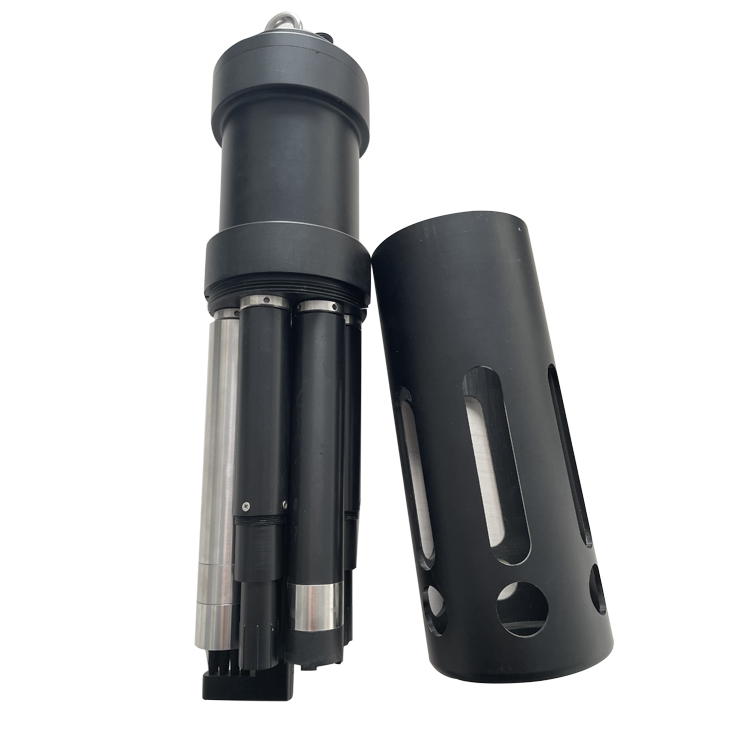
A configurable NiuBoL MPS-5A platform can combine selected observations at one location. It is not a substitute for instruments at several treatment stages, and a fitted optical COD channel is not automatically a compound-specific analyzer.
| Platform item | MPS-5A specification or selection condition |
|---|---|
| pH channel | 0-14 pH; +/-0.1 pH accuracy; 0.01 pH resolution |
| ORP channel | -1500 to +1500 mV; +/-6 mV; 1 mV resolution |
| Temperature channel | 0-50 degrees C; +/-0.5 degrees C |
| Supply / consumption | 12 V DC +/-5%; 5 W at 12 V |
| Output | RS485 Modbus RTU |
| Cleaning / cable | Automatic mechanical cleaning; standard 5 m cable |
| Installation compatibility | Confirm wetted parts, seals, cable jacket, pressure and complete assembly protection for the actual chemicals and holder |
The ORP value here belongs to the combined platform channel, not every standalone ORP model. Its electrical specification is also different from a 12-24 V single probe. Review chemical exposure and safe sampling before placing an assembly in an aggressive reaction stream.
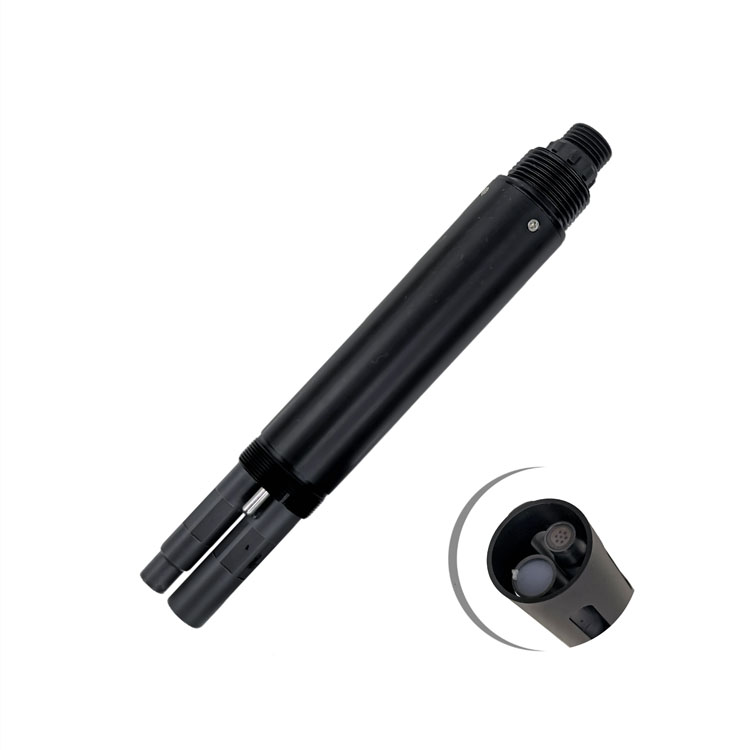
Oxidation can change the mixture of organic compounds and their optical response. An optical estimate calibrated on incoming wastewater may therefore behave differently after treatment. A stable relationship for one production campaign may not remain valid for another.
Take paired measurements at the intended point over representative batches and treatment states. Retain the reference method, sample preparation, timing and whether solids were included. Where a specific pharmaceutical compound or toxicity concern drives the decision, use a suitable additional test rather than inferring its removal from COD alone.
Residual peroxide also deserves attention when verifying a Fenton process by dichromate COD. Research on peroxide interference in COD testing documents that interference. Agree the appropriate analytical handling with the laboratory; do not improvise a quenching step or assume that a changed COD result is entirely organic removal.
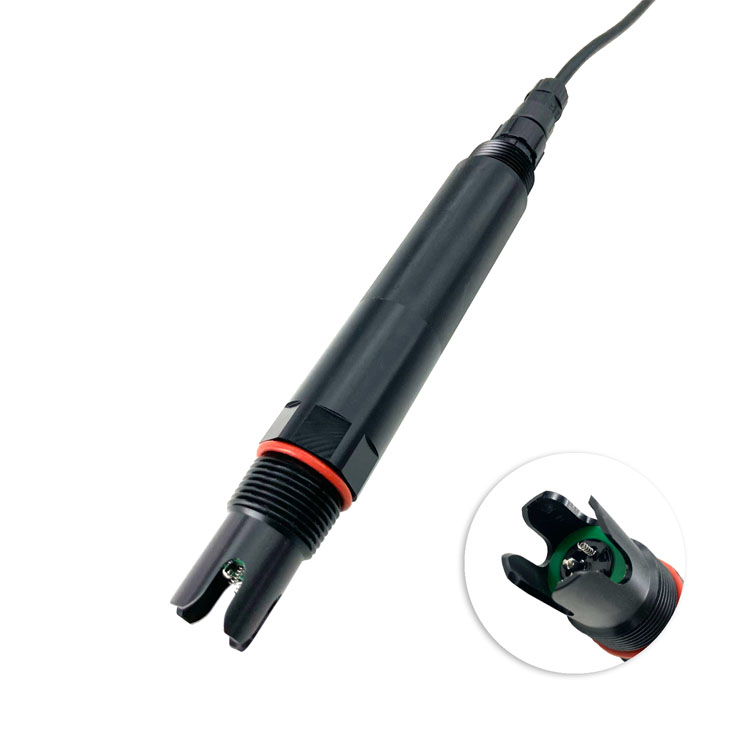
A high ORP reading does not directly quantify peroxide, ozone or chlorine. If residual oxidant matters to the receiving process, specify the actual species and method needed. The chlorine electrode below is a different measurement; it must not be specified as a peroxide analyzer because both are used around oxidation systems.
Where a separate chlorination stage exists, its measuring point and sample conditions require their own review. Do not add a chlorine channel solely to fill a standard monitoring package. The selection should follow the process chemistry and the operator's required action.
For water moving toward biological treatment, define the checks that justify transfer: relevant pH condition, residual oxidant assessment and appropriate feed-quality or treatability evidence. The separate pharmaceutical biological-treatability guide covers that receiving-process question.
In the PLC or RTU, store the sample location, batch identifier, acquisition time and measurement validity. Keep reaction and transfer tags distinct. A value from the previous batch must not silently remain the current release condition after communication is lost.
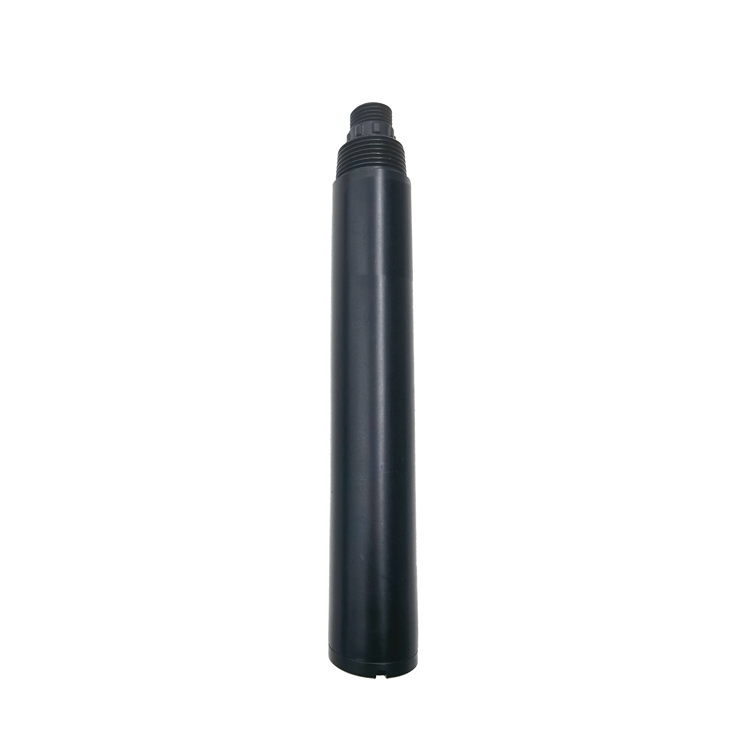
Review a short batch record before commissioning the decision logic: original condition, dosing and mixing events, reaction observations, analytical samples, separation and transfer. This makes missing information visible without adding unrelated parameters. The optical probe below illustrates particle monitoring, not direct confirmation of dissolved compound destruction.
Not automatically. ORP reflects the combined electrochemical conditions at the electrode. Use a method appropriate to peroxide where its concentration is the required result.
No. Composition changes can alter the optical-to-reference relationship. Validate the estimate for the intended stream and reassess it when manufacturing or treatment chemistry changes.
Residual peroxide can interfere with dichromate COD. The laboratory must evaluate the sample and use a justified handling procedure; do not treat an unqualified comparison as a calibration target.
No. It measures its own location. Reaction, separation and transfer stages can need different instruments and ranges, even when all values reach one SCADA system.
Provide the treatment sequence, relevant chemicals, batch variation, sample conditions, decision required at each point and reference tests. Identify whether the quote concerns a probe, sample system or complete acquisition arrangement.
Pharmaceutical wastewater monitoring should show which stage is being observed and which decision the value supports. Keep reaction conditions separate from analytical removal and biological-feed suitability. NiuBoL sensor selection can then address defined measuring duties without implying that a general water-quality trend proves advanced-treatment performance.
Prev:Fluorescence Dissolved Oxygen Sensor: Quenching, Cap and Compensation
Next:Hospital Wastewater Monitoring: Disinfection and Discharge Sample Points
Related recommendations
Sensors & Weather Stations Catalog
 Agriculture Sensors and Weather Stations Catalog-NiuBoL.pdf
Weather Stations Catalog-NiuBoL.pdf
Agriculture Sensors Catalog-NiuBoL.pdf
Water Quality Sensor Catalog-NiuBoL.pdf
Related products
 Combined air temperature and relative humidity sensor
 TDR Soil Moisture & Temperature Sensor for irrigation| RS485 |4-20mA| NBL-S-THR
 Soil pH sensor RS485 soil Testing instrument soil ph meter for agriculture |NBL-S-PH
 Wind Speed sensor Output Modbus/RS485/Analog/0-5V/4-20mA
 Tipping bucket rain gauge for weather monitoring auto rainfall sensor RS485/Outdoor/stainless steel
 Pyranometer Solar Radiation Sensor 4-20mA/RS485

Screenshot, WhatsApp to identify the QR code
WhatsApp number:+8615367865107
(Click on WhatsApp to copy and add friends)

