





— Blogs —
—Products—
 Consumer hotline +8618073152920
 WhatsApp:+8615367865107
Address:Room 102, District D, Houhu Industrial Park, Yuelu District, Changsha City, Hunan Province, China
Product knowledge
Time:2026-05-28 15:59:41 Popularity:425
Quick Answer: To use a conductivity meter, confirm the unit and temperature mode, select the correct electrode and range, rinse without contaminating the sample, then wait for a stable result. Record whether the value is conductivity at the actual temperature or conductivity normalized to a reference temperature. Setting a temperature value to 25 degrees C is not a universal way to switch compensation off.
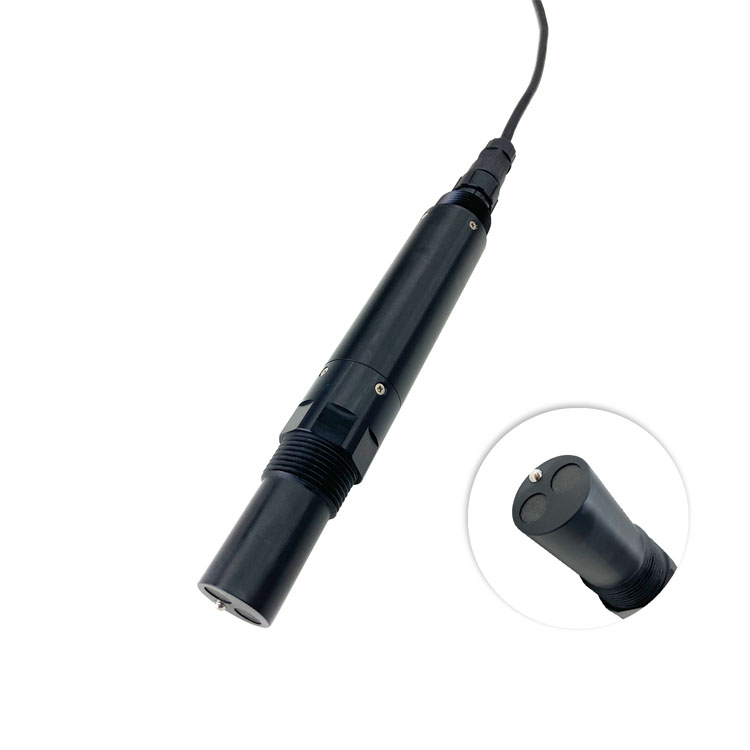
Electrical conductivity describes the water's ability to conduct current. A result may be reported at the measured temperature or normalized to a reference temperature, commonly 25 degrees C. Those are different reporting conditions. Establish which one is required before comparing instruments, setting an alarm or entering a value into a process record.
For actual-temperature conductivity, select the meter's supported uncompensated mode or raw-conductivity output. Do not enter a false temperature to try to remove compensation: a meter may still apply its selected algorithm using that setting. If the interface only provides a compensated value, confirm whether the required raw value is available before choosing the instrument.
| Displayed quantity | Interpretation |
|---|---|
| 1000 microsiemens/cm | Equal to 1 millisiemens/cm; this is a unit conversion |
| Conductivity normalized to 25 degrees C | A temperature-adjusted result; check the compensation method |
| TDS in mg/L | Often a conversion from conductivity using a configured factor; not a universal dissolved-solids analysis |
| Salinity in PSU | A different reported quantity; do not compare the number directly with a conductivity standard |
A thousand-fold unit difference can look like a serious sensor fault. Conductivity commonly uses microsiemens per centimeter (uS/cm) or millisiemens per centimeter (mS/cm). Confirm the unit and decimal scaling in the data logger before adjusting the electrode constant. Also distinguish a sample's actual-temperature value from a compensated value on the comparison instrument.
The cell constant relates the measured conductance to conductivity. Use the constant and probe type supported by the instrument, then verify or calibrate with a suitable standard. Entering a convenient constant is not a substitute for selecting a cell appropriate to the water and measurement range.
Consider the expected normal value as well as the highest possible value. A very wide range may include both while offering insufficient accuracy or resolution at the normal operating point. This is particularly important when checking treated water or comparing conductivity before and after a treatment stage.
| Range option | Resolution | Full-scale accuracy implication |
|---|---|---|
| 0-20.00 uS/cm | 0.01 uS/cm | +/-1% FS corresponds to +/-0.2 uS/cm |
| 0-200.0 uS/cm | 0.1 uS/cm | +/-1% FS corresponds to +/-2 uS/cm |
| 0-5000 uS/cm | 1 uS/cm | +/-1% FS corresponds to +/-50 uS/cm |
| 0-200.0 mS/cm | 0.1 mS/cm | +/-1% FS corresponds to +/-2 mS/cm |
These are separate NBL-WQ-EC configurations, not an instruction that one delivered probe automatically changes between all ranges. Specify the required version. The stated full-scale accuracy is also different from a percentage of the current reading; it should be considered when deciding whether a low process limit can be verified.
Rinse the cell as appropriate for the model and use a small portion of fresh sample to reduce carryover from the rinse water or previous sample. Do not return used liquid to the sample or standard stock. Avoid residues from containers and handling surfaces.
Immerse the sensing region correctly, remove trapped bubbles and allow the reading and temperature to stabilize. Keep the clearance required by the cell design. The NBL-WQ-EC-1.0 and EC/S-SI arrangements require at least 2 cm clearance from the vessel bottom and side walls during installation and testing.
Low-conductivity water is especially sensitive to contamination and exposure during sampling. If a grab sample changes after collection, comparing it later with the original online reading may not isolate a meter error. Use a suitable sampling and flow arrangement for the required measurement rather than assuming an open beaker preserves every water sample unchanged.
A fixed temperature coefficient is an approximation for a defined use, not a property shared by every acid, salt solution and natural water. Record the selected coefficient or compensation algorithm and reference temperature. When comparing two instruments, align those settings or compare their supported raw values at a stable common temperature.
Do not use a convenient table of generic water conductivities as an acceptance standard. Drinking water, natural water and process water vary with composition and temperature. Use an identified standard and the applicable measurement conditions when checking instrument performance.
Consider an illustrative linear-compensation calculation: the actual conductivity is 330 microsiemens/cm at 30 degrees C, the reference is 25 degrees C and the selected coefficient is 2% per degree C. The normalized value is 330 divided by [1 + 0.02 multiplied by (30 - 25)], which equals 300 microsiemens/cm. A raw display of 330 and a compensated display of 300 can therefore describe the same sample.
The 2% coefficient in this example is an assumption, not a recommendation for every solution or a fixed NiuBoL setting. Use the instrument's actual algorithm and the coefficient appropriate to the application. The practical check is to identify both reporting modes before trying to remove the difference by changing the cell constant.
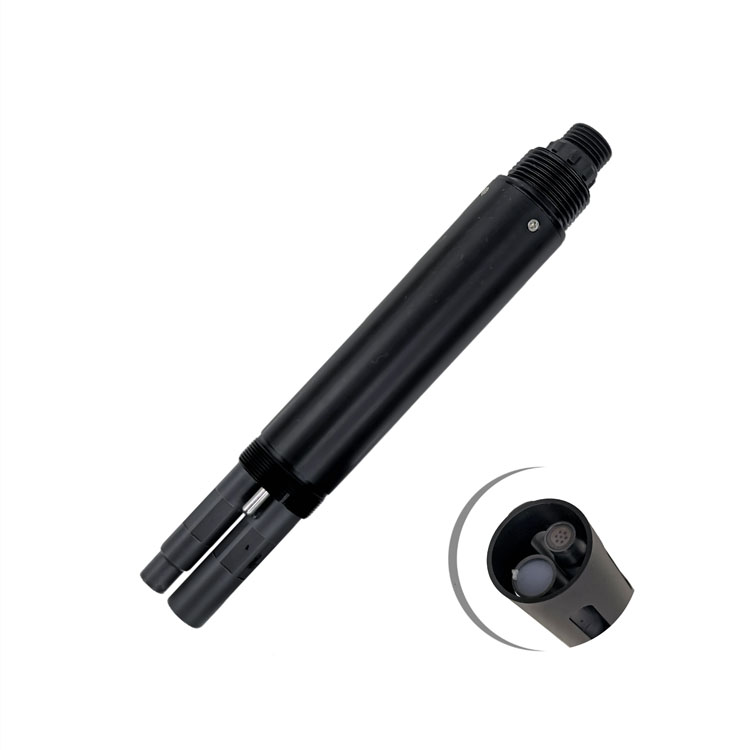
Conductivity responds to the combined ionic composition of the sample; it does not selectively measure ammonia nitrogen. If the process needs an ammonia result, specify an appropriate separate measurement channel. The ammonia probe illustrated here has a different analytical task and should not be labelled as a conductivity sensor in a wiring list.
The same limitation applies when the water contains a changing mixture of salts and treatment chemicals. An EC rise can prompt investigation, but it does not identify which compound caused it. A conversion to TDS or salinity must be appropriate to the intended water and interpretation.
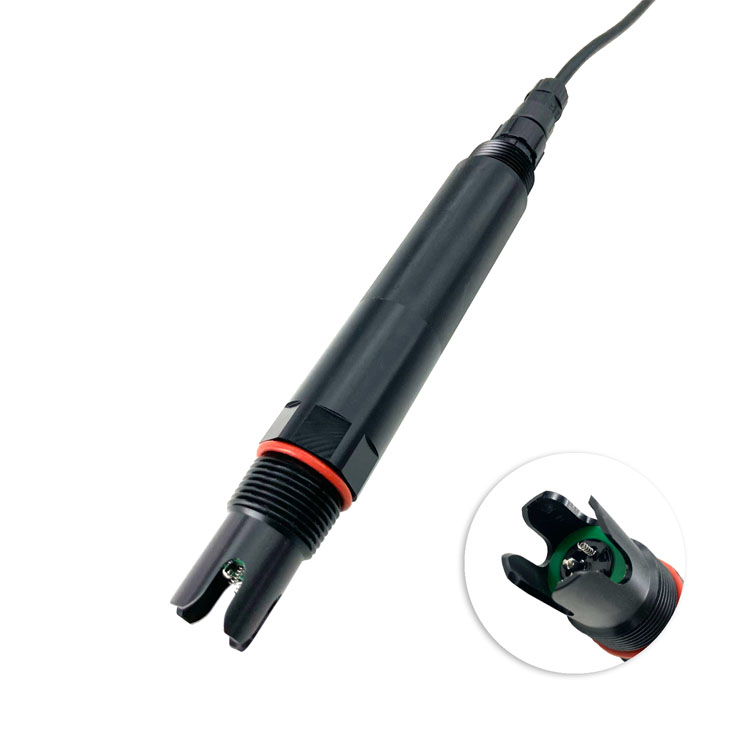
Residual chlorine is another separate measurement. A disinfectant-control requirement cannot be satisfied by relabelling an EC value as chlorine concentration. Keep conductivity, ammonia nitrogen and residual chlorine as distinct parameters with their own units, sensing methods and acceptance checks.
A portable or laboratory meter provides a reading of the sample being checked. For continuous monitoring, the online sensor needs a representative installation, stable supply and an input compatible with its actual output. The NBL-WQ-EC version provides RS485 Modbus RTU and operates from 12-24 V DC, with a working envelope of 0-50 degrees C and pressure below 0.6 MPa.
Confirm range, units and scaling at the receiving PLC or RTU. For this family, select the ordered wetted-material arrangement and cable length for the installation rather than inferring them from a product photograph. A successful digital read establishes communication; it does not prove that the sample, compensation setting or measuring range is correct.
No. First align units, temperature mode, sampling location and timing. Check the cell, standard and settings. Adjust only through the supported calibration procedure after identifying that an adjustment is required.
Use the instrument's actual uncompensated or raw-conductivity mode where available. Do not assume that setting a manual temperature to 25 degrees C disables the algorithm. Verify which quantity the display or digital register provides.
Only if its resolution, accuracy and cell design meet the required low-level measurement. Being inside the range is not sufficient. Compare the full-scale accuracy in absolute conductivity units with the process tolerance.
No. Conductivity is not a selective concentration measurement of either substance. Use separate sensing channels when those parameters are required, and keep their labels and units distinct in the controller.
Record the sample point, time, conductivity unit, measured temperature, compensation mode, reference temperature and instrument configuration. Keep relevant standard checks and cleaning events so later comparisons use the same measurement basis.
 NBL-WQ-CL Water Quality Sensor Online Residual Chlorine Sensor.pdf
NBL-WQ-DO Online Fluorescence Dissolved Oxygen Sensor.pdf
NBL-WQ-NHN Ammonia Nitrogen Water Quality Sensor.pdf
NBL-WQ-COD Online Water Quality COD Sensor.pdf
NBL-WQ-PH Online pH Water Quality Sensor.pdf
NBL-WQ-EC water quality conductivity sensor.pdf
NBL-WQ-BOD-4A Online BOD Sensor.pdf
NBL-WQ-TH-4S online total hardness sensor.pdf
Using a conductivity meter correctly means controlling the measurement basis as well as reading the number. Match the cell and range, preserve the sample, verify temperature handling and distinguish EC from derived or selective measurements. For an online installation, the NiuBoL conductivity sensor should be selected against the actual water, operating limit and controller input.
Related recommendations
Sensors & Weather Stations Catalog
Agriculture Sensors and Weather Stations Catalog-NiuBoL.pdf
Weather Stations Catalog-NiuBoL.pdf
Agriculture Sensors Catalog-NiuBoL.pdf
Water Quality Sensor Catalog-NiuBoL.pdf
Related products
 Combined air temperature and relative humidity sensor
 TDR Soil Moisture & Temperature Sensor for irrigation| RS485 |4-20mA| NBL-S-THR
 Soil pH sensor RS485 soil Testing instrument soil ph meter for agriculture |NBL-S-PH
 Wind Speed sensor Output Modbus/RS485/Analog/0-5V/4-20mA
 Tipping bucket rain gauge for weather monitoring auto rainfall sensor RS485/Outdoor/stainless steel
 Pyranometer Solar Radiation Sensor 4-20mA/RS485

Screenshot, WhatsApp to identify the QR code
WhatsApp number:+8615367865107
(Click on WhatsApp to copy and add friends)

