





— Blogs —
—Products—
 Consumer hotline +8618073152920
 WhatsApp:+8615367865107
Address:Room 102, District D, Houhu Industrial Park, Yuelu District, Changsha City, Hunan Province, China
Product knowledge
Time:2026-06-10 10:00:36 Popularity:468
Quick Answer: Online residual chlorine analyzer selection should compare the actual measurement and sample limits before comparing outputs or price. The NiuBoL basic CL and CL-4A are different configurations: they share an HClO-related measurement basis and require matching flow cells, but their ranges, pressure limits, construction and output options differ. Neither becomes a total-chlorine analyzer through a different display label.
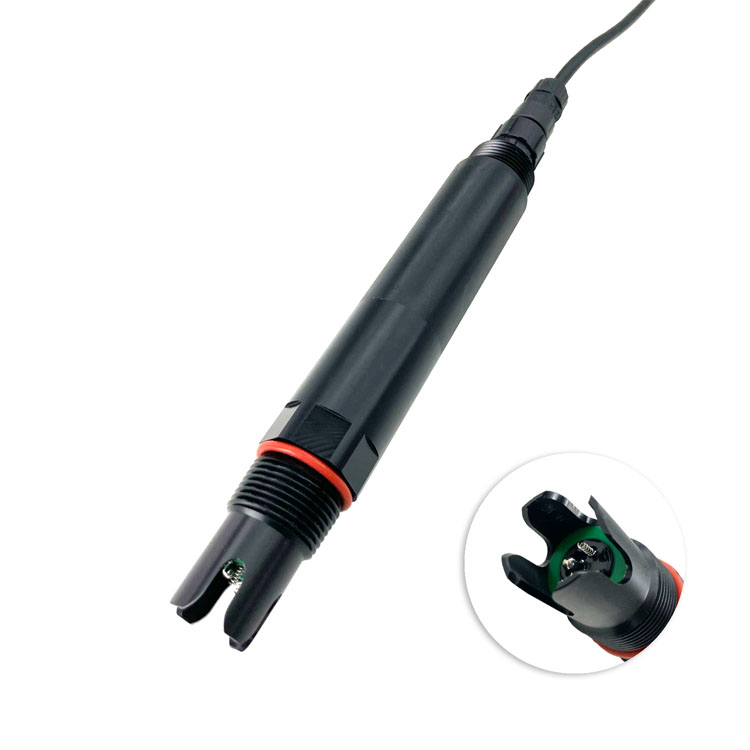
A buyer may receive two quotations described simply as an online residual chlorine analyzer. That description does not establish whether either instrument measures the required chlorine fraction or fits the sample conditions. Define the required result, normal and peak concentration, reference method and operating purpose first.
Reject a proposed configuration if its measurement basis does not answer the project requirement. Do the same if the sample pressure, temperature or chemical exposure cannot be brought within its limits. A different analog output or longer cable cannot correct those mismatches.
For water containing combined chlorine, confirm the required determination separately. The HClO-related response of these electrodes must be resolved against the intended free-chlorine result; do not assume that temperature compensation establishes automatic pH correction or measurement of all chlorine forms.
| Selection item | NBL-WQ-CL | NBL-WQ-CL-4A |
|---|---|---|
| Range / resolution | 0-2.000 mg/L HClO; 0.001 mg/L | 0-2.000 or 0-20.00 mg/L HClO; respective resolution 0.001 or 0.01 mg/L |
| Accuracy statement | +/-5% or +/-0.05 mg/L | Low-range +/-5%; obtain the range-specific acceptance statement |
| Water conditions | 5-50 degrees C; below 0.1 MPa; pH 4-9 | 0-60 degrees C; at or below 0.2 MPa; pH 4-9 |
| Cell / flow | Matching flow cell; 30-60 L/h | Matching flow cell; 30-60 L/h |
| Output | RS485 Modbus RTU | RS485 Modbus RTU; optional 4-20 mA |
| Supply / consumption | 12-24 V DC; 0.2 W at 12 V | 12-24 V DC; 0.2 W at 12 V |
| Construction / protection | POM and PTFE; IP68 | 316L housing configuration; IP68 |
| Cable | Standard 5 m | Standard 5 m; confirm delivered cable arrangement |
Confirm the percentage basis and applicable accuracy rule with the offered version. Review the basic CL and CL-4A separately. Do not treat metal construction as proof of unrestricted chemical resistance, or choose the wider range without examining performance near the operating threshold.
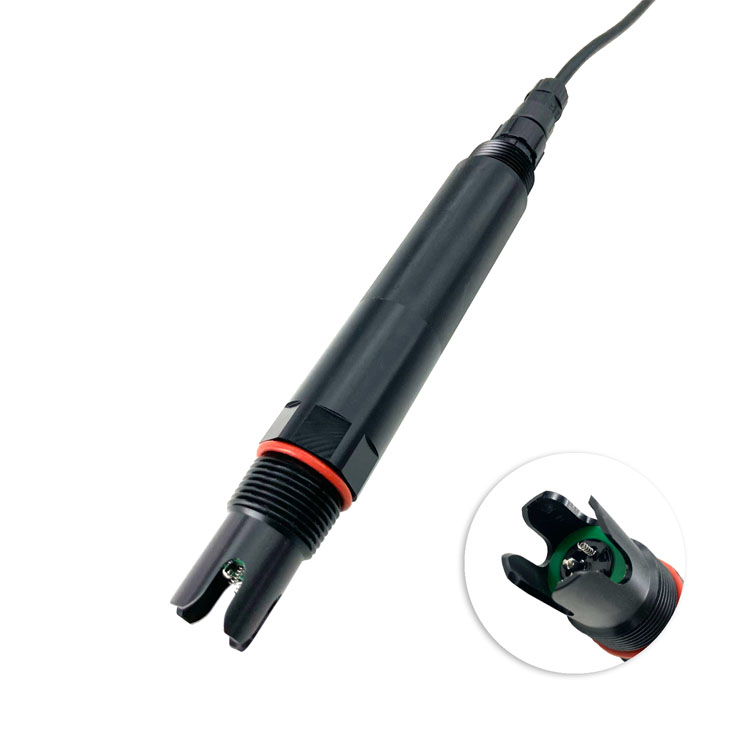
A pressurized supply may require an appropriately designed sample takeoff, pressure reduction and flow regulation. State where each pressure is measured. A nominal plant pressure can differ from the pressure at the sensing assembly and can change when a downstream valve closes.
Both examples need a compatible flow cell, not arbitrary immersion or direct installation into a main. Include a way to observe and restore stable sample flow. Establish a safe outlet and service isolation arrangement rather than assuming that a threaded connection alone supplies them.
Review sample-line residence time and materials. A long or reactive path can delay the result or change residual before measurement. If the purpose is rapid detection of a change at a particular process point, include that delay when assessing the complete system response.
Ask each supplier to identify the same scope: probe and matching cell, sample regulation and indication, fittings, mounting, cable, local acquisition and any onward communication. Separate these from consumables, commissioning and service responsibilities.
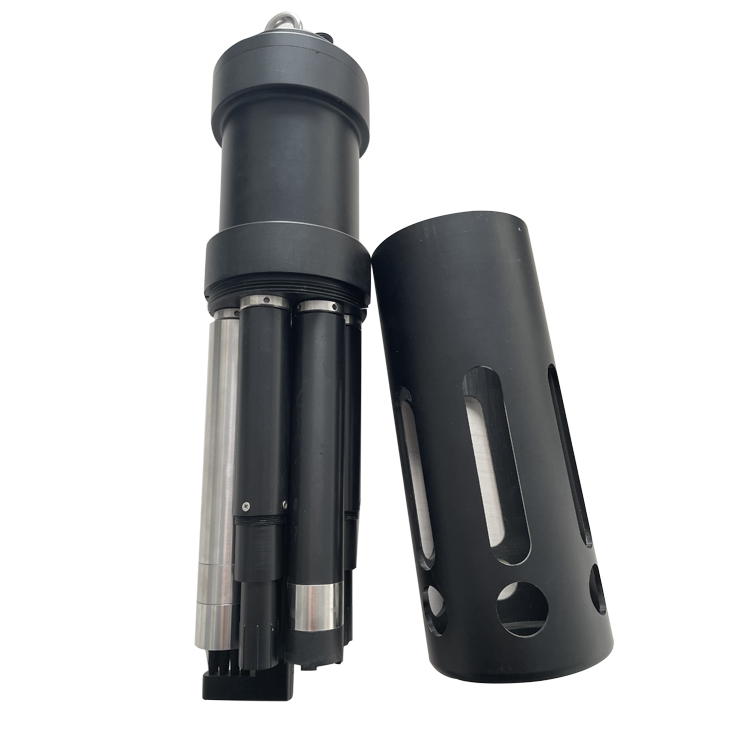
A configurable multiparameter instrument, shown below, is another supply arrangement. Confirm which chlorine measurement is actually fitted, if any. It cannot be priced or accepted as a complete disinfection station simply because pH or temperature is present.
For a new digital installation, check that the PLC, RTU or data logger supports the delivered Modbus RTU register map, scaling and serial settings. For an analog-only cabinet, the basic CL needs a suitable conversion arrangement or a different configuration; CL-4A's current output must be ordered and connected under its actual definition.
If both outputs are required, obtain explicit confirmation of the supplied arrangement and verify the same engineering scale at the receiver. Do not assume a cable conductor or connector pin has the same purpose across several water-quality products.
A gateway forwards acquired data. It does not provide the missing sample flow, establish a reference concentration or supply a complete dosing safeguard. Keep those responsibilities visible when comparing a sensor quotation with a cabinet or station quotation.
Use representative water and the agreed reference basis during a trial. Check the reading near the intended operating band, the stability of cell flow and the effect of a controlled interruption under the site's test procedure. Include preparation after storage and access for future checks.
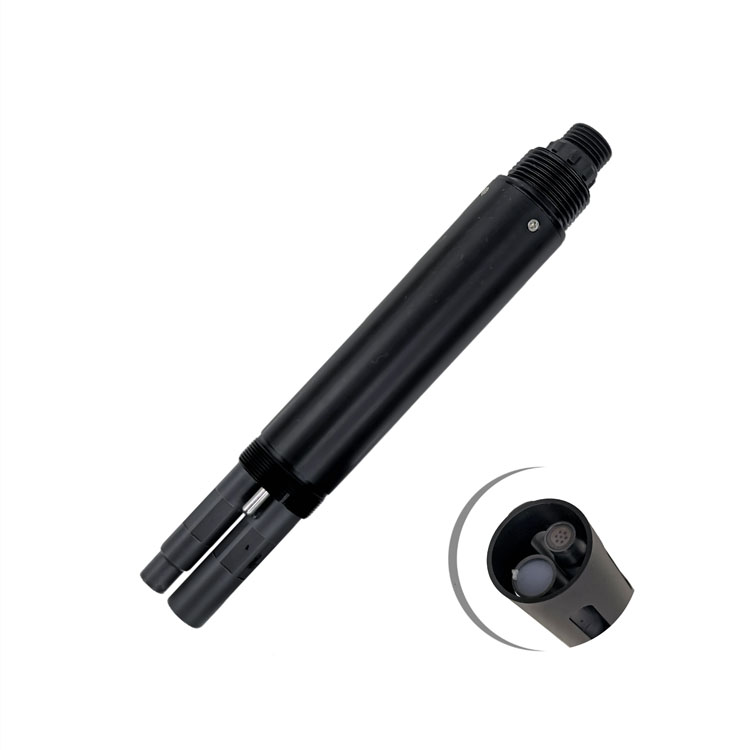
For a digital trial, verify fresh readings and the unavailable-input state at the final display. For an analog trial, check the conversion rather than accepting a plausible number. The separate probe illustration below is a reminder to identify the actual supplied assembly and not select spare parts by appearance.
No. Choose it when its measurement, operating limits and ordered interface suit the duty. Unneeded options do not improve an unresolved measurement or sampling mismatch.
Not within its stated 0-2.000 mg/L range. Review a suitably ranged version and its accuracy near the normal operating band; do not interpret a clipped maximum as the true peak.
No. Pressure limits, the matching cell and the complete installation still apply. Ingress protection is not an unrestricted pressure rating.
It makes the required cell, regulation, fittings, drain and service provisions visible. Comparing only probe prices can conceal a different installation scope.
Send the chlorine result required, reference method, normal and peak concentrations, pH, temperature, pressure at the sample source, available flow and receiving input. Include sample-route and service-access details.
Online residual chlorine analyzer selection is clearer when basic CL and CL-4A remain separate configurations. Resolve chemistry and sample conditions first, then compare the complete monitoring-point scope and receiving interface. Request a NiuBoL offer against that defined duty rather than a generic chlorine-analyzer name.
Prev:Textile Dyeing Wastewater Monitoring: Color, Turbidity and Batch Changes
Next:Chloramine Monitoring: When an HClO Probe Is the Wrong Choice
Related recommendations
Sensors & Weather Stations Catalog
 Agriculture Sensors and Weather Stations Catalog-NiuBoL.pdf
Weather Stations Catalog-NiuBoL.pdf
Agriculture Sensors Catalog-NiuBoL.pdf
Water Quality Sensor Catalog-NiuBoL.pdf
Related products
 Combined air temperature and relative humidity sensor
 TDR Soil Moisture & Temperature Sensor for irrigation| RS485 |4-20mA| NBL-S-THR
 Soil pH sensor RS485 soil Testing instrument soil ph meter for agriculture |NBL-S-PH
 Wind Speed sensor Output Modbus/RS485/Analog/0-5V/4-20mA
 Tipping bucket rain gauge for weather monitoring auto rainfall sensor RS485/Outdoor/stainless steel
 Pyranometer Solar Radiation Sensor 4-20mA/RS485

Screenshot, WhatsApp to identify the QR code
WhatsApp number:+8615367865107
(Click on WhatsApp to copy and add friends)

