





— Blogs —
—Products—
 Consumer hotline +8618073152920
 WhatsApp:+8615367865107
Address:Room 102, District D, Houhu Industrial Park, Yuelu District, Changsha City, Hunan Province, China
Product knowledge
Time:2026-09-16 13:00:00 Popularity:23
The right way to compare sludge concentration vs MLSS options is to compare measurement purpose, field condition and data path first. Portable, fixed, immersion and flow-through instruments solve different project problems. The practical product reference is NBL-WQ-MLSS online sludge concentration sensor, selected only where its measurement principle, range, wetted material and interface match the site.
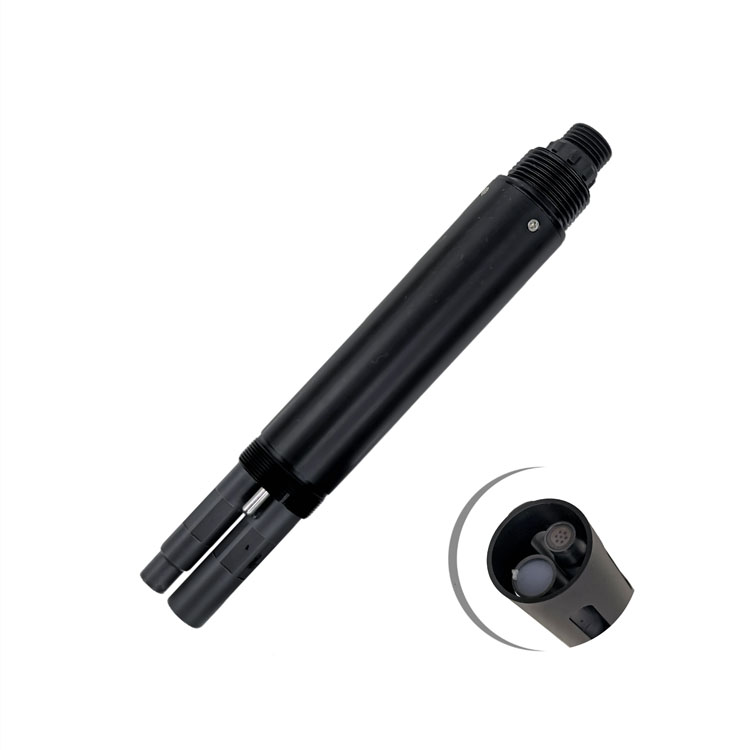
For sludge concentration vs MLSS, the final buying check should be written into the project file before release. Measurement-point record for environmental monitoring system: Confirm the NiuBoL product page link, the selected sensor or monitor family, the field water condition, the required RS485 Modbus RTU settings, the equipment identification and installation photographs, and the acceptance record expected by the owner.
In the selected Sludge Concentration vs MLSS project, the buyer should define the waterbody, normal range, upset range, sampling or immersion condition, operating objective and required response time. For example, municipal wastewater may need alarm-driven operation, while industrial wastewater may need trend evidence and reporting.
| Decision item | Project-specific check | Buyer value |
|---|---|---|
| Comparison basis — application: Sludge Concentration vs MLSS | Compare the same measuring point and operating duty | Avoids unfair portable-versus-online comparisons |
| Method limit — application: Sludge Concentration vs MLSS | State what each method can and cannot prove | Controls technical overclaim |
| Host interface — application: Sludge Concentration vs MLSS | Check digital, analog or manual record requirements | Prevents integration gaps |
| Quote scope — application: Sludge Concentration vs MLSS | Separate instrument, accessories and service | Makes bids readable |
NBL-WQ-MLSS online sludge concentration sensor is the field instrument for sludge concentration vs MLSS. In the selected Sludge Concentration vs MLSS package, the field sensor performs the measurement while the controller or RTU manages display, alarms, storage and platform transfer; the quotation must assign each item to the supplier or contractor scope.
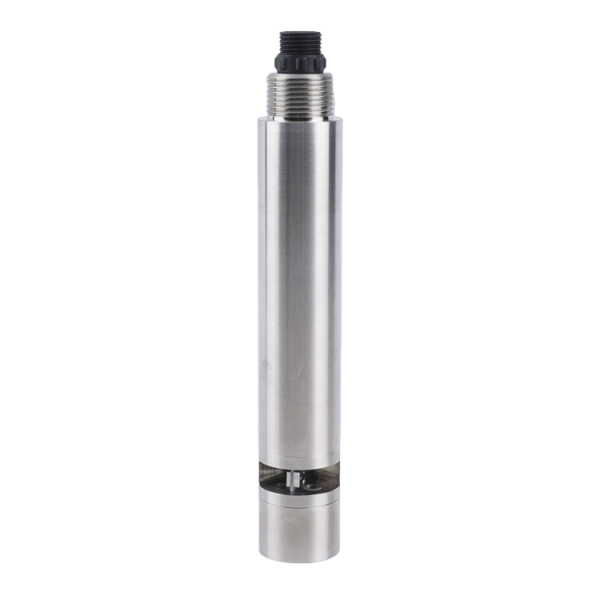
For sludge concentration vs MLSS, confirm RS485 Modbus RTU against the exact NiuBoL model and the host device used in municipal wastewater. For sludge concentration vs MLSS, an existing analog-input panel may require 4-20 mA; confirm that output on the exact model before cabinet fabrication.
| Parameter | Verified or product-family specification | Procurement meaning |
|---|---|---|
| Measurement principle | 90 degree scattered light method | Suitable for sludge and suspended-solids trend monitoring |
| Range | 0-20.000 g/L (0-20000 mg/L) referenced for NBL-WQ-MLSS-408-S | Match aeration, return sludge or process point |
| Accuracy | +/-5% of reading; temperature +/-0.3 deg C | Sludge homogeneity affects field comparison |
| Output / supply | RS485 Modbus RTU or 4-20 mA; 12-24 VDC | Confirm host input and scaling |
| Protection | IP68, 3/4 NPT, standard 5 m cable | Use cleaning access and bracket design to manage fouling |
| Application | Field environment challenge | System integration solution | User value |
|---|---|---|---|
| Municipal Wastewater — application: Sludge Concentration vs MLSS | Fouling, changing water chemistry and limited service access | Use the selected NiuBoL sensor with defined mounting, cleaning and protocol settings | Better alarm relevance |
| Industrial Wastewater — application: Sludge Concentration vs MLSS | Old PLC or RTU input restrictions | Confirm RS485 Modbus RTU or analog output before cabinet design | Less commissioning rework |
| Process-Water Treatment — application: Sludge Concentration vs MLSS | Representative sampling under variable flow | Set the point, depth or sample flow in the drawing | More defensible acceptance |
| Discharge Compliance Stations — application: Sludge Concentration vs MLSS | Need for trend evidence rather than one manual test | Store timestamped data with maintenance records | Lower support cost over the project life |
Not every site should use the same sludge concentration vs MLSS configuration.
For the sludge concentration vs MLSS RFQ, list water type, range, site point, cable length, signal output, controller or platform, documentation, quantity and delivery destination. For NBL-WQ-MLSS online sludge concentration sensor, separate sensor, mounting, controller, communication and calibration items so quotations cover the defined quotation boundary.
For sludge concentration vs MLSS, the first-day record should include photos, wiring, Modbus address, register mapping, calibration or comparison record and operator responsibility.
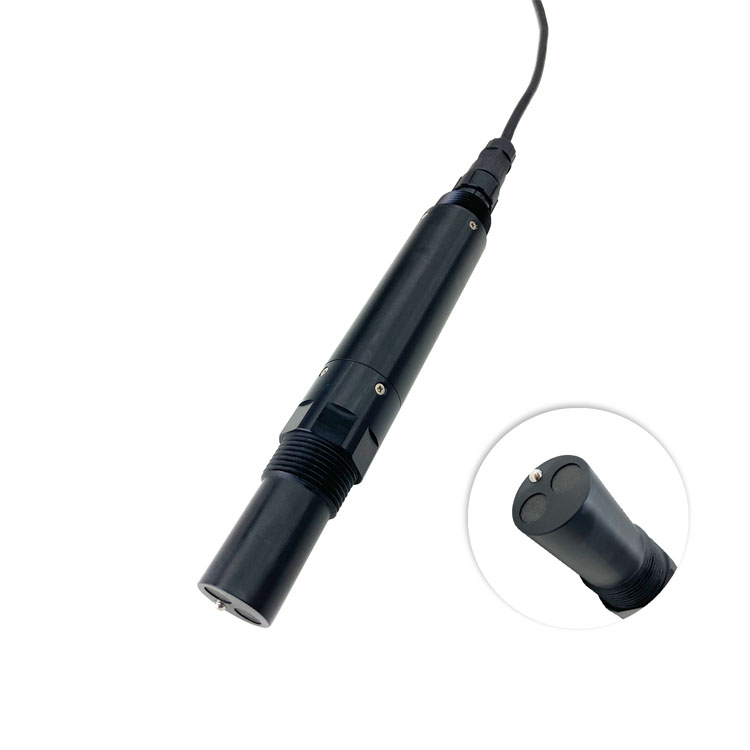
The engineering review defines where each value is used in wastewater treatment.
It focuses on aeration tanks, return sludge, excess sludge and optical sensor placement.
MLSS readings are most useful when the probe sees well-mixed liquor and the operator knows which process point is being measured. Return-sludge concentration, aeration-tank MLSS and excess-sludge monitoring are not the same installation. The engineering review asks the buyer to mark the tank or pipeline point on a process drawing before selecting range, bracket and cleaning method.
For this sludge concentration vs MLSS request, the quotation should be treated as a technical boundary document. A practical quotation for sludge concentration vs MLSS should identify the boundary of supply in one place. The offer for sludge concentration vs MLSS must state whether it covers only the probe or also the controller, holder, flow cell, bracket, cable extension, junction box, RTU, data logger, gateway, solar power, platform setup, calibration solution, spares and commissioning support. For NBL-WQ-MLSS online sludge concentration sensor, this prevents a common project dispute: one supplier quotes a sensor, another quotes a station, and the buyer compares the two prices as if they cover the same job.
The acceptance evidence for sludge concentration vs MLSS should be equally specific. For sludge concentration vs MLSS, keep process condition, upstream load, flow state, aeration or dosing status, cleaning record and last calibration or comparison result. Acceptance of sludge concentration vs MLSS should compare the live sensor or controller value with the value received by the PLC, RTU, data logger or platform. For sludge concentration vs MLSS over RS485 Modbus RTU, retain the address, baud rate, parity, register table, decimal scaling and engineering unit in the commissioning file. Where sludge concentration vs MLSS uses 4-20 mA, record the lower and upper range values mapped in the PLC.

A1: For sludge concentration vs MLSS, start by defining the operating decision. In municipal wastewater, that may be aeration control, dosing confirmation, discharge review, water exchange, filter performance or abnormal-event warning. Integration note for environmental monitoring system: The required action determines range, alarm point, response time, output and maintenance access.
A2: The selected NiuBoL instrument for sludge concentration vs MLSS uses RS485 Modbus RTU as its principal digital interface. The sludge concentration vs MLSS submittal should include wiring definition, Modbus settings, register table and example values for commissioning.
A3: Use 4-20 mA for sludge concentration vs MLSS only when the plant standard or existing panel requires analog input. Site review for environmental monitoring system: Check the selected model because some configurations are digital-only, while selected 4-series models may provide analog output with a defined measuring range.
A4: For sludge concentration vs MLSS, send application, water type, expected range, required parameters, installation point, cable length, output signal, controller or platform, quantity, documentation needs, destination and whether the scope is sensor-only or a complete monitoring point.
A5: A fixed price can mislead sludge concentration vs MLSS buyers because the cost changes with range, accessories, controller, gateway, software, cable, packing, support and delivery scope. Supply-scope check for environmental monitoring system: A useful quotation prices the exact configuration after those fields are confirmed.
A6: In municipal wastewater, representative placement, fouling, bubbles, sample flow, grounding, waterproof cable joints, calibration condition and data scaling often affect sludge concentration vs MLSS stability as much as the sensing principle. These items should be checked during commissioning.
A7: Keep the datasheet, user manual, wiring record, Modbus settings, register map, serial number, calibration or comparison record, installation photos, first readings and maintenance responsibility for the sludge concentration vs MLSS point in municipal wastewater. These records reduce support time later.
A8: For sludge concentration vs MLSS, specify cleaning, calibration or comparison interval, standard solution or spare part needs, safe access, responsible party and record format. Project requirement for environmental monitoring system: The initial interval can be adjusted after the site shows its actual fouling and drift pattern.

For Sludge Concentration vs MLSS: Measurement Difference and Sensor Selection - Final Project Selection Check, for sludge concentration vs MLSS, the buyer should compare methods against the same site condition and data requirement. The suitable NiuBoL option depends on measurement range, installation, interface and the record needed at handover.
Prev:Micro Automatic Water Quality Monitoring Equipment Supplier Evaluation
Next:Wastewater Treatment Plant Online Monitoring System Procurement Guide
Related recommendations
Sensors & Weather Stations Catalog
 Agriculture Sensors and Weather Stations Catalog-NiuBoL.pdf
Weather Stations Catalog-NiuBoL.pdf
Agriculture Sensors Catalog-NiuBoL.pdf
Water Quality Sensor Catalog-NiuBoL.pdf
Related products
 Combined air temperature and relative humidity sensor
 Soil Moisture Temperature sensor for irrigation|NBL-S-THR
 Soil pH sensor RS485 soil Testing instrument soil ph meter for agriculture |NBL-S-PH
 Wind Speed sensor Output Modbus/RS485/Analog/0-5V/4-20mA
 Tipping bucket rain gauge for weather monitoring auto rainfall sensor RS485/Outdoor/stainless steel
 Pyranometer Solar Radiation Sensor 4-20mA/RS485

Screenshot, WhatsApp to identify the QR code
WhatsApp number:+8615367865107
(Click on WhatsApp to copy and add friends)

