





— Blogs —
—Products—
 Consumer hotline +8618073152920
WhatsApp:+8615367865107
Address:Room 102, District D, Houhu Industrial Park, Yuelu District, Changsha City, Hunan Province, China
Product knowledge
Time:2026-08-16 09:04:00 Popularity:322
Quick answer: A TDS meter module is only one part of a water-measurement chain. Before using it in an industrial upgrade, identify where conductivity is measured, where temperature compensation is applied and where conductivity becomes an estimated TDS value. A complete NiuBoL RS485 conductivity probe can perform those instrument functions internally, but it is not an interchangeable bare circuit board. The host still needs the correct units, register decoding and data-quality handling.
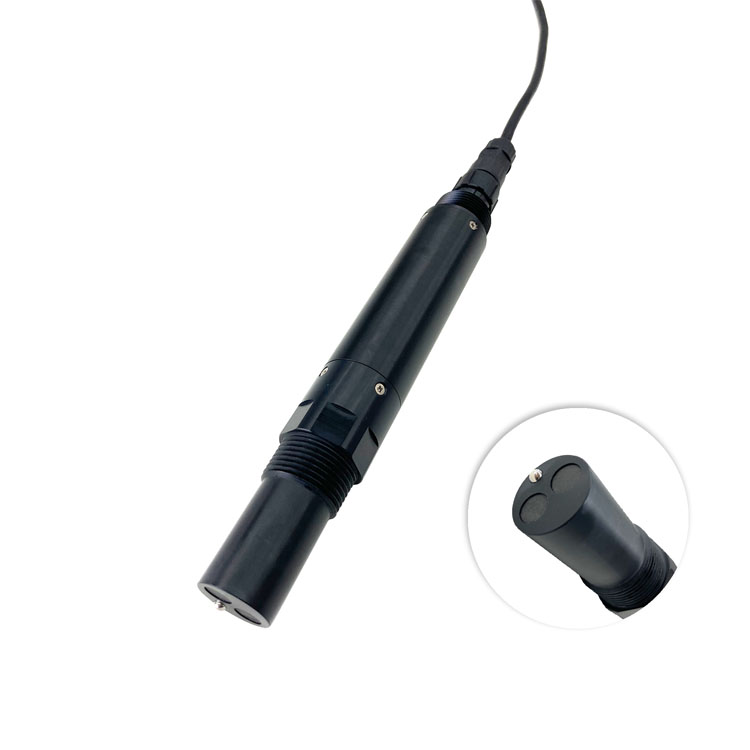
A quotation for a small interface board can exclude the conductivity cell, temperature element, enclosure and application software. A digital field probe combines a different set of functions. Comparing the two by price alone misses the engineering work required between the water and the PLC.
Draw the proposed chain before buying: conductivity cell, measurement electronics, temperature input, compensation, TDS conversion and receiving system. Label the supply and signal at every connection. If the board expects a particular cell and temperature element, an arbitrary replacement probe may not work even when the connector fits.
Record whether the value sent to the host is raw conductivity, temperature-compensated conductivity or calculated TDS. Do not apply the same compensation or conversion again merely because the host has an available formula. For existing installations, inspect the software as well as the wiring; some conversions are hidden in a display or gateway configuration.
| Item | NBL-WQ-EC digital field probe | Upgrade implication |
|---|---|---|
| Conductivity range | 0-20.00, 0-200.0 or 0-5000 uS/cm; or 0-200.0 mS/cm | Select the ordered range for the actual water, not the widest span by default |
| Accuracy | Conductivity +/-1% F.S.; temperature +/-0.3 C | Assess the span-related error at the intended decision point |
| Temperature compensation | Integrated Pt1000 and automatic compensation | Confirm the reporting basis before adding a host-side correction |
| TDS conversion | Configurable coefficient; default 0.64; output depends on range support | Do not assume every range supplies the same TDS span |
| Supply / consumption | 12-24 VDC +/-10%; 0.2 W at 12 V | Not a logic-level board supply; budget the host separately |
| Interface | RS485 Modbus RTU; default 9600, N, 8, 1 | Use a suitable physical interface and the ordered register map |
| Working conditions | 0-50 C; pressure below 0.6 MPa | Check the complete installation, including holder and seals |
| Protection / cable | IP68; standard 5 m cable | Confirm jacket compatibility and protect external joints |
The specifications above apply to the NBL-WQ-EC, not to every board sold as a TDS module. Wetted materials are configuration-dependent. Supply the chemical composition and temperature before choosing the housing or electrode assembly. The separate pH probe below measures a different property and needs its own signal processing.
Suppose a test configuration reports compensated conductivity of 500 uS/cm and uses a TDS coefficient of 0.64. Its estimated result is 320 mg/L. This is an illustrative calculation, not a statement about the composition of a particular water sample. Multiplying the resulting 320 mg/L by 0.64 again would introduce an additional, unintended conversion.
In the NBL-WQ-EC measurement block, conductivity, temperature and supported TDS each have a value and decimal-position register. Decode the selected quantity according to that map. Do not interpret a TDS register as raw EC or add a universal divisor copied from another range.
For a bare module whose output is analog, document the voltage or current range and the corresponding engineering span. For a digital probe, retain raw register values alongside a commissioning record of the decoded result. Neither approach should be assumed galvanically isolated without an explicit specification.
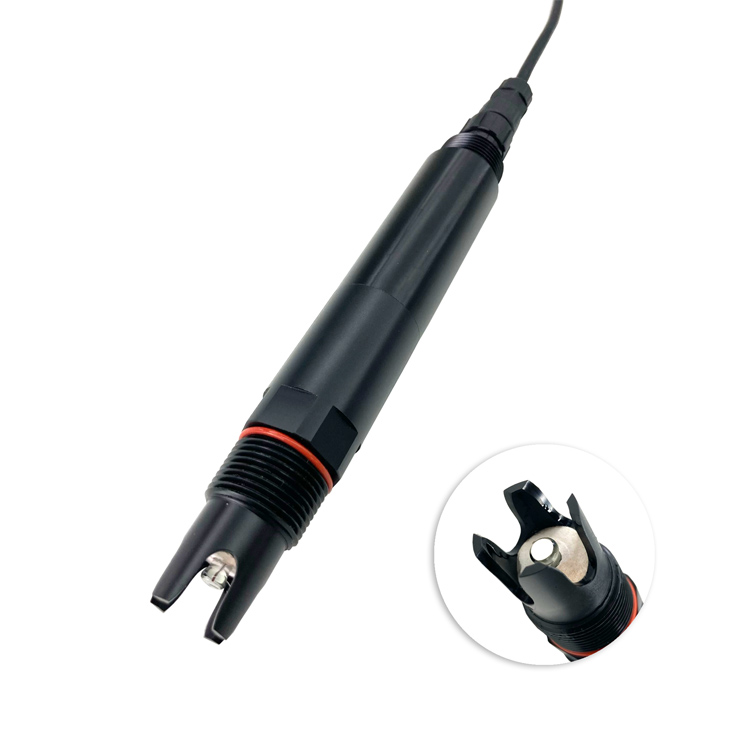
The PH-4S pictured below is another digital instrument, not a conductivity-cell replacement. Its presence on the same RS485 network does not make its register definitions interchangeable with EC data.
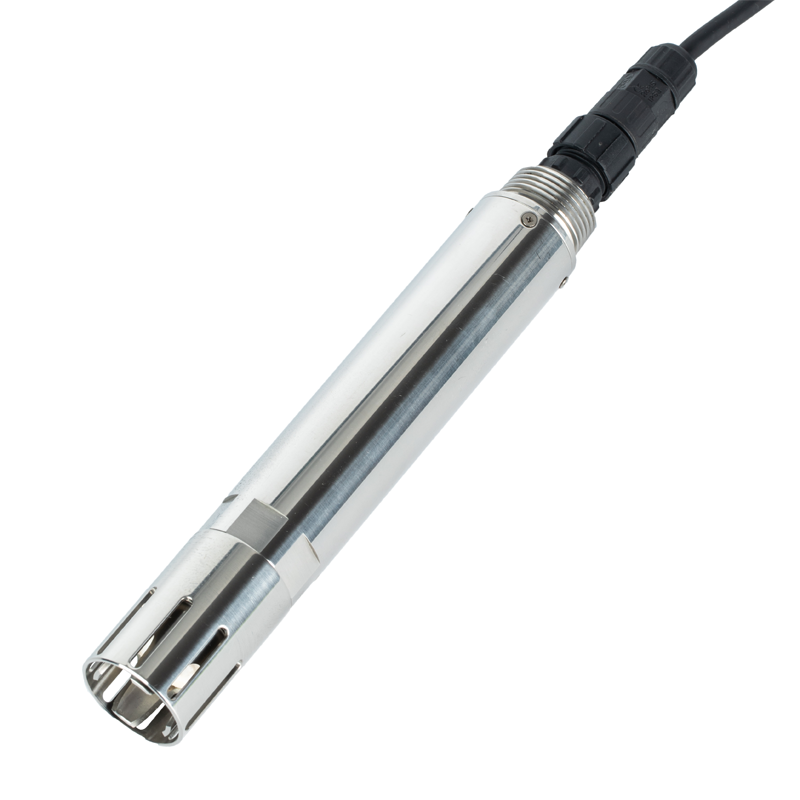
A TDS estimate does not identify specific ions, hardness or all contaminants. If the process decision depends on a particular substance, retain the required analysis rather than treating conductivity as a substitute. The separate optical DO probe below cannot confirm that the EC-to-TDS conversion is correct; it serves an independent oxygen-monitoring duty.
No. Match the cell constant, excitation requirements, temperature input and electrical connection to the module design. A matching thread or connector does not establish measurement compatibility.
Not necessarily. The NBL-WQ-EC provides supported calculated TDS through its own electronics. Confirm the range and data map before adding another conversion stage.
Only after checking the units, compensation, coefficient and achievable uncertainty. A numerically identical threshold can mean something different when those settings change.
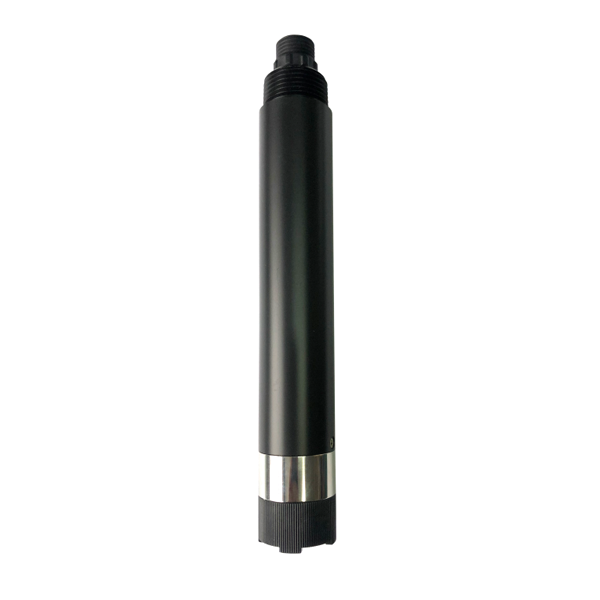
No. Salinity uses its own reporting units and conversion basis. The EC-S below is a separate instrument; do not substitute its PSU output into a host expecting mg/L TDS.
Send the present board and cell identification, wiring, supply, water range and composition, host input and current calculation settings. Ask NiuBoL to identify the field probe and required interface work separately.
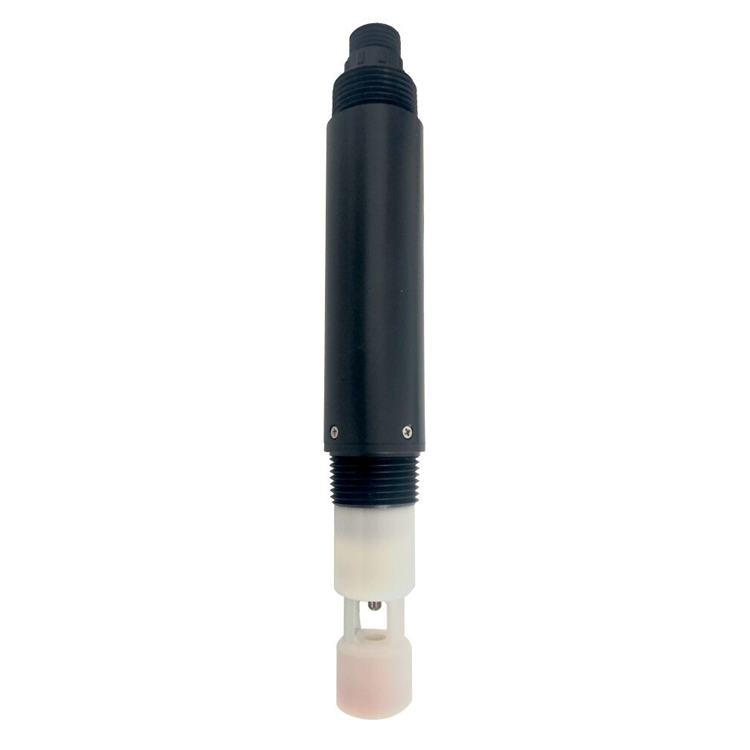
A useful TDS upgrade makes the complete calculation chain visible. Choose a compatible measurement assembly, apply compensation and conversion once in the intended place, and verify the final host value before carrying over the process rule.
Prev:Turbidity Instruments: Immersion Probe, Flow Cell or Bench Meter?
Next:Water TDS and pH Meter: EC Range, Conversion and Dosing Checks
Related recommendations
Sensors & Weather Stations Catalog
 Agriculture Sensors and Weather Stations Catalog-NiuBoL.pdf
Weather Stations Catalog-NiuBoL.pdf
Agriculture Sensors Catalog-NiuBoL.pdf
Water Quality Sensor Catalog-NiuBoL.pdf
Related products
 Combined air temperature and relative humidity sensor
 TDR Soil Moisture & Temperature Sensor for irrigation| RS485 |4-20mA| NBL-S-THR
 Soil pH sensor RS485 soil Testing instrument soil ph meter for agriculture |NBL-S-PH
 Wind Speed sensor Output Modbus/RS485/Analog/0-5V/4-20mA
 Tipping bucket rain gauge for weather monitoring auto rainfall sensor RS485/Outdoor/stainless steel
 Pyranometer Solar Radiation Sensor 4-20mA/RS485


Screenshot, WhatsApp to identify the QR code
WhatsApp number:+8615367865107
(Click on WhatsApp to copy and add friends)

