





— Blogs —
—Products—
 Consumer hotline +8618073152920
WhatsApp:+8615367865107
Address:Room 102, District D, Houhu Industrial Park, Yuelu District, Changsha City, Hunan Province, China
Product knowledge
Time:2026-08-16 09:05:00 Popularity:324
Quick Answer: A water TDS and pH meter configuration combines two different measurements: pH describes acidity or basicity, while conductivity provides the basis for an estimated TDS value. Select the conductivity range around the operating decision, establish the TDS conversion and verify pH independently before using either channel for treatment control.
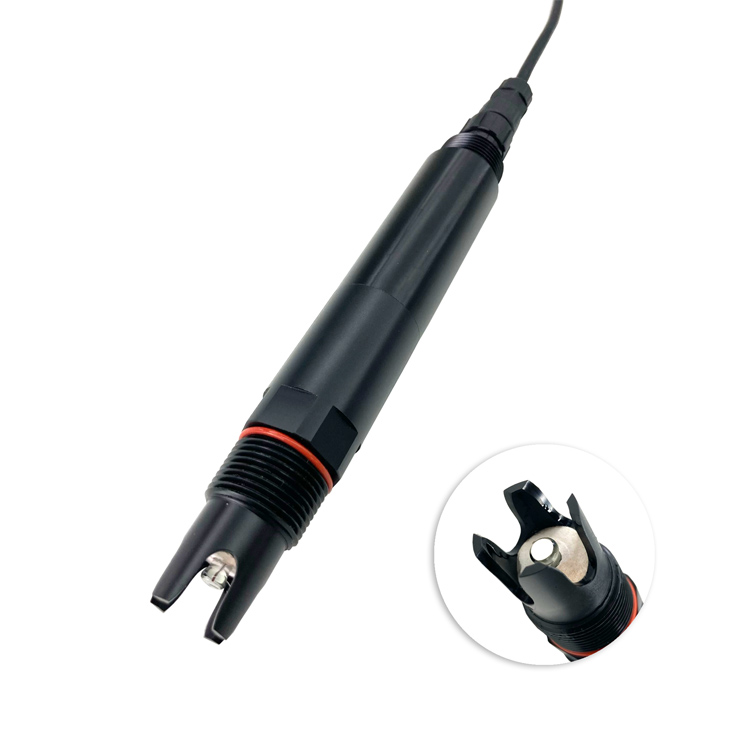
In a treatment plant, pH may support neutralization while conductivity indicates a changing dissolved-ion load. In a reuse-water line, conductivity may reveal dilution or concentration changes while pH identifies an acid or alkali disturbance. One value does not explain the other: neutral pH water can still contain substantial dissolved salts.
The NiuBoL pH probe above is one measuring channel, not a combined TDS analyzer. An online installation may use separate pH and EC probes with a common PLC, RTU or data logger. That arrangement allows each channel's range, installation and maintenance to be selected independently.
Decide whether TDS is needed as a familiar reporting unit or as an acceptance limit. If the operating procedure is fundamentally based on conductivity, retain EC in its original unit rather than hiding it behind a converted value. For a contractual TDS limit, establish the required analytical basis and comparison method before specifying an EC-derived display.
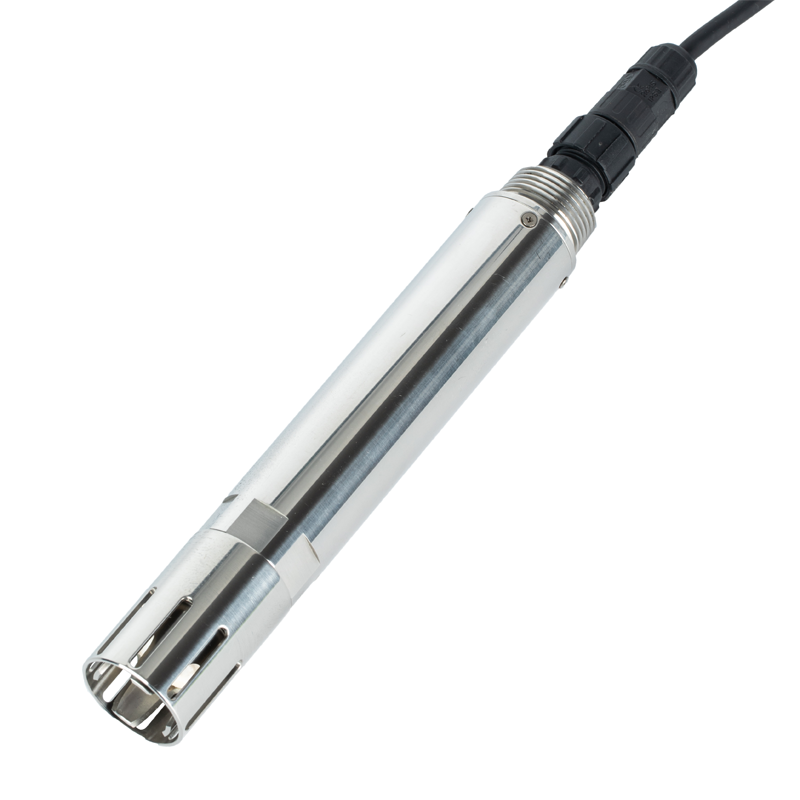
The NBL-WQ-EC conductivity family includes different range configurations. They are not one universal probe with identical low-end performance. A range that covers the highest possible concentration can still be a poor choice for a much smaller control change.
| EC configuration | Listed EC resolution |
|---|---|
| 0-20.00 microS/cm | 0.01 microS/cm |
| 0-200.0 microS/cm | 0.1 microS/cm |
| 0-5000 microS/cm | 1 microS/cm |
| 0-200.0 mS/cm | 0.1 mS/cm |
For illustration, an accuracy of +/-1% of full scale has an absolute term of 50 microS/cm on a 5000 microS/cm range, but 2 microS/cm on a 200 microS/cm range. This calculation explains full-scale error; it does not include every source of field uncertainty. Add temperature effects, calibration and installation conditions when setting acceptance limits.
The NBL-WQ-EC selection specification is +/-1% FS; agree the ordered version's range and accuracy before purchase. State the measurement requirement as an allowable error near the operating point, not merely a number of decimal places. Verify the delivered electrode configuration, including its cell constant, before applying the range and scaling.
A conductivity-based estimate can be written as TDS in mg/L = k × EC in microS/cm, with a suitable conversion factor k for the water and reporting basis. The factor is not determined by pH. Dissolved species and their proportions influence the relationship, so an assumed factor needs evaluation when the source water or chemical treatment changes.
For a hypothetical EC value of 1000 microS/cm, factors of 0.50 and 0.70 produce 500 and 700 mg/L respectively. The EC value has not changed. The 200 mg/L difference comes entirely from the assumed conversion; those example factors are not recommendations for a particular site.
Retain the EC value, temperature, compensation reference and conversion factor alongside the estimated TDS. Compare against appropriately collected samples where TDS accuracy matters. USGS work on dissolved-solids estimation illustrates the use of site-specific relationships rather than a universal multiplier.
Confirm whether the selected EC version exports a TDS register or whether the host will calculate it. Do not assume every range and firmware version offers the same output. If both the probe and PLC apply conversion, document which value is authoritative and prevent accidental double conversion.
The NBL-WQ-PH measures 0-14 pH with 0.01 pH resolution and specified accuracy of +/-0.1 pH. Its pH value is not a measurement of total acid demand. Two waters at the same pH can need different chemical doses because their buffering differs; probe selection alone does not determine a safe dosing rate.
Install at a representative, adequately mixed point rather than immediately beside a dosing injection. Consider the mixing and transport delay when configuring control. A fast polling interval cannot remove physical process delay, and increasing controller response can make an already delayed loop oscillate.
Verify the electrode with suitable fresh buffers and their temperature-dependent values. Temperature compensation of electrode response does not make every sample's chemistry equivalent to a fixed reference temperature. A glass pH probe also needs appropriate wet storage; the EC probe's cleaning or storage procedure should not be applied automatically to it.
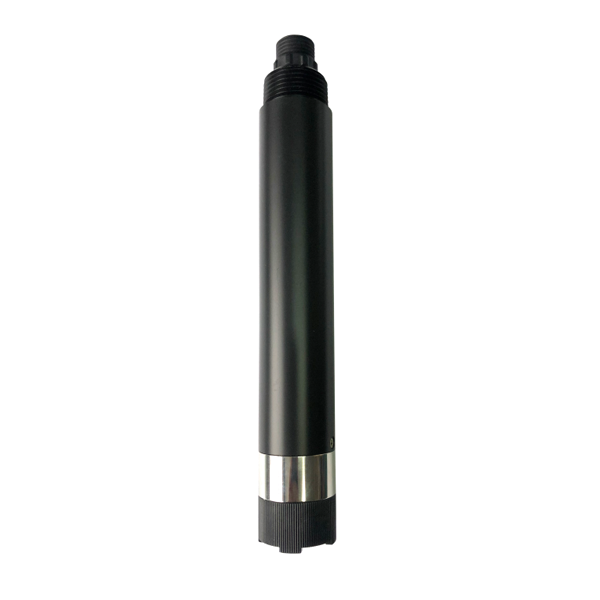
Oxygen is a separate measurement again. The optical DO probe below is relevant only when the process needs oxygen information; neither a TDS display nor an apparently stable pH reading can supply it.
| Integration item | Requirement for the measuring point |
|---|---|
| Power | NBL-WQ-PH and NBL-WQ-EC use 12-24 V DC; listed consumption is 0.2 W at 12 V for each. Add the host and other loads separately. |
| Data interface | RS485 Modbus RTU; unique addresses on a shared bus, compatible serial settings and version-specific registers |
| pH probe conditions | POM construction; IP68; working pressure below 0.2 MPa; temperature and chemistry suitability checked for the ordered assembly |
| EC probe conditions | ABS / SUS316L / PVC construction by configuration; IP68; working pressure below 0.6 MPa; confirm the selected electrode and temperature rating |
| Mounting and cable | 3/4 NPT immersion mounting; standard cable 5 m, other lengths configurable. Specify jacket compatibility for the actual exposure. |
| Reported values | pH, EC unit, measured temperature, TDS conversion basis if used, timestamp and separate quality state for each channel |
The two individual pressure limits do not make the complete assembly suitable for a pressurized line. Rate the holder, seals, valves and sample chamber as well. For common immersion use, ensure water remains around the sensing elements and that staff can retrieve each probe without straining its cable.
Keep the units explicit: 1 mS/cm equals 1000 microS/cm. A conductivity number copied into a mg/L field without conversion creates a data error even if Modbus communication is reliable. Check the decoded value through the final dashboard or historian, not only at the serial-port test.
A salinity probe, shown below, uses its own reporting basis. Do not substitute a salinity value for TDS simply because both relate to dissolved salts. Specify the required parameter and model before comparing quotations or reusing a controller channel.
First verify pH and conductivity individually with their appropriate standards. Record the standard identity, temperature, observed value and whether an adjustment was made. Then compare a representative process sample with a suitable reference using the same EC compensation and TDS conversion basis.
For treatment control, test what happens when pH is unavailable, the EC channel is out of range or the shared bus is lost. Define the approved response with the process engineer; do not let an invalid zero or indefinitely retained value initiate dosing. The correct action can differ between a monitoring-only point and a chemical-control loop.
When requesting a water TDS and pH meter quotation, provide normal and upset EC values, the smallest change that affects operation, expected pH, water temperature and intended control action. Include whether TDS needs to match a laboratory method or only an established site display. These details affect range and verification more directly than the label "combined meter."
No. Conductivity-derived TDS and pH describe different properties. Use an independently verified pH electrode when acidity, basicity or neutralization matters. A separate alkalinity measurement is needed when the water's acid-neutralizing capacity matters.
Only if it remains suitable for the changed composition and reporting requirement. Compare EC-derived values with appropriate sample results before retaining the factor for acceptance or process decisions.
A full-scale error specification can produce a larger absolute error near a low operating value on a wider range. Compare permissible error at the actual decision point and retain enough headroom for credible upset conditions.
They can share a suitably designed bus when addresses and serial settings are compatible and the host supports both register maps. Verify each channel independently; a valid response from one address does not prove the second is configured correctly.
No. Verify the probes, measurement location, process delay and controller behavior first. The loop also needs an approved response to invalid data and a safe dosing arrangement appropriate to the process.
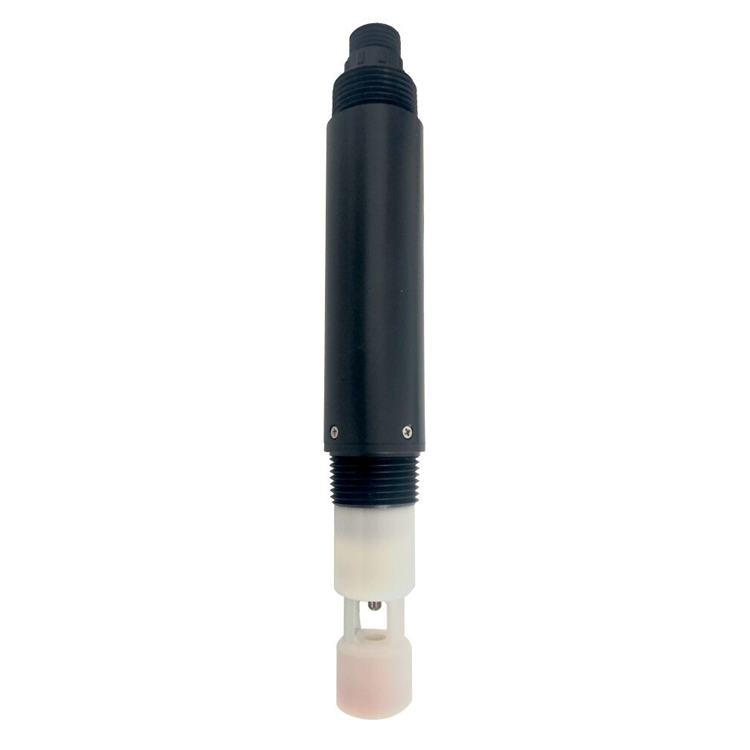
Organic-load assessment remains separate from this two-channel point. The optical BOD-related probe below should be evaluated against its own method and water matrix when that measurement is needed; it cannot be replaced by a TDS-to-pH calculation.

A useful combined station preserves the distinction between pH, measured EC and estimated TDS. Match EC range to the operating change, make the conversion basis visible and verify pH independently before control. NiuBoL can assess the probe combination against those requirements without treating one display as proof of every aspect of water quality.
Prev:TDS Meter Module: Where Should Compensation and Conversion Take Place?
Next:Portable DO Meter Checks During an Online Monitoring Upgrade
Related recommendations
Sensors & Weather Stations Catalog
 Agriculture Sensors and Weather Stations Catalog-NiuBoL.pdf
Weather Stations Catalog-NiuBoL.pdf
Agriculture Sensors Catalog-NiuBoL.pdf
Water Quality Sensor Catalog-NiuBoL.pdf
Related products
 Combined air temperature and relative humidity sensor
 TDR Soil Moisture & Temperature Sensor for irrigation| RS485 |4-20mA| NBL-S-THR
 Soil pH sensor RS485 soil Testing instrument soil ph meter for agriculture |NBL-S-PH
 Wind Speed sensor Output Modbus/RS485/Analog/0-5V/4-20mA
 Tipping bucket rain gauge for weather monitoring auto rainfall sensor RS485/Outdoor/stainless steel
 Pyranometer Solar Radiation Sensor 4-20mA/RS485


Screenshot, WhatsApp to identify the QR code
WhatsApp number:+8615367865107
(Click on WhatsApp to copy and add friends)

