





— Blogs —
—Products—
 Consumer hotline +8618073152920
WhatsApp:+8615367865107
Address:Room 102, District D, Houhu Industrial Park, Yuelu District, Changsha City, Hunan Province, China
Product knowledge
Time:2026-08-15 09:03:00 Popularity:304
Quick Answer: A TDS pH temperature meter built from separate online probes can report more than one water temperature. Keep each probe's temperature associated with its own measurement and compensation. If the temperatures disagree, compare sampling position, timestamps and stabilization before replacing either sensor or copying one temperature into both channels.
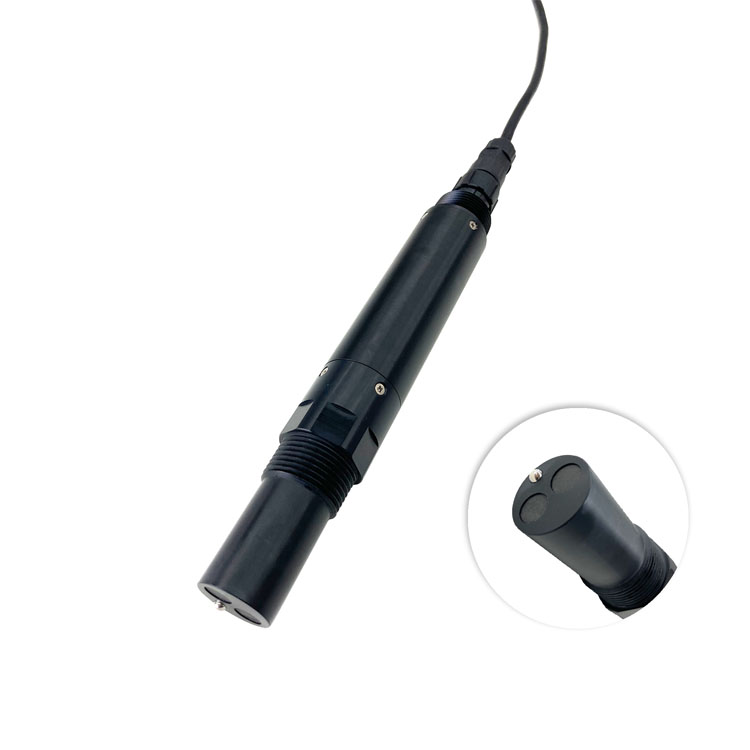
The NiuBoL NBL-WQ-EC measures conductivity and temperature using an integrated Pt1000 element. Supported TDS is calculated from conductivity with a configurable coefficient, default 0.64. The pH probe has its own temperature measurement and compensation arrangement.
A host that shows only one temperature should identify where that value originates. Hiding the other temperature can conceal a sampling mismatch or a failed temperature channel. It does not make two probes physically measure the same water at the same time.
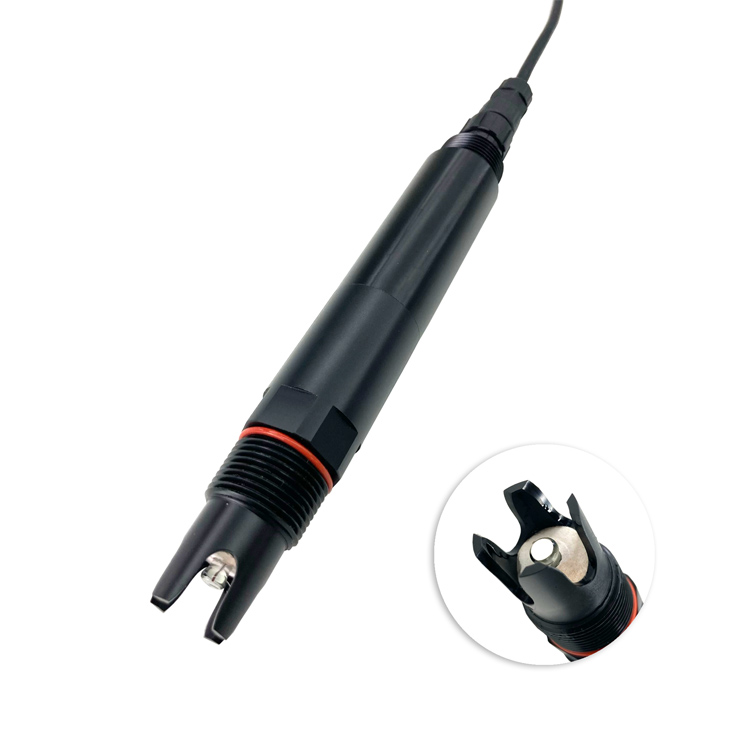
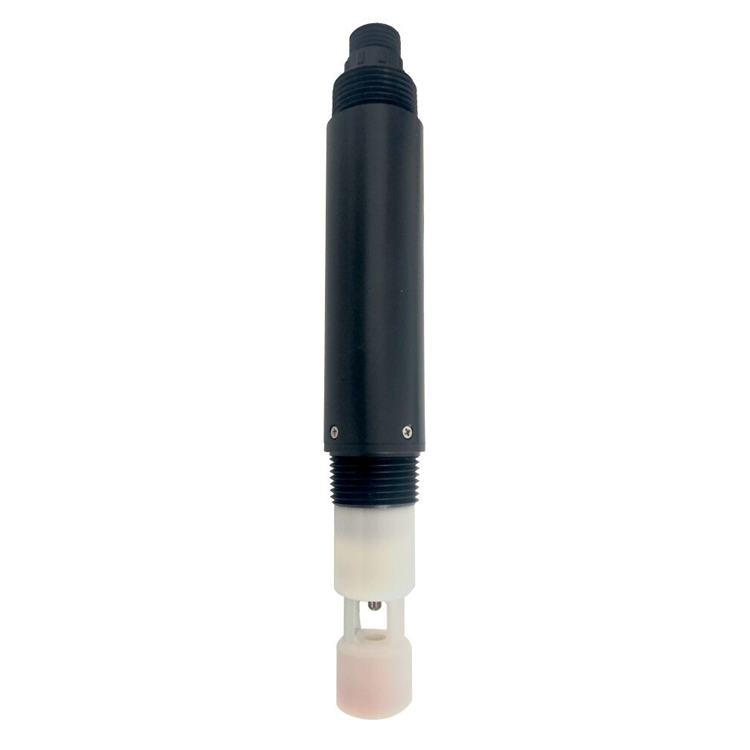
The base pH probe shown below uses NTC temperature compensation. That is a different sensing configuration from EC's Pt1000, but the component type alone does not establish that one reported temperature is wrong.
Start by locating both sensing regions on the water-path drawing. One probe near a warm inlet and another after a cooling section may correctly report different temperatures. Samples collected at different times can also differ. Record the two acquisition times and the process conditions before interpreting the discrepancy as instrument drift.
For a controlled comparison, expose both probes and a suitable reference to comparable, stable water conditions within their operating limits. Preserve the individual readings and allow stabilization according to the applicable procedures. Do not enter a new EC conversion coefficient merely to make a temperature-related TDS difference disappear.
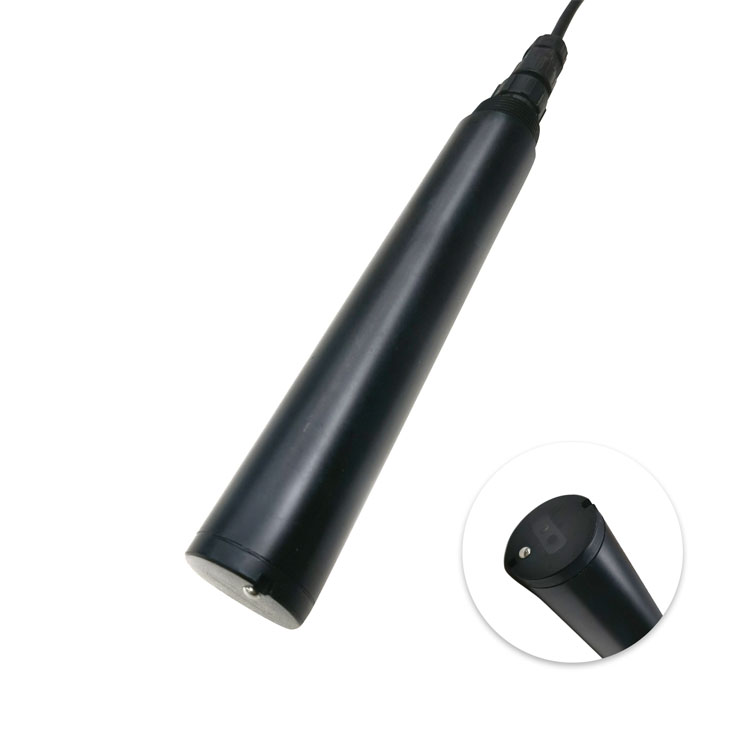
The turbidity probe pictured next is another independent instrument, even when its temperature appears on the same screen. A cabinet's shared display does not establish that one channel's temperature is automatically suitable for compensating the others.
| Item | NBL-WQ-EC | Base NBL-WQ-PH / PH-4S |
|---|---|---|
| Measurement range | Four EC ranges from 0-20.00 uS/cm to 0-200.0 mS/cm | 0-14 pH |
| Measurement accuracy | +/-1% FS conductivity | +/-0.1 pH |
| Temperature accuracy | +/-0.3 C | +/-0.3 C for both listed pH models |
| Temperature element | Pt1000 | NTC for base PH; Pt1000 for PH-4S |
| Operating temperature | 0-50 C | 0-65 C for base PH; 0-50 C for PH-4S |
| Pressure | Below 0.6 MPa | Below 0.2 MPa for base PH; at or below 0.2 MPa for PH-4S |
| Supply / power | 12-24 VDC +/-10%; 0.2 W at 12 V | 12-24 VDC; 0.2 W at 12 V |
| Output / protection / cable | RS485 Modbus RTU; IP68; standard 5 m | RS485 Modbus RTU; IP68; standard 5 m |
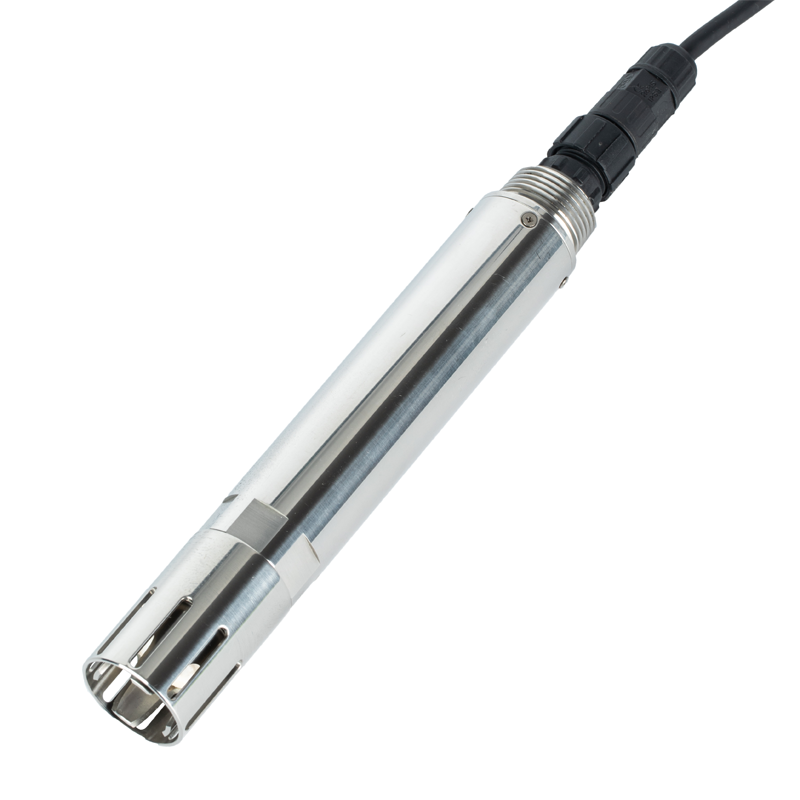
The PH-4S pictured below is not the base pH model with an interchangeable specification. Confirm the actual version and its wetted materials. All cable joints need appropriate protection, and cable-jacket material should be confirmed for the liquid rather than inferred from IP68.
For a shared vessel or bypass, assess the complete assembly against every probe's limits. The EC probe's higher pressure allowance cannot be applied to the pH probe, holder or seals. If process water is hotter than the permitted range, the sampling design needs review before a controller correction is considered.
Separate probes can each measure local temperature for their own measurement. Keep both values identifiable; differences may arise from location, timing, stabilization or an instrument problem.
Not without a documented compensation design. These probes already have their own temperature arrangements. Confirm how the ordered instruments use temperature before adding host-side compensation or overriding a value.
First compare the probes and a suitable reference under matched stable conditions. An apparent mismatch between different locations or times is not evidence of calibration error.
The coefficient relates conductivity to estimated dissolved solids. Review the EC reporting basis and temperature conditions first. Changing the coefficient is not a general remedy for a failed temperature measurement or an unrepresentative sample.
Keep EC, calculated TDS, pH, each associated temperature, acquisition time and quality state. Retain coefficient and configuration changes separately so later analysis can distinguish water changes from settings changes.
Send the two probe models, ranges, actual water temperatures, pressure and sample-path drawing. Include the host's display and compensation requirements so NiuBoL can check the measurement package without assuming a single combined handheld meter.
A TDS pH temperature meter is more useful when each temperature remains tied to its probe and sample. Compare like conditions, respect the shared assembly's limits and avoid compensating twice without a defined method. A salinity channel, if added, also needs its own reporting and compensation checks.
Prev:Water Conductivity Sensor with Arduino: Poll Multiple Probes Without Mixing Data
Next:Dissolved Oxygen Meter for Wastewater: Does a Bypass Preserve the Sample?
Related recommendations
Sensors & Weather Stations Catalog
 Agriculture Sensors and Weather Stations Catalog-NiuBoL.pdf
Weather Stations Catalog-NiuBoL.pdf
Agriculture Sensors Catalog-NiuBoL.pdf
Water Quality Sensor Catalog-NiuBoL.pdf
Related products
 Combined air temperature and relative humidity sensor
 TDR Soil Moisture & Temperature Sensor for irrigation| RS485 |4-20mA| NBL-S-THR
 Soil pH sensor RS485 soil Testing instrument soil ph meter for agriculture |NBL-S-PH
 Wind Speed sensor Output Modbus/RS485/Analog/0-5V/4-20mA
 Tipping bucket rain gauge for weather monitoring auto rainfall sensor RS485/Outdoor/stainless steel
 Pyranometer Solar Radiation Sensor 4-20mA/RS485


Screenshot, WhatsApp to identify the QR code
WhatsApp number:+8615367865107
(Click on WhatsApp to copy and add friends)

