





— Blogs —
—Products—
 Consumer hotline +8618073152920
WhatsApp:+8615367865107
Address:Room 102, District D, Houhu Industrial Park, Yuelu District, Changsha City, Hunan Province, China
Product knowledge
Time:2026-08-19 09:01:00 Popularity:202
Water quality sensor site acceptance is the point where a quoted instrument becomes a trusted operating record. A PLC display that shows numbers is not enough. The installer and buyer need to confirm that each sensor is at the agreed water point, measures within its ordered range, reaches the correct data channel, survives a controlled fault and can be serviced without dismantling the station. These checks should be agreed before shipment, not negotiated after the contractor has left.
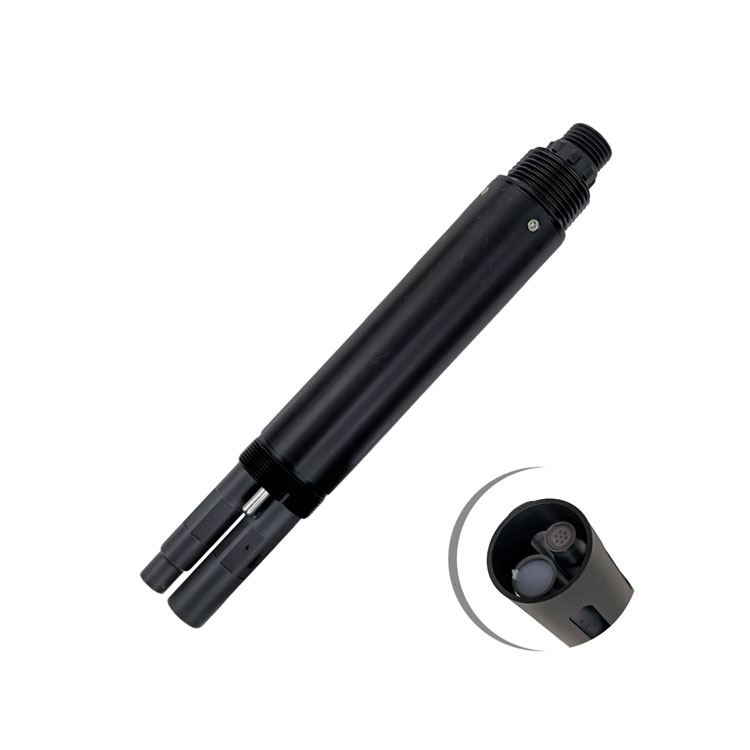
List every measurement point with water source, parameter, instrument model, output variant, mounting drawing, cable length, power source, data destination, unit and person responsible for acceptance. A river intake, an aeration basin and a treated-water outlet can require different sensor positions and reference checks even if all three use RS485. Tie each product serial number to its physical location and platform channel. If the installer swaps two identical-looking probes, the dashboard may still display plausible but wrongly attributed data.
The five linked NiuBoL examples in this article are ammonia nitrogen, optical dissolved oxygen, optical COD, conductivity and pH sensors. They do not share one universal calibration liquid, accuracy criterion or maintenance interval. The purchase contract should name the current datasheet and the site-specific acceptance method for each ordered model. Keep configuration changes and any substitutions on a signed revision of the point list.
At a point measuring ammonium-related ammonia nitrogen, confirm the instrument's reporting basis and the host label. An ion-selective electrode responds to ammonium ions under defined conditions; the displayed value and reporting convention must match the process requirement. Verify the selected measuring range and any temperature or matrix conditions against the actual water, rather than accepting a bench demonstration in clean water as proof of site performance.
Inspect immersion depth, flow direction, bubble exposure, sediment clearance, cleaning access and cable strain relief before powering the station. A sensing head beside an aerator may not represent the bulk basin. A low-flow side chamber can hold old water after the main process changes. Photograph the location with enough context to find it again; a close-up of the probe alone does not show whether the site is representative.
For dissolved oxygen, compare the online probe with a maintained reference at the same depth and time. Document water temperature, any salinity setting, cap condition and whether aeration bubbles were present. Optical DO avoids electrolyte replenishment but still needs a clean cap. A disagreement is a reason to inspect settings, fouling and the reference instrument before changing a controller alarm.
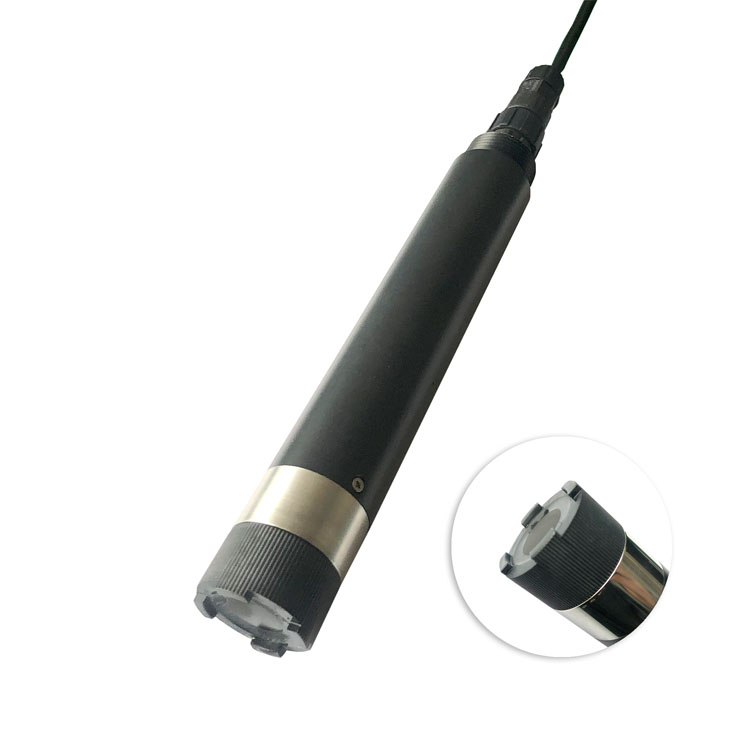
Use a test record with fields for as-found reading, reference reading, model, serial number, calibration state, time, water condition, action taken and as-left reading. Set the allowable difference from the ordered instrument specification and the project requirement. Do not impose one tolerance across pH, DO, conductivity, COD and ammonia. If a reading cannot be checked safely at the installed location, define an accessible sampling or retrieval method before sign-off.
| Channel | Acceptance evidence | Common false pass |
|---|---|---|
| Ammonia nitrogen | Range and reporting basis, suitable standard or reference sample, matrix conditions, stable host value | Assuming ammonium response and a reported nitrogen value use the same numeric basis. |
| Optical DO | Same-point reference comparison, compensation settings, cap condition, alarm response | Comparing readings taken at different depths or during changing aeration. |
| Optical COD | Site-matrix comparison with the specified laboratory method, cleaning function and trend response | Calling a UV-derived estimate identical to every laboratory COD result without correlation. |
| Conductivity | Appropriate standard, configured range, unit and temperature-compensation reference | Mixing µS/cm and mS/cm or comparing values at different reference temperatures. |
| pH | Required buffer checks, temperature reading, electrode condition and stable installed value | Accepting only one buffer point or testing a dry or fouled electrode. |
The linked NiuBoL optical COD product uses UV absorption and a reference light path to manage turbidity effects. It is still a method-specific online measurement. At a wastewater outlet, collect paired samples under representative process conditions and compare them by the laboratory method specified for the project. A clean-water factory test cannot establish site correlation in colored or highly variable effluent. Record what the controller receives as well as what the optical sensor reports locally.
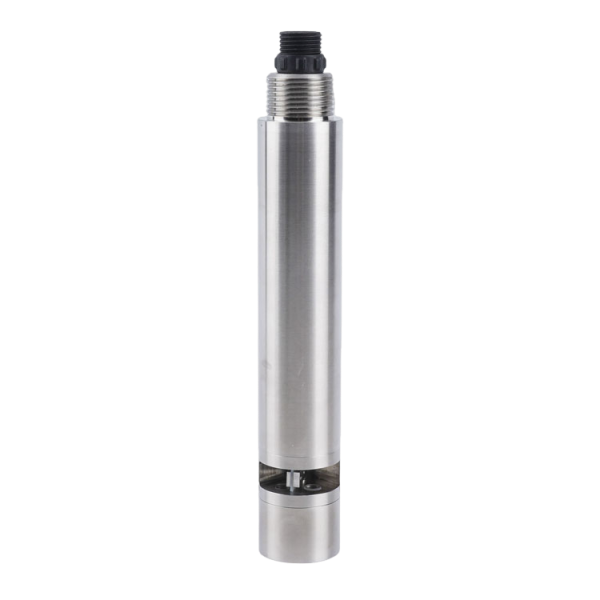
Before a wet test, record the supply voltage at the installed point and verify RS485 polarity, device address, baud rate, parity and bus topology. For each Modbus RTU channel, retain the register number, data type, scaling and engineering unit. The acceptance witness should compare the sensor or local display with the PLC, RTU or data logger at the same timestamp. A value off by a factor of ten can look like a believable trend; reading the wrong register is not always an obvious communication failure.
Then test the data destination. Confirm site ID, channel name, timestamp source, storage interval, any aggregation rule and export format. Simulate loss of one sensor and loss of the backhaul separately. The platform should distinguish stale data from a fresh reading and show the outage interval when service returns. If local buffering is included, retrieve and inspect records captured during the interruption. A successful first upload does not prove continuity.
Alarm acceptance should show the approved threshold, delay, reset rule, recipient and action. Use a safe test method agreed with operations; do not disturb treatment by changing a live dosing or aeration loop simply to produce an alarm. Test a sensor-fault path as well as an out-of-range process value. Where the sensor is connected to a PLC, confirm that a failed or stale register does not silently retain the last valid value as if it were current water quality.
A conductivity probe may need a different range or cell configuration when the water matrix changes. During acceptance, check that the selected NiuBoL variant matches expected conductivity and that the host preserves the right unit. Remove and reinstall the probe using the planned service method so technicians know whether fittings, cable connectors or cleaning space are adequate. A probe that passes one comparison but cannot be retrieved safely is an incomplete installed point.
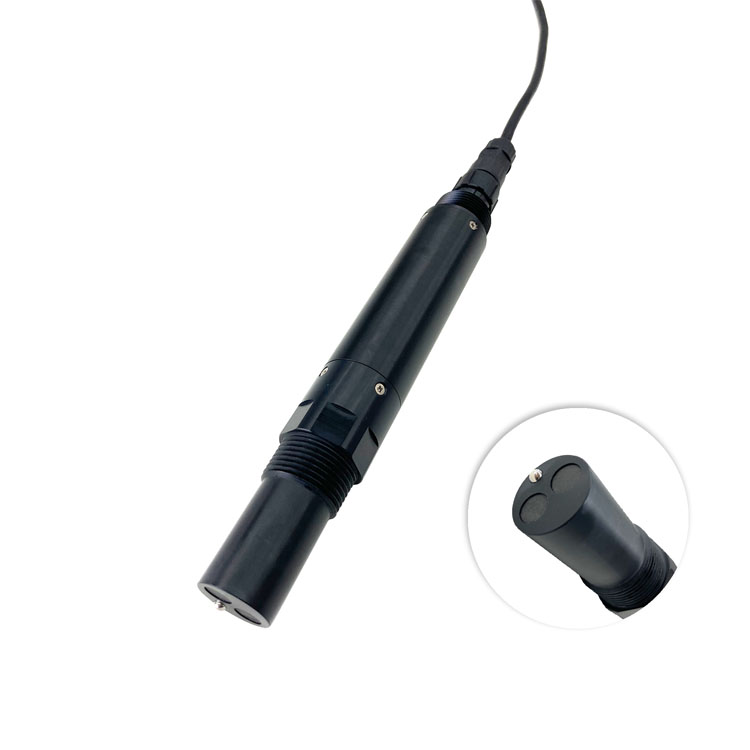
Keep a punch list for items that fail. Separate sensor performance from site defects such as unstable power, blocked sample flow, poor network coverage or a mounting position rejected by operations. Assign a responsible party and retest each item after correction. Handover should include as-built drawings, serial numbers, current register map, configuration export, calibration and reference records, maintenance instructions, spare-part list, account access and named support contacts. Do not sign off a complete station when only the sensors have been demonstrated.
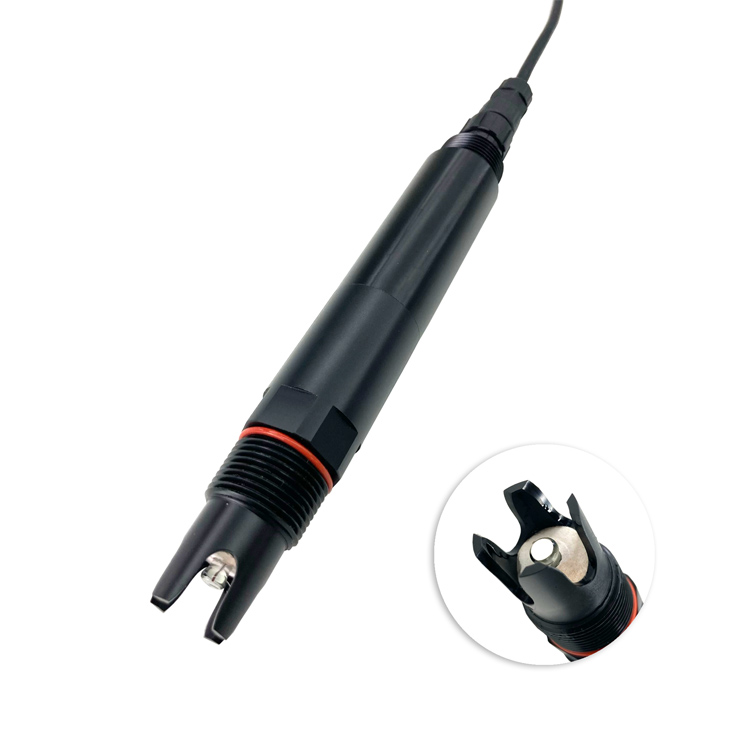
For pH, retain the buffer verification and temperature record with the acceptance package. A pH electrode can be electrically connected and still be unfit for process use after poor storage or fouling. Keep the pre-service and post-service readings, and document whether the water point is an immersion location or a flow assembly. The linked pH image illustrates a separate channel with its own service method; it should not be treated as interchangeable with a conductivity or ammonia probe.
No. It may establish factory performance of the supplied model, but site acceptance also checks installation, local water matrix, wiring, host scaling, timestamps and alarms. Retain both records.
Use the ordered model's current specification, the agreed reference method and the operating decision that depends on the value. Define the tolerance before testing. Do not invent one numeric limit for unrelated parameters.
Not in the same way. pH and conductivity can be checked with appropriate standards; DO can be compared at the same point with a maintained reference; optical COD and ammonia may require matrix-aware comparisons. Follow the project method for each channel.
Check register address, data type, byte order where relevant, scale, unit, timestamp and communications status before recalibrating the probe. Save both the raw read and interpreted value during diagnosis.
No. Witness the required trend duration, data gaps, restart behavior and alarm chain defined in the contract. A static reading does not show that the logger survives an outage or that the measurement point remains wetted.
The buyer and integrator should sign the as-built schedule showing model, serial number, location, range, unit, data channel and maintenance owner. This prevents later ambiguity when a probe is replaced or a site point moves.
An unverified process connection, unsafe service access, wrong host mapping, missing reference record or untested alarm should remain on the punch list until corrected. A dashboard screenshot alone is not a completed acceptance test.
Water quality sensor site acceptance connects five things: the right device, the right water point, a defensible reference check, correct digital interpretation and a maintainable handover. NiuBoL sensors can be integrated into PLC, RTU and logger systems, but each channel should be witnessed on its own measurement principle and contract criteria before the station is put into routine service.
Prev:Greenhouse Weather Station Price: Indoor and Outdoor Sensor Costs
Next:Anemometer for Greenhouse Ventilation: Exposure and Fault Response
Related recommendations
Sensors & Weather Stations Catalog
 Agriculture Sensors and Weather Stations Catalog-NiuBoL.pdf
Weather Stations Catalog-NiuBoL.pdf
Agriculture Sensors Catalog-NiuBoL.pdf
Water Quality Sensor Catalog-NiuBoL.pdf
Related products
 Combined air temperature and relative humidity sensor
 TDR Soil Moisture & Temperature Sensor for irrigation| RS485 |4-20mA| NBL-S-THR
 Soil pH sensor RS485 soil Testing instrument soil ph meter for agriculture |NBL-S-PH
 Wind Speed sensor Output Modbus/RS485/Analog/0-5V/4-20mA
 Tipping bucket rain gauge for weather monitoring auto rainfall sensor RS485/Outdoor/stainless steel
 Pyranometer Solar Radiation Sensor 4-20mA/RS485


Screenshot, WhatsApp to identify the QR code
WhatsApp number:+8615367865107
(Click on WhatsApp to copy and add friends)

