





— Blogs —
—Products—
 Consumer hotline +8618073152920
WhatsApp:+8615367865107
Address:Room 102, District D, Houhu Industrial Park, Yuelu District, Changsha City, Hunan Province, China
Product knowledge
Time:2026-09-15 10:00:00 Popularity:210
Quick Answer: Water quality testing instrument brand evaluation should examine how a specific product can be supported throughout its working life. Compare method suitability, spare-part identity, integration dependencies and the cost of changing equipment later. A recognizable name or a long parameter list does not establish that a particular model is suitable for your process.
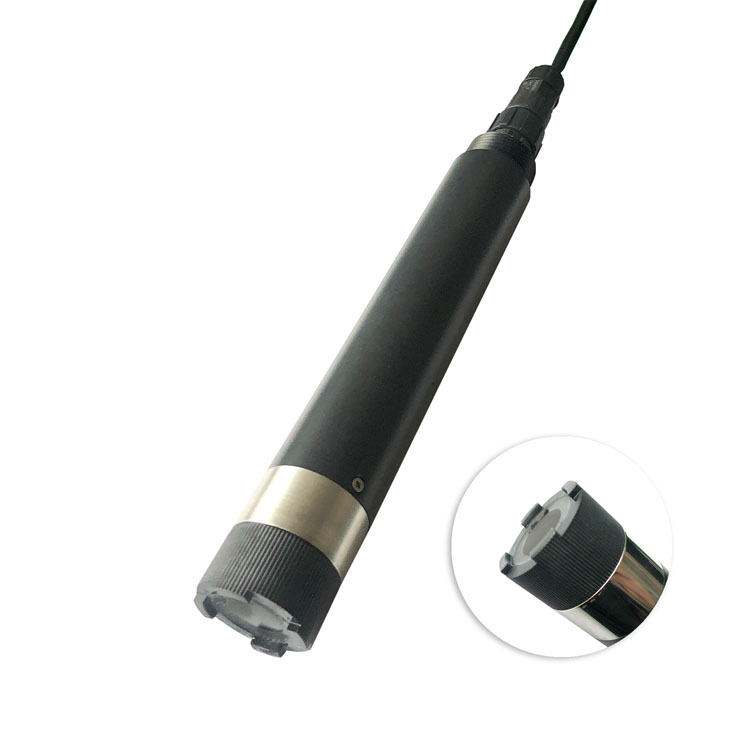
A contractor buying one instrument may focus on commissioning. A distributor or utility purchasing for several sites also inherits replacement stock, technician training and software maintenance. An instrument that works satisfactorily today can still be an expensive fleet choice if every replacement requires a new controller or if service components cannot be identified reliably.
Start by defining the equipment family you are evaluating. An immersion dissolved oxygen probe, a laboratory analyzer and an online chemical analyzer do not offer the same measurement service. Comparing them solely by brand reputation or headline accuracy conceals differences in sampling, maintenance and the meaning of the reported value.
NiuBoL offers individual water-quality probes and multi-parameter assemblies. Their suitability should be assessed by the selected model and installation, not by treating every product in the range as one interchangeable platform. Evaluate measurement performance in a representative trial, then assess parts availability and revision support separately.
Use two stages when shortlisting a water quality testing instrument brand. First exclude configurations that cannot perform the measurement under the intended conditions. Only then compare service arrangements and commercial terms. A preferred supplier cannot overcome an unsuitable pressure limit, an incompatible sensing method or an output your control system cannot use.
| Decision stage | Question to resolve | Consequence of leaving it unresolved |
|---|---|---|
| Measurement suitability | Does this model measure the required parameter or a correlated estimate? | Values may not support the intended process or reporting decision |
| Installation fit | Can it operate in the actual water, temperature, pressure and mounting arrangement? | Additional conditioning or a different instrument may be required |
| Serviceability | Which components are replaceable and who can perform that work? | A minor sensing-element issue may interrupt the complete point |
| System dependency | What changes are needed if the probe or controller is replaced? | Replacement cost may extend beyond the instrument |
| Supply continuity | How are model revisions and replacement parts identified? | Old stock, new firmware and installed software may not match |
Score only items that have evidence for the offered configuration. A feature shown elsewhere in the same catalog should not count as an included capability. Where a requirement is optional, distinguish the base model from the option in the comparison. This makes a less expensive but incomplete offer visible before purchasing decisions are made.
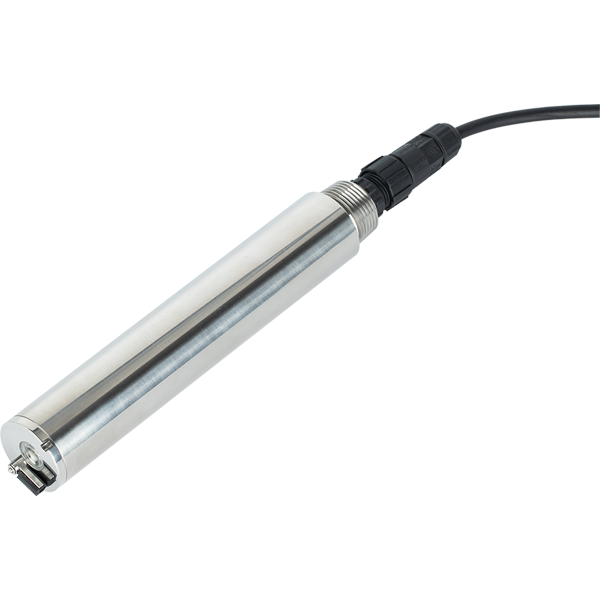
Different measurement methods create different spare-part needs. An optical oxygen probe may need a compatible sensing cap; a pH instrument may require electrode replacement; a mechanically cleaned assembly adds brush and mounting considerations. These are not interchangeable categories of spare. Record the part identity, storage conditions and procedure that applies to the exact instrument.
For distributors, shelf stock is useful only if it remains usable when required. Avoid buying a large quantity of sensitive replacement elements merely because the initial unit price is attractive. Ask about storage conditions and any applicable shelf-life limits before deciding how much to hold. The stock policy should reflect local demand and replenishment time rather than a generic percentage of installed instruments.
A utility may prefer to exchange a complete probe on site and repair or recalibrate the removed unit in a workshop. That approach needs more capital tied up in spares but can reduce the complexity of field work. Another operator may have skilled staff and convenient access, making component-level service practical. Compare the brand's available service route with the team's actual working method.
The following NiuBoL examples show why family-level assumptions can be misleading. They describe different electrical arrangements, even though both use RS485 Modbus RTU. The comparison is deliberately limited to items relevant to replacement planning; it is not a statement that the two products perform the same measurement task.
| Item | NBL-WQ-PH individual pH sensor | NBL-WQ-MPS-5A multi-parameter assembly |
|---|---|---|
| Measurement configuration | pH channel, 0-14 pH | Selected modules, up to eight parameters including temperature |
| pH accuracy / resolution | +/-0.1 pH / 0.01 pH | Optional pH module: +/-0.1 pH / 0.01 pH |
| Supply voltage | 12-24 V DC | 12 V DC +/-5% |
| Power consumption | 0.2 W at 12 V | 5 W at 12 V; assess cleaning demand separately |
| Digital output | RS485, Modbus RTU | RS485, Modbus RTU |
| Standard cable length | 5 m | 5 m |
| Service consequence | One principal measurement point to remove | Retrieving the shared body can interrupt several channels |
The individual pH sensor is specified for 0-65 C and pressure below 0.2 MPa, with a POM wetted body and IP68 protection. Those values must not be assigned to a complete multi-parameter assembly simply because a pH module is installed in it. Assembly limits depend on all relevant components.
Likewise, matching cable length does not establish cable equivalence. Connector construction, conductor arrangement, shielding, jacket compatibility and sealing all affect whether an existing installation can be reused. A replacement order should identify those details instead of describing the item only as a five-metre water sensor.

RS485 Modbus RTU is useful when an integrator wants a PLC, RTU or data logger to read sensor values without a dedicated proprietary display. However, devices using the same protocol may have different register addresses, numeric formats, scale factors and configuration commands. Replacing one with another can still require changes to the host program.
Keep a copy of the implemented channel mapping under the operator's control. It should identify the model and firmware used, not merely contain a screenshot of a normal reading. If a replacement instrument changes a register or data type, the engineer can then determine the affected tags rather than rediscovering the entire integration.
Also separate local access from remote services. A sensor that can be read locally may be suitable for a long-lived plant, while a cloud dashboard can have separate account, network and service dependencies. Ask whether historical records can be exported and how local readings remain accessible when the remote service is unavailable. These are system questions, not capabilities that should be assumed from the sensor brand.
A useful cost comparison starts with the same measurement duty and service period. Include the instrument, required mounting or sample equipment, host modifications, planned consumables, calibration work and field visits. Keep known quoted prices separate from estimates. There is no reliable universal price for a complete monitoring point assembled from different channels and accessories.
For a remote location, calculate travel sensitivity before arguing over a small probe-price difference. If one service approach requires six planned visits per year and another requires four, the illustrative difference is two visits per year, or six visits over three years. Multiply those visits by the site's actual travel and labour cost. This is a budgeting scenario, not a claim that either instrument will achieve those intervals.
Do not monetize every possible failure as though it were certain. Instead, show which costs are firm and which depend on water conditions or operating experience. For example, cap replacement frequency and cleaning demand may change with use, while an agreed installation charge is known. This keeps the comparison understandable and prevents an apparently precise total from hiding unsupported assumptions.
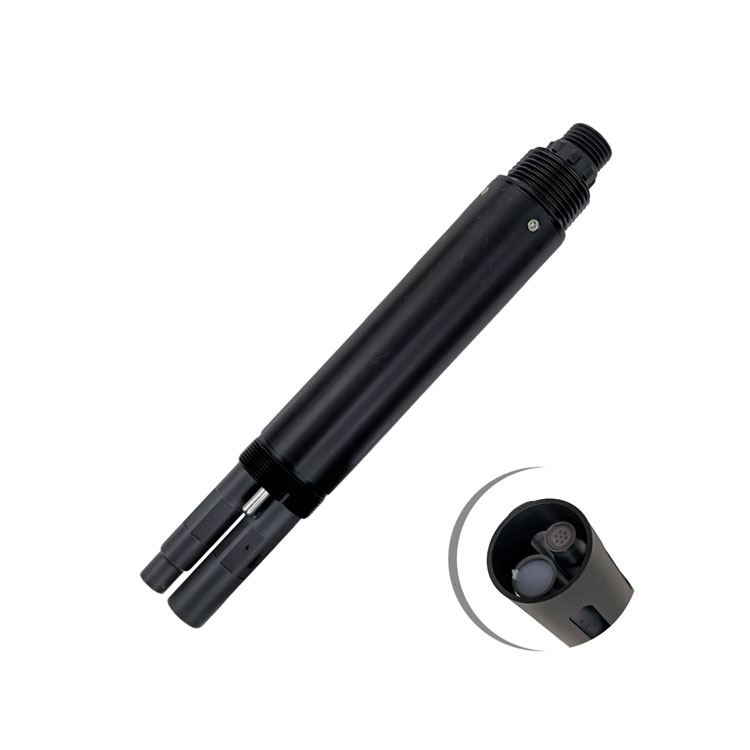
Before adding a model to a repeated-order schedule, clarify how changes to sensing elements, firmware, connectors or accessories will be communicated. Ask whether the previous version can be identified from its label or serial information and how to select a compatible replacement. Do not assume a product name that remains unchanged guarantees an unchanged internal configuration.
For after-sales support, establish the first technical contact and what information is needed to diagnose a fault. A useful fault report includes the exact model, observed symptom, process conditions and whether the local reading agrees with the host. Agree on the route for inspection or repair; do not presume local service coverage or a replacement time unless it is actually offered for the destination.
Warranty also needs a component-level reading. Electronics, sensing elements and consumables can have different terms and exclusions. Ask for the terms applying to the supplied configuration and distinguish warranty coverage from expected service life. Neither a warranty period nor a recommended maintenance interval is a promise that the sensor will remain accurate without attention.
When approaching NiuBoL, describe whether the purchase is a new station, a replacement within an existing fleet or a distributor stock order. Include the installed controller and the maintenance resources available. That allows the discussion to focus on compatibility, service parts and repeat-order consistency instead of presenting a generic instrument package.
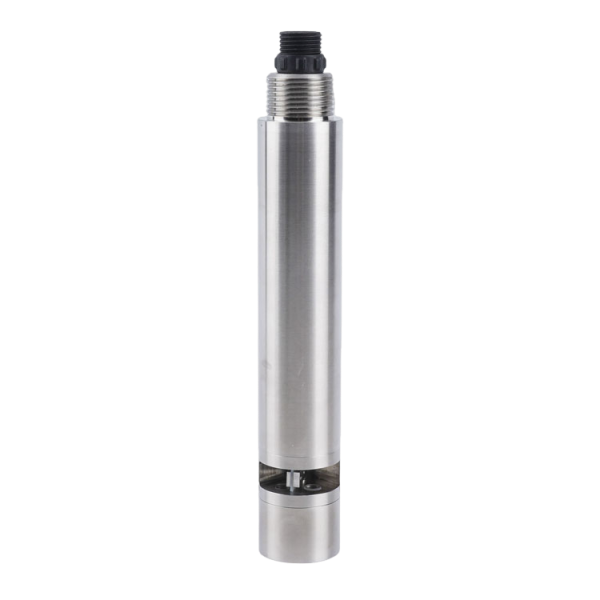
Standardization can reduce training and spare complexity, but only where the selected models meet the different measurement duties. Retain exceptions for conditions or methods that need different equipment. A single-brand policy should not override technical suitability.
No. It provides a common communication framework, not a universal register map. Check power, mounting, connector, data format and host configuration as well as the protocol. Plan a replacement mapping before removing a functioning instrument.
Review the exact model's measurement method and operating limits, then examine service parts and integration information. Use a representative sample trial where performance is uncertain. Keep the trial result distinct from the longer-term questions of parts availability, revision management and support.
Compare the installed measurement duty and its recurring service requirements. Separate probe-only pricing from a complete point with controller, fittings or sample equipment. Use actual quotations for the selected configuration rather than a generic online price as the project budget.
No. Warranty defines contractual coverage; maintenance is physical work needed to preserve measurement performance. Review exclusions and component terms, then budget the cleaning, reference checks and replacement elements required by the application.
Resolve exact version compatibility, storage requirements, likely demand and replenishment time. Keep enough identification information to match stock to the installed units. Do not assume that a probe with a similar housing or the same protocol is an approved replacement.
A project should use a delivery commitment for its actual models, options, quantity and destination. Standard probes and assemblies with selected modules can have different availability. Confirm the schedule in the quotation rather than applying a general website statement to every order.
Evaluate a water quality testing instrument brand through the equipment you will have to operate, maintain and replace. Model-level suitability comes first; service continuity and system dependencies determine the longer-term fit. A focused enquiry to NiuBoL should describe that installed duty so the proposed configuration and support arrangements can be assessed on practical terms.
Prev:Water Quality Meter Product Features That Matter in Engineering Procurement
Next:Water Quality Meter Maintenance Methods for Reliable Field Data
Related recommendations
Sensors & Weather Stations Catalog
 Agriculture Sensors and Weather Stations Catalog-NiuBoL.pdf
Weather Stations Catalog-NiuBoL.pdf
Agriculture Sensors Catalog-NiuBoL.pdf
Water Quality Sensor Catalog-NiuBoL.pdf
Related products
 Combined air temperature and relative humidity sensor
 TDR Soil Moisture & Temperature Sensor for irrigation| RS485 |4-20mA| NBL-S-THR
 Soil pH sensor RS485 soil Testing instrument soil ph meter for agriculture |NBL-S-PH
 Wind Speed sensor Output Modbus/RS485/Analog/0-5V/4-20mA
 Tipping bucket rain gauge for weather monitoring auto rainfall sensor RS485/Outdoor/stainless steel
 Pyranometer Solar Radiation Sensor 4-20mA/RS485


Screenshot, WhatsApp to identify the QR code
WhatsApp number:+8615367865107
(Click on WhatsApp to copy and add friends)

